Checked by Dr. Aravind Chander - Best IVF Specialist. First published on 6/10/2026
A baseline scan before IVF is an early ultrasound, usually done at the start of a cycle, that gives your fertility team a starting picture of your uterus and ovaries before stimulation medicines begin. It helps the doctor count small follicles, spot any ovarian cysts, check the uterine lining, and decide whether the cycle is ready to proceed.
It is one piece of planning, not a full fertility test. It cannot predict pregnancy, and it cannot judge egg quality.
Key takeaways
A baseline scan gives your fertility team an early picture of your ovaries and uterus before an IVF cycle begins. The findings may help your doctor decide:
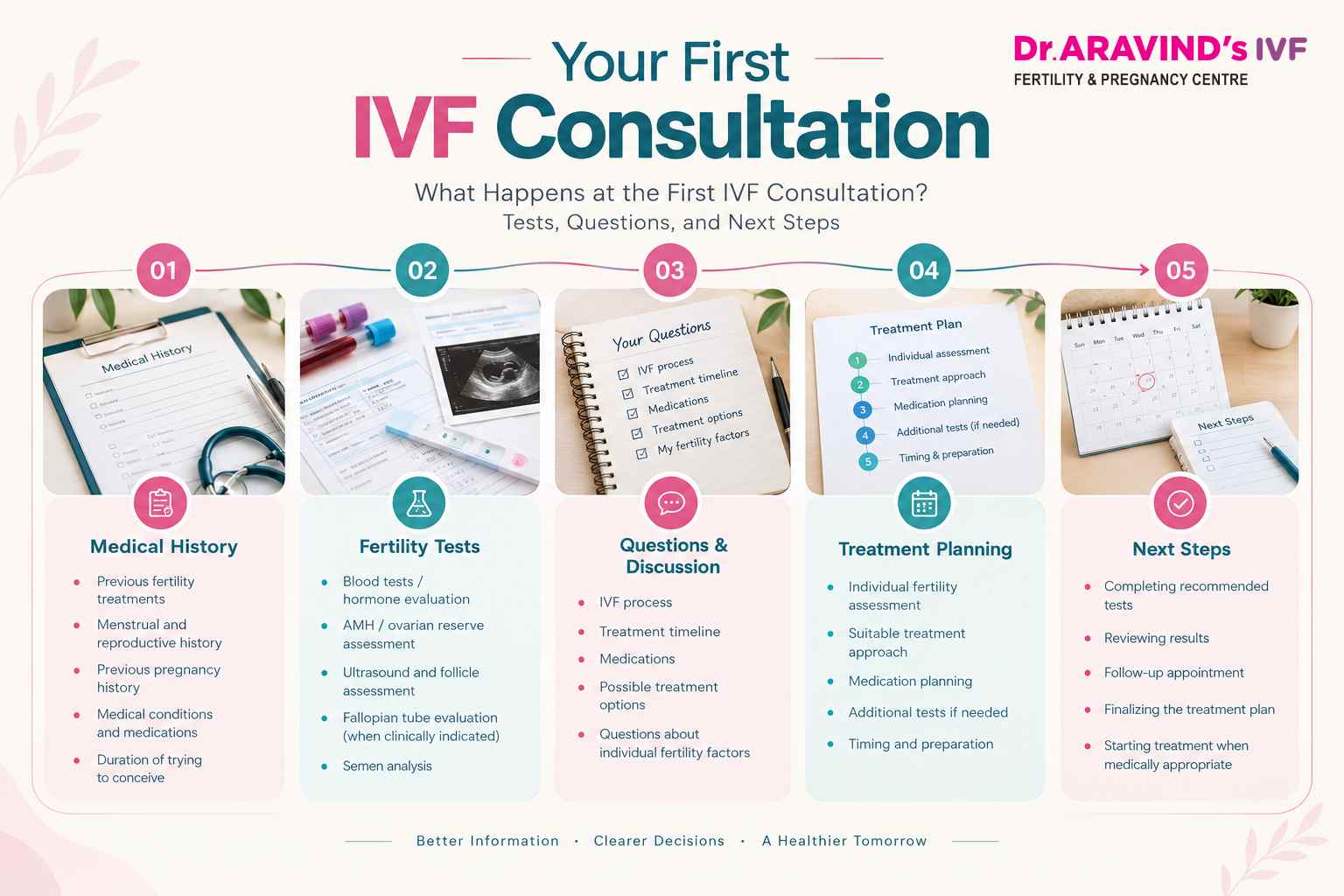
If you are still deciding where to begin your fertility journey, our guide to the first IVF consultation explains what happens during the initial appointment and how investigations such as ultrasound scans may fit into the process.
The timing of a baseline scan depends on the IVF protocol and the fertility clinic's approach. In many cases, it is performed during the early part of the menstrual cycle, often within the first few days of the period. However, some treatment protocols may involve cycle preparation or schedule the scan at a different time.
Follow the date recommended by your fertility specialist. The appropriate timing can vary from one treatment plan to another. Your doctor may also request blood tests during the same visit. Looking at the ultrasound findings together with hormone results can help the team decide whether to proceed with stimulation, adjust the plan or wait before starting medicines.
The baseline scan provides a reference point for the monitoring scans performed later in the IVF cycle. Your fertility team can compare changes in follicle development and ovarian response with what was seen at the beginning of treatment.
Ovarian cysts can occur for different reasons, and many functional cysts resolve without treatment. However, some cysts may produce hormones or require further assessment. If a finding could affect the planned IVF cycle, your doctor may recommend waiting, repeating the scan or adjusting the treatment plan.
The antral follicle count (AFC) provides information about the small follicles visible in the ovaries. Your doctor considers this alongside factors such as AMH, age and your previous response to fertility treatment when assessing ovarian reserve and planning stimulation.
However, an antral follicle count cannot tell you exactly how many eggs will be collected or predict whether an IVF cycle will result in pregnancy. For more information, see our AMH and ovarian reserve explainer.
The scan can provide an initial look at the uterus and uterine lining. Findings such as fibroids, polyps or fluid within the uterine cavity may require further evaluation, particularly before embryo transfer.
Read more about intramural fibroids and fertility and uterine polyps and infertility.
IVF stimulation is not a one-size-fits-all process. Your doctor considers the baseline scan, hormone levels, age, ovarian reserve, and other clinical factors when selecting the treatment approach and medication doses. The goal is to support an appropriate ovarian response while monitoring for an excessive or inadequate response.
Remember, a baseline scan is only one part of the overall IVF assessment. Your fertility specialist will consider it together with your medical history, examination, and other test results before deciding how to proceed.
For IVF, a baseline ultrasound is commonly performed using a slim transvaginal ultrasound probe. Most women describe the experience as pressure or mild discomfort rather than significant pain. You may feel some temporary awkwardness during the examination, but the scan is usually brief.
If you feel anxious, have pelvic pain or would like the procedure explained as it happens, let the sonographer or doctor know. They can explain each step and proceed at a pace that is more comfortable for you.
The scan itself is generally quick, although it may take longer if the ovaries are difficult to visualise or if your doctor wants to examine a particular finding more closely.
Your fertility clinic will provide specific instructions because preparation can vary depending on the type of scan and your treatment protocol. In many cases, you may be advised to:
Light menstrual bleeding does not necessarily mean that an early-cycle scan needs to be cancelled. Baseline scans are often scheduled during or shortly after a period. However, follow the instructions given by your own fertility clinic.
For other practical steps to organise before starting treatment, see our IVF preparation checklist.
Finding an ovarian cyst does not automatically mean that your IVF cycle will be cancelled. Your doctor will consider several factors before deciding what to do, including:
Depending on the findings, your doctor may recommend continuing with monitoring, repeating the ultrasound, waiting for the cyst to resolve, investigating it further or modifying the treatment plan.
Do not start, stop or change medicines for an ovarian cyst without speaking with your fertility specialist.
A lower antral follicle count may suggest that the ovaries could produce fewer follicles in response to stimulation. However, AFC does not measure egg quality, and a lower count does not mean that pregnancy is impossible.
Your doctor will interpret the result alongside your age, AMH level, medical history and any previous response to fertility treatment. You may then discuss an individualised stimulation approach, realistic expectations and, where appropriate, alternative treatment options.
A single follicle count should not be used by itself to guarantee or rule out IVF success.
A higher antral follicle count can occur in people with PCOS or polycystic-appearing ovaries. It may also indicate that the ovaries could respond strongly to stimulation medicines.
In this situation, your fertility team may carefully adjust medication doses and monitor your response during treatment. A higher number of follicles does not automatically mean better egg quality or guarantee pregnancy.
Your doctor may also discuss the possibility of an excessive ovarian response and ovarian hyperstimulation syndrome (OHSS), along with measures that can help reduce the risk. Read our guide to IVF injections and side effects before beginning treatment.
Sometimes. If the ultrasound findings, hormone results and other clinical factors are suitable, your doctor may advise you to begin ovarian stimulation according to your treatment plan.
In other situations, it may be better to address a cyst, investigate the uterine cavity, manage a hormonal issue or wait for another cycle before starting. A delay does not necessarily mean something is wrong. In some cases, waiting allows treatment to begin under more suitable conditions.
The two scans can overlap, but the terms are not always used in exactly the same way.
A baseline scan may include an assessment of the ovaries, antral follicle count, uterus and uterine lining, along with a check for findings that could affect whether an IVF cycle should begin.
An antral follicle count (AFC) scan may be performed primarily to estimate the number of small follicles visible in the ovaries as part of an ovarian reserve assessment.
If you are unsure what your appointment is intended to assess, ask your clinic. You can also ask whether the report will provide the follicle count for each ovary. Learn more in our guide to the antral follicle count.
A baseline scan gives your fertility team a starting picture of your ovaries and uterus before an IVF cycle. It can help assess antral follicles, identify ovarian cysts or uterine findings, and provide information that may guide your treatment plan and medication choices.
However, a scan is only one part of the overall fertility assessment. Your doctor will consider the findings alongside your blood test results, age, ovarian reserve, sperm assessment, medical history and previous treatment before deciding whether and when to begin an IVF cycle.
If you would like help understanding your pre-treatment reports or discussing your fertility treatment options, the team at Dr. Aravind's IVF Fertility & Pregnancy Centre can help you understand what your results may mean and what the next steps could be.
Need help reading your pre-IVF results?
Book a consultation and bring your scan and blood reports. We will explain what they mean and what comes next.
No. An ultrasound can show how many small follicles are visible and how the ovaries look, but it cannot judge the quality of the eggs inside them.
Not reliably. A routine scan does not show whether the tubes are open. If tubes need checking, the doctor may suggest an HSG, HyCoSy or laparoscopy.
Often yes. Many baseline scans are booked during or just after a period on purpose. Confirm with your clinic before you reschedule.
No. It is a starting check. The result of a cycle also depends on your age, egg and sperm health, how embryos develop and the condition of the womb.
That depends on the day of your cycle and the plan. The doctor may repeat the scan, check hormone levels or look for other reasons. This early reading is not the same as the lining check done before an embryo transfer.


