People usually ignore reproductive health when they assess their complete wellness until they experience a health emergency that requires their attention to this matter. The method of responding to emergencies creates danger because it wastes essential time, which couples who want to start a family need. People need to know why regular reproductive check-ups are important, because these tests offer important medical benefits to individuals who struggle with infertility. The core elements of preventive healthcare include these tests, which enable people and couples to learn about their health status while they protect themselves from hidden conditions and make informed choices about their health.
Dr. Aravind's IVF Fertility & Pregnancy Centre, which people in South India trust because of its three decades of medical experience, demonstrates its main belief that better results come from early patient detection. Thus demonstrating how early treatment produces positive health results. The article investigates reproductive wellness check-ups, which include their examination as a vital component of human development that establishes a base for healthy reproductive life.
Reproductive health is the total well-being of the person, be it physical, mental, or social, regarding the reproductive system, where it's seen as more than just disease absence. The condition combines various health aspects, which include hormonal health, menstrual health, ovarian function, sperm health, uterine health, and pregnancy viability.
Reproductive health needs more attention because it holds significant value for society. The combination of cultural taboos, insufficient public knowledge and the belief that fertility matters only during conception attempts leads to postponed medical treatment. The majority of fertility disorders, which encompass Polycystic Ovary Syndrome (PCOS), endometriosis, low Anti-Mullerian Hormone (AMH) levels, male varicocele and hormonal imbalance, begin their progression through multiple years without any visible symptoms.
The period for obtaining effective treatment options becomes limited because symptoms start to show themselves. The pattern receives disruption through regular check-ups. The process establishes your reproductive health baseline while providing your medical team with the necessary data to execute their medical decisions.
The main reason to make reproductive health screenings a regular practice is their capability to identify hidden medical conditions that exist at their earliest stages. Consider the following:
PCOS exists as a highly prevalent hormonal disorder that affects women of reproductive age, since approximately 10 percent of women worldwide develop this condition. Yet many women remain undiagnosed for years. PCOS disrupts ovulation, affects hormonal balance, and can lead to infertility if left unaddressed. A routine ultrasound and a simple blood test for hormones like FSH, LH and AMH can flag PCOS early, which enables doctors to use lifestyle changes, medications and targeted fertility support as treatment options.
Endometriosis occurs when tissue similar to the uterine lining grows outside the uterus, which commonly develops on the ovaries, fallopian tubes and other pelvic organs. The condition affects approximately 10 percent of women worldwide, which serves as a primary reason for pelvic pain and infertility. Many women ignore the symptoms because they resemble common menstrual discomfort, which results in a lengthy period before they receive a proper diagnosis. A detailed pelvic examination and imaging can help identify endometriosis before it causes irreversible damage to the reproductive organs.
AMH Anti-Mullerian Hormone serves as the primary indicator that displays a woman's remaining ovarian capacity, which shows both her remaining egg count and its quality. AMH levels show a natural decline throughout a woman's life, yet some women experience more rapid declines, which doctors refer to as premature ovarian insufficiency. The AMH blood test provides an accurate measurement of a woman's egg reserve on any day throughout her menstrual cycle. Early AMH testing enables people to plan their fertility treatment through methods such as egg freezing or appropriate IVF scheduling.
The fallopian tubes serve as vital pathways for conception because they connect the ovaries to the uterus and provide the site where fertilization happens. Blockages caused by past infections, pelvic inflammatory disease, or fibroids may cause no symptoms at all. The HSG test and the saline sonogram both serve as testing methods to verify whether fallopian tubes remain open. The medical team can start surgical or reproductive processes as soon as they identify blockages because they need less time to begin these procedures.
Men with low sperm count, poor motility, abnormal morphology or hormonal imbalances show no apparent symptoms. A simple semen analysis is one of the most informative tests in reproductive medicine and should be a standard part of any couple's fertility check-up. The identification of male factor issues at an early stage provides access to ICSI treatments, which focus on solving sperm difficulties through direct intervention.
Throughout existence, people experience changes in their reproductive health requirements. People need to schedule regular check-ups because these assessments need to occur continuously according to their existing age and specific life situations.
The 20s serve as the optimal period to establish reproductive health foundations. The knowledge of your hormonal health, menstrual cycle patterns and ovarian reserve capacity proves essential for future planning even when you currently do not want children. Women should schedule their first gynaecological examination together with cervical cancer screening, STI testing and a comprehensive hormonal assessment during this decade. Men should learn about scrotal health while undergoing their first semen analysis test when they have health concerns.
Fertility begins to decline in the early 30s, and it is more noticeable after 35. The women who intend to have children in the future need to track their AMH levels and ovarian reserve and complete hormonal health assessments. The conditions, which include fibroids and endometriosis, start to become worse during this time. Couples should obtain fertility health screening after trying to conceive for 6-12 months without success. At Dr. Aravind's IVF, each couple gets a treatment plan which their fertility history, age and diagnostic results require.
Women undergo major hormonal transformations during their 40s, which mark the onset of perimenopause. The body experiences a rapid decrease in ovarian reserve while the likelihood of chromosomal defects in eggs starts to rise. The process of reproductive health assessment requires regular hormonal testing, and users must track their bone density and cardiovascular health status. The testosterone levels of men start to decrease during their 40s, which leads to reduced fertility and decreased energy levels. The routine check-ups of this decade establish a detailed guide that helps patients navigate their life changes with self-assurance.
A full reproductive health assessment needs to be conducted, including multiple tests which will differ according to your age and gender and your specific health issues.
For Women:
For Men:
For Couples:
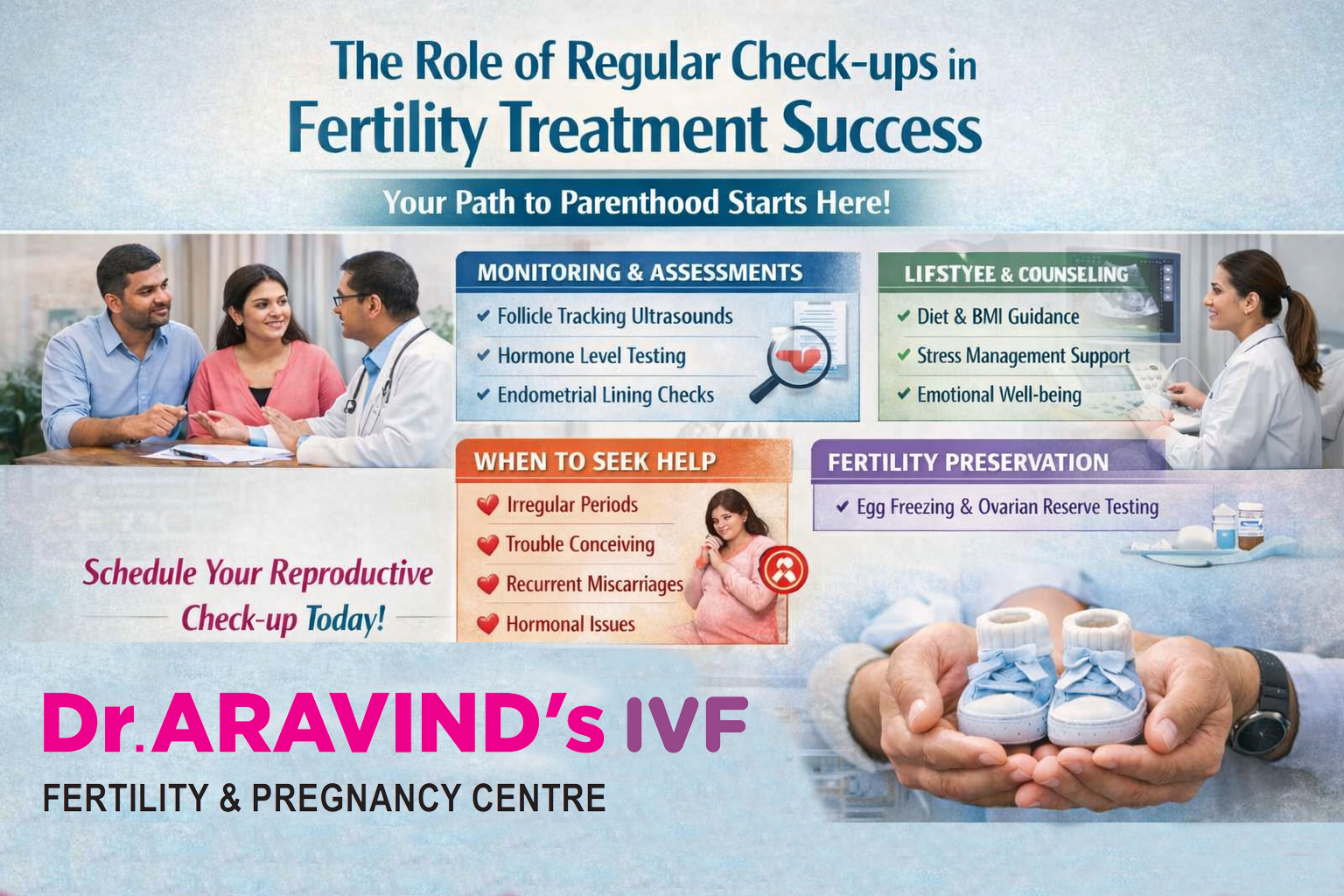
The Role of Regular Check-ups in Fertility Treatment Success
The successful outcomes of fertility treatments for couples depend on regular monitoring, which functions as an essential treatment component. The clinic at Dr. Aravind's IVF performs multiple assessments throughout its IVF and IUI treatment protocols, which include follicle tracking through ultrasounds, hormone level assessments and endometrial lining studies and real-time medication dosage adjustments based on patient response. Continuous monitoring of patients demonstrates that reproductive medicine requires personalized treatment because patients exhibit unique responses to their respective conditions.
One couple's successful treatment plan requires a complete transformation in order to serve another couple's needs. Doctors use regular check-ups during fertility treatment to create customised care plans which improve treatment success while decreasing the chances of Ovarian Hyperstimulation Syndrome (OHSS) complications. Couples who finish IVF or other assisted reproduction treatments should keep attending their scheduled follow-up appointments from the active treatment period. The process of post-treatment monitoring tracks early pregnancy development, which requires special monitoring during its initial stages.
People make lifestyle choices which include their food intake and body weight, their stress levels and sleep patterns, exercise routines and their alcohol use and smoking practices. The scheduled medical examination provides a chance to discuss these elements with a reproductive health expert who will offer personalized advice. The disruption of hormonal balance and ovulation occurs through both obesity and underweight conditions. The success rates of IVF treatment and the risks of pregnancy complications both increase when a person has a BMI that falls outside the healthy weight range.
The patients at Dr. Aravind's IVF centre in Tamil Nadu receive regular consultations, which provide them with counselling services to reach their ideal body mass index.
Chronic stress conditions lead to increased cortisol production, which causes a decline in reproductive hormone levels and disrupts normal menstrual cycles. The reproductive check-up process includes routine mental health evaluations, which help couples discover their emotional issues at an early stage. Dr. Aravind's IVF centre offers psychological support services, which function as a fundamental component of their treatment system.
The annual check-up serves as a beneficial health practice for all people, yet specific medical situations require immediate assessment. The following situations require urgent medical attention:
The best option for you and your partner requires you to contact a specialist at the earliest opportunity. The Dr. Aravind's IVF facility provides consultation services at various centres located throughout Tamil Nadu, Kerala and Karnataka.
Reproductive health matters at medical facilities because it requires clinical evaluation and emotional assessment. The journey to parenthood becomes overwhelming because it includes both easy pathways and difficult obstacles. The check-up process enables health professionals to test physical health indicators while creating a secure environment where couples can share their worries and aspirations.
The IVF clinic at Dr. Aravind begins its patient assessment process with an extensive consultation, which reviews all aspects of the patient, including their medical background, emotional state, daily habits and personal objectives. The person-centred treatment method protects patients from being treated as just another medical case. The team provides emotional support through their understanding of infertility, which guides them to create counselling sessions that continue through all treatment moments.
The investment of emotions into work activities creates value for medical purposes. Research about reproductive medicine shows that psychological health affects IVF results because patients who experience peace and receive support and have a complete understanding of their condition show better treatment compliance and strength during their medical journey.
One increasingly important reason for early reproductive health assessments exists because it enables women to protect their ability to have children in the future. The development of cryopreservation technology now enables the successful storage of both eggs and embryos because their frozen state maintains essential life functions. The new development enables people who wish to have children in the future but currently experience life challenges to establish their family when they feel prepared.
The quality and number of eggs that can be retrieved for freezing decline with age. Women in their late 20s and early 30s generate more high-quality eggs during each retrieval cycle compared to women in their late 30s. The AMH level and ovarian reserve assessment through a basic medical check-up will help you determine your current need for fertility preservation.
All people need to undergo regular reproductive health check-ups, which serve as essential care requirements for their reproductive health needs. The choice to monitor your health through routine check-ups helps you take charge of your health management system. The monitoring of reproductive health through regular check-ups provides multiple benefits of reproductive health screening before pregnancy that help detect hidden medical issues at their earliest stage, decide on fertility treatment, establish lifestyle modifications and protect reproductive capabilities.
Every month you delay a check-up creates another month during which an untreated medical issue can develop into a more severe condition. The good news is that with the right care and the right partner in health, the journey to reproductive wellness and parenthood becomes more accessible than people believe.
Start your journey today. Schedule a full reproductive health examination at Dr. Aravind's IVF Fertility & Pregnancy Centre. Your body will receive expert reproductive health care from our experienced team, which operates multiple centres throughout South India and helps people achieve their parenthood goals.
It is recommended to have a reproductive health check-up once a year. However, if you are trying to conceive or experiencing symptoms like irregular periods or hormonal issues, you should consult a specialist sooner.
A fertility check-up typically includes hormonal blood tests, AMH testing, ultrasound scans, semen analysis for men, and screening for infections or underlying conditions affecting fertility.
Couples should seek evaluation after one year of trying to conceive naturally. If the woman is over 35, consultation is recommended after six months.
Yes, many conditions like PCOS, endometriosis, or low sperm count may not show obvious symptoms, which is why regular screenings are essential.
Most tests like blood work and semen analysis are simple and painless. Some procedures like HSG may cause mild discomfort but are generally well tolerated.


