Seeing a low Anti-Müllerian Hormone (AMH) result on your fertility report can be unsettling, especially if you're planning to start a family. One of the first questions many women ask is, "Does this mean I can't get pregnant?"
The answer isn't as straightforward as a single test result. If you're unsure how to interpret your AMH result, read our good AMH level to get pregnant guide before continuing. While AMH provides valuable information about your ovarian reserve, it doesn't determine your ability to conceive on its own. Fertility is influenced by several factors, including age, egg quality, ovulation, uterine health, fallopian tubes, and your partner's sperm health.
This article explains what low AMH means, how it may affect pregnancy, and the options available if you're trying to conceive.
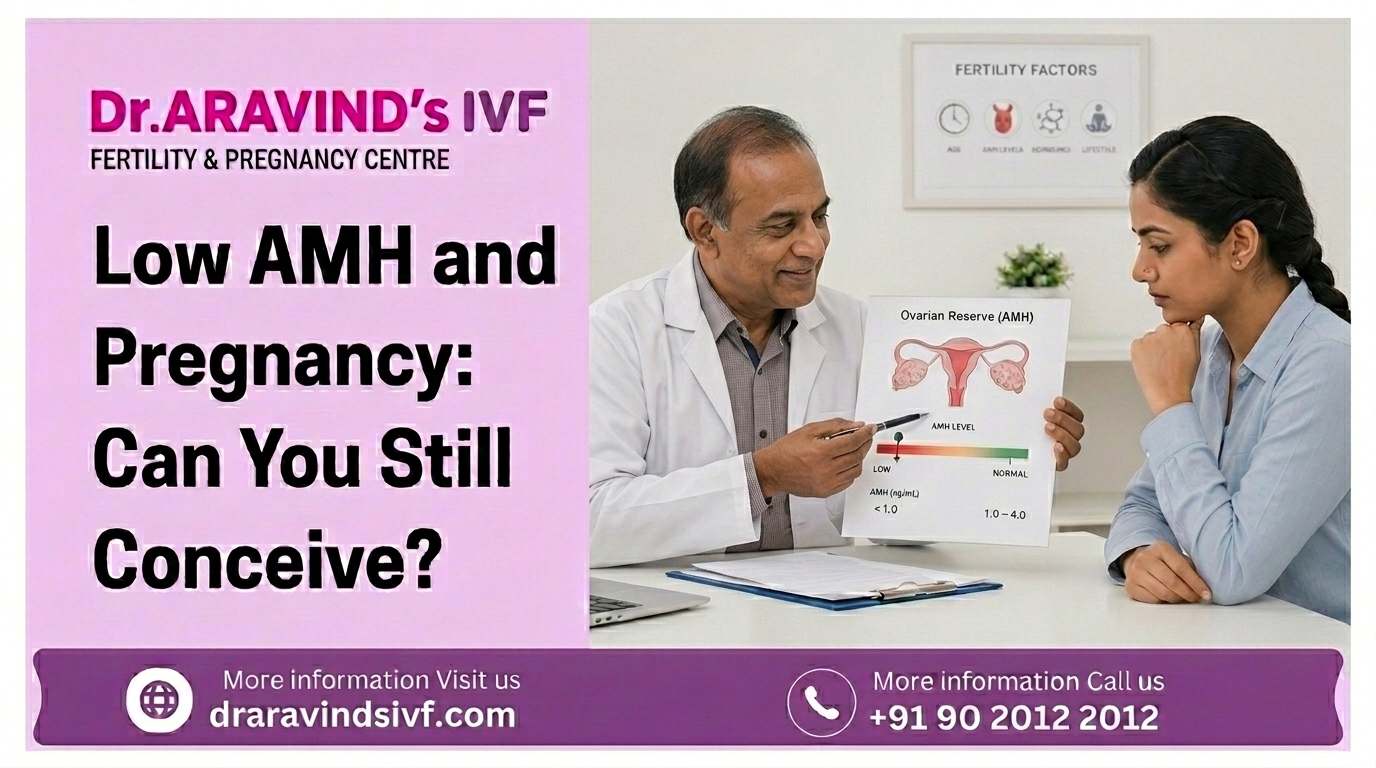
This comprehensive approach provides a much clearer understanding of fertility than relying on one blood test alone. Understanding fertility hormones alongside AMH can provide a more complete picture of your reproductive health.
A low AMH level often causes unnecessary worry because it's commonly misunderstood. AMH estimates the number of eggs remaining in the ovaries, but it does not measure the health or quality of those eggs.
For example, two women may have the same AMH level but very different fertility outcomes depending on their age and overall reproductive health.
When fertility specialists evaluate a patient, they look beyond AMH by considering:
This comprehensive approach provides a much clearer understanding of fertility than relying on one blood test alone.
Many women with low AMH conceive naturally, particularly if they are younger and ovulate regularly.
Your chances of natural conception depend on several factors working together rather than AMH alone.
Women with irregular periods and fertility concerns may benefit from an early fertility assessment.
Women under 35 often have better egg quality, even if their ovarian reserve is lower than expected. Lots of people are still able to get pregnant. Natural conception is still an option, for women and men. It is definitely possible for natural conception to happen.
When people get older the number of eggs they have and the quality of those eggs go down. This happens to everyone as they age. The egg quantity and egg quality naturally decline over time. If you're over 35 and have a low AMH result, your fertility specialist may recommend earlier evaluation and treatment to make the most of your reproductive timeline.
Conditions such as blocked fallopian tubes, endometriosis, irregular ovulation, or male factor infertility can have a greater impact on conception than AMH itself. Addressing these factors is often an important part of fertility care.
A low AMH result is usually the starting point—not the final diagnosis.
To understand your fertility potential, your doctor may recommend additional assessments such as:
A pelvic ultrasound helps estimate the number of developing follicles in your ovaries.
Blood tests, including FSH, LH, estradiol, thyroid hormones, and prolactin, provide more information about ovarian function and ovulation.
Tracking menstrual cycles or ovulation can confirm whether eggs are being released regularly.
Male fertility contributes to nearly half of infertility cases, making semen analysis an important part of the evaluation.
If male fertility is a concern, learning about male fertility testing and treatment can help couples understand the next steps.
Together, these tests help create a personalized treatment plan rather than relying on AMH alone.
Although no lifestyle change has been proven to significantly increase AMH levels, healthy habits can support reproductive health and prepare your body for pregnancy.
Consider focusing on:
Eating a balanced diet rich in vegetables, fruits, whole grains, healthy fats, and lean protein.
Maintaining a healthy body weight.
Staying physically active with moderate exercise.
Avoiding smoking and limiting alcohol.
Prioritizing adequate sleep.
Managing stress through relaxation techniques or mindfulness.
A balanced diet that includes fertility-friendly foods may also support overall reproductive health.
These habits contribute to overall well-being and may improve your readiness for conception or fertility treatment.
The most suitable treatment depends on your age, fertility goals, and overall reproductive health.
If you're younger, ovulating regularly, and have no additional fertility concerns, your doctor may recommend continuing to try naturally for a period of time.
For women with irregular ovulation, medications may help improve the timing of egg release.
IUI may be recommended in selected cases where sperm quality and fallopian tubes are normal.
IVF can be beneficial for women with low AMH, especially when time is an important factor. Although fewer eggs may be retrieved, successful pregnancies are still possible, particularly when egg quality remains good.
Your fertility specialist will recommend the approach that best matches your individual circumstances.
Before beginning treatment, your fertility specialist may recommend additional procedures, such as hysteroscopy before IVF, when clinically appropriate.
You don't need to wait until pregnancy becomes difficult before speaking with a specialist.
Consider scheduling a consultation if:
Early evaluation can help identify potential concerns and expand your treatment options.
A low AMH result is an important part of fertility assessment, but it should never be viewed in isolation.
While it reflects ovarian reserve, it does not measure egg quality or predict whether pregnancy is possible. Many women with low AMH conceive naturally, while others benefit from personalized fertility treatments based on their overall reproductive health.
The best way to understand your fertility potential is through a comprehensive evaluation that considers your medical history, age, hormone profile, and other fertility factors.
If you'd like to understand how AMH levels are interpreted, explore our complete guide to AMH levels for pregnancy.
Yes that is possible. Many women get pregnant naturally even when they have Anti-Müllerian Hormone levels especially if they are younger and their periods are regular.
Not always. Anti-Müllerian Hormone is a test that checks how eggs I have left but the quality of my eggs is more about how old I am.
No I do not have to do that. My doctor will look at my whole fertility situation. Then decide what treatment is best for me. Some women can get pregnant naturally or with treatments.
Eating well and taking care of myself is good, for my health but right now there is no way to make my Anti-Müllerian Hormone levels go up a lot.
My doctor might want me to take the test again or do an ultrasound and some other hormone tests so we can understand my fertility better.


