Medically reviewed by [Dr. Aravind Chander - Best IVF Specialist] | Published [10/03/2026]
An IVF preparation checklist helps you get organised before your first cycle: choose a registered clinic, complete the recommended tests, review medicines and supplements, understand the injection plan, look after your general health, arrange practical support and know when to call the clinic. Good preparation cannot guarantee success, but it helps you begin treatment informed and organised.
Preparing for IVF is more than buying injections and waiting for the first scan. It helps your team understand your health, plan a suitable protocol and reduce avoidable confusion during a busy treatment cycle.
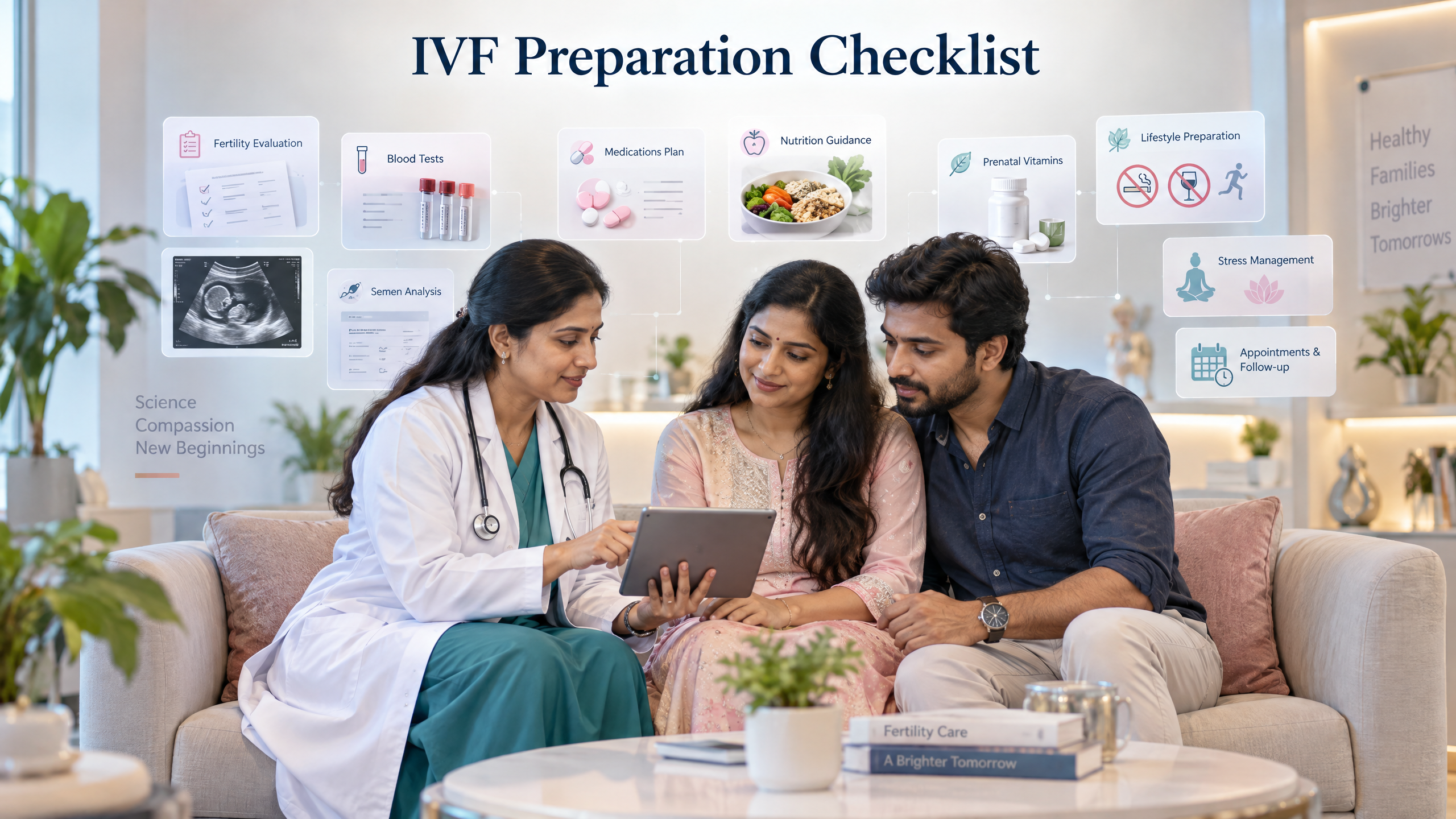
| Stage | Focus | What to do |
|---|---|---|
| At the first consultation | Understanding | Share your history, ask why IVF is advised, review the plan and the written cost estimate |
| After the consultation | Tests and records | Complete the recommended tests, organise reports, review medicines and supplements |
| Before stimulation starts | Medicines and logistics | Learn the injection plan, arrange storage, transport, time off and support |
| Final week | Final checks | Confirm dates, collect medicines, save the emergency number, rest |
| During the cycle | Following instructions | Attend scans and blood tests, take medicines as prescribed, report urgent symptoms |
Start with a consultation that considers both partners. Bring information about menstrual cycles, previous pregnancies, miscarriages, surgeries, chronic illnesses, allergies, medicines and earlier fertility treatment. If you are still deciding whether IVF suits you, read who is eligible for IVF first.
Ask the clinic to explain:
Write down the answers. Fertility treatment can be emotionally intense, and it is easy to forget details after an appointment.
Create a digital and paper folder with:
Do not assume an old report is still sufficient. Your doctor may repeat a test if the result is outdated or if it will change the treatment plan.Tell your doctor about prescription medicines, over-the-counter products, herbal preparations, vitamins and supplements. Some medicines may need adjustment before pregnancy, while others must be continued for your health.
Do not stop a prescribed medicine suddenly, and do not begin fertility supplements because of an online recommendation. Folic acid is commonly advised before pregnancy, but the right dose depends on your health and medical history. If you have diabetes, thyroid disease, high blood pressure, epilepsy, asthma or another long-term condition, ask how it should be managed before and during IVF.
Testing differs from person to person. Your clinic may recommend some combination of the following IVF tests before treatment:
| Test | Why it is done |
|---|---|
| Ovarian reserve (AMH, antral follicle count) | Estimates how the ovaries may respond to stimulation |
| Pelvic ultrasound | Checks the uterus and ovaries |
| Uterine or tubal evaluation, such as hysteroscopy | Looks for problems that may affect embryo transfer or implantation |
| Hormone and thyroid blood tests, when indicated | Identifies conditions that may need treatment first |
| Semen analysis | Assesses sperm count, motility and shape; helps decide whether ICSI is needed |
| Infectious-disease and routine pre-treatment screening | Supports safe treatment and laboratory handling |
Tell your doctor about prescription medicines, over-the-counter products, herbal preparations, vitamins and supplements. Some medicines may need adjustment before pregnancy, while others must be continued for your health.
Do not stop a prescribed medicine suddenly, and do not begin fertility supplements because of an online recommendation. Folic acid is commonly advised before pregnancy, but the right dose depends on your health and medical history. If you have diabetes, thyroid disease, high blood pressure, epilepsy, asthma or another long-term condition, ask how it should be managed before and during IVF.
Good IVF medicines preparation means you know exactly what you are taking and why. Before the cycle begins, make sure you know:
Ask whether the clinic provides an injection demonstration. It is better to practise with a nurse or trained team member than to rely on a video that may not match your prescription. Read more about IVF injections and side effects.
A balanced routine supports general health, but no food, detox drink, position or supplement can guarantee IVF success. Useful preparation usually includes:
If you have a significant weight concern, ask for personalised advice. Avoid crash diets before treatment, especially if they leave you weak or affect your menstrual cycle.
Want a preparation plan based on your history?
A fertility specialist can tell you which tests, medicines, and lifestyle changes matter for you, and which don't.
Book a fertility consultation →
Smoking can affect reproductive health and may reduce the chance of a healthy pregnancy. Avoid second-hand smoke where possible, and ask about a structured cessation programme if stopping is difficult. Alcohol advice should be individualised, particularly once pregnancy is possible. Discuss your usual intake honestly with the clinic rather than guessing what is safe from social-media posts.
The same preparation applies to the male partner. Sperm health can be affected by smoking, alcohol, some drugs, fever, heat exposure, medicines and health conditions. See male infertility and semen analysis.
IVF involves appointments, medicines, monitoring and procedures. Before stimulation, plan:
Do not drive yourself after sedation. Follow the clinic's instructions about work, exercise and travel, because recommendations can change during stimulation and after retrieval.
| Cost item | What to ask the clinic |
|---|---|
| Consultation, tests and scans | Which are included, and which may need repeating? |
| Medicines | Are they included or billed separately? |
| Egg retrieval and anaesthesia | Is anaesthesia included? |
| Laboratory work (fertilisation, ICSI, embryo culture) | Is ICSI used only when indicated? |
| Embryo freezing and storage | Are freezing and storage separate charges? |
| Embryo transfer | What if a fresh transfer is not possible? |
| Sperm retrieval, if needed | What extra costs could arise? |
| Policies | What is the cancellation or refund policy, and who answers billing questions? |
IVF can create a cycle of appointments, waiting, hope and uncertainty. Couples may experience anxiety, disagreements, sadness or exhaustion. These feelings are common and deserve support. Before treatment, decide:
"Just relax" is not a treatment plan. Stress is not a personal failure and does not mean an IVF cycle will fail.
Ask your clinic when to call. During or after stimulation, retrieval or transfer, seek prompt medical advice for symptoms such as severe or rapidly increasing abdominal pain, marked swelling, persistent vomiting, difficulty breathing, fainting, heavy bleeding, fever or a significant drop in urine output.
These symptoms can have different causes, including complications that need assessment. Do not wait for an online answer if you feel seriously unwell.
To prepare for your first IVF cycle, take this list to your appointment:
The best IVF preparation is informed, practical and personalised. Complete the recommended evaluation, understand your medicines, plan appointments and costs, take care of your general health, and ask how to reach your clinic when you need help.
Preparation cannot control every part of an IVF cycle, but it can help you enter treatment with clearer expectations and fewer avoidable surprises. For common questions, see our IVF treatment FAQ.
Ready to plan your first cycle?
Book a fertility consultation at Dr. Aravind's IVF Fertility & Pregnancy Centre to discuss a preparation plan based on your medical history.
Book a fertility consultation →
Medical disclaimer: This checklist is educational and cannot replace instructions from your fertility clinic. Do not start, stop or change medicines or supplements without medical advice.
Not usually, but the safe level depends on your health and treatment stage. Gentle or moderate activity may be appropriate before treatment. Ask about changes once the ovaries enlarge during stimulation.
There is no universal preparation period. Some people begin after initial tests, while others need time to manage a medical condition, change medicines, improve health, arrange fertility preservation or complete additional evaluation.
Many people continue working, but scans, blood tests, egg retrieval and recovery may require schedule flexibility. Ask the clinic how often you may need to attend.
Yes. The male partner should review medicines, smoking, alcohol, recent fever, heat exposure and semen-collection instructions. Follow the clinic's advice about abstinence before the semen sample.


