More patients who undergo travelling during IVF treatment require assistance with trip planning than most people realize. The question about travel safety arises when you need to travel for unavoidable work commitments or essential family events, or when your long stimulation cycle requires you to remain active. The question arises whether I can travel, and if so, I need to know how to handle my injection schedule.
With proper preparation and fertility specialist guidance, you can travel during your IVF cycle. The essential requirements include planning your trip schedule, understanding how to manage IVF medications on a trip, identifying your carried medications and maintaining direct contact with your medical team. The specialists at Dr. Aravind's IVF Fertility & Pregnancy Centre, which represents one of South India's most reputed fertility centres through their 70000 completed IVF procedures and 75 percent successful live birth rate, assist patients who require remote treatment management during specific treatment intervals.
This guide provides complete instructions for everything you need to learn, which starts with proper injection packing and continues through managing time zone adjustments and locating suitable storage facilities while travelling.
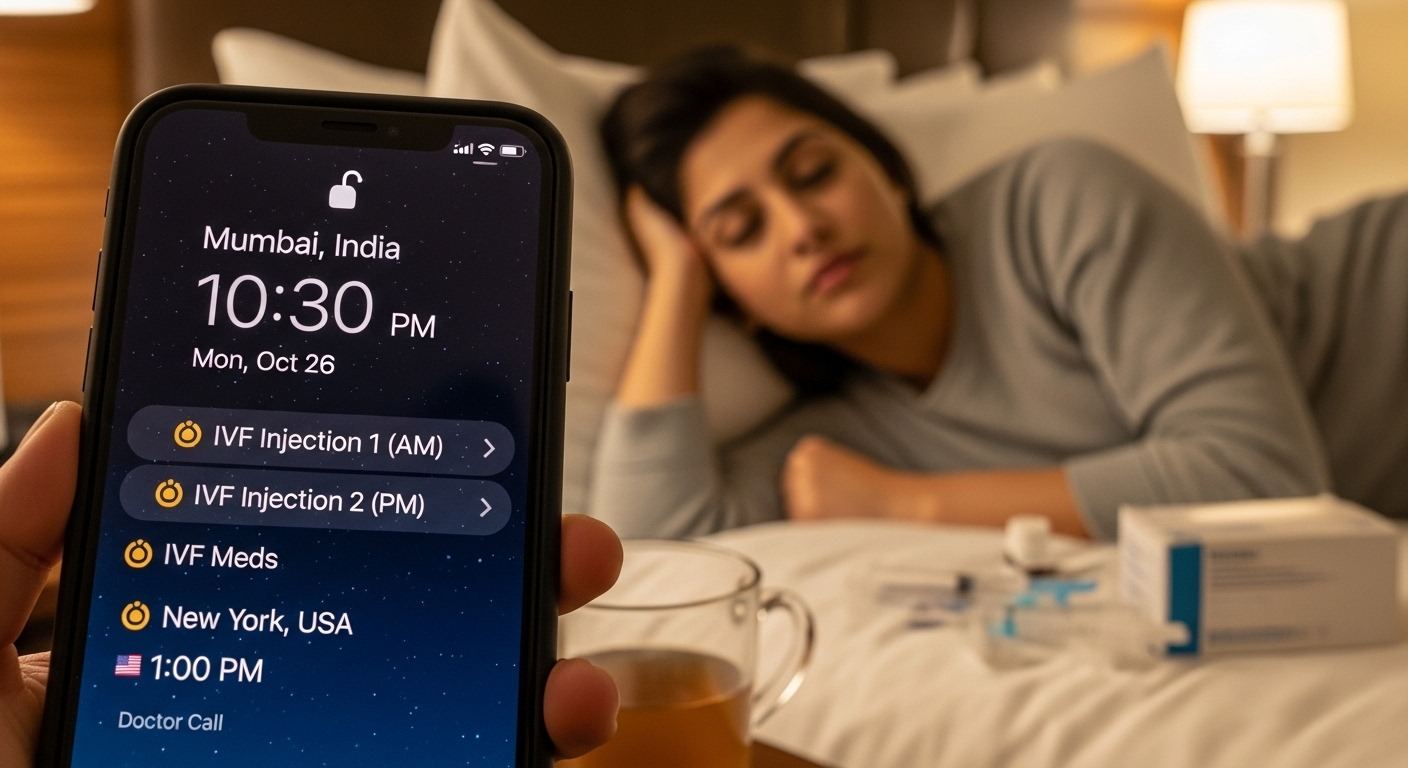
You need to consult your fertility doctor about your treatment progress before you book your flight. IVF requires a series of medication stages that must be timed precisely with monitoring visits and medical treatments. This is especially important when planning IVF injections while travelling.
The first stage of ovarian stimulation allows greater freedom for patients who attend clinics that can transmit their monitoring results to nearby medical centres. Patients need to stay close to their clinic because the trigger shot period and egg retrieval date approach. The period before and after both egg retrieval and embryo transfer acts as a travel restriction time. Understanding IVF treatment tips in India can help patients plan better.
Ask your doctor specifically:
The answers to these questions will create a path that leads to a relaxing travel experience. Multiple fertility clinics throughout Chennai, Bangalore and Kerala work with Dr. Aravind's IVF centres to ensure that patients keep their vital monitoring appointments.
People must handle IVF medication carefully because it requires special storage and treatment, especially when considering IVF injection storage while travelling. The entire panel of IVF injectable medications needs specific temperature control and precise dosage measurement according to the established treatment schedule. The medication loses its effectiveness after less than two hours of improper storage.
The doctor needs to provide a written prescription that contains all your medication details, which include their dosages and the contact information of your treating clinic. This is essential if you are questioned at airport security or customs.
Your IVF travel kit should include:
All prescribed injectable medications need to be clearly labelled.
You should never put your medications in checked baggage because it creates unnecessary risks. Temperature-sensitive biological materials will suffer damage because the cargo hold of an aircraft experiences extreme temperature changes. Your cabin bag needs to contain all injections, which must be stored in separate containers that display proper identification for security checks.
The storage requirements for most gonadotropin medications used during IVF stimulation require storage between 2°C and 8°C (36°F to 46°F) for unopened packages, while users can store medications at room temperature below 25°C for a limited time after they start using the products. The duration of this window depends on the specific medication, so users must check their medication insert or consult their pharmacist for accurate storage guidelines.
Online and speciality pharmacies offer medical cooling wallets, which provide storage for insulin and fertility medications. These are especially helpful for patients managing IVF injections while travelling over long distances. These wallets use evaporative cooling technology and can maintain safe temperatures for up to 45 hours without electricity — ideal for long-haul flights and transit periods.
At your destination:
People should not use their medication until they consult with their fertility nurse or doctor about their medication storage after potential heat or freezing conditions. The compromised state of your medication will determine your stimulation response, which makes it mandatory to obtain a replacement instead of executing the treatment cycle with the affected solution.
Patients experience unnecessary anxiety about bringing syringes and injectable drugs to airport security checkpoints. Security agencies worldwide, including India's Bureau of Civil Aviation Security, permit passengers to bring essential medical items and their associated injection equipment onboard aeroplanes when they present valid documentation.
You should inform security personnel about your medications before the checkpoint because this will help officers find your items. This procedure shows your willingness to cooperate, which leads to a shorter security check process that uses fewer resources. You should store your medical documents, including your doctor's letter and prescriptions and your clinic documentation in your cabin bag, where they remain accessible for use at any time.
Travellers to international destinations must examine the specific import regulations that apply to their medications within their destination country. Certain countries require special entry documentation for some hormonal medications. Your clinic's international patient coordination team can often help you prepare the right paperwork well in advance.
You should maintain all medications inside their original containers, which display the pharmacy's original labelling. The practice of removing labels to save space will lead to customs difficulties, which you should avoid during your challenging IVF cycle.
The success of IVF procedures depends on precise control of timing. Your body needs special timings for taking stimulation medications and trigger shots, which reflect your ovarian development activities. Your body needs special timings for taking stimulation medications and trigger shots, which reflect your ovarian development activities. Your body needs special timings for taking stimulation medications and trigger shots, which reflect your ovarian development activities. The process of maintaining this specific timing becomes difficult when you travel through different time zones.
The first rule is simple: do not adjust your injection schedule on your own. The fertility team requires vacation information to create a medication schedule that matches your new time zone. Most protocols permit a one to two-hour dose alteration, but your doctor needs to confirm this rule. The doctor needs to confirm this rule because it requires specific verification.
Travelling IVF patients can use these practical strategies, which have proven effective for most patients.
Jet lag causes real fatigue problems. Your exhaustion causes you to mix up AM and PM times on your medication schedule or to completely miss a dose. The use of a handwritten daily checklist helps to prepare for the trip because it provides an important organisational tool.
Most IVF patients achieve high levels of comfort with self-administered subcutaneous injections after about three days of practice. Patients need to develop additional hygiene and privacy procedures because they must inject themselves in hotel rooms, airport lounges and at their relatives' homes.
Your injection procedure needs to take place in a clean and private area. A hotel bathroom with a clean surface is ideal. You must wash your hands completely before you touch any medication or equipment, and you should use a new alcohol swab to clean the injection site at every instance.
You should avoid rushing through the entire procedure because you feel self-conscious or need to complete it quickly. The process of injecting yourself becomes more dangerous because hurrying the procedure increases the chances of making incorrect dosages and dirtying the injection area. A partner who travels with you can protect you from mistakes by reading the dosage instructions out loud while you prepare the injection.
You must throw away all used needles at once by using your portable sharps container. The hotel bin and plastic bag should never contain used needles. Countries establish regulations to manage sharps disposal because responsible disposal methods keep hotel staff members safe from needlestick injuries.
You should contact your fertility clinic without delay for any unexpected pain or unusual bruising or for any symptoms of ovarian hyperstimulation syndrome (OHSS), which include bloating and nausea, shortness of breath, and severe pelvic pain. Your specialist can evaluate your condition through telehealth and remote consultation services, which work even when you are located hundreds of kilometres away from them.
Dr. Aravind's IVF Fertility and Pregnancy Centre provides continuous patient assistance while its staff helps patients decide whether their symptoms require immediate medical attention or if they can wait until their scheduled return. Your emergency contact from the clinic should be saved in your phone with high visibility for quick access at all times.
Travelling with fertility medications becomes straightforward when people make proper equipment arrangements. Managing IVF emotional support during treatment is just as important as handling medications. Patients tend to underestimate the emotional component of their experience. The emotional side of IVF requires intense dedication from patients because they must leave their home environment and establish daily activities and close friends behind, which creates additional stress that needs to be recognised.
You need to evaluate your travel plans to determine their actual necessity. The best option is to postpone or change your schedule if you have that ability. The following methods will help you maintain your mental strength during unavoidable travel times:
People who require assistance should understand that their need for help does not indicate any personal shortcomings. The human mind requires assistance to develop and grow. People achieve their best results during IVF when they combine their medical expertise with their true emotional experiences.
The checklist should be used during the days before your trip to ensure that all vital tasks are completed.
The departure process becomes simpler when you complete each checklist item because it helps you control a difficult situation. The aim requires people to achieve complete stress control through their dangerous work activities.
The process of travelling for IVF does not pose any safety risks. The process requires additional planning before proceeding with any travel arrangements. Your treatment schedule will continue uninterrupted when you properly understand your medication schedule and store your injections according to your requirements while maintaining proper dosing times during different time zones and keeping continuous contact with your fertility team.
The clinical team at Dr. Aravind's IVF Fertility & Pregnancy Centre, recognised as the best IVF clinic in Chennai, helps patients navigate real-life situations that occur in their day-to-day lives. We provide patient support throughout their parenthood journey from our multiple centres located in Chennai, Bangalore and Kerala, which operate under a patient-first approach developed through three decades of experience and more than 70000 treatment cycles. Our facility provides support for you throughout your parenthood journey, from your time in our waiting area to your time in a Mumbai hotel room where you handle your medications.
Patients who wish to travel for IVF during their cycle period must first consult their doctor before making any travel arrangements. A 15-minute conversation with your specialist will save you weeks of worry while safeguarding your treatment process. Your dream of parenthood deserves that extra care.
Missing a dose can affect your cycle. Contact your fertility doctor immediately for guidance instead of adjusting the schedule yourself.
Do not change timing on your own. Your doctor will adjust your injection schedule based on your travel plans. Use alarms and dual time-zone tracking to stay consistent.
Yes, airport security allows medical injections and supplies with valid documentation. Always keep medications in the original packaging and inform security staff in advance.
Choose a clean, private place like a hotel room. Maintain proper hygiene by washing hands and using alcohol swabs before administering injections.
If you experience symptoms like severe pain, bloating, or nausea, contact your fertility clinic immediately. Many clinics offer remote consultation support.


