For couples who want to have children through IVF, the process creates their first essential emotional experience. Every process step throughout the whole procedure has been developed with exact planning, and every step forward holds the burden of optimism, strength, and deep parental aspirations. At Dr. Aravind's IVF Fertility & Pregnancy Centre, which operates as one of India's leading fertility chains, we conduct more than 70,000 IVF procedures, which result in a 75% success rate for live births. Our centre treats preparation work as an equal treatment component to which we dedicate our resources. This is why many specialists recommend hysteroscopy before IVF as an important part of the uterine evaluation before IVF treatment.
Fertility specialists recommend a hysteroscopy as the primary preparatory step for patients who plan to start their IVF program. Many patients hear this word for the first time during their initial consultation and naturally wonder: "Why do I need another procedure before IVF even starts?" The question maintains its validity because the treatment process requires particular details which create major impacts on treatment success. Many couples also ask why hysteroscopy is done before IVF and whether it can improve implantation chances. The entire process of your fertility treatment will be impacted by this question because it requires both rights and privileges to be answered.
The article explains the definition of hysteroscopy and its necessity for IVF and its ability to identify medical conditions which make successful pregnancy achievement more difficult. Hysteroscopy exists as a crucial factor which decides the outcome for patients who are new to IVF treatment and for those who have experienced unsuccessful cycles.
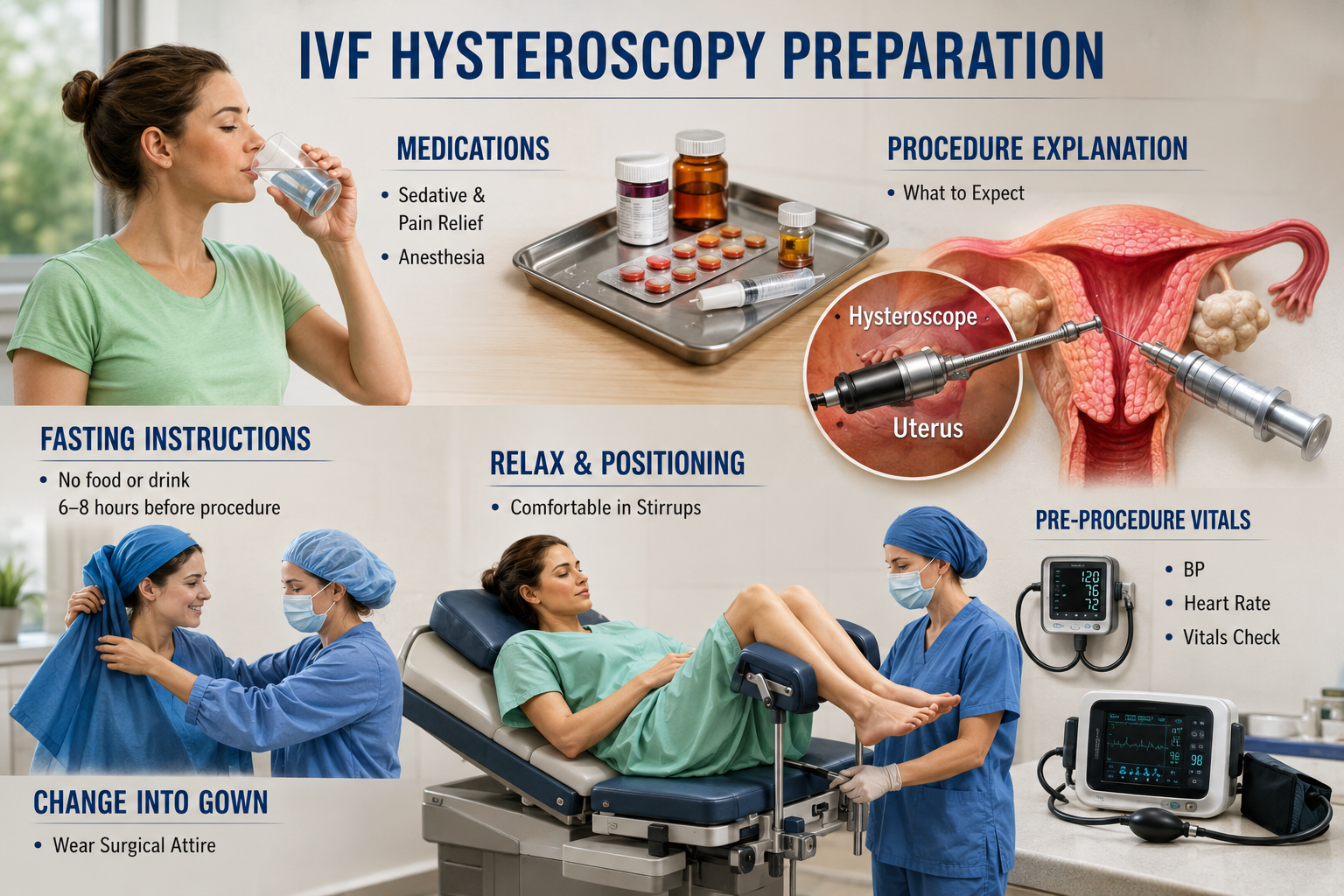
Hysteroscopy serves as both a diagnostic tool and a surgical procedure, which enables doctors to examine the internal structure of the uterus using a technique that requires minimal surgical intervention. The procedure involves the introduction of a hysteroscope, which consists of a flexible, slender tube that houses a miniature camera and lighting device through the vaginal and cervical passages to access the inner uterine space. The technology enables the fertility specialist to see the endometrial tissue and uterine walls and fallopian tube entrance points in real time. This detailed IVF uterine check before embryo transfer helps doctors identify hidden abnormalities that may affect implantation.
There are two main types of hysteroscopy relevant to IVF patients:
The procedure needs outpatient care, which requires 15 to 45 minutes for treatment because doctors need to perform specific medical adjustments, yet most women can return home after the procedure on the same day. The medical team will choose between local and general anaesthesia based on two factors, which include the case's complexity and the patient's requirements. At Dr. Aravind's IVF specialists perform every hysteroscopy according to the highest standards of safety and patient comfort, which they execute with precise technical skill. Most women also experience a smooth hysteroscopy procedure recovery with only mild discomfort for a short period.
IVF consists of three basic procedures, which start with ovarian stimulation to generate eggs and proceed to laboratory-based fertilization of those eggs and end with embryo transfer to the uterus. The scientific and technological precision involved in the first two steps is extraordinary. All these efforts reach one single goal, which requires the embryo to take root in the uterine lining. The uterus serves as the permanent residence where your embryo must establish itself and develop. This is why hysteroscopy for IVF success has become increasingly important in fertility treatment planning.
The uterus serves as the necessary residence for embryo development because it provides the required space for embryonic growth. The best embryos in their healthiest condition cannot achieve successful implantation when the uterus lacks proper environmental conditions. Research consistently shows that 15% to 50% of women undergoing fertility investigations present uterine cavity abnormalities, which occur at a rate higher than previously recognized. Many of these abnormalities exist without causing any noticeable symptoms to those affected.
Hysteroscopy has become an essential procedure that IVF programs now require as their standard practice. Hysteroscopy provides better visual assessment capabilities than standard imaging methods, which use transvaginal ultrasound and Saline Infusion Sonography (SIS) as their primary tools. The successful embryo transfer rates for women who had experienced multiple failed IVF attempts improved when they underwent pre-IVF hysteroscopy, according to research studies that top reproductive medicine journals published. This explains why many patients ask, do I need a hysteroscopy before IVF, especially after failed implantation cycles.
Doctors use hysteroscopy to identify various concealed uterine conditions that other diagnostic techniques fail to identify. Here is a closer look at the most common findings:
Endometrial polyps are small, benign growths that develop from the lining of the uterus. The existence of even one tiny polyp creates an obstacle that prevents an embryo from reaching the uterine wall during the attachment process. Studies on endometrial polyp IVF failure show that untreated polyps may reduce implantation rates. The research shows that women who undergo operative hysteroscopy to remove polyps before their embryo transfer will experience double the pregnancy success rate. Hysteroscopy becomes essential because routine ultrasound fails to detect polyps, which are commonly present.
Fibroids are non-cancerous muscular growths that develop inside the uterus. The different fibroid types encompass submucosal fibroids, which extend into the uterine cavity because these fibroids present the highest probability of hindering IVF outcomes. The process creates a cavity distortion that blocks blood flow to the endometrium and establishes a physical obstruction that prevents embryo implantation. Hysteroscopy allows doctors to identify all fibroids with complete accuracy, but they can eliminate most of these fibroids during their initial medical visit.
The medical condition known as intrauterine adhesions occurs when scar tissue develops as synechiae, which create bands of tissue that grow between different parts of the uterine cavity. The adhesions create a blockage that prevents the uterus from opening up completely, which leads to an environment that makes it impossible for embryos to implant and for early pregnancy development to proceed. The gold-standard method for diagnosing and treating this condition uses hysteroscopy, which enables doctors to remove adhesions that obstruct normal uterine structure restoration.
The uterine septum emerges as the most common uterine abnormality because it leads to increased miscarriage rates and decreased success rates for embryo implantation. The women who have a uterine septum condition experience no signs of the disorder, which remains unknown to them until doctors conduct a hysteroscopy test. The surgical procedure known as hysteroscopic metroplasty establishes an efficient method to correct uterine septum defects, which results in major reproductive success improvements.
Chronic endometritis describes a lasting infection that maintains continuous low-intensity inflammation throughout the uterine lining. The chronic form of the condition shows no more than two symptoms, while the acute form displays multiple symptoms. The condition has been established as a factor that contributes to both IVF treatment failures and repeated pregnancy loss. Through hysteroscopy, doctors obtain direct access to endometrial tissue, which they use to perform an endometrial biopsy and microbiological testing. The doctors can begin embryo transfer after they diagnose chronic endometritis and complete treatment with antibiotics.
The evidence supporting hysteroscopy as an IVF preparatory step shows both substantial backing and increasing weight. A landmark meta-analysis evaluating data from over 4,000 IVF cycles found that women who underwent office hysteroscopy before their first IVF attempt had a statistically significant improvement in clinical pregnancy rates compared to those who did not. The improvement was even more pronounced in women with a history of one or more failed embryo transfers. These findings contribute to the growing discussion about hysteroscopy IVF success rate India and worldwide fertility outcomes.
The clinical team at Dr. Aravind's IVF centre demonstrates research-backed outcomes that maintain constant research-based results. When doctors fix abnormalities found during hysteroscopy before patients undergo embryo transfer, patients experience various advantages, which include multiple specific benefits.
Hysteroscopy enables doctors to convert IVF into a dual process that both treats infertility and helps patients prepare for their future role as parents.
Hysteroscopy proves useful to the majority of IVF patients, but certain groups need urgent medical attention because of the establishment of clinical evidence and the assessment of risk factors. Dr. Aravind's IVF fertility specialist will assess your specific situation, yet the following elements usually show strong support for hysteroscopy as a necessary procedure before IVF treatment begins:
Any person who meets these criteria should speak with their fertility consultant about hysteroscopy because it represents their most important choice before their IVF treatment begins.
Understanding hysteroscopy procedures enables patients to experience decreased stress levels while gaining a superior ability to prepare for their upcoming procedures. The procedures at Dr. Aravind's IVF centre include several stages which patients should expect to encounter according to their typical routine.
Your specialist will choose testing times that match your menstrual cycle needs according to your personal situation. The doctors will require you to fast from food and drinks for multiple hours before your surgery when they plan to use general anaesthesia. You need to provide your complete medical history, together with details of your current medications and all your medical questions, for the pre-procedure consultation.
You need to lie down in a position that resembles the common practice of gynecological examinations. The hysteroscope enters the body through the vaginal and cervical openings without the need for surgical cuts or stitches. The sterile fluid or gas system expands the uterine cavity to enable the camera to produce a clear image, which displays on the monitor. The specialist will conduct an extensive examination of the complete uterine cavity while using the hysteroscope to perform any necessary corrective procedures through which small instruments can be operated.
The procedure results in common patient experiences, which include mild cramping and light spotting that persist for one to two days. Most women need 24 to 48 hours before they feel prepared to start their regular daily tasks, making the hysteroscopy procedure recovery relatively quick and manageable. Your specialist will share the results with you right after the procedure and will guide you through the next steps of your IVF program.
Dr. Aravind's IVF Fertility & Pregnancy Centre uses hysteroscopy as an essential clinical tool, which enables us to implement our customized IVF treatment plans. The medical team assesses each patient's uterine health with the same level of thoroughness as they examine their ovarian reserve, hormonal profile, and embryo quality. Patients searching for the best IVF centre hysteroscopy Chennai often choose our centre because of our expertise and advanced fertility care.
Our fertility specialists possess extensive expertise in both diagnostic and operative hysteroscopy, which enables them to detect hidden abnormalities that others would overlook while treating these conditions during the same procedure. We operate advanced hysteroscopy equipment, which delivers high-definition live imaging to examine all aspects of the uterine cavity. Patients also frequently inquire about hysteroscopy cost Chennai fertility clinic options while seeking affordable and advanced fertility treatment.
Our organization has delivered safe birth services to more than 20000 infants during our 30 years of operation, which has taught us that each IVF cycle brings forth a distinct narrative of optimism. The process to advance every embryo development begins with us through the implementation of hysteroscopy as our primary method to establish optimal growth conditions.
The process that leads to parenthood through IVF requires both embryology and reproductive science to be performed at their highest level, while scientists need to understand how to prepare human bodies with equal importance as they prepare their scientific facilities. Hysteroscopy serves as a vital instrument that fertility doctors use to confirm that their patients' uteruses can receive embryos when the proper moment arrives.
Hysteroscopy establishes ideal implantation conditions through its ability to identify and fix conditions that standard imaging techniques fail to detect, including endometrial polyps and fibroids, intrauterine adhesions, and chronic inflammation, which results in improved IVF success rates. The recommendation to perform hysteroscopy before your IVF cycle demonstrates that your care team uses all available resources to guarantee your safety according to their medical expertise.
We recommend that you speak with your specialist about uterine evaluation because it is an important step in your fertility journey which you should discuss with your specialist. Dr. Aravind's IVF Fertility & Pregnancy Centre provides patients with complete, empathetic, and modern medical treatment, which represents the highest standards of care. The achievement of parenthood dreams requires every single aspect to receive complete attention.
Yes. Studies show that hysteroscopy can improve IVF success rates by detecting and treating uterine conditions that interfere with embryo implantation and early pregnancy development.
Most women experience only mild discomfort or cramping during and after the procedure. Depending on the type of hysteroscopy, local or general anaesthesia may be used for comfort.
A hysteroscopy procedure usually takes between 15 to 45 minutes depending on whether it is diagnostic or operative.
Yes. Women with repeated IVF failures are often advised to undergo hysteroscopy because it can identify treatable uterine abnormalities that may have been missed in previous scans.
Recovery is usually quick. Most women return to normal activities within 24 to 48 hours after the procedure.


