Removing a fibroid before IVF is usually advised when it distorts the womb cavity, causes heavy bleeding or anaemia, blocks safe egg collection or embryo transfer, looks unusual on imaging, or creates a clear anatomical problem for pregnancy. It is not automatically needed for every fibroid. Surgery carries risks, such as bleeding, scarring and possible effects on ovarian reserve or the womb wall, and it delays treatment, so the benefit has to be weighed against both. Where the fibroid sits matters more than how big it is.
Key points
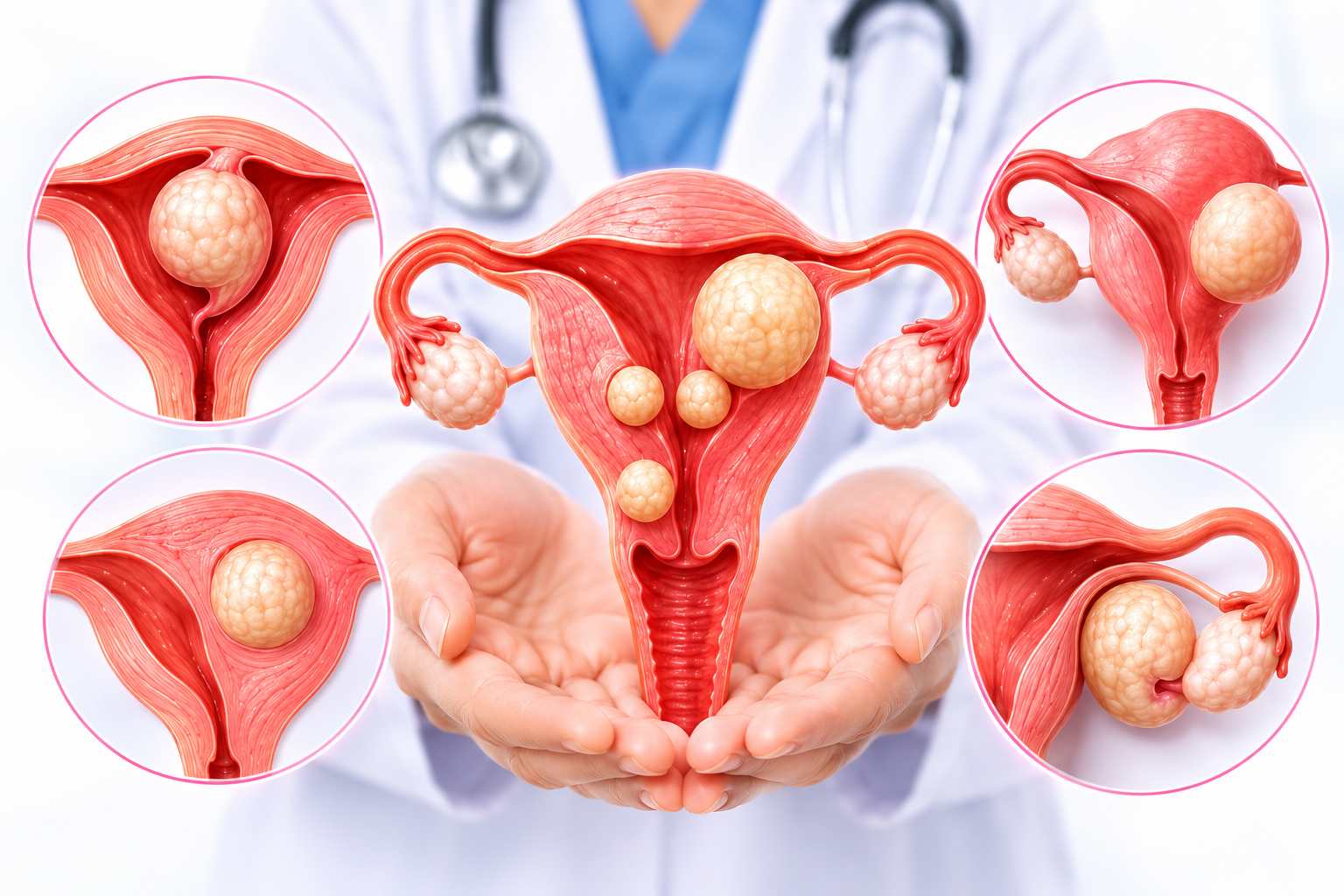
A myomectomy is surgery to remove fibroids while keeping the womb. The surgical approach depends on the fibroid's size, number, and location.
| Method | How it is done | Often used for |
|---|---|---|
| Hysteroscopic myomectomy | Through the vagina and cervix into the womb cavity, without an abdominal cut. | Selected fibroids that extend into the womb cavity. |
| Laparoscopic or robotic myomectomy | Through small cuts in the abdomen using a camera and surgical instruments. | Selected fibroids in the muscle wall or on the outer surface of the womb. |
| Open myomectomy | Through a larger abdominal incision. | Selected large, multiple or complex fibroids. |
Recovery time and the recommended wait before embryo transfer vary depending on the surgical method, the depth and extent of the uterine incision, and how well the womb heals. Your surgeon and fertility specialist will advise you on the appropriate timeline.
Submucosal or cavity-distorting fibroids. These are the most likely to affect implantation and are commonly considered for removal before transfer, especially if you have symptoms or infertility. Hysteroscopic removal may suit selected FIGO type 0, 1 or 2 fibroids, depending on size, depth and the surgeon's skill.
Intramural fibroids. If the cavity looks normal, the benefit of surgery before IVF is less clear. Some studies link larger intramural fibroids with lower IVF results, while the evidence that myomectomy improves live birth is mixed. Factors in the discussion include size, number, position, rapid growth, symptoms, earlier IVF failure, closeness to the cavity, your age and ovarian reserve. No universal size cut-off applies to everyone.
Subserosal fibroids. These rarely interfere with implantation directly. Removal may be considered for severe pressure symptoms, rapid or unclear growth, very large size or another anatomical reason, but routine surgery just to help IVF isn't generally assumed.
A specialist may recommend, or strongly consider, myomectomy when:
"Necessary" is a strong word. Surgery may be strongly advised for one woman and unnecessary for another with the same measurement but a different position.
| Your fibroid | What doctors often consider |
|---|---|
| Pushes into the cavity (submucosal) | Removal before embryo transfer is commonly considered. |
| Inside the muscle, cavity normal | Often monitored; surgery is decided on an individual basis. |
| On the outer surface, no symptoms | Usually left untreated. |
| Blocks an ovary or the cervix | Treatment may be discussed to make egg collection or embryo transfer safer. |
| Heavy bleeding or anaemia | Bleeding needs treatment; surgery may be helpful in selected cases. |
| Unusual scan appearance | Further assessment is needed before making a treatment decision. |
Important: This table is for general understanding, not a treatment plan. Only your fertility specialist can recommend whether surgery is appropriate after reviewing your scans, symptoms and fertility history.
When the report doesn't clearly say whether a fibroid reaches into the cavity, a cavity check matters. See hysteroscopy before IVF and diagnostic hystero-laparoscopy.
It may improve the womb environment, remove a physical barrier to implantation, reduce heavy bleeding and let the doctor see the cavity clearly before transfer. Be realistic, though. Myomectomy does not correct embryo chromosome problems, sperm factors, low ovarian reserve or every cause of implantation failure.
Ask your surgeon how the operation could affect a future pregnancy, and whether a planned caesarean or special delivery plan may be needed.
It depends on the route, how deep the womb incision went, the number and size of fibroids, how you heal, any complications, and your surgeon's judgement. After a hysteroscopic procedure, the gap can differ from the gap after a deep intramural or open operation.
Some women create and freeze embryos before surgery, especially when age or ovarian reserve makes delay costly. Others need the womb to heal first. Don't rely on a timeline you found online. Get written clearance from both the surgeon and the fertility specialist.
Sometimes. IVF or embryo freezing first may be considered when:
If the fibroid blocks egg collection or clearly affects the cavity, surgery may need to come first. For growth and monitoring during a cycle, see can fibroids grow during IVF.
Hysteroscopic myomectomy removes selected fibroids that extend into the cavity through the cervix, with no abdominal cut, so it may suit some submucosal fibroids. Laparoscopic or open surgery is used for fibroids in the muscle or on the outer surface, which may involve a womb incision and a longer recovery. The right method depends on the fibroid's type, size, depth, and number, the surgeon's experience, and your fertility goals.
Myomectomy removes existing fibroids but can't promise that new ones will never grow. Recurrence depends on age, the number of fibroids, genetics and other factors. Your fertility team can plan the timing of transfer after surgery and monitor the womb during pregnancy. Related: adenomyosis and IVF and endometriosis and IVF, which can mimic or coexist with fibroids.
[Reviewer/doctor to write 3 to 4 honest sentences: for example, how the fertility team and gynaecological surgeon decide together whether hysteroscopic removal is performed in-house, and what postoperative clearance patients receive. No success figures or unprovable claims. Delete this note.]
Removing a fibroid before IVF is mostly considered when it distorts the cavity, causes significant symptoms, blocks egg collection or transfer, or creates a specific pregnancy concern. Surgery is not automatically needed for every intramural or subserosal fibroid. The safest decision balances cavity anatomy, symptoms, age, ovarian reserve, surgical risk and timing.
For personal fibroid and fertility guidance, contact Dr. Aravind's IVF Fertility & Pregnancy Centre.
Discuss your fibroid assessment, treatment options and fertility timeline with our team.
Book for ConsultationDr. Aravind's IVF Fertility & Pregnancy Centre
Next read: Can fibroids grow during IVF? · Repeated IVF failure · Endometrial preparation for FET
Whether to remove a fibroid before IVF depends on its position, effect on the cavity, symptoms, age, ovarian reserve, surgical risk and your fertility plan. A size rule cannot replace specialist assessment. This article is for education only.
No. Cavity-distorting fibroids are more likely to be treated before transfer. Many small fibroids that don't distort the cavity can be monitored without surgery.
There's no universal cut-off. Position, cavity distortion, symptoms, number, ovarian access, age and ovarian reserve all matter, and size alone shouldn't decide surgery.
Possibly, if it distorts the cavity or causes bleeding. A small fibroid in the cavity can matter more than a larger one outside it. Scans and a specialist's assessment are needed.
Some studies link larger or multiple intramural fibroids with lower IVF outcomes, but whether surgery improves live birth is less certain when the cavity is normal. The decision is individual.
Many women do. Timing depends on healing, how much of the womb wall was involved, ovarian reserve and your surgeon's clearance.
No. Myomectomy treats the womb, not the eggs, and delaying IVF for surgery can matter when age or ovarian reserve is a concern.


