Adenomyosis is when womb-lining-type tissue grows into the muscle wall of the uterus. It can cause heavy or painful periods and, in some women, make it harder to conceive or to keep an early pregnancy. IVF can still work. A skilled vaginal ultrasound, and sometimes an MRI, confirms it, and some clinics use hormonal suppression or a freeze-all-then-transfer plan before embryo transfer, although no pretreatment is right for everyone. Most women with adenomyosis who get pregnant have healthy babies, though some need closer obstetric monitoring.
Key points
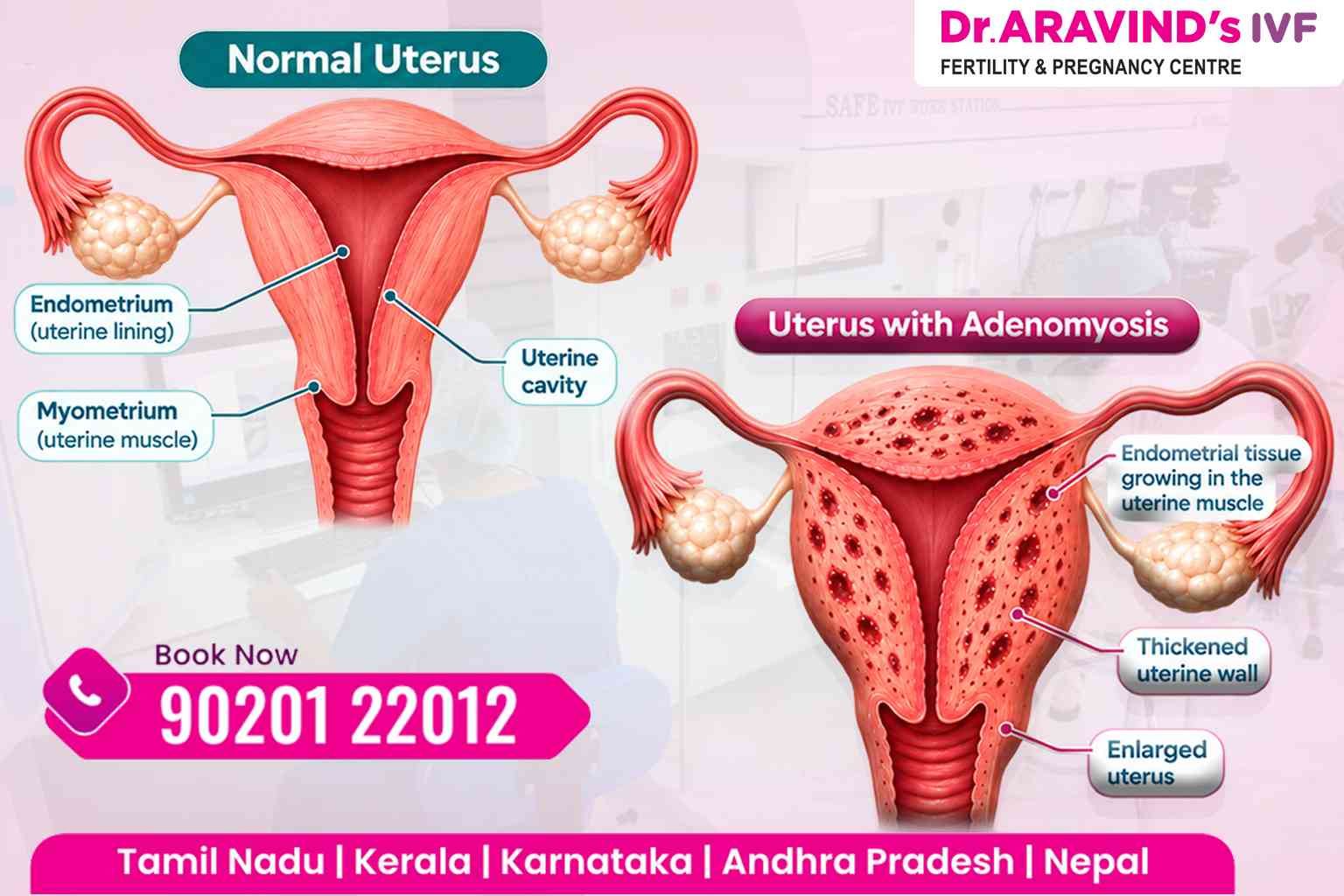
In adenomyosis, womb-lining-like tissue settles into the muscle layer of the uterus. The womb may become enlarged or tender, and the muscle's structure and behaviour can change.
| Adenomyosis | Endometriosis | |
|---|---|---|
| Where | Inside the muscle wall of the womb. | Outside the womb, such as on the ovaries, pelvic lining, bowel or bladder. |
| Typical effects | Heavy bleeding, painful periods and a bulky, tender womb. | Pelvic pain, adhesions and ovarian cysts. |
| Can they occur together? | Yes. | Yes. |
| IVF page | This page. | See endometriosis and IVF. |
Some women with adenomyosis have no noticeable symptoms. Others may experience:
These symptoms can overlap with fibroids, endometriosis and other gynaecological conditions. Therefore, symptoms alone cannot confirm adenomyosis. A proper medical assessment is important.
A transvaginal ultrasound performed by an experienced examiner may show features associated with adenomyosis, such as:
The quality of the ultrasound machine and the examiner's experience can influence how clearly these features are identified.
An MRI can provide additional detail when ultrasound findings are unclear, the disease appears extensive, fibroids are also present or a more detailed assessment is needed for treatment planning. However, an MRI is not necessary for everyone.
Your specialist considers your symptoms, medical history, physical examination, and imaging findings together. A diagnosis should not rely on just one statement in an ultrasound report.
For most women seeking fertility treatment, confirmation through hysterectomy is neither necessary nor appropriate. Assessment generally relies on clinical findings and imaging.
If a problem inside the uterine cavity is suspected, your specialist may also discuss a hysteroscopy before IVF.
Adenomyosis may influence fertility through changes in several aspects of the uterus, including:
Some studies have associated adenomyosis with lower implantation and clinical pregnancy rates in certain IVF groups, as well as a higher likelihood of early pregnancy loss. However, the extent of these effects varies depending on age, disease pattern and severity, embryo status, coexisting endometriosis and the population studied.
Having adenomyosis does not mean IVF cannot work. Your individual diagnosis and other fertility factors are important when estimating treatment outcomes.
IVF may be discussed when adenomyosis occurs alongside other fertility challenges, such as:
No single uterine size or ultrasound finding automatically determines whether IVF is needed. Your specialist considers symptoms, uterine anatomy, ovarian reserve, age, sperm health, embryo-related factors, and your personal fertility goals before recommending a treatment plan.
If you have experienced unsuccessful embryo transfers, read our guide on repeated IVF failure.
Not always. Some clinics consider hormonal suppression before embryo transfer, especially when adenomyosis is extensive or there has been failed implantation or pregnancy loss. One option is a GnRH agonist, but the evidence is still evolving, and this pretreatment is not suitable for everyone.
| Approach | Why it may be chosen |
|---|---|
| Go ahead with IVF and transfer, without prolonged suppression | Mild disease, limited time or no history of failed transfers. |
| Create and freeze embryos first | Gives time to consider treatment before embryo transfer. |
| Suppression before a frozen embryo transfer | May be considered for extensive disease or earlier failed implantation or pregnancy loss. |
| Treat coexisting endometriosis or fibroids | When these conditions also contribute to the fertility problem. |
| Surgery, in carefully selected cases | For focal disease or specific anatomical concerns, with expert counselling. |
| Manage pain and bleeding separately | The embryo transfer plan and symptom control can be different treatment goals. |
Before starting pretreatment: Ask your doctor about the reason for recommending it, how long it may last, possible side effects, cost and the uncertainty around its benefits. The plan should be based on your individual diagnosis and fertility history.
Adenomyosis cannot usually be removed as straightforwardly as a fibroid. This is because adenomyosis develops within the muscle wall of the uterus. Surgery may leave scar tissue or weaken the uterine wall, which can have implications for a future pregnancy.
Conservative surgery may be considered in selected cases, such as focal adenomyosis, severe symptoms or particular uterine anatomy. However, it requires careful assessment and counselling by an experienced specialist.
Uterine artery procedures and other interventions also need careful discussion, particularly when future pregnancy is desired. Do not choose surgery simply because an ultrasound report mentions adenomyosis. Ask your specialist what specific problem the procedure is intended to address and how it could affect your ability to carry a pregnancy.
Before an embryo transfer, your fertility team may review several factors to understand the condition of your uterus and plan the most suitable approach:
A frozen embryo transfer allows time to prepare the uterine lining and plan the transfer. However, it is not automatically better for every woman with adenomyosis. The best approach depends on your medical history and individual findings.
You can also explore these guides:
Many women with adenomyosis become pregnant and deliver healthy babies. However, some research has associated adenomyosis with a higher likelihood of certain pregnancy complications, including:
The level of risk varies depending on age, disease severity, other medical conditions, embryo genetics, previous surgery and how adenomyosis was diagnosed. An association does not mean that these complications will happen in your pregnancy.
After a positive pregnancy test, your obstetric team may recommend an individual monitoring plan that includes:
Important: Do not stop prescribed fertility medicines after a positive pregnancy test unless your doctor advises you to do so.
Contact your maternity team urgently if you experience any of the following during pregnancy:
These symptoms can have several possible causes. They should not automatically be attributed to adenomyosis without medical assessment.
Adenomyosis can cause heavy or painful periods, pelvic pain, and difficulty conceiving. A skilled ultrasound and an MRI, when needed, assess the womb. IVF is considered based on age, ovarian reserve, sperm, tubes, embryo history, and other factors, and pretreatment before transfer is individual because the evidence is still developing. Pregnancy is possible, though some women need closer obstetric monitoring.
Discuss your fertility concerns and explore suitable treatment options with the team at Dr. Aravind's IVF Fertility & Pregnancy Centre.
Book for ConsultationAdenomyosis diagnosis and treatment need individual assessment. Pregnancy risks vary. This article is for education and does not replace consultation with a fertility or obstetric specialist.
Yes. It may lower fertility for some women, but pregnancy is possible naturally or with treatment.
It can. Results vary with age, ovarian reserve, embryo quality, extent of disease, endometriosis, sperm factors and the protocol.
No. Some studies report a higher association with miscarriage, but many women have successful pregnancies. Your fertility and obstetric teams should discuss your own risk.
Often a skilled transvaginal scan gives useful information, but an MRI may be advised when findings are uncertain or the disease is complex. The diagnosis should combine imaging and history.
Not always. Suppression or another treatment may suit selected patients, but there is no universal protocol. Ask how it is expected to help your plan.


