IVF is usually recommended for endometriosis when the tubes are blocked or damaged, when age or low ovarian reserve means time matters, when the disease is moderate to severe, when sperm or other factors add to the problem, or when simpler treatments have not worked. Surgery is not automatically needed first. Operating on an endometrioma can lower ovarian reserve, so it is usually reserved for severe pain, suspicious cysts or cysts that block egg collection. The best plan balances pain, anatomy, ovarian reserve, age and urgency.
Key points:
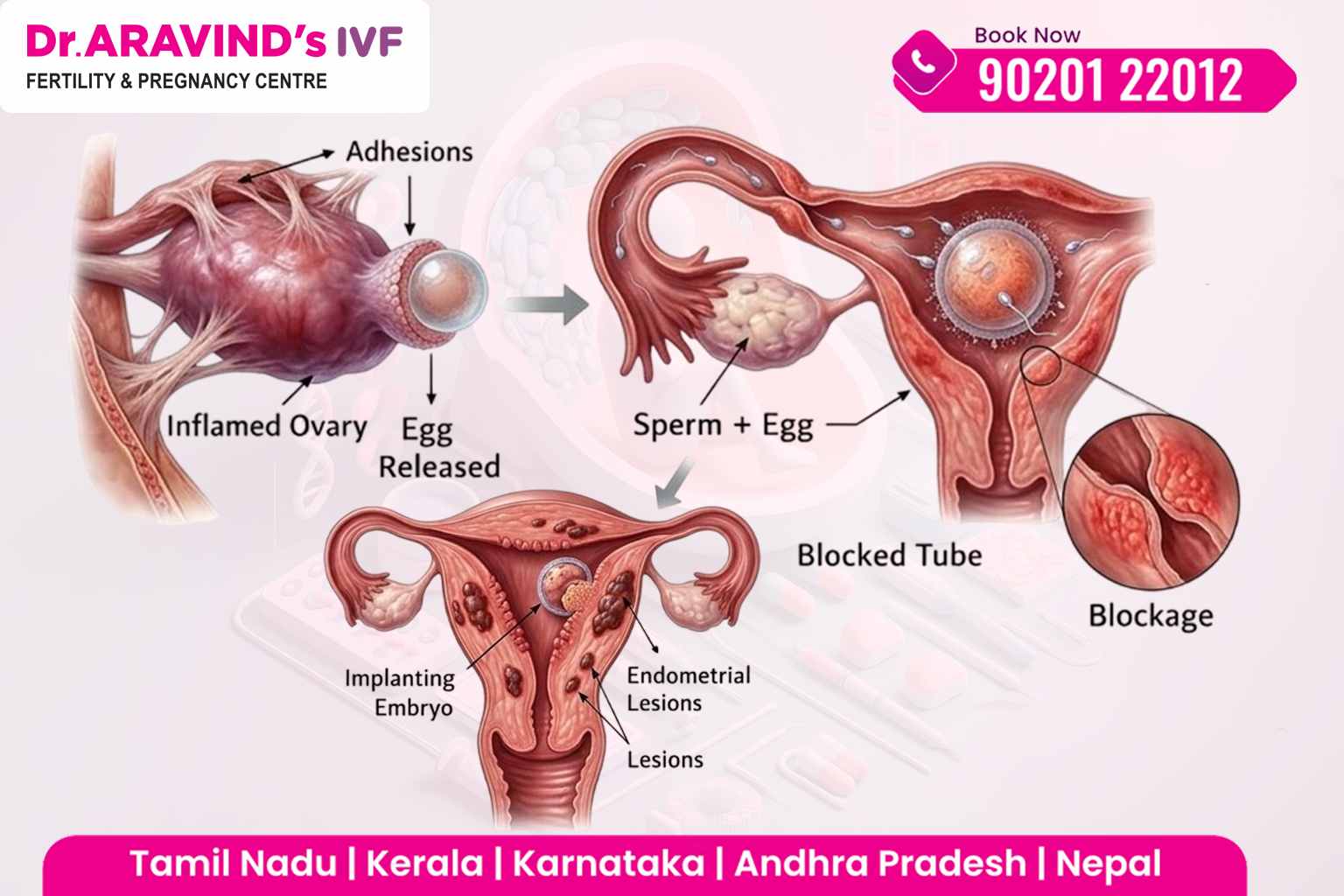
Endometriosis is a condition in which tissue similar to the lining of the womb (endometrium) grows outside the womb. It may develop on the ovaries, pelvic lining, bowel, bladder or nearby areas. This tissue can contribute to inflammation, scarring and the formation of adhesions, where organs or tissues stick together.
Endometriosis is estimated to affect roughly one in ten women of reproductive age worldwide. However, its symptoms and severity can vary considerably from person to person.
Importantly, pain and fertility do not always match. Some women experience severe pain even when there is little visible disease, while others may have extensive endometriosis with few or no noticeable symptoms. Therefore, the level of pain alone cannot tell you how easily you will conceive.
| Possible effect | What it means for conception |
|---|---|
| Adhesions | They can pull the ovaries or fallopian tubes out of their normal position. |
| Endometriomas | Ovarian "chocolate" cysts that may affect the ovary and egg collection. |
| Lower ovarian reserve | Seen in some patients, especially after ovarian surgery. |
| Inflammation | Can change the environment around the egg and sperm. |
| Pain with intercourse | May reduce how often a couple tries to conceive. |
| Tube or ovary changes | Can disrupt the egg's journey. |
| Adenomyosis or other factors alongside | See our guide to adenomyosis and IVF. |
Endometriosis can cause different symptoms, and they may vary in intensity from one person to another. Common symptoms include:
Some women with endometriosis experience no noticeable pain. In certain cases, difficulty conceiving may be the first reason the condition is discovered.
Doctors assess endometriosis by considering your symptoms, medical history, physical examination and imaging results. A transvaginal ultrasound can identify ovarian endometriomas and some forms of deep endometriosis. An MRI may provide additional information when the disease is complex or its extent needs further assessment.
However, a normal scan does not completely rule out endometriosis, as some forms may not be visible on imaging.
Laparoscopy is a surgical procedure that can help diagnose and treat certain types of endometriosis. However, it is not automatically required before fertility treatment. The decision depends on your symptoms, imaging findings, fertility goals and the possible effect of surgery on ovarian reserve.
Learn more about diagnostic hystero-laparoscopy.
IVF may be discussed when endometriosis affects fertility or when other factors make natural conception or simpler fertility treatments less suitable. Your fertility specialist may consider IVF in situations such as:
Your treatment plan should consider several factors, including age, ovarian reserve, semen analysis results, fallopian tube function, pain, previous treatment history and personal preferences.
To understand the different stages of treatment, read the IVF treatment process.
Not automatically. Surgery can ease pain or correct a specific anatomical problem, but operating on an endometrioma can reduce ovarian reserve in some women.
| Surgery before IVF may make sense when... | It is usually not routine when... |
|---|---|
| Pain is severe and hasn't responded to appropriate treatment. | The main reason is only to "improve" IVF results. |
| A cyst blocks access to follicles during egg collection. | The cyst is small and does not interfere with egg collection. |
| The cyst looks suspicious or its nature is uncertain. | Ovarian reserve is already low. |
| There is a concern about infection or another complication. | Age means that any delay could cost valuable time. |
| Anatomy makes safe egg collection impossible. | Pain is well controlled. |
Before deciding: Your fertility team should discuss ovarian reserve, expected egg numbers, pain, cyst size and position, your age, and the potential risks of waiting. The decision should be individualised rather than based on a routine rule.
Before planning IVF, your fertility specialist may recommend tests to understand your reproductive health, identify factors affecting conception and choose an appropriate treatment approach. These may include:
AMH and antral follicle count help estimate how your ovaries may respond to stimulation during IVF. However, they do not directly measure egg quality or guarantee a pregnancy. Learn more about ovarian reserve testing.
Yes. Endometriosis can recur after surgery. The likelihood depends on factors such as the type and extent of disease, treatment received, age and duration of follow-up.
Hormonal medicines may help control pain and reduce disease activity when you are not trying to conceive. However, many of these treatments suppress ovulation while you take them, so they are not suitable for everyone who is actively trying to become pregnant.
Your specialist will help decide the appropriate order of treatment, which may include surgery, medical suppression, attempts at natural conception, IUI or IVF.
Read our guides on preventing endometriosis from returning after surgery and endometriosis treatment options.
In some groups of patients, endometriosis is associated with lower implantation or pregnancy rates. However, outcomes vary considerably from person to person. Factors that may influence IVF results include:
Be cautious of clinics that quote one success rate for everyone with endometriosis. Ask your specialist for an estimate based on your age, ovarian reserve, medical history and proposed treatment plan.
Endometriosis and ovarian surgery can both be associated with reduced ovarian reserve in some women. An ovarian cyst caused by endometriosis, called an endometrioma, may also make some follicles more difficult to identify during an ultrasound scan.
If your ovarian reserve is low or age is a concern, delaying fertility treatment for surgery may affect your available time. In selected younger patients, fertility-preservation counselling may be considered before ovarian surgery.
Your specialist should weigh the possible benefits of surgery against its potential effect on ovarian function before recommending a procedure.
Hormonal medicines may be used to control endometriosis-related pain and suppress disease activity. However, they also suppress ovulation while you are taking them.
Some doctors recommend hormonal pretreatment before IVF in selected cases, but there is no single protocol that is appropriate or beneficial for everyone.
Before starting treatment, ask your specialist:
Many women with endometriosis go on to have healthy pregnancies. However, pregnancy does not cure endometriosis, and symptoms may return after childbirth.
Your obstetric team should be aware of your endometriosis history, previous ovarian surgery and pelvic anatomy. They may also consider placental location, pain and other individual risk factors when planning your antenatal care.
Having endometriosis does not mean you should avoid pregnancy. Regular antenatal check-ups and care tailored to your medical history are important throughout pregnancy.
IVF may be recommended for endometriosis when the fallopian tubes are damaged, age or reduced ovarian reserve creates time pressure, the disease is significant, other fertility factors are present or simpler treatments have not been successful.
Surgery is not automatically necessary before IVF. In particular, removing an ovarian endometrioma may reduce ovarian reserve in some women. An individual treatment plan should balance pain, pelvic anatomy, ovarian reserve, age and the urgency of fertility treatment.
For an individual assessment of endometriosis and fertility treatment options, speak with the fertility team at Dr. Aravind's IVF Fertility & Pregnancy Centre.
Book an IVF consultationDr. Aravind's IVF Fertility & Pregnancy Centre
Next read:
Endometriosis and infertility require individual assessment. This article is for educational purposes and does not determine whether surgery, IVF or another treatment is appropriate for you. Discuss your options with a qualified fertility specialist.
Yes. Some women conceive naturally. Whether to keep trying, use ovulation treatment, IUI, or move to IVF depends on age, how long you've been trying, the disease, your tubes, ovarian reserve, and sperm.
Not automatically. Surgery may be right for severe pain, suspicious findings, or cysts that block egg collection, but it can lower ovarian reserve. The decision should be individual.
It may affect ovarian function in some women, but egg quality depends strongly on age and cannot be judged from the diagnosis alone.
No. IVF helps with fertilisation and embryo transfer. It does not remove the disease, or guarantee symptoms will go away.
Some studies report an association, but your own risk depends on age, embryo genetics, adenomyosis, and general health. Your fertility and obstetric team should interpret your history.


