An embryo transfer catheter is a thin, soft tube that carries your embryo through the cervix and releases it inside the uterus. Your doctor usually watches the path on an ultrasound screen. The embryo travels in a tiny drop of fluid, and the lab checks the catheter afterwards to make sure it has been released. The whole thing is usually brief and feels like pressure or mild cramping, and walking afterwards will not make the embryo fall out.
Key takeaways
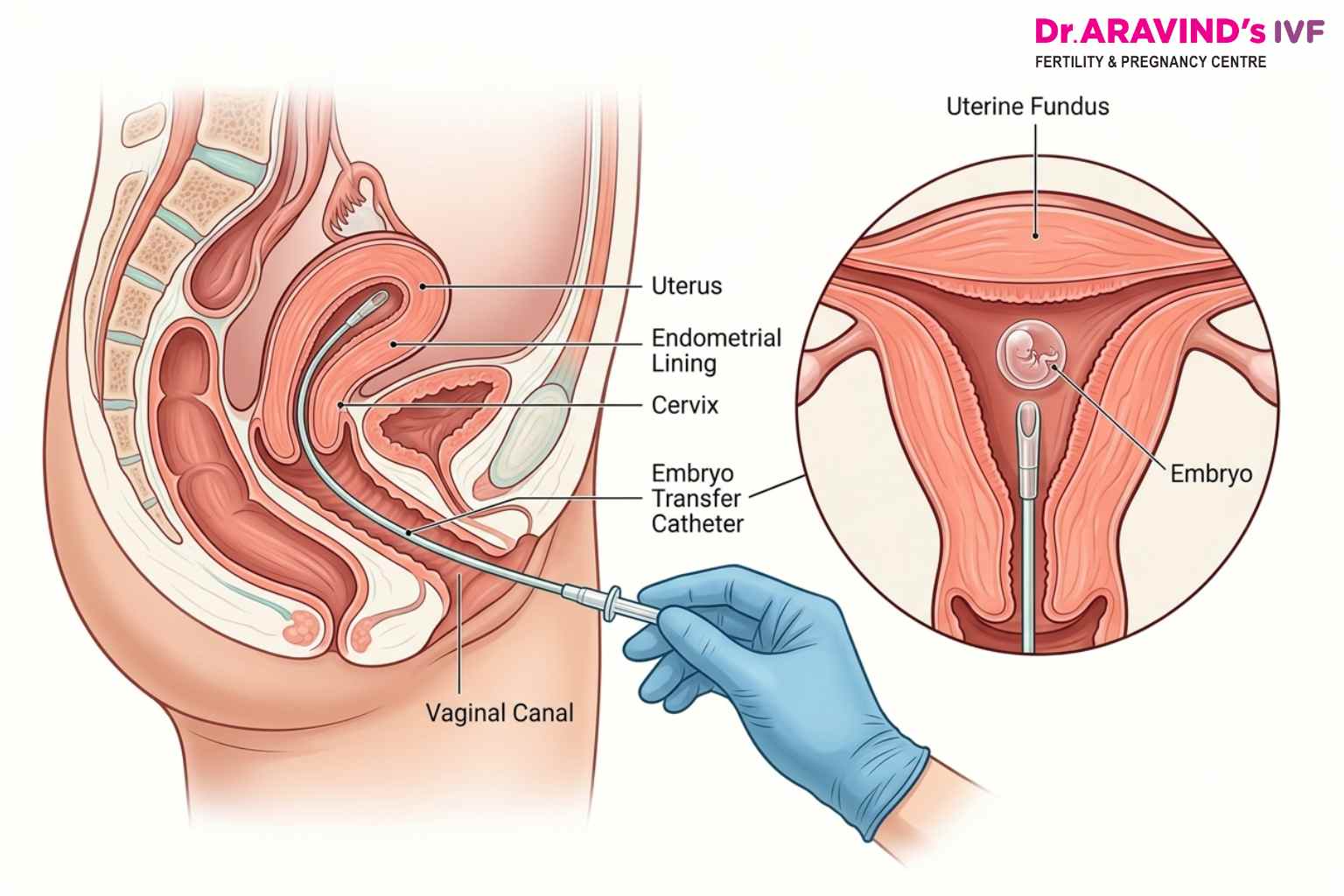
An embryo transfer catheter is a very thin, flexible tube designed to place an embryo inside the uterine cavity during a fresh or frozen embryo transfer. It is gently guided through the vagina and cervix into the uterus. Most clinics use a soft catheter designed to help minimise irritation to the cervix and uterine lining.
The catheter is used only to deliver the embryo into the uterine cavity. It does not enter the ovaries or travel into the fallopian tubes. After the embryo is released, implantation may occur later when the embryo attaches to the uterine lining.
A soft catheter is commonly used for embryo transfer. However, if the cervix is narrow, unusually angled or difficult to navigate, the doctor may use an ultrasound-guided approach, a guide or another suitable instrument. If additional steps are anticipated, your fertility team can explain the procedure beforehand.
During embryo transfer, the embryo is released into the uterine cavity, usually at a planned location away from the very top of the uterus. The doctor considers your uterine anatomy and may use ultrasound guidance to position the catheter accurately.
The catheter does not glue or permanently fix the embryo in place. Instead, a small amount of fluid carries the embryo out of the catheter into the uterine cavity. The catheter is then carefully withdrawn.
After the procedure, the catheter is commonly handed to the embryologist, who examines it under a microscope to check whether the embryo has been released. If an embryo is unexpectedly retained in the catheter, the clinical team follows its established protocol to manage the situation.
Once the transfer is complete, implantation is a separate biological process. The embryo must interact with the uterine lining, and successful implantation is not guaranteed by catheter placement alone.
Embryo transfer is usually a brief procedure and often does not require anaesthesia. The exact steps may vary between clinics, so follow the instructions provided by your fertility team for your own transfer.
No. Once the embryo has been properly released into the uterine cavity, standing up, walking, coughing or going to the toilet will not push it out. The uterus is not an open container. Its walls lie close together, and the embryo is released into a small amount of transfer fluid within the cavity.
What happens next depends on factors such as embryo development and the receptivity of the uterine lining—not on how long you remain completely still. Follow your clinic's aftercare instructions, but ordinary movement does not cause a transferred embryo to fall out.
For practical advice on daily activities after transfer, read our guide to walking, working and travelling after embryo transfer.
Most people experience little discomfort during embryo transfer. You may notice mild pressure, brief cramping or a sensation similar to having a cervical screening test. Others feel almost nothing at all.
Your experience can depend on the position of your cervix, whether the catheter passes easily, the pressure from the speculum, your level of anxiety and whether your bladder needs to be full for ultrasound guidance.
Tell your clinical team if you feel pain or discomfort. They may pause, adjust the catheter or change their approach to make the procedure more comfortable. Severe or persistent pain should not be ignored.
Sometimes the catheter is harder to guide through the cervix because of a narrow or sharply angled cervical canal, scar tissue, previous cervical procedures or changes in the uterus. Fibroids that affect the anatomy may also influence the approach in some cases.
Depending on the situation, your doctor may use a different catheter, a guide or ultrasound guidance. If difficulty is anticipated, a preliminary assessment or trial transfer may help the team plan the procedure.
A technically difficult transfer does not automatically mean the treatment will fail. Ask your fertility team what made the procedure challenging, whether the embryo was released as expected and whether any changes might help during a future transfer.
Ultrasound guidance allows the doctor to see the uterus and monitor the catheter's position while the embryo is being placed. This helps the team select an appropriate location for releasing the embryo and reduces reliance on estimation alone.
When an abdominal ultrasound is used, a comfortably full bladder can improve the view of the uterus and help straighten the angle between the cervix and uterine cavity. Follow your clinic's instructions about bladder preparation, as requirements may vary.
Embryo transfer medium is a specially prepared fluid used by the embryology team to carry the embryo through the catheter and into the uterine cavity. The laboratory selects and handles the medium according to its clinical protocols.
Patients do not generally need to choose a particular brand or type of medium themselves. If you would like to understand what your clinic uses, ask the embryology team to explain its purpose and the evidence supporting its use.
Once the embryo has been released, the catheter is withdrawn and the team may check it under a microscope to confirm that the embryo is no longer inside. You may rest briefly before going home, depending on your clinic's routine.
Inside the uterus, the embryo continues its development. Depending on its stage, it may hatch from its outer shell and begin interacting with the uterine lining as implantation progresses. These processes take time, and implantation cannot be confirmed immediately after the transfer.
Continue estrogen, progesterone and any other prescribed medicines exactly as instructed. Your clinic will tell you when to take your pregnancy blood test. Avoid testing too early or changing your medication based on symptoms alone.
For a practical explanation of the waiting period, read our two-week wait guide.
Embryo transfer is designed to handle the embryo carefully and place it inside the uterus with minimal disturbance. The embryology team uses controlled laboratory techniques, and soft transfer catheters are commonly used to help minimise trauma to the cervix and uterine lining.
As with any medical procedure, difficulties can occasionally occur. The team checks the catheter after transfer according to its protocol and takes appropriate steps if the embryo appears to remain inside it.
A correctly performed transfer does not guarantee implantation. The outcome also depends on embryo development, the uterine environment and individual biological factors.
Discuss the procedure, aftercare and your personalised treatment plan with the fertility team at Dr. Aravind's IVF Fertility & Pregnancy Centre.
Book an IVF consultation →An embryo transfer catheter is a thin, flexible tube used to carry an embryo through the cervix and into the uterus. Ultrasound guidance is often used to help position the catheter accurately. The embryo is released in a small amount of transfer fluid, and the embryology team may check the catheter under a microscope to confirm that the embryo has been released.
Most people experience only mild pressure or cramping during the procedure. Normal activities such as standing up or walking will not make a properly transferred embryo fall out. If you experience pain or have concerns, let your fertility team know on the day of transfer.
Related reading: Embryo transfer in the IVF process · Frozen embryo transfer · Embryo transfer day preparation · Embryo development day by day · Embryo implantation after IVF · Progesterone before embryo transfer · Single vs double embryo transfer
Medical disclaimer: This article describes a typical embryo transfer procedure. Your clinic may use different catheter types, bladder preparation instructions, or techniques depending on your anatomy and treatment plan. Follow the instructions provided by your fertility team.
It is released into the uterine cavity, close to the lining. It may attach to the lining afterwards.
Everyday coughing, sneezing, or walking does not normally move a properly transferred embryo. Call your clinic for severe pain or heavy bleeding.
No. It passes through the cervix and stops inside the uterine cavity.
Some clinics ask for one because it improves the ultrasound picture. Follow your clinic's exact instructions.
The transfer itself is brief. The visit is longer because of identity checks, lab confirmation, and a short rest.


