The process of becoming a parent brings various emotions to expectant parents who experience fear and bodily changes. The majority of people find their most challenging period during their fertility journey when they must wait between ovulation and their upcoming menstrual period which the fertility community designates as the Two-Week Wait TWW period. During these fourteen days, every ache, mood change, or change in body is looked at closely: Is this a sign of pregnancy or is my period coming?
At Dr. Aravind's IVF, we want to empower you through health information that enables you to understand your current medical condition. When you understand how conception works, which describes how the body develops throughout time, you can transform your period of waiting into a process that you can monitor and understand. This section explains your body's physiological changes that occur during this critical period, including hormonal transformations, physical symptoms, and emotional experiences.
The process of becoming a parent brings various emotions to expectant parents who experience fear and bodily changes. The majority of people find their most challenging period during their fertility journey when they must wait between ovulation and their upcoming menstrual period which the fertility community designates as the Two-Week Wait TWW period. During these fourteen days, every ache, mood change, or change in body is looked at closely: Is this a sign of pregnancy or is my period coming?
At Dr. Aravind's IVF we want to empower you through health information that enables you to understand your current medical condition. When you understand how conception works, which describes how the body develops throughout time, you can transform your period of waiting into a process that you can monitor and understand. This section explains your body's physiological changes that occur during this critical period, including hormonal transformations, physical symptoms, and emotional experiences.
The two-week wait creates an emotional ride because your body creates different changes after you have ovulated. The situation includes hidden elements that go beyond initial appearances.
Let’s start with progesterone. The moment after ovulation occurs the spot where your egg popped out transforms into the corpus luteum structure. The scientific term describes the process which creates a minor hormone production facility that generates progesterone. The substance known as progesterone has its main function to prepare the uterine lining for implantation. The process creates a thicker structure which contains more protective material that stores nutrients for future use when an embryo arrives.
The process creates pregnancy-like symptoms through which progesterone activates various bodily functions. The symptoms include breast pain and stomach swelling and extreme exhaustion. The natural hormonal increase throughout your body makes you feel "pregnant" between 4 to 7 days after ovulation. The process of natural hormone production occurs in your body whether you are pregnant or not.
The fertilized egg begins its pathway to the uterus after the fertilization process occurs inside the fallopian tube. The traveling process requires 6 to 10 days for completion. The fertilized egg exists as a blastocyst which undergoes rapid cell division during this time period. The blastocyst needs to establish its attachment to the uterine wall before your body can recognize that you have become pregnant. The production of hCG pregnancy-specific hormones begins after that event occurs.
The symptoms of early pregnancy resemble those of PMS because they share identical symptoms which result from progesterone. Your body produces progesterone during every menstrual cycle after you complete ovulation whether you become pregnant or not. The period between 5 to 6 days after ovulation shows normal symptoms which include fatigue and mood swings together with mild menstrual cramps. The body exhibits proper functioning because these signs appear during the process. The signs do not prove that you are expecting a child. This information will assist you in controlling your expectations while enabling you to experience a two-week waiting period with reduced anxiety.
The study of menstrual signs is used to determine whether a woman experiences her regular menstrual cycle or early signs of pregnancy. The process of implantation usually occurs between 9 and 10 days after a woman ovulates. The embryo will start to implant into the uterine lining which causes visible changes that you will probably see.
The clinic receives a frequent question which asks for methods to distinguish between implantation bleeding and regular menstrual periods. The question about the 10 DPO spotting period needs an answer because it creates uncertainty for people who experience this symptom.
The body starts its process of embryo implantation between day eight and day nine after fertilization. You might notice:
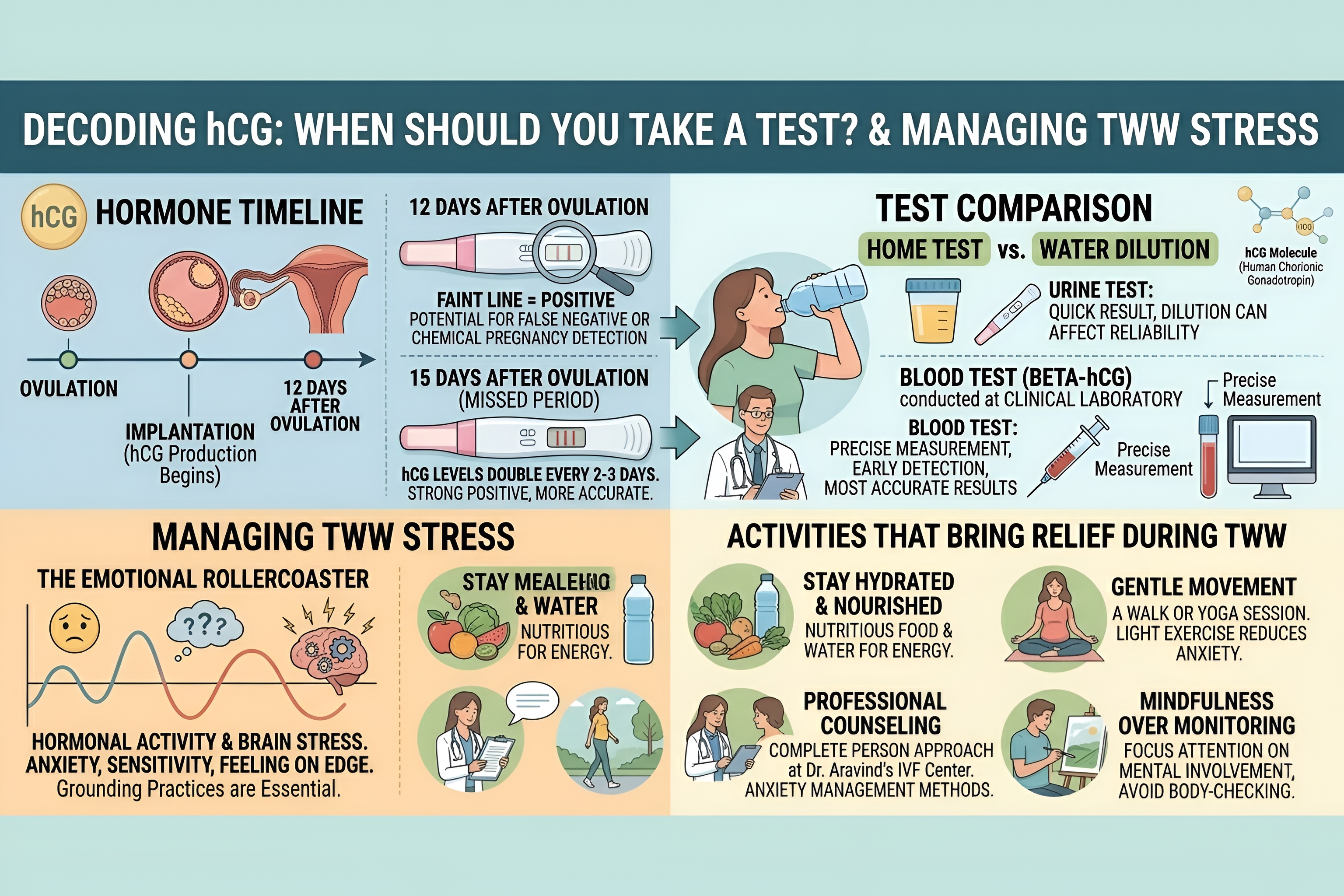
People who want to take a pregnancy test need to understand that their waiting period will be difficult but necessary. The main thing to watch is a hormone called hCG (Human Chorionic Gonadotropin).
Home urine tests provide quick results, but the results become less reliable because drinking water will dilute the hormone tested in urine.
Blood tests conducted at a clinic (Beta-hCG) provide precise measurements of hCG levels in your blood, which improves their accuracy because they can detect pregnancy earlier than other methods. The blood test provides the most accurate results for your condition.
The two-week waiting period evokes strong emotional reactions which scientists discuss through their research on hormones and cells. The emotions you experience have the same authenticity as physical health problems.
Your body experiences hormonal activity during the luteal phase while your brain faces the same process. You might experience heightened anxiety which leads to increased sensitivity and feelings of being on edge. The pressure of a fertility journey creates understandable stress which people experience.
The two-week waiting period serves as an interval that connects two states of existence. The second day of your symptoms and the fifteenth day of your blood test results create two different moments which you should observe because they demonstrate your body's amazing capabilities.
The two-week wait (TWW) is the period between ovulation and the expected start of your next menstrual cycle. During this time, a fertilized egg may travel through the fallopian tube and implant in the uterine lining. This phase usually lasts 12–14 days, and it is when people begin watching for early pregnancy symptoms.
Many people notice symptoms such as breast tenderness, bloating, fatigue, mood swings, or mild cramping during the two-week wait. These symptoms are mainly caused by the hormone progesterone, which rises after ovulation whether pregnancy occurs or not. Because of this, early pregnancy symptoms often feel very similar to premenstrual syndrome (PMS).
Implantation typically happens 6 to 10 days after ovulation. During this time, the fertilized egg attaches to the uterine lining and begins producing the hormone hCG, which pregnancy tests detect. Some people may notice light spotting or mild cramping, known as implantation bleeding.
The most accurate time to take a pregnancy test is around 14 days after ovulation or on the first day of a missed period. Testing earlier may lead to false-negative results because hCG levels may still be too low to detect.
It is usually not possible to confirm pregnancy based on symptoms alone during the two-week wait. Many early signs of pregnancy are caused by hormonal changes that happen in every cycle. The only reliable way to confirm pregnancy is through a pregnancy test that detects hCG after implantation.


