Yes. After a straightforward embryo transfer you can walk, return to light work, and travel once your doctor agrees to the plan. Walking will not make the embryo fall out, and strict bed rest has not been shown to improve your chances. Stay gently active, avoid heavy lifting and hard workouts, keep up your medicines, and call your clinic for heavy bleeding, severe pain, fever, or trouble breathing.
Key takeaways
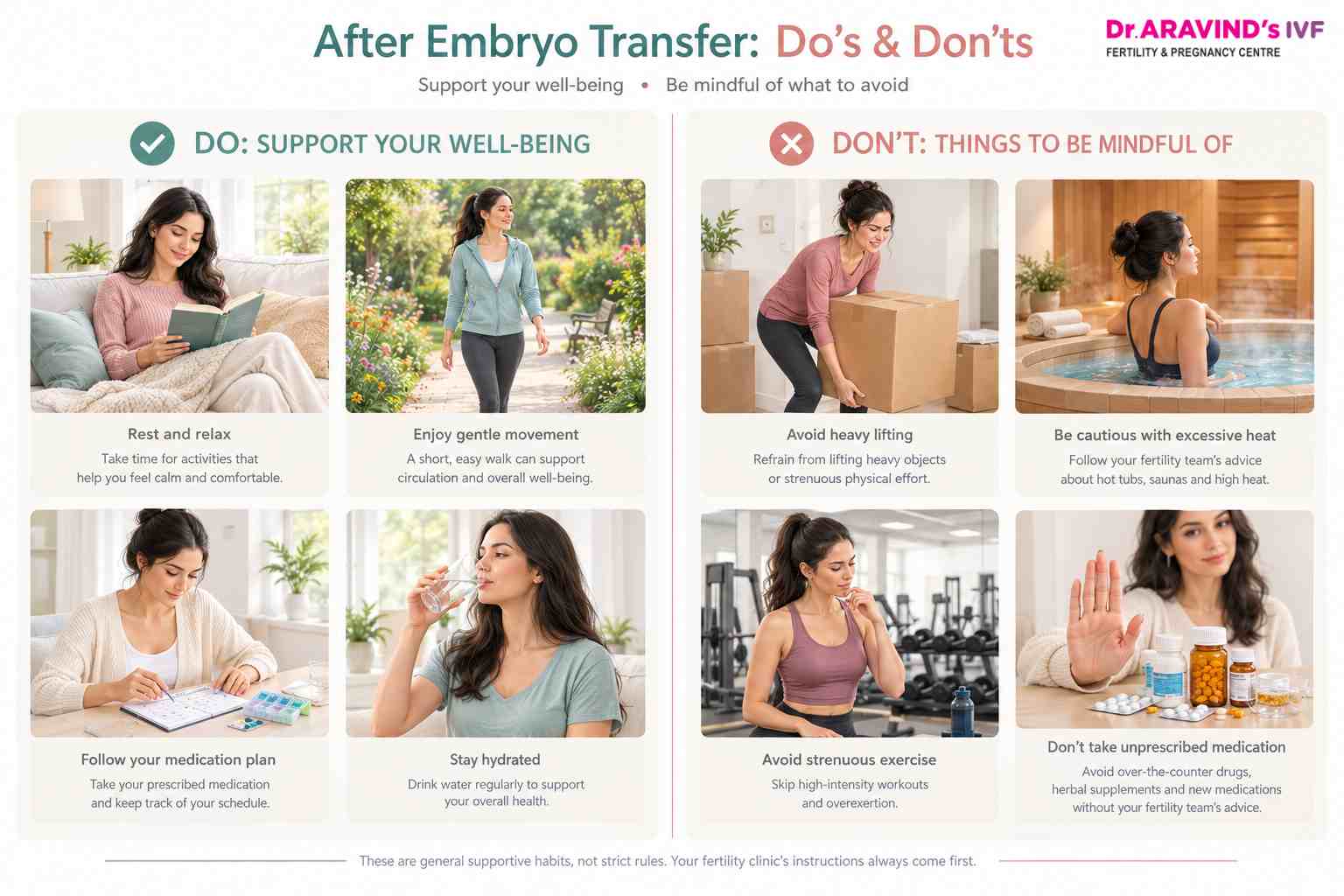
Yes. After an uncomplicated embryo transfer, gentle walking and ordinary light activities are generally safe. The embryo is placed inside the uterine cavity, not near the vaginal opening, so walking, coughing or climbing a few stairs will not make it fall out.
A stroll may also help you relax and ease some of the tension during the waiting period. Walk at a comfortable pace and follow any activity restrictions your fertility team has given you.
Curious about how the embryo is placed inside the uterus? Read our guide to the embryo transfer catheter.
Routine bed rest is generally not recommended after an uncomplicated embryo transfer. Research comparing bed rest with getting up soon after the procedure has not shown a benefit from prolonged lying down. Extended bed rest may also contribute to stiffness, discomfort and anxiety.
Your clinic may ask you to rest briefly after the procedure for comfort. You can usually resume gentle daily activities according to your team's instructions.
If your doctor recommends rest because of bleeding, significant pain, enlarged ovaries or another medical concern, follow that individual advice. These circumstances are different from recommending bed rest for every patient after embryo transfer.
Many people can return to desk-based or light work on the same day or the following day, depending on how they feel and their clinic's advice. Ordinary work does not prevent an embryo from implanting. However, your comfort, job demands and any symptoms should guide your decision.
You may want to adjust your schedule or discuss time off if:
If your work is physically demanding, ask your fertility team what limits are appropriate for your situation rather than assuming you must either remain in bed or return to every task immediately.
Gentle walking and everyday movement are usually fine after an uncomplicated transfer. However, it is sensible to postpone high-impact exercise, heavy weightlifting, contact sports and activities involving sudden twisting or a risk of falling until your fertility team advises that they are safe.
The right advice may differ depending on whether you have had a fresh transfer with enlarged ovaries, recently undergone egg retrieval, had a frozen embryo transfer or have another medical condition. Enlarged ovaries after stimulation or egg retrieval may need particular precautions.
Avoid starting a new, intense workout routine during this period. Ask your clinic when you can safely return to your usual exercise level, especially if you experience pain, bloating or other symptoms.
Often, yes. Whether you can travel after an embryo transfer depends on how you plan to travel, the distance, your medical history, access to healthcare and the timing of your pregnancy blood test. Check with your fertility team before making travel plans.
No. Ordinary movement, walking or travelling does not shake an embryo loose from the uterus. Strict bed rest is not routinely needed after an uncomplicated embryo transfer, but follow your clinic's specific instructions.
Seek prompt medical advice for heavy bleeding, severe or worsening abdominal pain, fainting, breathing difficulty or significant abdominal swelling. If symptoms are severe, seek emergency care rather than continuing your journey.
Before planning a long flight after embryo transfer, speak with your fertility specialist. This is particularly important if you have a history of blood clots, a serious medical condition, ovarian hyperstimulation syndrome (OHSS), recent surgery or complications during your treatment.
If your doctor confirms that travelling is appropriate, discuss these precautions before your journey:
Flying is not generally thought to dislodge an embryo from the uterus. However, the safety of travelling depends on your individual health, treatment stage and any complications. Confirm your travel plans with your specialist rather than relying on general advice alone.
Yes. You can pass urine or have a bowel movement after embryo transfer. The bladder and uterus are separate organs, so urinating or passing stool will not wash the embryo out of the womb.
A comfortably full bladder may be requested during the transfer to help the doctor see the uterus on ultrasound. After the procedure, you generally do not need to hold your urine for hours unless your clinic gives you a specific instruction.
Yes. Climbing an ordinary number of stairs at home or work is not expected to interfere with implantation after an uncomplicated embryo transfer.
Normal everyday movement does not make the embryo fall out. If you have severe pain, significant bloating or another complication, ask your clinic what activities are safe for you.
Advice about sex after embryo transfer can vary between clinics and according to your treatment. Your doctor may recommend waiting for a period because of bleeding, cramps, infection concerns or enlarged ovaries, particularly after ovarian stimulation or egg retrieval.
Follow your clinic's written instructions and ask your care team when it is appropriate to resume sexual activity. Also check before using tampons, douching, swimming or adding vaginal medicines that have not been prescribed. Continue your prescribed fertility medicines exactly as directed.
Symptoms differ from person to person. Some people feel no noticeable changes, while others experience mild symptoms such as:
These symptoms cannot confirm or rule out pregnancy. Progesterone and other fertility medicines can cause symptoms that resemble early pregnancy, and some people who become pregnant notice no symptoms at all. Follow your clinic's instructions about when to take your pregnancy test.
Contact your fertility clinic promptly if you experience any of the following symptoms:
Important: Severe symptoms, chest pain, breathing difficulty or fainting require urgent medical assessment. If you cannot reach your clinic, seek emergency care rather than waiting for a callback.
The waiting period between embryo transfer and your pregnancy test can feel emotionally demanding. You do not need to remain in bed or monitor every physical sensation. Focus on practical steps that support your well-being:
No particular food, sleeping position, or amount of bed rest can guarantee implantation. For more guidance, read our two-week wait guide.
Every fertility journey is different. Your specialist can help you understand which activities are appropriate for your treatment, symptoms and recovery.
Book an IVF consultationAfter a straightforward embryo transfer, most people can walk gently, return to light work and travel when their doctor agrees. Routine bed rest is usually unnecessary, and ordinary movement will not make the embryo fall out. Avoid heavy exertion, take your prescribed medicines on schedule and contact your clinic if you develop severe or concerning symptoms.
Usually yes, if the transfer was straightforward and your clinic has not said otherwise.
Many people can return to desk or light work. Heavy work, a tiring commute, pain or emotional needs can be good reasons for time off.
Routine bed rest is not needed. Rest if it feels good, and follow your doctor if you have a medical reason to limit activity.
Often yes. Take breaks, keep your medicines close and check with your clinic if you have any complications.
Many people can, but talk to your doctor first about long trips, bleeding, OHSS risk, clot risk or poor access to care.


