First published [19/10/2026]
In a programmed frozen embryo transfer, a day 5 blastocyst is usually transferred after about five days of progesterone, written as P+5. Progesterone prepares the womb lining to accept an embryo, and the exact moment you start it keeps the lining in step with your embryo's age. If you are late with a dose or miss one, call your clinic straight away and do not double up.
Key takeaways
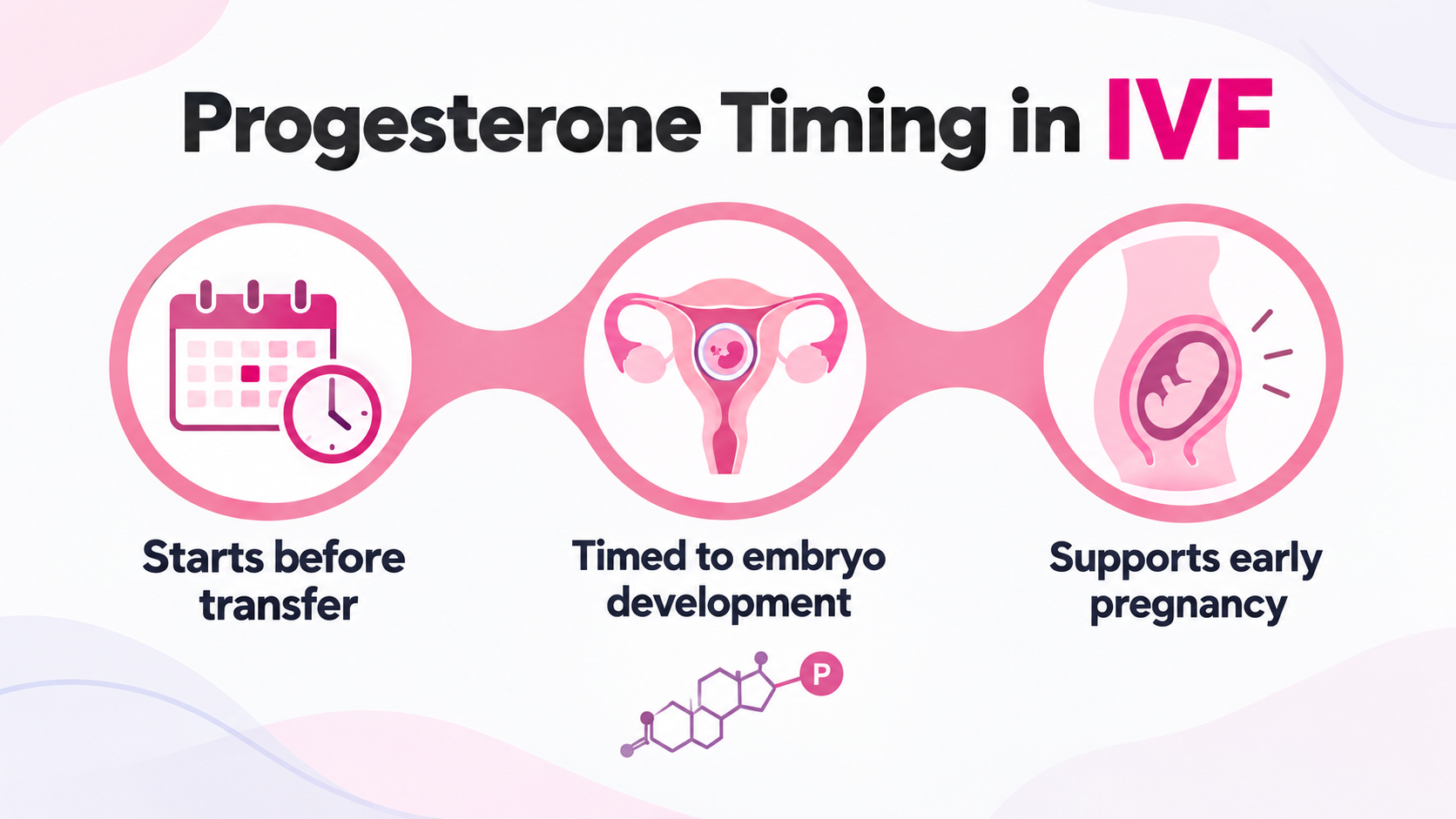
Progesterone plays an essential role in preparing the uterine lining for embryo implantation. It helps the endometrium move into a receptive state and coordinates the lining's development with the embryo's stage. This timing matters because the embryo and uterine lining must be at the right stage for transfer.
In a natural menstrual cycle, the body produces progesterone after ovulation. In a programmed frozen embryo transfer (FET) cycle, progesterone is prescribed as part of the treatment plan. The method of administration may vary according to your clinic's protocol.
Taking progesterone as prescribed is important, but the timing matters too. Your fertility team calculates the transfer date based on when progesterone starts and how long the lining has been exposed to it before transfer. The schedule is matched to the developmental stage of the embryo, helping coordinate the timing of the transfer.
Always follow your clinic's written instructions for the dose and start time. If you miss a dose, take it later than planned or are unsure when to begin, contact your fertility team promptly rather than changing the schedule yourself.
Explore our FET timeline to understand the overall cycle, and visit our blastocyst transfer success rates resource to learn more about embryo stage.
After progesterone starts, the uterine lining goes through a short phase in which it is most receptive to an embryo at the appropriate developmental stage. If progesterone begins too early, too late, or is taken inconsistently, the lining and embryo can fall out of sync. One late dose does not always mean a transfer will fail, but you should contact your clinic promptly for advice.
In a natural-cycle frozen embryo transfer (FET), the fertility team monitors follicle development, the luteinising hormone (LH) surge, ovulation and changes in progesterone levels. These findings help the team estimate when ovulation occurs and plan the embryo transfer accordingly.
Unlike a programmed FET cycle, the transfer date in a natural cycle is generally calculated from ovulation and the embryo's developmental stage, rather than from the first dose of prescribed progesterone. Progesterone support may still be recommended in some natural-cycle protocols, depending on your clinic's approach and individual circumstances.
In a modified-natural FET cycle, an hCG trigger injection may be used to help time ovulation. The clinic then calculates the transfer schedule according to its protocol, the expected timing of ovulation, and the embryo's stage.
Natural, modified-natural, and programmed cycles use different timing methods, so their schedules should not be compared or copied from one another. For a clearer explanation of how each approach works, read our guide to endometrial preparation for FET.
Always follow the transfer calendar provided by your fertility team, and contact the clinic if your LH test, ovulation timing or medication schedule differs from what was expected.
Call your fertility clinic as soon as possible and keep the following details ready so the team can assess your transfer schedule.
If you miss a progesterone dose before a frozen embryo transfer (FET), contact your fertility clinic as soon as possible. The next step depends on the type of progesterone you use, the prescribed schedule, how late the dose is and how close you are to the planned transfer.
Progesterone may be prescribed as vaginal capsules or gel, oral medication, subcutaneous injections or intramuscular injections. Your clinic may advise you to take the missed dose, wait until the next scheduled dose or attend for an assessment, depending on your situation.
Yes, progesterone levels can be important when assessing whether the uterine lining has received appropriate hormonal support before embryo transfer. Some fertility clinics measure progesterone in a blood test around the time of transfer, particularly during programmed FET cycles.
If a result is lower or higher than expected, your fertility team may review your medication, dose timing and treatment protocol. The meaning of the result depends on the type of cycle, the route of progesterone administration, when the blood sample was taken and the laboratory's testing method.
There is no single progesterone cut-off that applies to every patient and every protocol. Vaginal progesterone can produce different blood concentrations from injectable progesterone because medication absorption and distribution vary by route. A blood result also does not directly measure the progesterone level inside the uterine lining.
Good questions to ask your fertility team:
Speak with your fertility team about missed doses, progesterone results and the timing of your embryo transfer. Follow your personalised medication schedule.
Book an IVF consultation →Use progesterone exactly as prescribed by your fertility team. Do not switch routes, change the dose or stop the medication without medical advice.
Common effects may include breast tenderness, bloating, headache, tiredness, mood changes, constipation, vaginal discharge or residue, and pain at the injection site. The effects can vary depending on the medicine and how it is given.
These symptoms do not confirm pregnancy. Progesterone may also delay your period, so follow your clinic's scheduled pregnancy test date rather than relying on symptoms or bleeding alone.
Progesterone is usually continued until the scheduled pregnancy test. If the test is positive, your fertility specialist will advise how long to continue it based on your FET protocol and individual circumstances. The duration can vary between natural, modified-natural and medicated cycles.
Do not stop progesterone because you notice light spotting, experience changes in symptoms or feel no pregnancy symptoms. These signs alone cannot confirm whether the transfer has been successful.
If you are unsure about how long to continue your medication, or if you experience bleeding, contact your fertility clinic for advice. Continue following your prescribed schedule unless your treating team tells you otherwise.
Not necessarily. Increasing progesterone does not automatically improve implantation or pregnancy outcomes. The aim is to provide appropriate hormonal support at the right time and for the duration recommended for your treatment protocol.
Taking more than prescribed may increase the risk of side effects without providing additional benefit. The appropriate dose and route depend on factors such as your FET protocol, how the medication is absorbed and whether your fertility team identifies a reason to adjust treatment.
Never increase, reduce or change your progesterone on your own. If you are concerned about your dose or blood-test results, ask your fertility specialist whether any adjustment is clinically appropriate.
Clear medication instructions can help make the frozen embryo transfer process easier to follow. At Dr. Aravind's IVF Fertility & Pregnancy Centre, patients can discuss their FET medication schedule and transfer timing with the fertility team.
For patients travelling from other districts of Tamil Nadu, having clear instructions about medication doses, scan appointments and transfer dates can be especially helpful. Ask your care team how to contact the clinic if a dose is late or missed, and confirm the arrangements available for your treatment.
Progesterone helps coordinate the uterine lining with the developmental stage of your embryo. In a programmed frozen embryo transfer (FET), a day-5 blastocyst is commonly transferred after approximately five days of progesterone exposure, although the exact timing and method of counting depend on your clinic's protocol. If you take a dose late or miss one, contact your fertility team promptly for instructions.
Discuss your progesterone schedule, embryo transfer date, and medication instructions with the fertility team at Dr. Aravind's IVF.
Book an IVF consultationSources for editorial review: Consider citing relevant guidance from the American Society for Reproductive Medicine (ASRM), the European Society of Human Reproduction and Embryology (ESHRE), systematic reviews on luteal-phase support and reputable patient guidance from the NHS. Verify the specific source and its relevance before publication.
Medical disclaimer: Progesterone timing and dosage are individualised according to the treatment protocol and clinical circumstances. Do not start, stop, double or change your progesterone without speaking to your fertility clinic.
A day 5 blastocyst is usually transferred after about five days (P+5) in a programmed frozen transfer. Your clinic will give you the exact date and time.
Stick to the schedule you were given. If a dose is early, late or missed, call the clinic.
No, progesterone does not cause a positive hCG test. A trigger injection that contains hCG can, so follow your scheduled test date.
Tell the clinic and carry on with your medicine unless you are told otherwise. Spotting neither confirms nor rules out pregnancy.
It depends on the cycle, the route, the timing of the test and your clinic's protocol. There is no universal value.


