Extra embryos that are healthy enough are usually frozen by vitrification, a very fast freezing method, and kept in labelled liquid nitrogen storage for a possible frozen embryo transfer later. Not every embryo qualifies for freezing. If you decide you no longer need them, what you can do depends on Indian law, your clinic's policy, and the consent forms you signed. The choices may include keeping them in storage, donating them or giving them for approved research where the rules allow it, or ending their storage through the approved process.
Key takeaways
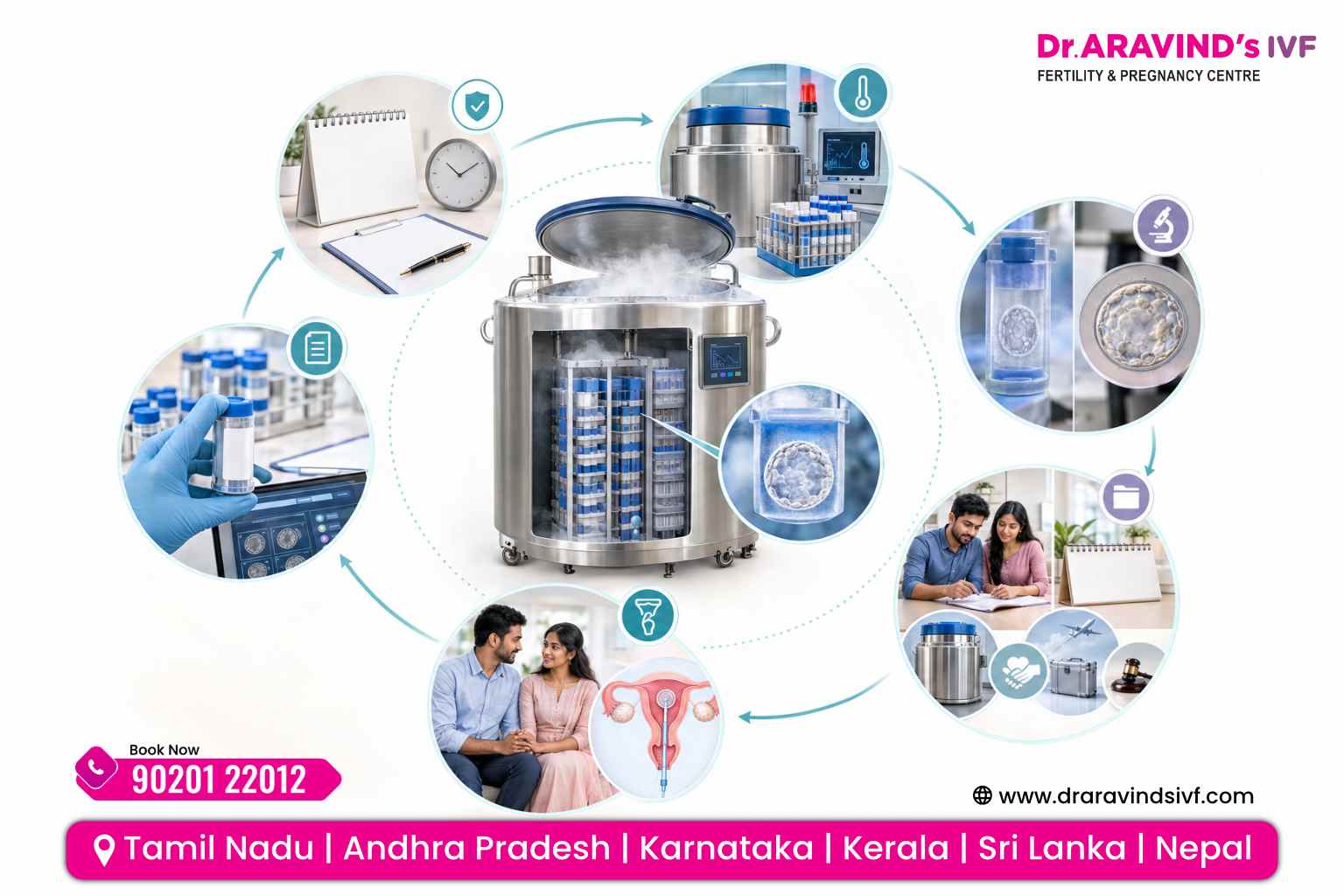
In one IVF cycle, several eggs may be collected and fertilised. Some embryos are used for the transfer in that cycle. Others keep growing in the lab, and if they meet the clinic's standard, they can be frozen for later.
You may hear a few different words for the same thing:
| Term | What it means |
|---|---|
| Extra or surplus embryos | Embryos left over after the planned transfer. |
| Frozen embryos | Embryos kept in storage after freezing. |
| Embryos for future transfer | Frozen embryos that are still suitable to use after warming. |
Freezing extra embryos gives you another opportunity to try for a pregnancy without repeating ovarian stimulation and egg retrieval. If suitable embryos remain after your IVF cycle, your fertility specialist may recommend freezing them for future use.
A frozen embryo transfer (FET) may be considered in several situations:
For some patients, freezing embryos and postponing transfer can also reduce the risk of ovarian hyperstimulation syndrome (OHSS), particularly when the risk is increased after ovarian stimulation. Your doctor will recommend an approach based on your response to treatment and individual health needs.
Most modern labs use vitrification. The embryo is cooled so quickly that it sets into a glass-like state, which limits the harmful ice crystals that slower freezing can create.
| Step | What happens |
|---|---|
| 1 | The embryologist checks the embryo's identity and stage. |
| 2 | Protective solutions prepare the embryo for freezing. |
| 3 | The embryo is placed on a labelled carrier. |
| 4 | It is cooled rapidly and kept in liquid nitrogen. |
| 5 | The clinic records its storage location and the consent details. |
Many frozen embryos survive the warming process, but survival is not guaranteed. The outcome can depend on the embryo's stage of development, its quality, its individual biology and the laboratory's freezing and warming techniques.
Before a frozen embryo transfer (FET), ask your fertility clinic about the following:
Surviving warming is an important step, but it does not guarantee implantation or pregnancy. The outcome also depends on factors such as embryo development, uterine conditions and individual medical circumstances.
To understand the process, read our frozen embryo transfer guide.
If suitable embryos remain after your first transfer, you may be able to keep them in storage for future treatment, subject to the clinic's consent requirements, storage arrangements and applicable regulations.
A future frozen embryo transfer is a separate treatment cycle. Your fertility team will plan how to prepare the uterine lining, which may involve:
The clinic will generally review important details before future treatment, including:
Keep your contact number and email address up to date with the clinic so you can receive important information about storage, consent and renewal dates. If your plans change, speak with the clinic early to understand the available options.
Depending on the law, clinic policy and the consent you signed, the possible options include:
| Option | Things to know |
|---|---|
| Keep storing them for yourselves | Storage fees and consent renewals may apply. |
| Use them in a future pregnancy attempt | Requires medical suitability and valid consent. |
| Donate to another person or couple | Possible only where permitted, with appropriate screening and consent. |
| Give to approved research | Permitted only where applicable rules allow it and specific consent is obtained. |
| End storage through the approved process | Requires proper consent and compliance with clinic procedures and applicable rules. |
| Move to another authorised ART clinic | Requires the necessary paperwork and a safe transport plan. |
Embryo donation and the use of embryos for research are subject to strict legal and regulatory requirements in India. Before making a decision, ask your registered Assisted Reproductive Technology (ART) clinic whether your intended plan is permitted under the current Indian ART framework, whether any screening requirements apply and which consent forms are needed.
Do not assume that a clinic can transfer your embryos to another person, use them for research or discontinue their storage based only on a verbal request. Ask your clinic for written guidance about the available options and, if necessary, seek independent legal advice.
Embryos created using reproductive material from two people can involve complex consent and legal questions. Your clinic should explain whose consent is required for continued storage, transfer, transport, donation, research or decisions about ending storage.
Before freezing embryos, it can help to discuss possible future situations together, including:
The answers depend on the consent documents, applicable law and the circumstances at the time. Ask your clinic to explain these matters clearly before signing the freezing and storage paperwork.
Review your storage arrangements regularly and confirm with your clinic whether continued storage is permitted under the applicable rules, consent requirements and clinic policies. Make sure you understand the storage charges, renewal dates and any deadlines that apply to your embryos.
Keep your contact details up to date and respond to calls, emails or letters from your clinic. Missed payments, expired consent or outdated contact information can create complications and may affect the options available to you.
Before agreeing to embryo freezing, use this checklist to discuss the medical, financial and consent-related details with your fertility team.
| Topic | Questions to Ask |
|---|---|
| Embryo details | How many embryos are being frozen? Are they cleavage-stage embryos or blastocysts, and what are their grades? |
| Laboratory process | Which vitrification method is used? How are embryo identity and witnessing checks performed? |
| Storage costs | What is the storage fee, when is renewal due and what happens if a payment is missed? |
| Consent and future use | When must consent be renewed? What options are legally available for future treatment, donation, research or ending storage? |
| Changes in circumstances | What happens after separation, a partner's death or loss of contact? |
| Moving embryos | Can the embryos be transported to another registered ART clinic, and what approvals and costs would apply? |
| Warming outcomes | What are the laboratory's embryo warming survival results, and what happens if an embryo does not survive warming? |
Embryo storage and embryo transfer are two separate stages of fertility treatment. Storage involves keeping frozen embryos in monitored liquid nitrogen storage under controlled laboratory conditions. Transfer takes place later, when a selected embryo is warmed and placed into the uterus as part of a planned treatment cycle.
| Embryo Storage | Embryo Transfer |
|---|---|
| Keeps suitable embryos frozen for possible future use. | Involves warming a selected embryo and placing it in the uterus. |
| Requires ongoing storage arrangements, applicable consent and fees. | Requires treatment planning, uterine lining preparation and transfer-related medical decisions. |
| Does not guarantee that an embryo will later implant. | Does not guarantee implantation or pregnancy. |
Speak with our team about embryo freezing, storage arrangements and planning for a future frozen embryo transfer.
Book an IVF consultationSuitable extra embryos are commonly frozen using a technique called vitrification and stored for possible use in a future embryo transfer. Depending on current Indian law, consent requirements, and clinic policy, you may also be able to discuss continued storage or other legally permitted options, including donation, approved research, or ending storage.
Take time to understand your options before making a decision. Keep your choices documented, review your consent and storage arrangements regularly, and revisit them if your family plans or personal circumstances change.
Related Reading
No. Only embryos that meet the lab's standard, and that you have agreed to freeze, are frozen. Some stop growing or are not suitable for freezing.
Yes, if they are stored properly, the consent is valid, you are medically suitable and the clinic's rules allow it.
Vitrification is designed to limit damage, and many embryos survive warming. Survival is not guaranteed, and neither is implantation.
It may be possible between authorised clinics, with proper paperwork, consent, safe transport and compliance with Indian rules. Ask both clinics before making plans.
Your clinic's contract and consent papers should explain the notice period and process. Contact the clinic before a deadline if you need help.


