For many IVF patients, transferring one embryo is the usual choice. It aims for one healthy pregnancy and keeps the chance of twins low. Two embryos may be discussed in particular situations, but they are not automatically safer or more likely to work. The right number for you depends on your age, the stage and quality of your embryos, any genetic test result, your history, your health and the rules your clinic follows.
Key takeaways
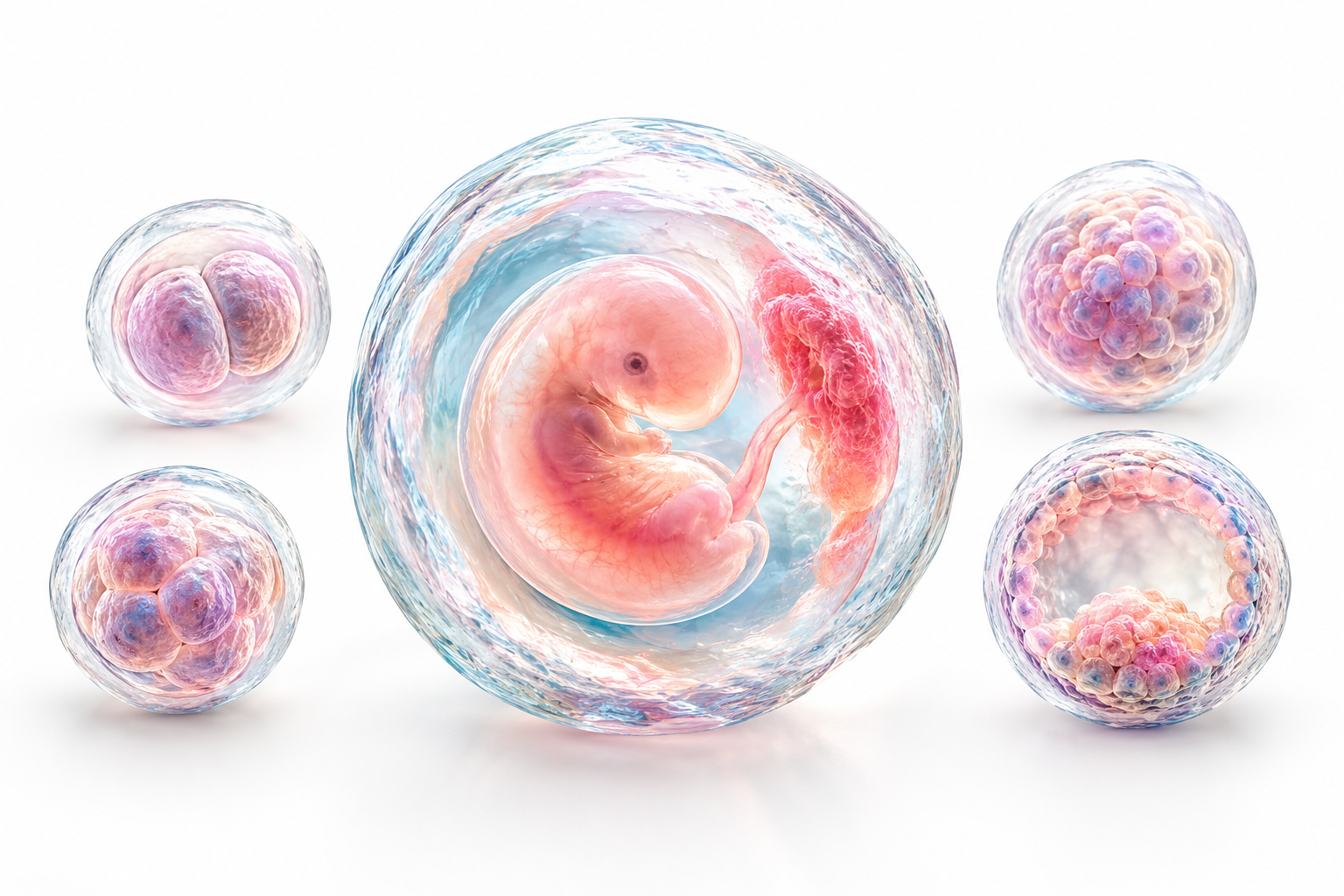
Several things are weighed together, and none of them decides it alone.
The goal of IVF is to achieve a healthy pregnancy and birth. Transferring one embryo reduces the risk of twins and higher-order multiple pregnancies. If other suitable embryos are available, they may be frozen for possible use in future transfers.
Compared with a twin pregnancy, a singleton pregnancy generally involves lower risks of:
For a side-by-side comparison, read our guide to single vs double embryo transfer.
Age can influence embryo development and the chance of implantation, but it does not determine the number of embryos to transfer on its own. For example, a younger patient with a suitable blastocyst may be advised to have a single embryo transfer. For an older patient, the specialist may need to consider age-related fertility factors, embryo availability, previous treatment outcomes and other clinical details.
Your doctor should base the recommendation on your individual circumstances and current professional guidance. Recommendations can differ according to the country, applicable regulations and the clinical situation. Ask your clinic which guidance it follows and why it recommends a particular approach for you.
Yes. Embryo stage and grade help the embryology team assess development and discuss which embryo may be suitable for transfer. A good-quality blastocyst may support a single embryo transfer plan, while an earlier-stage or lower-grade embryo may require a more detailed discussion of its potential and limitations.
However, embryo grade describes appearance, not confirmed chromosomal health, and cannot guarantee implantation or live birth. Your specialist should consider the full embryo report alongside your age, medical history and previous IVF results.
Learn more in our guides to embryo grading in IVF and embryo development day by day.
IVF clinics in India must follow the applicable Assisted Reproductive Technology (ART) legal and regulatory framework, relevant professional guidance and their registration requirements. The appropriate number of embryos to transfer depends on the circumstances of the case and the current requirements that apply.
Before consenting to treatment, ask your clinic to explain the current rules relevant to your situation, the clinical reasons for its recommendation and any applicable limits. Do not rely on a general online article as the final authority on the number of embryos permitted in your case.
Bring your embryo report to a consultation at Dr. Aravind's IVF Fertility & Pregnancy Centre. Your fertility team can explain the recommended transfer plan, the reasons behind it and the potential risks and benefits.
Book an IVF consultation →If both embryos implant, the pregnancy may involve twins. Twin pregnancies carry higher risks of premature birth, low birth weight, high blood pressure and pre-eclampsia, gestational diabetes, placenta-related complications, differences in fetal growth and newborn intensive care. Some complications associated with prematurity can have lasting effects on a child's health.
A twin pregnancy can also place additional physical and emotional demands on the mother, including more frequent monitoring and a greater likelihood of needing additional medical care. Read our guide to twin pregnancy after IVF for more information.
The chance of pregnancy from a single transfer may be lower than that of transferring two embryos in some circumstances. However, comparing only one transfer can overlook the possibility of using another suitable frozen embryo in a later cycle.
Your fertility specialist should consider the potential cumulative chance of live birth across the embryos available to you, as well as the risks of multiple pregnancy. Ask your clinic to explain:
When comparing success rates, check whether the figures refer to a positive pregnancy test, clinical pregnancy or live birth, and whether they are calculated per transfer or across several transfers. These are different measures and should not be treated as interchangeable.
If only one embryo is available, the decision about how many embryos to transfer is more straightforward. Your fertility team should still explain its developmental stage, grade, potential and limitations, along with the proposed transfer plan.
A single embryo can implant and lead to a healthy birth, although no outcome is guaranteed. If no embryo is suitable for transfer, ask your specialist to review the laboratory findings and discuss appropriate next steps. If you have experienced repeated unsuccessful cycles, our guide to repeated IVF failure may also be helpful.
Having several suitable embryos may allow you to transfer one embryo now and freeze others for possible future use. This can provide additional opportunities without repeating ovarian stimulation and egg retrieval for every transfer.
However, not every frozen embryo survives thawing, and not every transfer results in pregnancy. Ask your clinic about embryo storage duration and fees, consent requirements, the process for a future transfer and the possibility that an embryo may not survive thawing.
Yes. Transferring two embryos in a frozen cycle can also result in twins if both implant. The fact that an embryo has been frozen does not remove the risks associated with multiple pregnancy.
The number of embryos should be decided after individualised counselling, considering embryo characteristics, your medical history, expected outcomes and the applicable clinical guidance. Read more in our frozen embryo transfer guide.
Choosing the number of embryos to transfer is an important decision. Before giving informed consent, consider discussing these questions with your fertility specialist:
A good fertility team should explain the options clearly, answer your questions and give you time to make an informed decision. You should not feel pressured to transfer two embryos because you are worried about wasting a cycle. The aim is to balance the chance of success with the safest possible outcome for you and your baby.
There is no single embryo transfer approach that is right for everyone. For many IVF patients, transferring one embryo is the preferred strategy because it reduces the risk of twins and complications associated with multiple pregnancy. Double embryo transfer may be discussed in selected circumstances after carefully considering your medical history, embryo quality and stage, previous treatment outcomes, current clinical guidance and applicable Indian regulations.
For a detailed comparison, read our guide to single vs double embryo transfer. To understand what happens after an embryo is transferred, explore our guide to embryo implantation after IVF.
Have questions about transferring one embryo or two? Book a consultation with the team at Dr. Aravind's IVF Fertility & Pregnancy Centre to review your embryo report, understand your options and discuss a treatment plan tailored to your needs.
Book an IVF consultation →Medical disclaimer: There is no single embryo number that is appropriate for everyone. Transfer decisions should be made with your treating fertility team after reviewing your medical history, available embryos, expected outcomes, applicable legal requirements and informed consent.
Many patients are advised to transfer one, especially when a suitable blastocyst is available. Two may be discussed in selected cases, depending on the patient, the embryos, safety, guidance and the rules that apply.
One is generally safer, because it lowers the chance of a multiple pregnancy. For some patients, two may raise the chance of implantation in a single procedure, but at the cost of a higher twin risk.
They can raise the chance that both implant, but twins are not guaranteed, and a twin pregnancy has higher medical risks than a single baby.
No. An embryo is transferred once. Another suitable frozen embryo can be used in a separate, later transfer.
Not automatically. Your doctor should look at why the earlier cycle did not work, the quality of your embryos, your health and your other options before suggesting a number.


