First published [10/10/2026]
IVF egg maturity describes how far each retrieved egg has developed. Only mature eggs, called MII or M2, can normally be fertilised, either by mixing with sperm or by ICSI. That is why the number of eggs collected is often higher than the number of eggs the laboratory can actually use.
Key takeaways
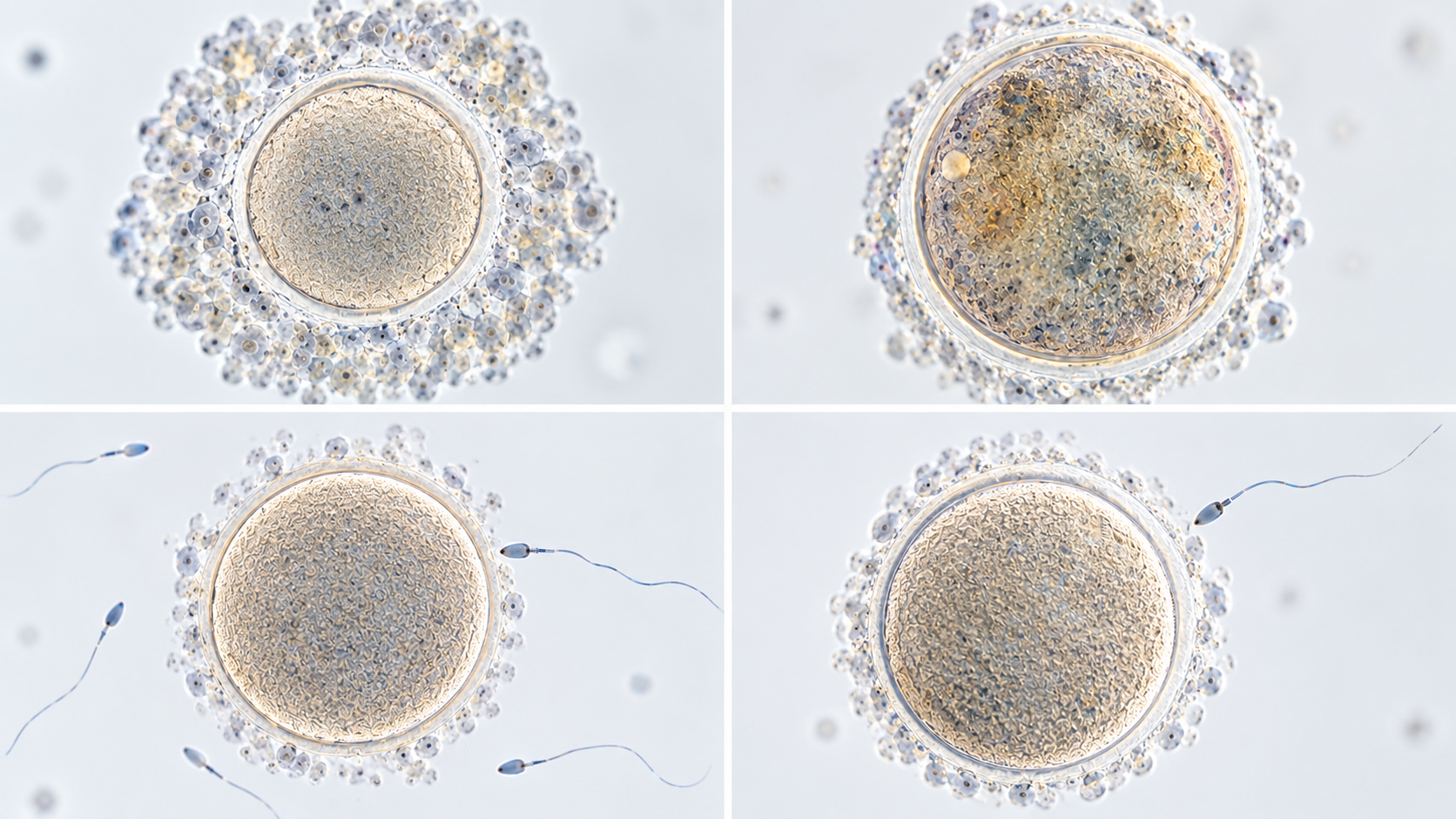
During an IVF cycle, fertility medicines stimulate the ovaries to help several follicles grow at the same time. Each follicle may contain an egg. During egg retrieval, the doctor collects fluid from the follicles, and the embryology team examines it under a microscope to identify the eggs.
However, finding an egg is only the first step. Before an egg can usually be fertilised, it needs to reach a particular stage of development. This readiness is known as egg maturity.
After retrieval, the embryology team may classify the collected eggs into different groups based on their stage of development and appearance:
The exact terminology and format can vary between embryology laboratories. The important point is that the number of eggs retrieved is not necessarily the same as the number of mature eggs available for fertilisation.
Your fertility specialist and embryology team can explain what your results mean and whether they suggest any changes to a future treatment plan.
These three terms describe where an egg stands in its final development. The table puts them side by side.
Eggs do not all mature at exactly the same pace. Even when an ultrasound shows several follicles of a suitable size, some eggs may still be developing when egg retrieval takes place. As a result, not every egg collected during an IVF cycle will necessarily be mature enough for fertilisation.
Several factors may contribute to immature eggs during IVF, including:
Finding immature eggs does not automatically mean that something was done incorrectly during treatment. Egg maturity depends on several interacting factors, including individual biology, follicle development and the timing of the trigger injection.
Your embryology report is best understood as part of the complete IVF process. Your fertility specialist can review the number of eggs retrieved, how many were mature, fertilisation results and embryo development together to help explain the outcome and guide any future treatment decisions.
No. An ultrasound shows follicles, but it cannot tell whether each one holds a retrievable egg. Some come back empty, and some give an egg that is not yet mature.
For this reason, IVF results make more sense as a chain of counts:
It is normal for the count to fall at each step, even in a cycle that went exactly to plan. What follows after fertilisation is covered in our page on embryo development and blastocyst culture.
The IVF trigger injection helps prompt the final stages of egg maturation before retrieval. The egg retrieval procedure is scheduled around the injection, commonly about 34–36 hours later, although the exact interval depends on the medication used and your clinic's protocol.
Before deciding when to give the trigger, your fertility specialist may consider:
The trigger injection supports final egg maturation, but it cannot guarantee that every retrieved egg will be mature. If you are concerned about the timing of your injection, ask your fertility team to review the prescribed injection time and egg retrieval schedule with you.
Read our guide to the trigger shot in IVF, including its timing and purpose, to understand this step in more detail.
Some immature eggs may continue to mature after they are collected and placed in laboratory culture. This is sometimes called in vitro maturation after retrieval. However, not every immature egg will mature, and the likelihood varies depending on the egg and its stage of development.
An egg that matures later may not have the same fertilisation or embryo-development potential as an egg that was already mature at retrieval. Even if an egg reaches maturity in the laboratory, successful fertilisation and further development are not guaranteed.
The embryology team assesses whether continued culture or any further laboratory steps are appropriate. Not every immature egg can be used, but an immature egg is not automatically discarded in every case. The available options depend on the laboratory's protocols and the individual circumstances.
Bring your egg retrieval and laboratory results to a consultation at Dr. Aravind's IVF Fertility & Pregnancy Centre. Our team can help explain what each stage means for your treatment.
Book an IVF consultation →Once the embryology team identifies the mature eggs, the next step depends on your treatment plan, sperm results, and fertility history. Options may include:
The appropriate option depends on factors such as sperm quality, previous fertilisation results, the number of mature eggs available and the plan discussed with your fertility specialist.
Not necessarily. Egg maturity and egg quality are related, but they are not the same thing. A lower-than-expected maturity rate may be associated with uneven follicle development, trigger timing, your response to stimulation or natural biological variation.
Egg quality is influenced by several factors, including age. A single maturity percentage cannot tell you the complete picture of egg quality or predict the outcome of an IVF cycle on its own.
For a more detailed explanation, read our guide to egg quality before IVF.
If your embryology report shows that some eggs were immature, these questions can help you understand the results and discuss the next steps:
Your answers can help put the maturity results into context alongside fertilisation and embryo development.
If a cycle produces a higher-than-expected number of immature eggs, your fertility specialist may review the complete treatment cycle before deciding whether any adjustments are appropriate.
This review may include:
A protocol change is not always necessary. Your fertility specialist should make recommendations based on the complete cycle report, your medical history and your treatment goals rather than one percentage alone.
Were your eggs mature, but fertilisation did not occur as expected? Read our article on why IVF eggs fail to fertilise to understand some of the possible reasons behind this next stage.
The number of eggs retrieved is only the beginning of your IVF laboratory report. Not every egg collected will be mature enough for fertilisation. Some may be immature because their follicles developed at different rates, while other factors related to your ovarian response and treatment cycle may also play a role.
M2 or MII eggs are generally considered mature and suitable for fertilisation. M1 or MI and GV eggs are at earlier stages of development and may not yet be ready. However, egg maturity alone cannot predict whether fertilisation or embryo development will be successful.
If your report shows fewer mature eggs than you expected, ask your fertility specialist and embryology team to explain the complete process, from follicle development and egg retrieval to maturity, fertilisation and embryo development.
You can also learn more about how IVF egg retrieval works and how follicle numbers relate to the eggs collected.
Would You Like Help Understanding Your IVF Report?
Would You Like Help Understanding Your IVF Report?
Book a consultation at Dr. Aravind's IVF Fertility & Pregnancy Centre to discuss your cycle results and understand the next steps based on your individual circumstances.
Book an IVF consultation →Medical Disclaimer: This article is intended for general educational purposes and is not a substitute for medical advice or diagnosis. Your fertility specialist and embryology team should interpret egg maturity, fertilisation, and embryo development results in the context of your individual treatment and medical history.

There is no magic number. A single mature egg can lead to an embryo, but more mature eggs give the laboratory more chances at fertilisation and embryo growth. Your age, your partner's sperm and what you hope to achieve all shape how many are enough.
ICSI is normally done on mature eggs only. If some immature eggs ripen in the dish, the embryologist decides whether and when they are suitable to inject.
M2 eggs have finished the step that makes them ready for fertilisation, so they are the ones used first. M1 eggs are still one stage short, and they may or may not catch up in the laboratory.
Not always. Follicles, retrieved eggs and mature eggs are three separate counts. A very high follicle count can also raise the chance of an over-response such as OHSS.
It might. A doctor can sometimes find a lever to change, like the dose, the stimulation length or the trigger plan. Cycles still differ from one another, and nobody can promise a set maturity rate.


