IVF eggs fail to fertilise when the eggs are not mature enough, the sperm cannot fertilise them normally, the egg does not activate after sperm enters, or the fertilisation method does not suit the situation. Trigger timing, laboratory conditions and natural variation can also play a part. Often the cause is a mix of factors, and one cycle rarely gives the full answer.
Key takeaways
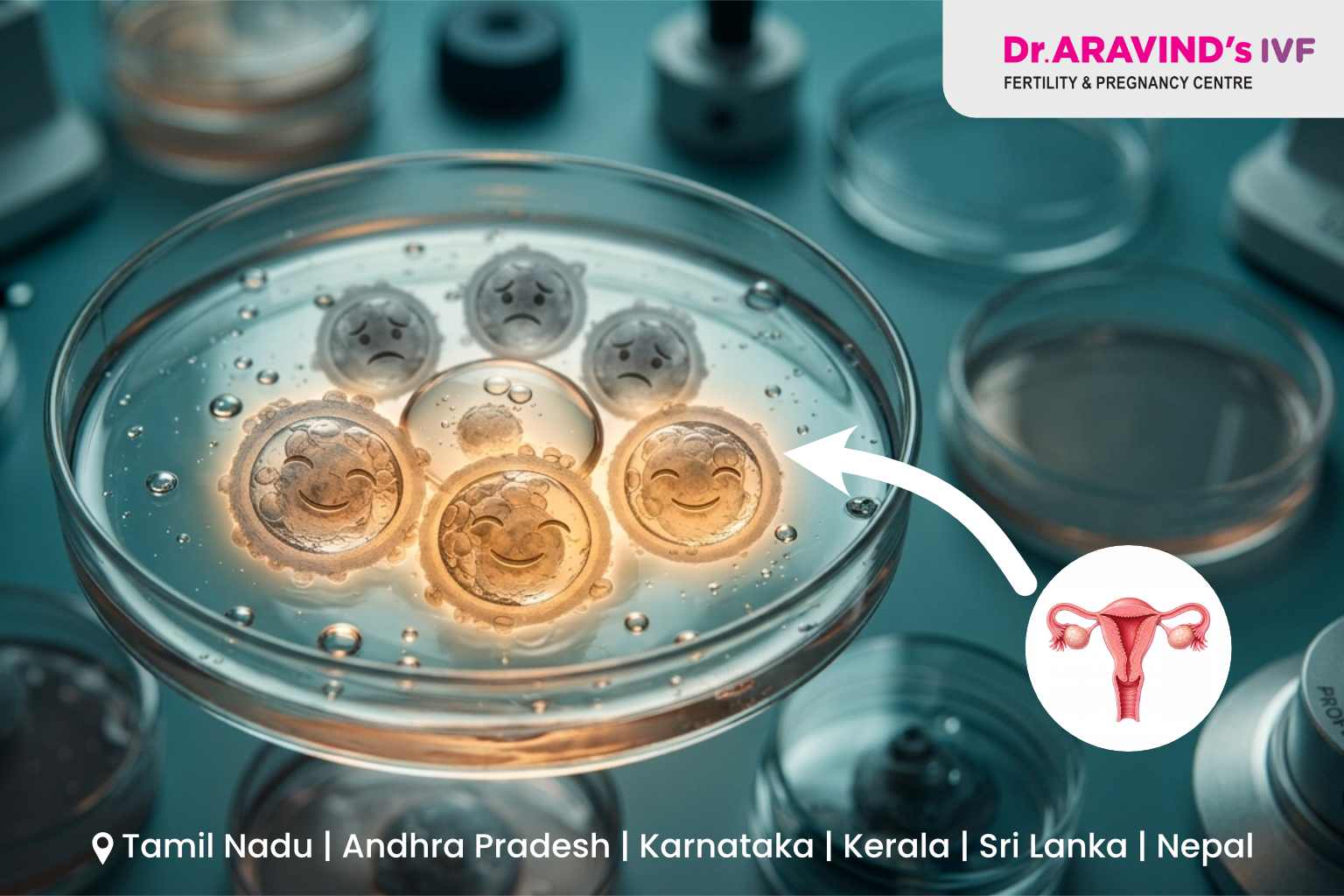
During IVF, the embryology team usually checks for signs of fertilisation the following day after conventional insemination or ICSI. Normally fertilised eggs typically show two pronuclei, known as 2PN. These are the visible signs that the egg and sperm have contributed their genetic material as expected at this stage.
If fewer eggs than expected show normal fertilisation, the outcome may be described as low fertilisation. If none show normal fertilisation, it may be described as total fertilisation failure. Your embryologist will interpret the findings based on the treatment method and laboratory observations.
It is also important to distinguish fertilisation failure from other IVF setbacks, because each involves a different stage of treatment:
A low fertilisation result does not automatically mean pregnancy will never happen. It also does not guarantee that the same result will occur in a future cycle. Understanding what happened can help your fertility specialist discuss appropriate next steps.
Fertilisation depends on several steps involving the egg, sperm and laboratory process. There may be more than one contributing factor, and sometimes the exact reason remains unclear even after a detailed review. The following are nine possible explanations your fertility team may consider.
Egg maturity is an important factor in IVF fertilisation. Eggs generally need to reach the mature MII or M2 stage before they can be used for conventional IVF or ICSI in the usual way.
If many of the retrieved eggs are immature, fewer may be available for fertilisation. Before interpreting the fertilisation outcome, your doctor and embryologist will usually review how many eggs were collected, how many were mature and how many were suitable for the planned treatment.
They may also review follicle growth, trigger timing and the interval between the trigger injection and retrieval. Learn more in our guide to IVF egg maturity and why some retrieved eggs cannot be fertilised.
Sperm count, movement and shape can provide useful information about male fertility. However, a routine semen analysis cannot assess every aspect of sperm function or predict exactly how sperm will interact with an egg.
In certain cases, factors such as medical conditions, a recent high fever, smoking, some medications, or a varicocele may be relevant. Their significance depends on the individual's history and test results.
In conventional IVF, prepared sperm must reach and interact with the egg without direct injection. If sperm-related difficulties are identified, the fertility specialist may discuss ICSI, in which a single sperm is injected into a mature egg. ICSI may help overcome certain fertilisation barriers, but it cannot guarantee success.
Read more about male infertility and semen analysis.
After a sperm enters an egg, the egg must undergo a series of biological changes known as egg activation. These changes help initiate the process that leads to normal fertilisation and early embryo development.
Sometimes, the egg does not activate as expected, even when a sperm has entered it. Egg-related factors, sperm-related factors and other biological mechanisms may contribute. A single unsuccessful cycle does not necessarily establish the precise cause.
If fertilisation failure occurs repeatedly, your fertility specialist may review the embryology findings and decide whether further assessment is appropriate.
Conventional IVF and ICSI use different approaches to bring sperm and eggs together.
When significant sperm-related concerns exist or previous fertilisation has been unexpectedly low, the fertility specialist may discuss whether ICSI is appropriate in a future cycle. The decision depends on the clinical history, laboratory results and treatment goals.
ICSI can bypass certain barriers involved in sperm reaching and entering an egg, but it does not resolve every possible cause of fertilisation failure.
ICSI places a sperm directly inside a mature egg, but this is only one step in the fertilisation process. The egg must still activate, form the expected pronuclei and begin normal development.
Fertilisation may not occur after ICSI because of factors involving egg maturity, sperm function, egg activation or other biological processes. The embryology team can help determine which findings are relevant to your cycle.
Learn more about ICSI treatment and when it may be considered.
The IVF trigger injection helps prompt the final stages of egg maturation before retrieval. If follicles develop at different rates, some eggs may not be fully mature by the time they are collected.
When the maturity rate is lower than expected, your fertility specialist may review:
Reviewing these details does not automatically mean that a mistake occurred. Egg maturity can be influenced by several factors, including individual ovarian response.
For more information, read our guide to the trigger shot in IVF, including its timing and purpose.
Egg quality is a broad term that cannot be fully measured by a single test or percentage. Age is an important factor, but individual biology, ovarian conditions and treatment history may also be relevant.
It is important to distinguish egg quality from egg maturity. An egg can be mature without necessarily having the developmental potential needed for successful fertilisation and embryo growth.
Be cautious about products or treatments claiming to improve egg quality overnight. Discuss the available evidence and realistic options with your fertility specialist rather than relying on quick-fix promises.
Our guide to egg quality before IVF explains some of the factors that may influence it.
A routine semen analysis does not measure every aspect of sperm function. In selected situations, particularly when there are recurrent reproductive difficulties, a specialist may consider additional testing based on the couple's history and previous results.
One possible investigation is a sperm DNA fragmentation test. This test assesses damage to sperm DNA, but it is not necessary for everyone and does not, by itself, explain every case of fertilisation failure.
Your fertility specialist can explain whether further testing is appropriate and how the results might influence treatment decisions.
IVF laboratories follow established procedures for egg collection, assessment, insemination, fertilisation checks and embryo culture. When fertilisation is much lower than expected, the embryology team may review the relevant laboratory records, procedures, equipment and culture conditions as part of its assessment.
A low fertilisation rate alone does not prove that a laboratory problem occurred. The outcome should be reviewed objectively alongside egg maturity, sperm findings, the fertilisation method and other relevant clinical information.
You deserve a clear explanation of your results. Rather than blaming yourself or assuming that the laboratory was responsible, ask your fertility team to explain what the available evidence suggests about your cycle.
Bring your egg retrieval and embryology reports to a consultation at Dr. Aravind's IVF Fertility & Pregnancy Centre. Your specialist can review the results with you and discuss possible next steps based on your individual circumstances.
Book an IVF consultation →Medical disclaimer: This article is for general educational purposes and does not replace individual medical advice. Your fertility specialist and embryology team should interpret fertilisation results in the context of your treatment method, medical history and laboratory findings.
A fertilisation rate is normally worked out against the number of mature eggs that were inseminated or injected. The total number of follicles on the scan, or of eggs collected, is not normally the starting figure.
The table below uses made-up numbers purely to show how the denominator changes the result.
If fertilisation does not happen as expected during IVF, the next step is usually a follow-up discussion with your fertility specialist and embryologist. They can review your laboratory report, explain what happened at each stage and discuss whether any changes may be appropriate for a future cycle.
Bring your embryology report to the appointment and ask your team to explain these numbers:
Your fertility team may also review the stimulation protocol, trigger injection timing, sperm preparation, fertilisation method, egg maturity, laboratory observations and outcomes from previous cycles.
Depending on the findings, possible next steps may include:
Not every patient needs additional tests, specialised procedures or treatment add-ons. Recommendations should be based on your individual history, laboratory findings and the available evidence—not on a promise of guaranteed success.
No. Failed fertilisation and failed implantation happen at different stages of IVF.
These situations need different assessments. If no eggs fertilise, your fertility team may focus on egg maturity, sperm factors, the fertilisation method and laboratory findings. If embryos develop but pregnancy tests repeatedly remain negative, the specialist may review other aspects of treatment based on your history.
If implantation is your main concern, read our guide to repeated IVF failure.
Yes, fertilisation failure can happen again, but one unsuccessful IVF cycle cannot predict exactly what will happen in a future attempt. A detailed review may identify factors that can be addressed, while some biological factors may remain difficult to explain or change.
Ask your fertility specialist what the previous cycle revealed and whether a specific adjustment is being recommended. This may involve reviewing egg maturity, sperm findings, the trigger schedule, the fertilisation method or other relevant details.
A thoughtful treatment plan should be based on your individual medical history, laboratory results and realistic expectations. Although changes may improve the approach in a future cycle, no treatment can guarantee fertilisation, embryo development or pregnancy.
IVF eggs may fail to fertilise for several reasons, including egg maturity, sperm-related factors, egg activation, the fertilisation method, trigger timing, laboratory factors or natural biological variation. In some cases, the exact cause may remain unclear even after a detailed review.
The most useful approach is to understand each stage of your IVF cycle, from follicles and egg retrieval to egg maturity, insemination, fertilisation and embryo development. Reviewing these results together can help your fertility specialist explain the outcome and discuss whether any changes may be appropriate in a future cycle.
To learn more about the earlier stages, read our guides to IVF egg retrieval and IVF stimulation protocols. For the next stage, explore our guide to embryo development and blastocyst culture.
Book a consultation at Dr. Aravind's IVF Fertility & Pregnancy Centre and bring your complete embryology report. Your specialist can review your previous cycle and discuss possible next steps based on your individual circumstances.
Book an IVF consultation →Medical Disclaimer: This article provides general educational information and cannot diagnose the cause of fertilisation failure or predict the outcome of a future IVF cycle. Discuss your laboratory report, treatment history, and available options with your fertility specialist and embryologist.
Several things can sit behind it: eggs that were not mature, sperm that could not fertilise, an egg that did not activate, the fertilisation method used, trigger or stimulation factors, or plain biological variation. Only your embryology report can point to the most likely cause
No. It means fertilisation did not go as hoped in that cycle. What comes next depends on how many eggs were mature, the sperm findings and the laboratory review.
ICSI helps in selected situations, such as certain sperm problems or earlier fertilisation failure. It does not suit every couple better, so your doctor should tell you why they are proposing it.
Usually not in the normal way. Some immature eggs ripen in the laboratory, but that cannot be counted on. Our article on IVF egg maturity explains the stages.
Ask how many eggs were retrieved, how many were mature, which fertilisation method was used, how many fertilised normally, and what they would look at before another cycle.


