Hydrosalpinx: Causes, Symptoms, Diagnosis and Treatment
Hydrosalpinx is a condition in which a fallopian tube becomes blocked and fills with fluid. It may affect one or both tubes and is often discovered during an infertility evaluation because many women have no noticeable symptoms. Common causes include pelvic inflammatory disease (PID), sexually transmitted infections, endometriosis, previous pelvic surgery, ectopic pregnancy, pelvic tuberculosis and adhesions.
Hydrosalpinx can make natural conception difficult because the damaged tube cannot function normally. Fluid from the affected tube may also interfere with embryo implantation and reduce IVF outcomes. Diagnosis may involve ultrasound, HSG, HyCoSy or, in selected cases, laparoscopy.
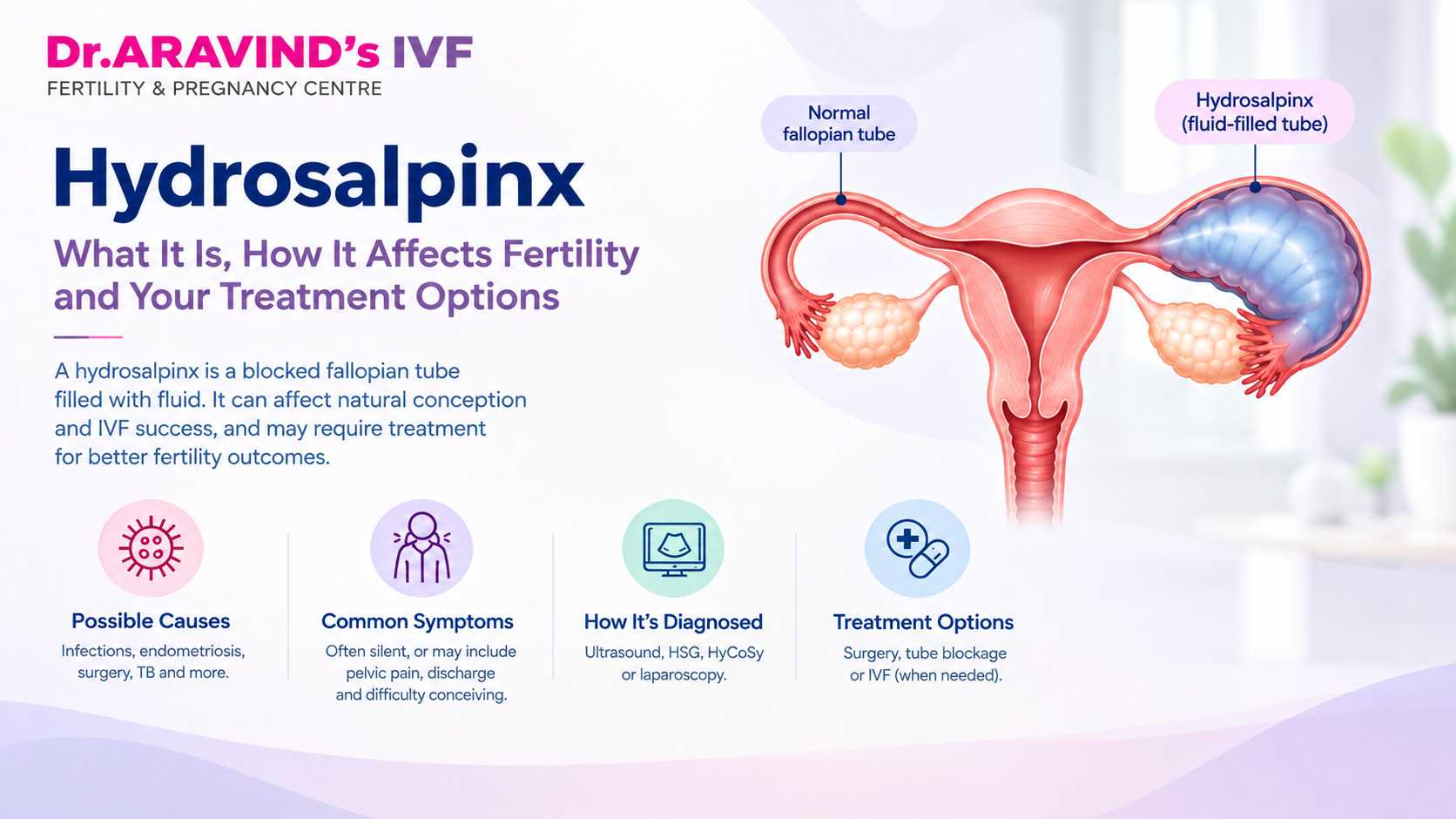
Hydrosalpinx is a blocked, fluid-filled fallopian tube. The blockage is usually near the far end of the tube, close to the ovary, so fluid collects and the tube becomes swollen. Many women have no obvious symptoms and discover the condition during a fertility evaluation. It can make natural conception difficult and may reduce IVF outcomes if an untreated hydrosalpinx is present.
This guide explains what hydrosalpinx means, what causes it, symptoms and diagnosis, how it affects pregnancy, treatment options, and why treatment may be considered before IVF.
A hydrosalpinx develops when a fallopian tube becomes blocked, usually at its distal end, and fills with fluid. The tube may become enlarged and take on a tubular or sausage-like appearance.
Normally, a fallopian tube helps pick up an egg released from the ovary, provides the usual site for fertilisation, and helps transport the early embryo toward the uterus. Damage or blockage can interfere with these functions. Hydrosalpinx may affect one tube (unilateral) or both tubes (bilateral).
A fallopian tube can be blocked near the uterus, in the middle portion, or near the ovary. Hydrosalpinx is a specific type of distal tubal blockage in which fluid accumulates inside the tube. The location and severity of the blockage help determine treatment.
For more information, read Fallopian Tube Blockage After PID: Causes and Fertility Impact
Previous infection and inflammation are common causes of tubal damage. As inflammation heals, scar tissue and adhesions can narrow or seal the tube.
In some women, no single cause is identified.
If PID is a concern, read Pelvic Inflammatory Disease (PID) and Long-term Fertility
Many women have no symptoms. When symptoms occur, they may include:
Severe or sudden pelvic pain, especially with fever, vomiting, dizziness or fainting, needs urgent medical assessment.
Diagnosis usually combines medical history, pelvic imaging and, when needed, a procedure that directly assesses the pelvis.
For HSG preparation and results, read HSG Procedure: Steps, Pain, Cost, Results and HSG vs HyCoSy
An HSG is usually scheduled in the first part of the menstrual cycle, after menstruation and before ovulation. A thin catheter is placed through the cervix, contrast is introduced, and X-ray images are taken. Some women experience temporary cramping similar to period pain. HSG is not performed during pregnancy, and active pelvic infection should be treated first. Tell your doctor about previous reactions to contrast material or relevant allergies.
Hydrosalpinx can affect fertility through mechanical blockage and through the effect of tubal fluid on the uterine environment. A damaged or blocked tube may prevent normal contact between the egg and sperm. Fluid from the affected tube can sometimes move toward the uterus and may interfere with implantation.
Tubal disease is also associated with an increased risk of ectopic pregnancy. Because infertility can have more than one cause, a fertility assessment may also include ovarian reserve testing, assessment of the uterus and a semen analysis.
If you have known tubal disease and a positive pregnancy test, early medical assessment can help confirm the location of the pregnancy. Seek emergency care for severe one-sided abdominal pain, vaginal bleeding with pain, shoulder-tip pain, dizziness or fainting.
It can make natural conception much more difficult. With a unilateral hydrosalpinx, the other tube may remain open and natural pregnancy may still be possible. With bilateral disease, natural conception is very unlikely because both tubes are affected.
The appropriate approach depends on the condition of both tubes, age, ovarian reserve, duration of infertility and the couple's overall fertility assessment.
IVF bypasses the fallopian tubes by retrieving eggs from the ovaries, fertilising them in the laboratory and transferring an embryo into the uterus. However, an untreated hydrosalpinx can still affect the uterine environment and is associated with poorer IVF outcomes.
For this reason, a fertility specialist may recommend treating a significant hydrosalpinx before embryo transfer. The exact approach depends on the tube, previous treatment, ovarian reserve and the overall IVF plan.
Learn more about In Vitro Fertilization (IVF) treatment
| Feature | Unilateral | Bilateral |
| Tubes affected | One | Both |
| Natural conception | May be possible if the other tube is healthy | Very unlikely |
| IVF impact | May still affect outcomes | Can affect IVF outcomes |
| Treatment | Individualised | Often treated before embryo transfer when appropriate |
IUI is generally not a suitable treatment when a significant hydrosalpinx is present because tubal function is compromised. The fertility specialist should assess the individual situation.
There is no proven home remedy that can reopen a chronically blocked, fluid-filled fallopian tube. Antibiotics can treat an active infection but do not reverse established tubal scarring. Medical or surgical treatment may be considered depending on the diagnosis and pregnancy plan.
The decision should be personalised rather than based on the scan alone.
If embryos are frozen, plan embryo transfer after the treating team confirms recovery and uterine readiness.
For uterine assessment, see Hysteroscopy
For frozen embryo transfer information, see Frozen Embryo Transfer
Consider a fertility consultation if you have been trying to conceive for 12 months, or for 6 months if you are over 35, or sooner if you have a history of PID, pelvic tuberculosis, endometriosis, ectopic pregnancy, pelvic surgery or an HSG/scan showing tubal damage.
For fertility assessment and IVF care, explore Dr. Aravind's IVF Fertility & Pregnancy Centre in Coimbatore
HSG Procedure: Steps, Pain, Cost, Results and HSG vs HyCoSy →
Fallopian Tube Blockage After PID: Causes and Fertility Impact →
Pelvic Inflammatory Disease (PID) and Long-term Fertility →
Who Is Eligible for IVF? Age, Conditions & Tests →
IVF Preparation Checklist: Tests, Medicines, Lifestyle →
In Vitro Fertilization (IVF) treatment →
It is not usually life-threatening by itself, but it can significantly affect fertility and may increase ectopic pregnancy risk.
A chronically blocked, fluid-filled tube does not normally reopen on its own.
Natural pregnancy may be possible with one healthy open tube, but the chance can be reduced. With bilateral disease, natural conception is very unlikely.
Antibiotics can treat an active infection but do not normally reverse established tubal blockage.
Not everyone needs the same treatment. When a clinically significant hydrosalpinx is present, treatment before embryo transfer is often considered.
Yes. Untreated hydrosalpinx is associated with poorer IVF outcomes, and treating it when appropriate may improve outcomes.
No. A salpingectomy removes the tube, not the ovaries. Menstrual cycles generally continue.
Tubal damage is associated with a higher risk of ectopic pregnancy.
Many women have no symptoms; others may experience pelvic or lower abdominal pain.
Hydrosalpinx is a specific distal tubal blockage in which fluid accumulates inside the tube.


