The condition of infertility develops through a gradual progression that leads to its eventual emergence as a medical problem. The condition develops silently when existing medical conditions go unrecognized and untreated, and when people fail to comprehend their condition. The medical community underestimates pelvic inflammatory disease fertility issues, which people refer to as PID, because it represents a major danger to women's reproductive health throughout India and worldwide. Many women receive their diagnosis too late because they only discover their condition after their infection has ended and their fertility problems start to appear.
Dr. Aravind's IVF Fertility and Pregnancy Centre operates with over three decades of experience, while completing more than 70,000 IVF procedures throughout Tamil Nadu, Kerala and other regions. The article serves to fill an essential information gap which enables women to comprehend what PID constitutes, including PID and infertility, its long-term effects on reproductive organs and the available fertility treatments after PID diagnosis.
The guide offers scientific evidence, caring support and practical solutions for people who currently experience PID or who need to recover from previous episodes or who want to know how their fertility history will affect their upcoming pregnancy, including insights on fertility after PID and getting pregnant after PID diagnosis.
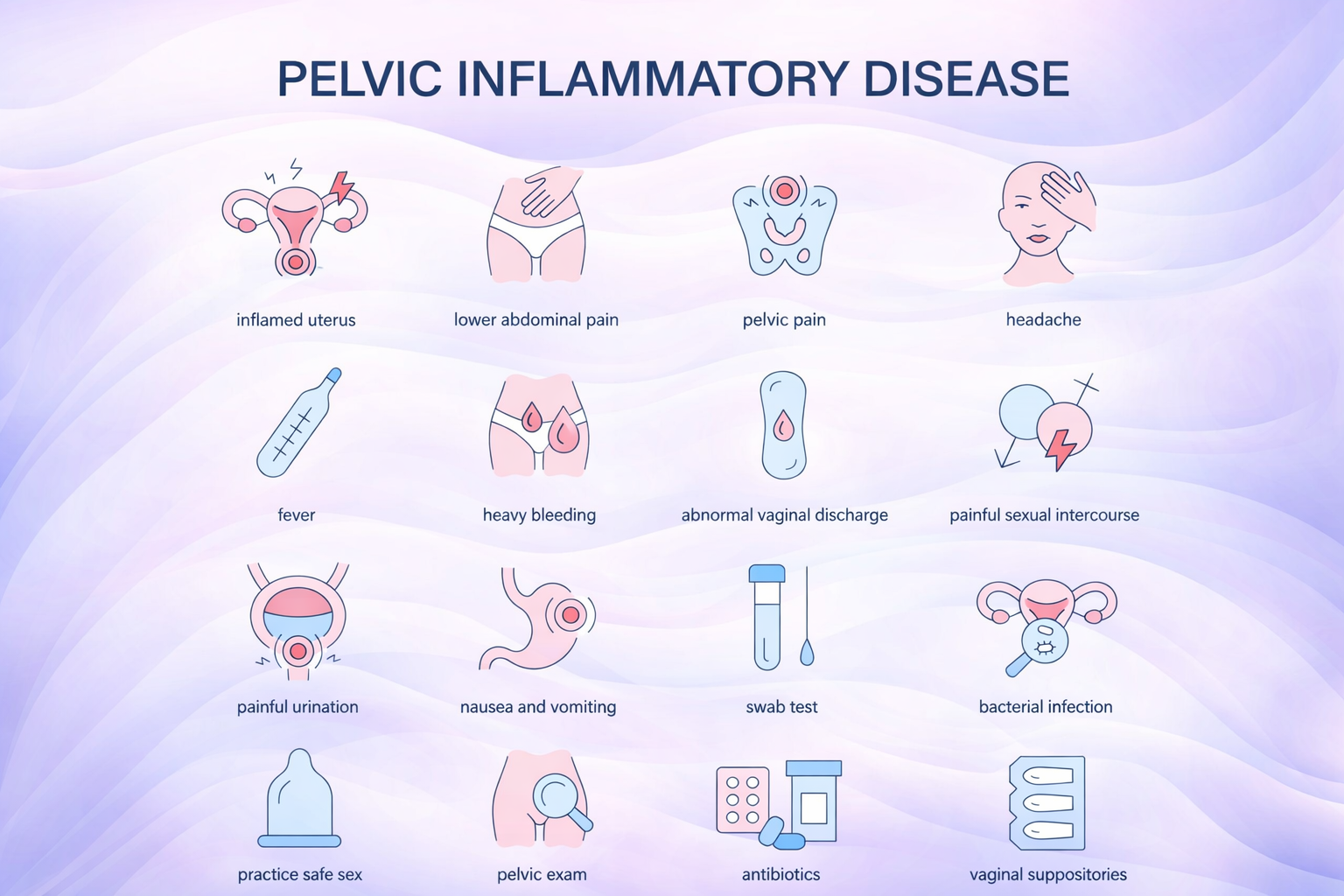
Pelvic Inflammatory Disease is an infection that affects the upper female reproductive tract, which includes the uterus, fallopian tubes and sometimes the ovaries and adjacent pelvic areas. The disease most frequently occurs because of sexually transmitted bacteria, which include Chlamydia trachomatis and Neisseria gonorrhoeae, making it a major cause of STI-related infertility. The upper reproductive tract can develop PID when vaginal bacteria enter through the vaginal canal after childbirth, miscarriage, abortion or IUD insertion or other gynaecological procedures.
The cervix normally functions as a protective barrier that stops infections from ascending through the body. The body experiences an infection when this protected pathway sustains damage from three different factors, which include hormonal shifts, sexual intercourse, and excessive bacterial growth. The human body initiates an inflammatory response after pathogens reach this location. The body needs this response to fight infection, but it results in severe damage to the sensitive reproductive system tissues.
PID can be classified as acute (sudden onset with clear symptoms) or chronic (persistent, low-grade infection with subtle or no symptoms). The silent nature of chronic and subclinical PID makes it especially harmful because it enables ongoing bodily harm to occur without the woman becoming aware of her condition, contributing to long-term complications like PID scarring and fertility treatment in India scenarios.
All sexually active women face the possibility of developing pelvic inflammatory disease, yet specific risk factors significantly increase their chances of developing this condition. The following risk factors are:
PID presents its most dangerous aspect through its ability to show only mild or vague symptoms, which is why awareness of PID symptoms in women is crucial and sometimes leads to a complete absence of symptoms. Research shows that approximately 70 percent of PID cases remain undetected because patients display only general or limited symptoms. The system operates as a concealed danger that adversely affects reproductive health.
The main problem with mild PID, which doctors refer to as 'silent PID', occurs when women experience only brief, dull pelvic pain, which they mistakenly connect to stress, menstrual irregularities and digestive problems. The reproductive system damage reaches critical levels before doctors can identify the accurate medical condition.
The examination of PID's effects on fertility requires scientists to study how pelvic inflammatory disease affects the sensitive structure of the female reproductive system during its battle against ongoing infections.
The fallopian tubes, which function as narrow, hair-like tubes within the female body, perform two essential functions: they carry the ovulated egg towards the uterus while serving as the point where most fertilization events occur. The inner lining of the fallopian tubes contains tiny hair-like structures, which scientists refer to as cilia, that function to move the egg and sperm through the tube system.
When a person develops PID, their fallopian tubes become inflamed, which results in a medical condition known as salpingitis that allows the infection to destroy cilia and create scar tissue that eventually leads to total or partial tube blockage. A completely blocked fallopian tube prevents sperm from reaching the egg, making natural conception impossible. Sperm can still pass through a partial blockage, while the damaged cilia prevent fertilized eggs from leaving the tube, which creates a medical emergency called ectopic pregnancy.
The condition of hydrosalpinx develops through PID when a blocked fallopian tube becomes filled with fluid, significantly reducing PID and IVF success rates. The research demonstrates that an untreated hydrosalpinx decreases IVF success rates by 50% because it must be resolved before the embryo transfer process.
The pelvic inflammatory disease (PID) causes PID-related inflammation to create adhesions, which form fibrous scar tissue between the uterus and ovaries, fallopian tubes and nearby pelvic organs. The adhesions create anatomical changes that prevent the fimbrial end of the fallopian tube from capturing the egg after ovulation. The structures can also restrict blood flow to the ovaries, which causes problems with follicle development and egg production.
The endometrium functions as the site where an embryo must implant to achieve successful pregnancy establishment. The endometrial environment changes because endometritis results from pelvic inflammatory disease (PID) spreading to the uterus. The endometrial changes that follow an acute infection continue to exist and cause repeated implantation failures and early pregnancy losses, leading to repeated IVF failures in some patients undergoing PID and IVF treatment.
The ovaries become infected when PID reaches its most extreme stage or when patients do not receive treatment for their condition. A tubo-ovarian abscess (TOA) is a medical condition that involves pus collection that affects both the tube and the ovary. The medical condition poses a danger to life that needs immediate medical attention. TOAs create destruction of ovarian tissue, which leads to decreased ovarian reserve and affects the woman's ability to produce usable eggs. Severe infection can affect the ovaries, explaining how PID affect ovaries, including reduced ovarian reserve and egg quality.
The process for diagnosing PID requires multiple tests because there is no single test that provides a definite diagnosis. The diagnostic methods consist of the following tests, which include:
Women who need fertility assessments after their PID recovery must undergo complete evaluations at specialized fertility centres, which include tests for ovarian reserve assessment, tubal patency evaluation and endometrial assessment.
The treatment of PID through antibiotics becomes effective when doctors establish the diagnosis without delay. The existing scar tissue and structural damage from previous infections cannot be restored through antibiotic treatment. The essentiality of prompt medical treatment establishes its critical importance in this situation.
The standard treatment requires medical professionals to use broad-spectrum antibiotics, which effectively combat common STI pathogens and other anaerobic bacteria. Medical personnel administer oral treatment for patients with mild to moderate symptoms, while they give intravenous treatment to patients who require hospitalization due to severe symptoms. To avoid reinfection, sexual partners must receive simultaneous treatment. Women must take all prescribed antibiotics until they finish the entire treatment period because their health condition requires it. The primary reason for recurrent PID cases and diminishing fertility capacity is when patients stop their treatment before completing it.
When tubo-ovarian abscesses do not improve with antibiotic treatment, doctors must perform surgical drainage or surgical removal of infected tissue. Women with hydrosalpinx who plan to have IVF should undergo surgical tube closure or removal before their embryo transfer because this procedure leads to better IVF results.
The diagnosis of PID does not bring your parental quest to its conclusion. The severity of damage to both the uterine and tubal systems determines which fertility treatments will be effective for the patient. Modern medicine offers multiple options for PID treatment options depending on damage severity. The specialists at Dr. Aravind's IVF Fertility and Pregnancy Centre create customised treatment plans which use specific methods to achieve the best success rates for each individual woman.
Natural conception remains possible when PID is treated through early diagnosis and surgery, while follow-up tests show that fallopian tubes stay open and women have sufficient ovarian reserves. Women with minor tubal blockages can achieve conception through ovulation tracking and strategic intercourse schedules combined with maintenance of healthy life habits.
Interactions between the male and female reproductive systems result in fertility problems, which IUI can treat when one fallopian tube shows signs of normal function. IUI delivers prepared sperm directly into the uterus, which boosts the sperm's chances of reaching the egg.
The medical field considers IVF to be the most effective treatment option for women who experience repeated IUI failures and who have both bilateral tubal blockage and substantial pelvic adhesions. The process of IVF starts with doctors retrieving eggs from the ovaries. The medical team then fertilizes these eggs in their laboratory. The medical team then transfers the developed embryo into the woman's uterus.
The use of laparoscopic procedures to perform adhesiolysis, tuboplasty and hydrosalpinx removal existed as a method to enhance IVF outcomes through surgical intervention, which enabled physicians to perform these surgical procedures. Our surgeons collaborate closely with fertility specialists to assess the circumstances that require surgical treatment because they believe it will enhance their chances of achieving successful conception.
The medical field considers donor eggs to be the optimal solution in cases where PID has caused severe damage to ovarian reserves and egg quality, because this method allows partners to use their own sperm through IVF for achieving a successful pregnancy. This option enables women to experience pregnancy and childbirth while their ovarian reserve condition remains impaired.
Women often delay fertility tests because they believe their current situation requires more time or because they are afraid of discovering test outcomes. However, your best results come from evaluating your condition at an early stage, especially when you have experienced PID in the past.
You should get a Fertility Consultation immediately if you:
Fertility problems that doctors identify at an early stage can be handled successfully. Your treatment possibilities will decrease when you delay your meeting with a reproductive medicine specialist.
Pelvic Inflammatory Disease stands as a severe medical condition that does not result in permanent disability. The condition produces fallopian tube damage and pelvic tissue scarring, along with reproductive challenges that affect the process of achieving pregnancy. Through contemporary reproductive medicine, most women who experience PID successfully achieve motherhood through natural conception, IUI or IVF methods.
The essential elements for success depend on establishing awareness, administering immediate medical care, and conducting fertility evaluations at appropriate intervals. Anyone who received a PID diagnosis or believes they might have had an undiagnosed pelvic infection should seek medical help without delay. Your understanding of current fertility status brings you the power to achieve productive results.
Dr. Aravind's IVF Fertility & Pregnancy Centre provides advanced medical technology together with the emotional support and specialized knowledge needed by couples who want to become parents. The purpose of our organization exists to help you realize your dream of starting a family.
Yes, a natural pregnancy is possible if PID is diagnosed early and treated before significant damage occurs. If the fallopian tubes remain open and ovarian function is normal, conception can happen naturally.
PID causes inflammation that leads to scarring and blockage of the fallopian tubes, damage to cilia (which help move the egg), and changes in the uterine lining, making fertilization and implantation difficult.
Silent PID may not show clear symptoms. Mild pelvic pain, irregular periods, unusual vaginal discharge, or discomfort during intercourse may be the only signs, making it easy to miss.
IVF is often the most effective treatment for women with severe tubal damage or blocked fallopian tubes due to PID, as it bypasses the tubes entirely.
Hydrosalpinx is a fluid-filled blocked fallopian tube caused by PID. It can significantly reduce IVF success rates and usually requires surgical treatment before embryo transfer.


