Fallopian tube blockage is an important cause of infertility, and PID is one possible cause of tubal damage. When the tubes are scarred or blocked, sperm and egg may never meet, making natural conception difficult.
Many women only discover this issue after months of trying to conceive, since blocked tubes rarely cause obvious symptoms on their own.
Understanding how this happens, and what can still be done about it, gives couples real options instead of fear.
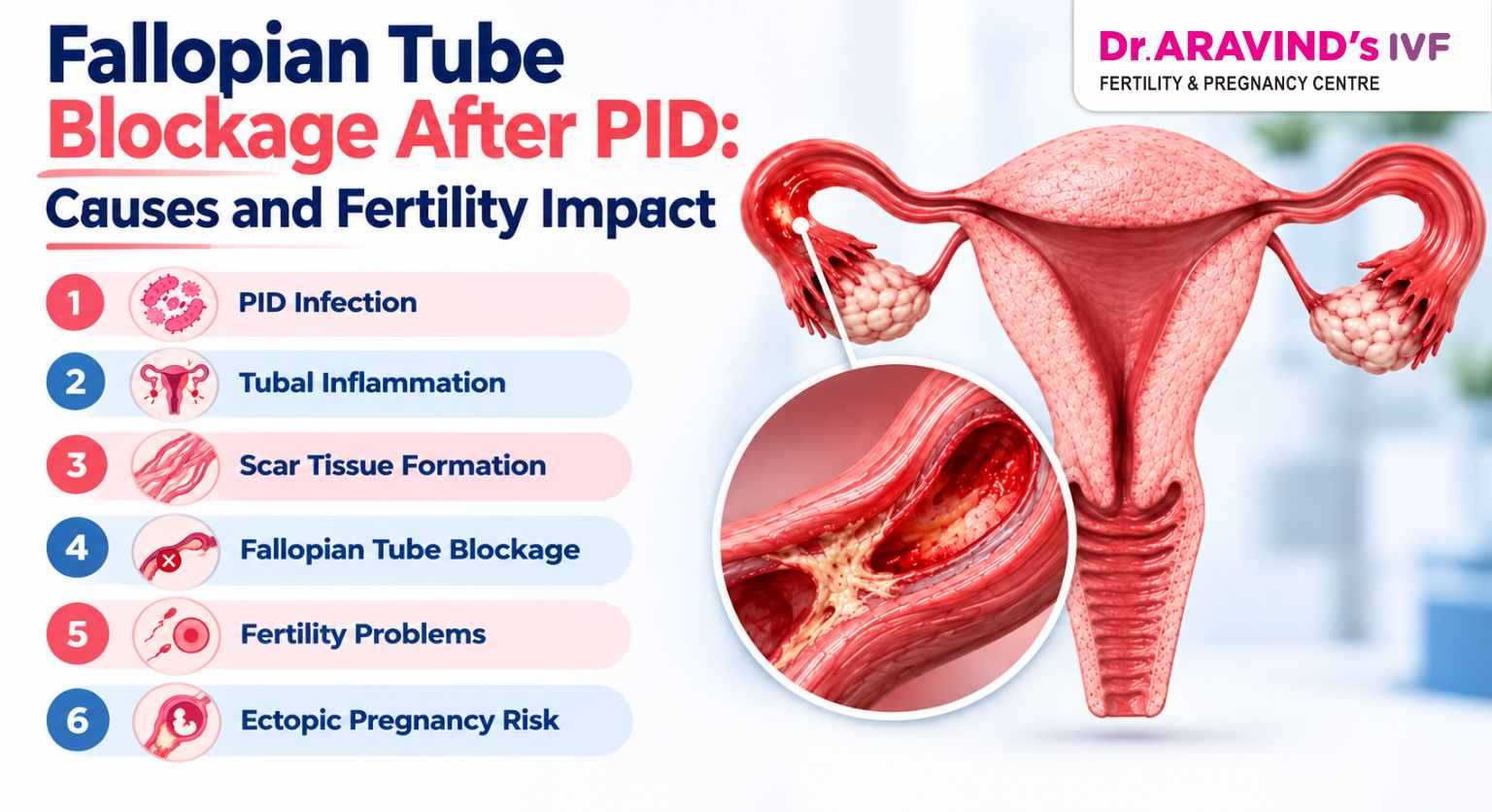
Most women notice no clear symptoms at all. Fallopian tube blockage symptoms often stay silent until a couple starts trying to conceive.
When signs of fallopian tube blockage do appear, they usually come from the underlying condition rather than the blockage itself:
None of these confirm a blockage on their own. They simply signal that a fertility check is worth having.
Does PID cause fallopian tube blockage? Yes, and understanding the process explains why early treatment matters so much.
PID is an infection and inflammation of the upper female reproductive tract. It can develop when certain infections spread upward from the lower genital tract.
The damage tends to follow four stages:
When scarring completely blocks a tube, the egg cannot normally pass through that tube toward the uterus.
PID is common, but it is not the only cause. Fallopian tube blockage causes include several other conditions:
Because tubal problems can affect the ability of sperm and egg to meet, assessing tubal health can be an important part of a fertility evaluation.
One of the most overlooked complications is chronic pelvic pain after PID. Scar tissue can pull on surrounding organs long after the original infection has cleared.
This pain does not always fade once antibiotics finish their course. Scar tissue does not resolve the way an active infection does.
Persistent pain after PID treatment deserves a follow-up evaluation. It should never be dismissed as something to simply live with.
Ectopic pregnancy risk after PID is one of the more serious long-term concerns following tubal damage.
If scarring only partially narrows a tube, a fertilized egg may not travel through it fast enough to reach the uterus. Instead, it can implant inside the tube itself.
This is a medical emergency and requires immediate care. Even a mild or resolved PID episode can carry this risk in a future pregnancy, so early pregnancy monitoring matters for anyone with a PID history.
A fallopian tube blockage test confirms what symptoms alone cannot. Since how to check for fallopian tube blockage is a common question, here are the main diagnostic options:
HSG is commonly used to assess whether the fallopian tubes are open, although the choice of test depends on the individual fertility evaluation.
Bilateral fallopian tube blockage means both tubes are closed, while unilateral blockage affects only one side. The distinction changes the treatment path significantly.
Can I get pregnant naturally with one blocked fallopian tube? Natural pregnancy may still be possible when one tube is open, depending on the health of the remaining tube, ovulation, and other fertility factors.
With bilateral blockage, natural conception is unlikely without treatment. This is where IVF becomes a direct path forward.
Can fallopian tube blockage be cured? It depends on the cause, severity, and how much scarring has already formed.
Antibiotics can stop an active infection, but they cannot reverse existing scar tissue. Surgery can sometimes restore tubal function for mild adhesions or localized damage.
For blockages that cannot be corrected, IVF offers a path to pregnancy by bypassing the tubes entirely.
Fallopian tube blockage treatment depends on where the blockage sits and how much damage exists.
For women exploring fallopian tube blockage treatment without surgery, tubal cannulation is a nonsurgical option for blockages near the uterus. A doctor guides a catheter through the cervix to clear the obstruction with minimal downtime.
Surgical options include:
For some patients with hydrosalpinx treatment needs, treating the affected tube before IVF may improve implantation and pregnancy outcomes. The recommended approach depends on the individual case.
Does a blocked fallopian tube affect egg quality? The blockage itself does not reduce egg quality or ovarian reserve directly.
However, conditions that cause the blockage, such as endometriosis or chronic inflammation, can sometimes affect ovarian function separately. This is why a full fertility evaluation looks beyond the tubes alone.
Can you get pregnant with blocked fallopian tubes? Yes, and the right path depends on how much of the tube is affected.
During IVF, eggs are retrieved from the ovaries, fertilised in the laboratory, and the resulting embryo is transferred into the uterus.
Protecting fertility starts well before any diagnosis. A few habits make a real difference:
Tubal damage after PID does not necessarily prevent pregnancy. Treatment options depend on the extent of damage, other fertility factors, and the overall evaluation.
An evaluation is worth considering if you have a history of pelvic infection, unexplained pelvic pain, or have been trying to conceive for six months or more.
Treatment planning may begin with tests such as HSG or other tubal imaging, alongside hormonal and general fertility testing. Laparoscopy may be considered when more detailed evaluation or treatment is needed.
For couples in Coimbatore seeking evaluation and treatment for tubal-factor infertility, Dr. Aravind's IVF Fertility & Pregnancy Centre provides fertility assessment and treatment options based on individual clinical needs.
Book a fertility evaluation with Dr. Aravind's IVF to understand your options and take the next step forward.

Yes. Untreated pelvic inflammatory disease causes inflammation and scarring inside the fallopian tubes, which can narrow or fully block them over time.
It depends on the extent of scarring. Antibiotics stop active infection but cannot reverse existing damage. Surgery or IVF are the main paths forward depending on severity.
Natural pregnancy may still be possible if the other tube is open, depending on its health, ovulation, and other fertility factors.
PID refers to infection and inflammation involving the upper female reproductive tract, including the uterus, fallopian tubes, or ovaries. Some infections can spread upward and develop into PID.
Fertility centres across Tamil Nadu typically use an HSG test, followed by laparoscopy if further evaluation of the tubes is needed.
PID can cause inflammation and scarring of the reproductive tract. Even after the infection has been treated, existing tubal damage may continue to affect fertility.
Yes. IVF can bypass the fallopian tubes by retrieving eggs from the ovaries, fertilising them in the laboratory, and transferring an embryo into the uterus. Suitability depends on the overall fertility evaluation.


