A sperm vitality test measures the percentage of sperm in a sample that are alive. The WHO sixth-edition lower reference limit is 54% live sperm. A sperm can be alive but not moving, so vitality adds information when motility is low. A result under 54% is not a final verdict: sample delay, recent illness, and handling can all lower it, and live sperm, even still ones, can sometimes be used in ICSI.
Key takeaways
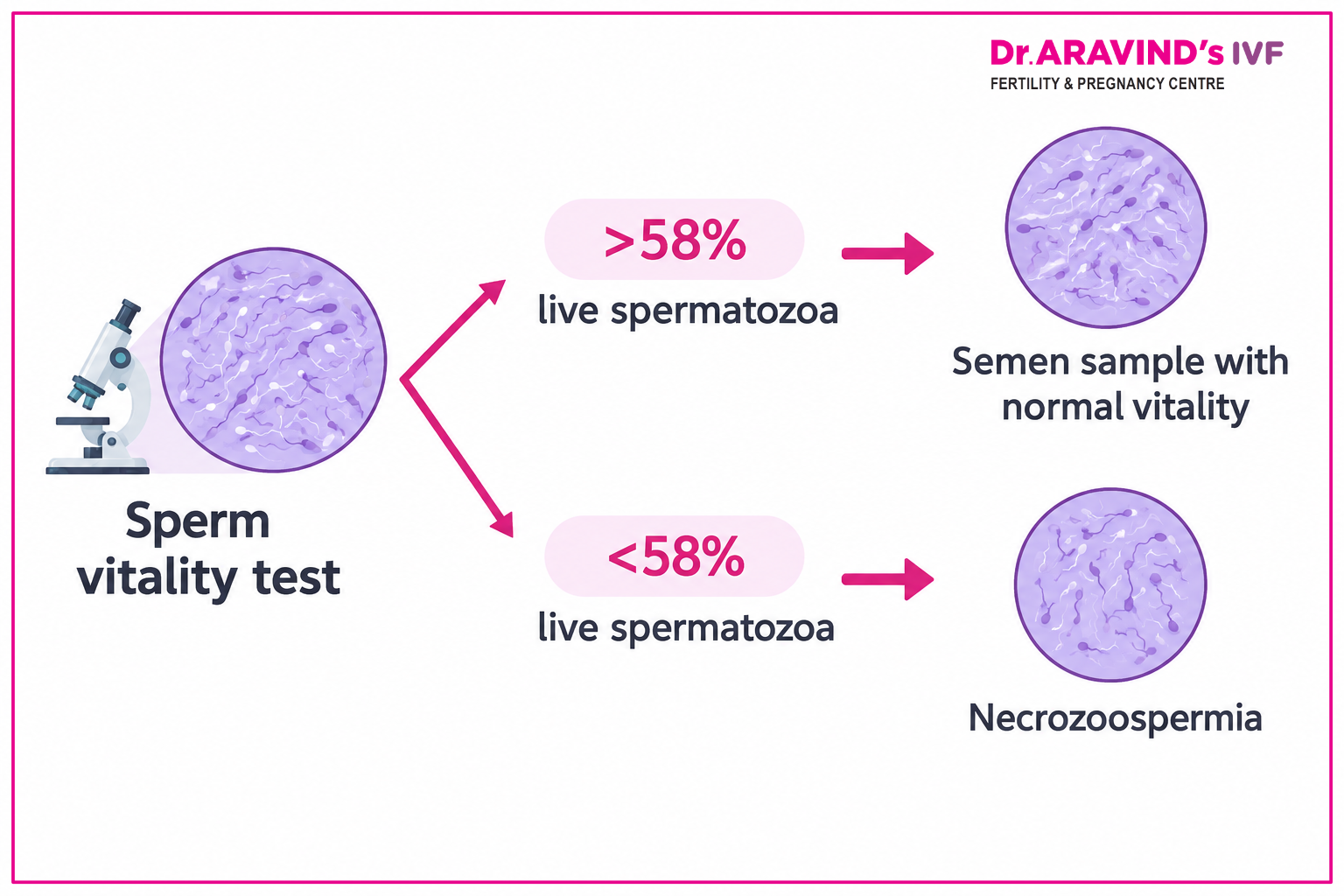
Sperm vitality, also called sperm viability, refers to the percentage of live sperm in a semen sample. It indicates how many sperm are alive, whether or not they are moving.
Sperm vitality and sperm motility are two different semen analysis parameters:
Motility assesses whether sperm move and how effectively they swim.
Vitality assesses whether sperm are alive, even if they are not moving.
This distinction is important because some sperm may be alive but unable to move. In selected cases, these live but non-motile sperm may still be identified and considered for use in ICSI (intracytoplasmic sperm injection), depending on the clinical findings and laboratory assessment.
Dead sperm cannot fertilise an egg. Therefore, when a large proportion of sperm in a semen sample are not moving, the laboratory may perform a sperm vitality test to determine whether they are alive or dead.
Under the WHO sixth edition, the lower reference limit is 54% live sperm. It is the fifth percentile of men in a reference group who had recently fathered a child, so it is a population marker, not a fertility pass mark. A result above 54% does not promise pregnancy, and a result below it does not make IVF impossible.
| Your Result | How It Is Usually Described |
|---|---|
| 54% or higher | Within the reference range. |
| Below 54% | Reduced vitality; repeat the test and review the sample conditions. |
| Most or all sperm dead | May indicate necrozoospermia, confirmed through an appropriately collected and handled repeat sample. |
Important note: Check the testing method and reference range printed on your own report, because laboratory methods and reporting ranges may differ.
Sperm vitality is best understood alongside the other semen analysis parameters. Here are the WHO sixth-edition lower reference limits:
| Measure | WHO Sixth-Edition Lower Limit |
|---|---|
| Semen volume | 1.4 mL |
| Sperm concentration | 16 million per mL |
| Total sperm number | 39 million per ejaculate |
| Total motility | 42% |
| Progressive motility | 30% |
| Vitality (live sperm) | 54% |
| Normal forms (strict morphology) | 4% |
Explore these related guides to understand your semen analysis report in more detail:
A sperm vitality test checks whether sperm are alive by assessing the condition of their outer cell membrane. One commonly used laboratory method is the eosin-nigrosin staining test.
During this test, the dye behaves differently depending on whether the sperm are alive or dead:
The embryologist examines and counts a specified number of sperm under a microscope, then calculates the percentage that are alive. This percentage is reported as sperm vitality.
Timing is important. Sperm viability can decrease after collection, so the sample should reach the laboratory promptly and be handled according to the clinic's collection and transport instructions.
Read our guide on sperm collection for IVF to understand how to collect and transport a semen sample correctly.
Some sperm remain alive but have difficulty moving. This can happen when the structures or processes responsible for sperm movement are affected.
Possible contributing factors include:
This is why a sperm vitality test can be useful when most sperm in a semen sample are not moving. It helps the laboratory distinguish between sperm that are alive but non-motile and those that are dead. This information can help your fertility specialist and embryologist decide which treatment or sperm selection approach may be appropriate.
| Test | What It Measures | Why It Matters |
|---|---|---|
| Concentration | Sperm per mL | Shows how many sperm are present in each millilitre of semen. |
| Motility | Movement | Shows whether sperm can move, including swimming forward. |
| Vitality | Percentage of live sperm | Distinguishes live sperm from dead sperm, including sperm that are not moving. |
| Morphology | Shape | Shows how many sperm meet strict visual criteria for normal shape. |
| DNA fragmentation | DNA integrity | Assesses damage to sperm DNA using a specific test. |
Explore these related guides to understand sperm movement and DNA health in more detail:
Low sperm vitality means that a higher-than-expected proportion of sperm in a semen sample are dead. Several medical, lifestyle and sample-handling factors may contribute to this result.
Possible causes include:
If the sample was delayed, incomplete or collected under unusual conditions, your doctor may recommend repeating the test. One low vitality result should not automatically be treated as permanent necrozoospermia, a condition in which all sperm in the semen are dead.
It can affect the chances of natural conception, particularly when a large proportion of sperm are dead. Fewer live sperm may be available to travel through the female reproductive tract and reach the egg.
However, the overall assessment depends on several factors, including:
Sperm vitality alone cannot predict whether natural pregnancy will happen. However, a persistently low result deserves a detailed review by a fertility specialist to understand the underlying cause and discuss suitable options.
Yes. Low sperm vitality may affect IVF treatment, mainly because it reduces the number of sperm available for fertilisation. The treatment approach depends on how many live sperm can be identified and whether other sperm parameters are also affected.
With ICSI treatment, an embryologist selects an individual live sperm and injects it directly into a mature egg. In selected cases, a live but non-motile sperm may also be used after appropriate vitality assessment.
However, ICSI does not guarantee fertilisation or pregnancy. Egg maturity, sperm DNA integrity, laboratory conditions and subsequent embryo development also influence the outcome.
When no sperm movement is observed in a semen sample, the laboratory may perform a sperm vitality test to determine whether the sperm are alive or dead. This distinction is important because non-motile sperm are not necessarily dead.
Depending on the test results and your medical assessment, possible options may include:
If a severe sperm-related problem is already known, discuss a backup plan with your fertility specialist and embryologist before the egg collection day. This helps you understand the available options without having to make rushed decisions during treatment.
Sperm vitality may improve in some men when an underlying or reversible contributing factor is identified and appropriately managed. However, improvement cannot be guaranteed, and the right approach depends on the cause.
Your doctor may review the following factors:
Sperm production takes approximately two to three months. Therefore, when your doctor recommends monitoring changes after addressing a contributing factor, a repeat semen analysis may be planned after an appropriate interval.
Avoid starting supplements or stopping prescribed medicines without medical advice. Your specialist can help determine whether any treatment or lifestyle changes are appropriate for your situation.
A low sperm vitality result can be worrying, but it is important to understand what the report means before making treatment decisions. These steps can help you prepare for your next consultation:
To understand the available treatment approaches, read our guide to male infertility treatment.
A sperm vitality test measures the percentage of sperm that are alive in a semen sample. Around 54% is the commonly used lower reference limit in WHO semen analysis guidelines. This test is particularly important when sperm are not moving, as some live but non-motile sperm may still be considered for use in ICSI.
However, one result is only a starting point for understanding male fertility. Your complete semen analysis, medical history and other fertility factors should be considered before deciding on treatment.
Get guidance on your sperm vitality results, understand possible causes and explore suitable fertility treatment options with a specialist.
Book Your IVF ConsultationDr. Aravind's IVF Fertility & Pregnancy Centre
This article is for educational purposes only and does not replace advice from your doctor. Reference limits describe findings in groups of men and should not be treated as an individual diagnosis.
It is the WHO sixth-edition lower reference limit, so 54% or more is within range. It is not a fertility guarantee and should be read with the rest of the report.
No. Count is how many sperm are present, while vitality is how many are alive. You can have a normal count with low vitality, or a low count with a high percentage alive.
Yes. A recent fever or illness can affect semen quality, so tell your doctor and repeat the test if advised.


