The appearance of a semen analysis report that states 'zero sperm count' will create an emotional impact similar to a person experiencing a sudden loss of stability. The medical condition of azoospermia, which results in this diagnosis, creates an emotional dead end for many couples who seek to become parents. The decades of reproductive medicine studies have established this knowledge for fertility specialists: The presence of sperm in the human body exists even when a person does not ejaculate any sperm.
Azoospermia affects approximately 1% of all men and accounts for almost 10 to 15% of male infertility treatment cases around the globe. The disorder represents one of the most difficult-to-understand fertility problems. Modern surgical sperm retrieval methods, advanced reproductive technologies and individual hormonal treatment programs have created new opportunities for men who have azoospermia to become biological fathers.
The current article will explain the meaning of azoospermia through its two main types, its causes and the complete range of present-day azoospermia treatment methods. The guide provides a compassionate and accurate medical picture of the future path for newly diagnosed patients and those who have been searching for answers over multiple years.
Azoospermia exists when no spermatozoa are found in the male's ejaculated semen. The condition requires confirmation through semen testing, which doctors conduct after two separate testing sessions. Azoospermia is different from oligospermia because it shows no sperm presence in the ejaculate, while asthenospermia demonstrates poor sperm movement. This condition is commonly referred to as zero sperm count, and many couples begin searching for zero sperm count treatment options immediately after diagnosis.
The absence of sperm in the ejaculate does not establish that all sperm exists inside the male body. The specific differentiation creates a treatment path that requires medical personnel to follow. Sperm may still exist in the testicles or reproductive ducts of a male even when it does not appear in his semen because of the underlying condition.
The most significant classification of azoospermia is whether it is obstructive or non-obstructive. The distinction determines all subsequent decisions that follow after this point.
Obstructive azoospermia occurs when men produce normal or nearly normal sperm in their testicles, yet cannot release any sperm into their ejaculate because of a physical barrier that blocks sperm from exiting their body. The blockage can develop at any point in the male reproductive system, which includes both the epididymis and the vas deferens and the ejaculatory ducts as potential obstruction sites.
Doctors identify these factors as the main reasons that lead to obstructive azoospermia:
The medical condition of obstructive azoospermia presents its most successful treatment results because men maintain their ability to produce sperm when they have this condition.
Non-obstructive azoospermia occurs because the body fails to produce sperm through the process of spermatogenesis. Testicular sperm production stops completely when hormonal changes, genetic disorders and testicular injuries combine to create the condition. The treatment for this medical condition proves more difficult than usual, yet still maintains the possibility of successful treatment.
The following factors serve as the main reasons that people develop non-obstructive azoospermia:
Klinefelter syndrome, through which patients develop a 47XXY chromosomal disorder
The Y chromosome microdeletions, which interfere with the genes that produce sperm
The condition of hypogonadotropic hypogonadism happens when a person lacks both FSH and LH hormones from their pituitary gland.
The condition develops because of previous treatments using chemotherapy or radiation therapy. The medical condition testicular failure arises when the testicles lose their capacity to produce sufficient hormones. The condition of varicocele and azoospermia occurs when veins in the scrotum become enlarged, and this causes elevated temperatures in the testicles. The viral infection mumps orchitis causes testicular tissue damage through its effects on the body.
The process of azoospermia diagnosis starts with an extensive semen analysis, which serves as the initial assessment. After the fertility specialist confirms azoospermia, the doctor will request further tests to determine the underlying cause of your condition.
The following diagnostic tests are typically used in medical evaluations
Doctors can determine obstruction type through which hormone levels and testicular volume measurements indicate, without requiring a biopsy. The presence of high FSH levels indicates that a patient suffers from a primary testicular failure condition.
Azoospermia treatment requires customized solutions because standard treatments do not work for all cases. The optimal treatment method requires assessment of three factors, which include the type of condition, the root cause and the patient's age and health, plus the couple's reproductive objectives. The section below will present an in-depth analysis of all primary treatment methods used in medical practice.
Men with both obstructive and non-obstructive forms of azoospermia can achieve biological fatherhood through sperm retrieval surgery, which serves as their most effective treatment option. The procedure requires scientists to extract sperm from the sample and use it for intracytoplasmic sperm injection (ICSI), which involves direct injection of a single sperm into a mature egg inside a laboratory environment.
The primary methods for surgical sperm retrieval include:
PESA is a minimally invasive procedure that doctors perform with local anaesthesia as their standard approach. A fine needle is inserted into the epididymis to aspirate sperm. This treatment method works best for men who have obstructive azoospermia because their condition allows easy access to abundant sperm. The procedure enables quick recovery because patients can undergo the treatment on the same day as their partner's egg retrieval.
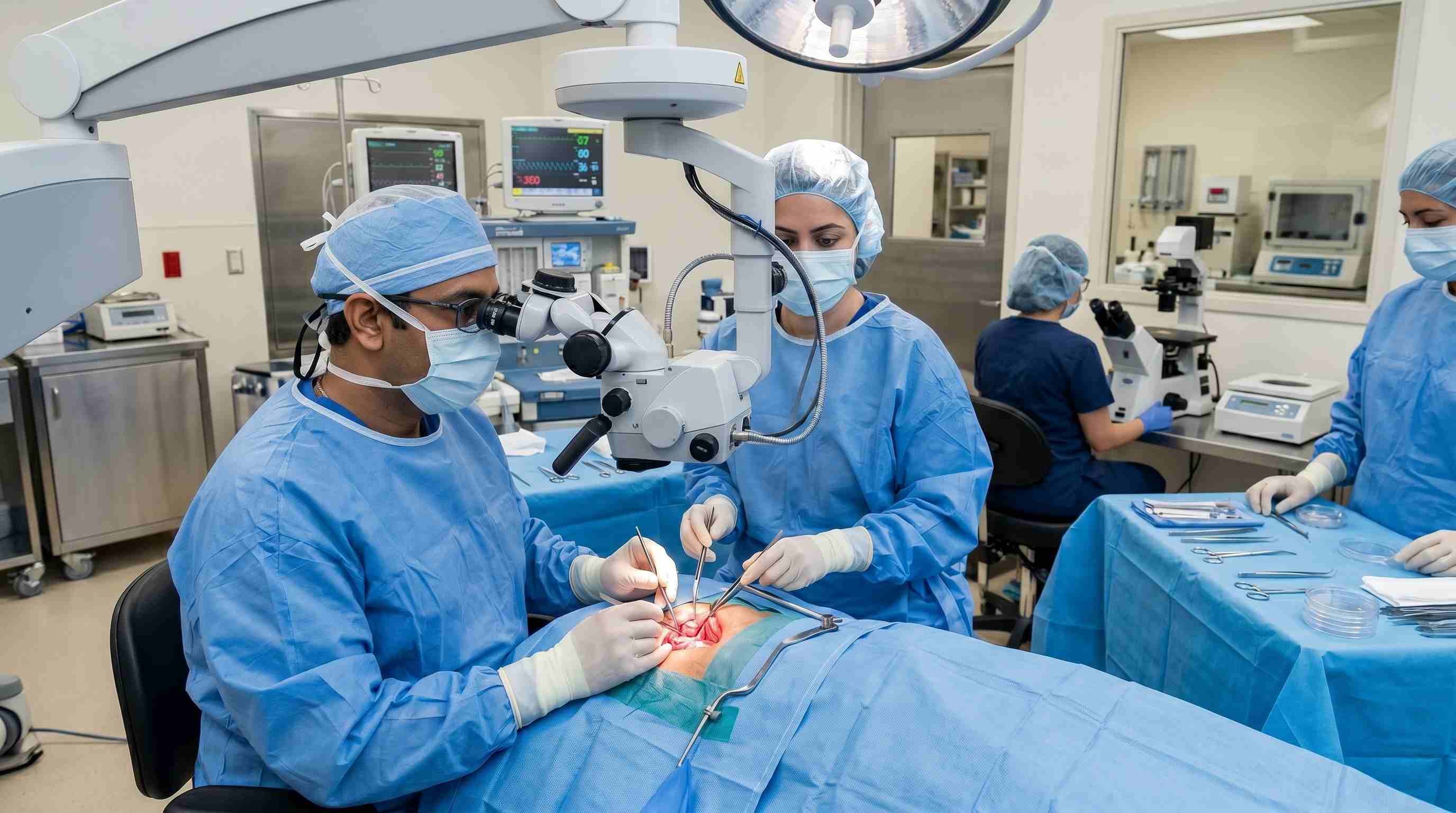
TESE surgical procedure involves creating a tiny opening in the testis so that doctors can collect small testicular tissue samples, which they will use for sperm extraction for IVF. The technique applies to both types of cases, which include obstructive and non-obstructive conditions. The conventional TESE procedure produces successful sperm extraction results in about 50 to 60% of cases, which involve non-obstructive conditions.
Micro-TESE stands as the most effective treatment option for men suffering from non-obstructive azoospermia, according to medical professionals. The procedure requires general anaesthesia to use a high-powered operating microscope for tubule extraction from the testis, which shows higher chances of active sperm production. Micro-TESE achieves better results than conventional TESE because it uses advanced technology to gather viable sperm from 40 to 60% of cases, which involve men who have serious production issues while taking fewer testicular samples.
TESA uses a needle to extract testicular tissue through non-surgical methods, which result in faster testing times compared to traditional TESE procedures. The procedure serves as the primary treatment method for obstructive azoospermia, which doctors use together with IVF-ICSI treatment procedures.
Medical treatment of hormonal deficiency azoospermia, which results from hypogonadotropic hypogonadism, enables doctors to use medications that produce sperm in their patients. The medical field uses these hormonal treatments to treat patients.
Patients must wait for results because hormonal therapy needs time to show its effects. The process of spermatogenesis takes approximately 72 to 90 days, which means doctors need to wait three to six months before assessing treatment results. The success rates depend on the specific hormonal condition that causes the problem.
A varicocele is a medical condition that creates enlarged veins around the testicle and serves as the second most frequent cause of male infertility, which healthcare providers can effectively treat. Up to 35 to 40% of men who experience infertility show signs of varicoceles. The condition reduces sperm production because it increases scrotal temperature. In some men, severe varicoceles can lead to the complete absence of sperm production, which results in the medical condition known as azoospermia.
The surgical procedure of varicocelectomy, which corrects a varicocele, has been demonstrated through multiple research studies to increase sperm parameters while restoring sperm production to the ejaculate in certain cases of near-azoospermia and non-obstructive azoospermia. The microsurgical subinguinal varicocelectomy method, which requires only small incisions, has become the most efficient treatment option because it results in the fewest instances of recurring treatment needs.
The body shows an increase in sperm count, which begins to manifest between three and six months after the surgical procedure. Varicocele repair provides men who experience complete failure to produce ejaculated sperm with an improved chance of successful Micro-TESE treatment.
Surgical reconstructive options provide couples with pathways to restore their natural ability to conceive after the treatment of obstructive azoospermia, which has been identified as a blockage through surgical means. The main reconstructive procedures include:
Vasovasostomy, which functions as a surgical reversal for vasectomy, establishes a connection between the two vas deferens ends. Success rates are highest when performed within 10 years of the vasectomy.
The procedure of vasoepididymostomy establishes a direct link between the vas deferens and the epididymis. This microsurgical procedure is more technically demanding but highly effective in experienced hands.
The choice between reconstructive surgery and direct sperm retrieval for IVF-ICSI procedures depends on two factors: the couple's age, the female partner's fertility status and the duration since the obstructive condition developed.
The process of Intracytoplasmic Sperm Injection (ICSI) enables fertilization to occur with just a few sperm or when their swimming ability is restricted. The ICSI procedure requires the identification of one sperm that shows normal shape through high-powered optical equipment to perform the injection directly into an egg's cell. The method creates a path to fertilization which eliminates all the natural obstacles that would block conception.
The procedure of ICSI has created new possibilities for treating men who experience extreme difficulties with fertility. The method enables men who would have been declared permanently sterile to achieve biological fatherhood through its combination of surgical sperm retrieval and other techniques. The ICSI method achieves a fertilization success rate between 60 and 80 percent yet the overall zero sperm count IVF success depends on three key factors, which are egg quality, embryo development and the ability of the uterus to accept embryos.
Dr. Aravind's IVF centre operates advanced embryology laboratories which use ICSI and Preimplantation Genetic Testing (PGT) to select the best embryos for transfer, especially when patients have genetic conditions that cause azoospermia and specifically Klinefelter syndrome.
When sperm retrieval fails because the surgery does not locate any sperm or because the genetic cause of azoospermia presents a significant heritable risk, then donor sperm offers a different path to parenthood. Couples can become pregnant through donor insemination, which uses IUI or IVF with sperm obtained from an anonymous donor who has passed screening tests.
Many couples select this option, which does not establish a genetic connection to the male partner because it provides an easy and secure method that achieves remarkable success. The couple needs to undergo comprehensive counselling from fertility experts and psychologists to achieve complete emotional readiness while they investigate all possible biological solutions.
The diagnosis of azoospermia brings emotional weight that clinical terminology fails to express. The news causes many men to experience a profound loss of self-worth because they feel empty and disconnected from others. These feelings are fully legitimate because they represent a common human experience. People should understand that fertility problems represent medical conditions that do not define their personal worth.
Couples who pursue psychological counselling in addition to their medical treatment demonstrate strength through their actions because this choice represents one of the best decisions they can make. Patients who receive medical treatment at fertility clinics that provide emotional support through their holistic care approach experience better outcomes because they follow their treatment plans more effectively.
Honest communication between you and your partner establishes a foundation for mutual support during this critical time. The couples who experience azoospermia will develop a stronger bond through their shared experience.
Dr. Aravind's IVF Fertility & Pregnancy Centre delivers male infertility solutions through its complete medical assessment and empathetic treatment approach, which treats all fertility problems with equal dedication. The centre provides complete assistance for male infertility problems through its 30 years of reproductive medicine expertise and multiple centres in Tamil Nadu and Kerala, and its team of specialised fertility doctors and embryologists. The male fertility programme at the centre provides these main advantages to its users:
• The andrology laboratory provides complete semen analysis and sperm function tests through its advanced testing facilities
Fertility clinics in Coimbatore, Chennai, Hosur, Tiruppur, Erode, Salem, Palakkad and Kozhikode enable South Indian families to easily access top-notch fertility services.
Azoospermia is the most difficult discovery that doctors can make when they assess male fertility. But it is far from synonymous with permanent childlessness. Fertility specialists today have access to a broad range of effective tools which enable them to perform surgical sperm retrieval together with ICSI, hormonal therapy, varicocele repair and reconstructive surgery. Patients seeking a male infertility specialist in India can benefit from the centre’s comprehensive care.
The journey begins with an accurate diagnosis because doctors need to determine whether the patient has obstructive or non-obstructive azoospermia and then identify the specific cause of their condition before developing a customized treatment strategy, which will be implemented by certified fertility experts. The centre is recognised as a trusted best azoospermia treatment centre, and IVF centre for male infertility Coimbatore patients rely on for specialised reproductive care. Dr. Aravind's IVF Fertility and Pregnancy Centre provides couples in South India with expert medical care, advanced technology and compassionate service through their complete medical facility.
Our team will answer your questions when you contact us, and we will explain all available options to you. The path to parenthood remains possible for you, and we will support you throughout this process.
Men with obstructive azoospermia often benefit from procedures like PESA, TESA, TESE, or reconstructive microsurgery to restore sperm flow.
Diagnosis usually includes repeated semen analysis, hormonal testing, scrotal ultrasound, genetic testing, and sometimes a testicular biopsy.
Yes. Hormonal disorders such as hypogonadotropic hypogonadism can reduce or stop sperm production, leading to azoospermia.
In severe cases, varicocele can impair sperm production and lead to azoospermia. Varicocele repair may improve sperm production in some men.
ICSI fertilization rates generally range between 60–80%, although overall pregnancy success depends on egg quality, embryo health, and uterine factors.


