For a sperm sample for IVF, follow your clinic's abstinence dates, use only the sterile labelled container from the lab, wash and dry your hands first, collect the whole sample without lubricants or ordinary condoms, note the time, and hand it over or transport it exactly as instructed. If anything goes wrong, such as early ejaculation, a spill, a delay, or trouble producing a sample, call the lab immediately. There are often backup options.
Key takeaways
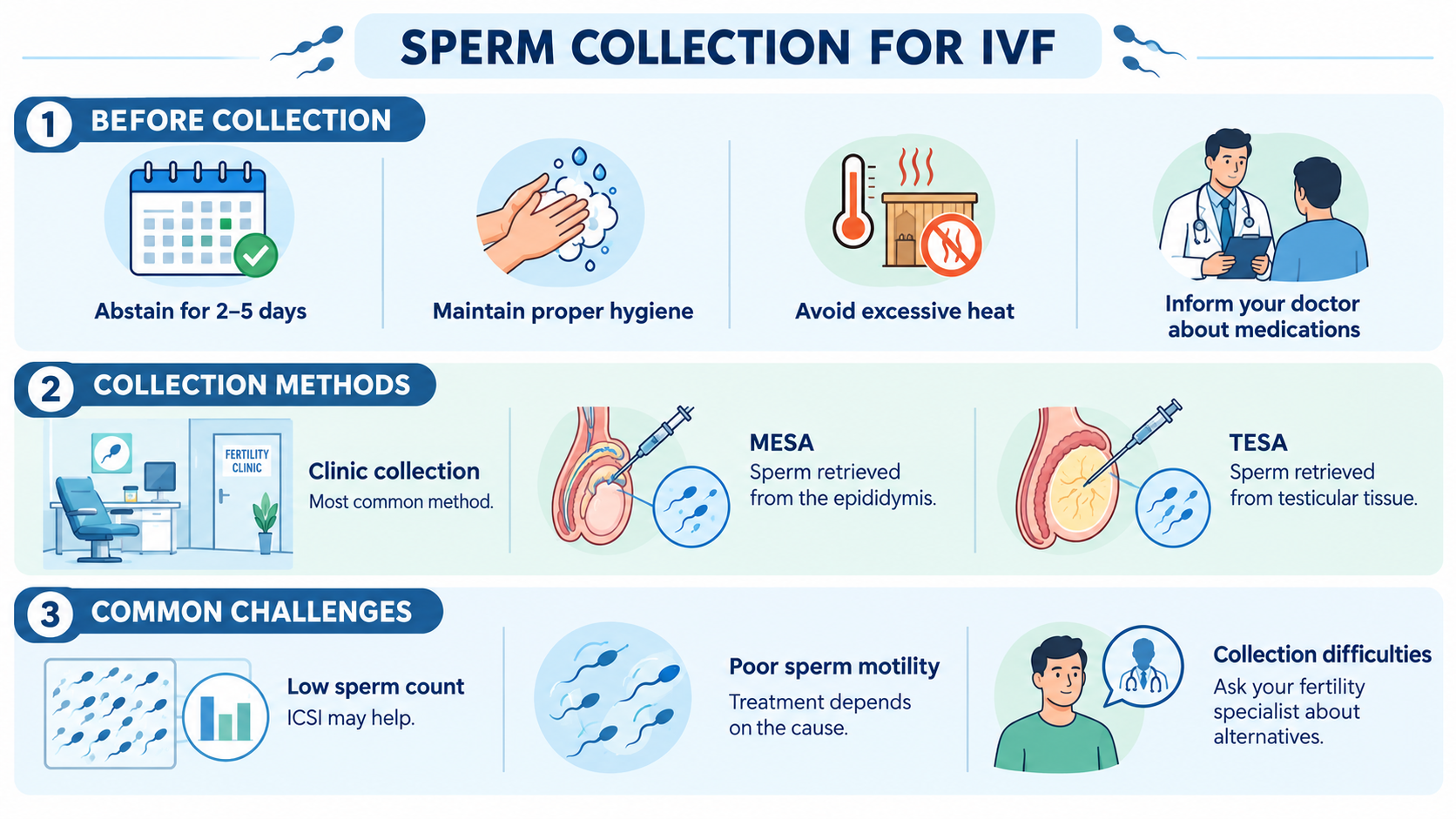
Sperm collection is an important step in IVF because the embryology laboratory needs a correctly labelled sample at the right time to fertilise the retrieved eggs or perform intracytoplasmic sperm injection (ICSI), if recommended.
Depending on your treatment plan, sperm may be collected on the day of egg retrieval, prepared using a previously frozen sample, or obtained through a surgical sperm retrieval procedure when ejaculation is not possible or suitable.
Sperm collection can feel stressful. Nervousness, concerns about privacy and time pressure can sometimes make the process more difficult. These concerns are understandable, and fertility clinic staff are familiar with them.
If you are worried about providing a sample, tell your fertility team early. They can explain the available options and help you plan ahead, reducing the risk of last-minute delays to your procedure.
| Step | What to Do |
|---|---|
| Abstinence | Follow the dates your clinic gave you. See how long to abstain before a semen sample for IVF. |
| Place | Confirm whether you should collect in a private room at the clinic, at home and deliver the sample, at approved nearby accommodation, using a validated collection condom, or through a surgical retrieval plan. |
| Container | Use only the sterile, labelled container the laboratory provides or approves. |
| Cleanliness | Wash and dry your hands and genital area. Keep soap, lubricant, saliva, oil, ordinary condoms and tissues out of the container. |
| Timing and transport | If collecting at home, ask how quickly the sample must reach the laboratory. Keep it near body temperature or as instructed, and never chill or overheat it. |
After ejaculation, semen usually becomes thicker before gradually liquefying on its own. Do not shake the sample or transfer it to another container unless the laboratory specifically instructs you to do so.
Tell the laboratory staff if any part of the sample was lost, and explain whether it was the first portion. The first portion of the ejaculate often contains a higher concentration of sperm, so this information helps the embryologist interpret the sample correctly.
Do not add water or any other fluid to the container. Keep the container and follow the laboratory's instructions. Depending on the sample and your treatment plan, the team may accept it, request another sample or adjust the collection plan.
Difficulty producing a sample at the clinic can happen. Anxiety, privacy concerns, certain medicines, erection difficulties, retrograde ejaculation or relationship-related stress may contribute. You do not need to feel embarrassed about discussing these concerns with your fertility team.
Depending on your circumstances and the clinic's facilities, possible options may include:
Do not take medication for sexual performance without discussing it with your doctor, particularly if you are preparing for anaesthesia or taking other fertility medicines.
Learn more about sperm retrieval and fertility treatment options at Dr. Aravind's IVF.
A small volume of semen does not necessarily mean that sperm are absent. The laboratory can examine the sample to assess what is available. If retrograde ejaculation is suspected, the medical team may check urine passed after ejaculation for sperm.
Tell your doctor about any relevant medical history, including previous surgery, diabetes, nerve problems, medicines, prostate procedures, or difficulty ejaculating. These details can help the team investigate the possible cause and decide on the next steps.
The recommended approach depends on the underlying cause, the number of sperm available, and whether conventional IVF, ICSI, or another treatment method is planned.
Collect a sample at home only if your fertility clinic approves this option. Ask for written instructions covering the following details:
Keep the container securely closed and protect it from direct sunlight and extreme temperatures. Follow your laboratory's specific transport instructions rather than refrigerating or heating the sample yourself.
Contact the laboratory as soon as possible and explain the situation. Be ready to provide the following information:
The embryologist will assess whether the sample can be used, processed, recollected or replaced with a suitable frozen sample. The appropriate decision depends on the sample's condition, the timing and your treatment plan. Contact the laboratory promptly rather than deciding on your own that the sample is unusable.
The embryology team checks the identity, time and condition of your sample, lets it liquefy, looks at the concentration and movement, and prepares the sperm. Depending on the treatment, the lab may use:
| Method | What Happens |
|---|---|
| Conventional IVF | Sperm and eggs are placed together for fertilisation. |
| ICSI | One selected sperm is injected directly into an egg. |
| Donor sperm | Used according to the treatment plan and applicable rules. |
| Frozen sperm | Thawed and prepared before use. |
| Surgically retrieved sperm | Used in selected male-factor infertility cases. |
A low sperm count does not automatically rule out IVF. ICSI may be discussed for severe sperm problems or previous fertilisation difficulties, but not every couple needs it. Learn more about ICSI treatment.
Some couples choose to freeze a sperm sample before egg retrieval as a backup. This may be helpful when providing a sample on the day of the procedure could be difficult, the male partner cannot attend the clinic, or a medical condition raises concerns about future sperm availability.
Before freezing sperm, ask your fertility team about the laboratory's freezing process, consent requirements, storage arrangements, fees, and how sperm are thawed for treatment.
Depending on sperm quality, the number of sperm available, and your doctor's recommendation, a frozen sample may be used on its own or alongside a fresh sample. However, freezing and thawing can affect sperm survival, so the suitability of a backup sample should be discussed with your embryologist.
Learn more about sperm freezing and fertility treatment options.
Tell your fertility team about any recent fever, infection, antibiotics, testosterone treatment, anabolic steroid use, finasteride, chemotherapy, supplements, or other medicines. This information helps your doctor assess whether these factors could affect sperm production or sample quality.
Testosterone therapy and anabolic steroids can suppress the body's natural hormone signals and reduce sperm production, sometimes substantially. The effects of other medicines depend on the specific drug, dose, and your medical circumstances.
Do not stop prescribed medication or supplements without medical advice. Your fertility team can review your treatment, consider the timing of sperm collection, and discuss whether further testing or a backup sample may be appropriate.
A recent fever or medication exposure does not automatically mean your sperm sample cannot be used. The laboratory and fertility specialist will assess the available information and recommend the most suitable approach for your treatment plan.
| Problem | What to Do |
|---|---|
| Ejaculated earlier than planned | Tell the clinic and give the actual date. |
| Abstained longer than asked | Inform the embryologist and follow their plan. |
| Cannot produce a sample | Ask about privacy arrangements, approved home collection or a backup plan. |
| Part of the sample spilled | Tell the laboratory which portion was lost. |
| Not the clinic's container | Contact the laboratory immediately. Do not transfer the sample into another container without instructions. |
| Transport delayed | Call the laboratory and provide the collection time. |
| Sample got too hot or too cold | Inform the laboratory. Do not assume the sample is unusable. |
| No sperm seen | Ask about repeat testing, frozen sperm or surgical sperm retrieval, if appropriate. |
| Recent fever or new medicine | Inform your doctor and the embryologist. |
Successful sperm collection for IVF depends on following the recommended abstinence period, using an approved collection container, collecting the sample carefully, transporting it according to laboratory instructions, and communicating honestly if something goes wrong.
If your sample is delayed, incomplete, or difficult to produce, contact the laboratory promptly. Depending on your circumstances and treatment plan, backup options may be available. Your fertility team can help you decide the next step without unnecessary panic.
Discuss your sperm collection concerns, test results, and treatment options with the team at Dr. Aravind's IVF Fertility & Pregnancy Centre.
Medical disclaimer: Always follow your IVF laboratory's instructions. Sperm collection, transport requirements, and backup plans vary by clinic, laboratory protocol, and procedure. This information is for general education and does not replace personalised medical advice.
Sometimes, but only with the clinic's approval and written transport instructions. The sample may need to reach the lab quickly and stay within a safe temperature range.
No. Ordinary condoms may contain sperm-harming substances or lubricants. Use a clinic-approved sperm-safe collection condom only if the lab allows it.
Tell the team straight away. Options may include a frozen backup sample, another collection method, medicine support or surgical sperm retrieval, depending on your situation
Yes. Performance anxiety and an unfamiliar room can make it hard. It is a common problem and not a personal failing, so ask about practical and medical alternatives.


