Sperm retrieval is recommended before ICSI when usable sperm cannot be obtained from an ejaculated sample. That includes no sperm in the semen (azoospermia), blockages, a previous vasectomy, inability to ejaculate, or repeated failed collections. A low sperm count alone does not usually need surgery. Your doctors choose the method and the timing after assessing the cause.
Key takeaways
No. Most ICSI cycles use sperm collected through normal ejaculation. ICSI (Intracytoplasmic Sperm Injection) is a fertility procedure in which an embryologist selects a single sperm and injects it directly into each mature egg.
ICSI may be recommended when sperm numbers are very low, sperm movement is poor or there are other factors that may make natural fertilisation difficult in the laboratory.
Surgical sperm retrieval is considered only when sperm cannot be obtained from the ejaculate or when the fertility specialist believes sperm from the epididymis or testis may be a more suitable option.
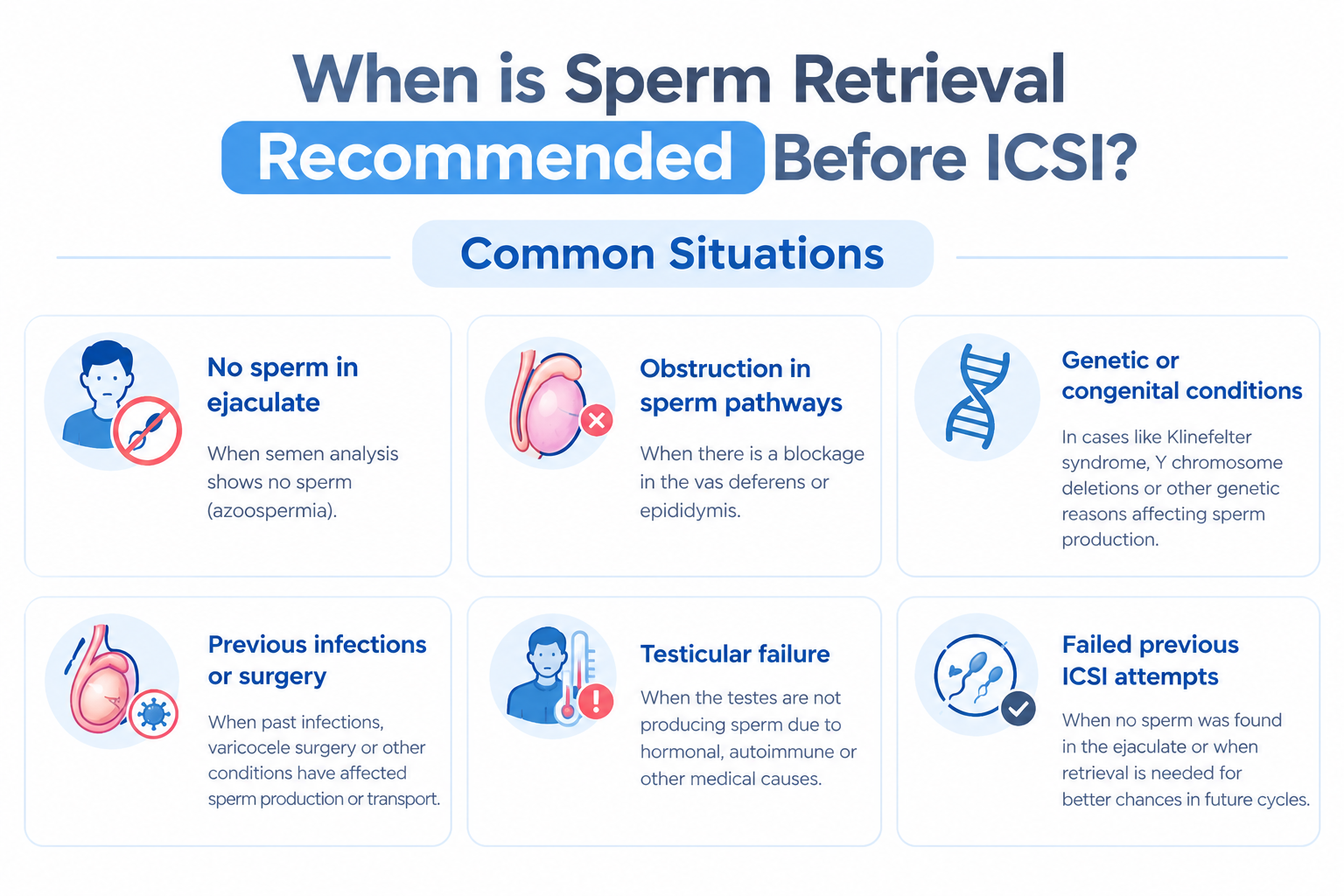
Your fertility specialist may consider sperm retrieval in situations such as:
If sperm DNA damage is a concern, learn more about the DNA fragmentation test and how your specialist may interpret the results.
A single semen analysis showing a low sperm count or poor motility does not automatically mean you need surgical sperm retrieval.
Your doctor will usually consider repeating the semen analysis, reviewing possible treatable causes, checking relevant hormone levels and assessing whether sperm collected through ejaculation can be prepared for IVF or ICSI.
The decision depends on your overall fertility assessment, previous test results and treatment history. Sperm retrieval should be recommended only when there is a clear clinical reason to consider it.
| Comparison | Obstructive Azoospermia | Non-Obstructive Azoospermia |
|---|---|---|
| What is wrong | Sperm are made, but cannot get out. | Sperm production is very low or patchy. |
| Common causes | Vasectomy, infection, surgery or absent vas deferens. | Hormonal, genetic or testicular causes. |
| Chance of finding sperm | Generally high. | Lower and less predictable. |
| Methods often used | PESA, MESA, TESA and TESE. | TESE or micro-TESE. |
| Genetic counselling | Sometimes recommended, for example, when the vas deferens is absent. | Strongly advised. |
Important note: This is a teaching table, not a treatment algorithm. Your urologist will recommend the appropriate approach after reviewing your reports and examining you.
| Method | Where sperm comes from | Often considered for |
|---|---|---|
| Urine recovery | Urine after ejaculation | Retrograde ejaculation |
| PESA | Epididymis, by needle | Some blockage cases |
| MESA | Epididymis, through microsurgery | Selected blockage cases |
| TESA | Testis, by needle | Blockage or limited sperm production |
| TESE | A small piece of testicular tissue | When aspiration is unlikely to be enough |
| Micro-TESE | Testicular tissue, examined under a microscope | Selected cases of non-obstructive azoospermia |
For more information, explore these related guides:
Sperm obtained through surgical retrieval can be used successfully for ICSI in suitable cases. However, retrieved sperm may be lower in number or less mature than sperm collected through normal ejaculation. This is one reason conventional IVF is generally not suitable when surgically retrieved sperm is used.
The chances of fertilisation and embryo development depend on several factors, including:
Testicular sperm is not automatically better than ejaculated sperm. Although it may be considered in selected cases, such as certain men with elevated sperm DNA fragmentation, the potential benefits and limitations need to be assessed individually.
Your fertility specialist and embryologist can help determine which sperm source is appropriate based on your diagnosis, previous treatment history and available test results. A responsible treatment plan should explain why a particular method is being recommended rather than assuming one sperm source is always superior.
| Plan | Why Couples Choose It | Trade-off |
|---|---|---|
| Same day as egg collection | Fresh sperm and one anaesthetic episode. | Risk if no sperm is found after the eggs are collected. |
| Before egg collection, with sperm frozen | A backup sperm sample is ready. | Involves an extra step and sperm freezing. |
| Separate procedure before stimulation | Confirms a sperm source before the cycle begins. | Adds cost, recovery time and scheduling. |
| After a diagnostic sample | Helps avoid repeat surgery if sperm is not found. | Requires an additional visit. |
A pre-stimulation retrieval is often worth discussing when the chance of finding sperm is uncertain, when the woman's age makes time precious, or when collection has been difficult before. Same-day retrieval may suit some blockage cases where sperm retrieval is more likely.
Important note: There is no single right answer for every couple. Before starting treatment, ask your fertility specialist and urologist what the backup plan will be if sperm is not found.
Before recommending a sperm retrieval procedure, your fertility specialist will usually review your medical history, examination findings and test results. The aim is to understand the cause of the sperm-related problem and identify the most appropriate treatment approach.
The initial assessment may include:
Genetic findings can influence treatment decisions and may have implications for a future child. If genetic testing is recommended, your specialist should explain what the results mean, whether further counselling is needed and how they may affect your fertility treatment options.
Before the retrieval procedure, discuss what will happen if the embryology laboratory cannot find usable sperm. Planning these possibilities in advance can help you and your partner make informed decisions without unnecessary pressure on the day of treatment.
Depending on your diagnosis, medical suitability and personal preferences, possible options may include:
Ideally, these decisions should involve your urologist or andrologist, fertility specialist and embryologist. A coordinated discussion helps ensure that everyone understands the possible outcomes, available alternatives and your treatment preferences before the procedure begins.
Recovery depends on the type of sperm retrieval procedure, whether sedation or anaesthesia was used and your individual health. Before leaving the clinic, ask your doctor for clear aftercare instructions covering:
Contact your clinic promptly if you develop a fever, rapidly increasing swelling, severe or worsening pain, heavy bleeding or discharge from the wound. These symptoms need medical assessment rather than waiting for your routine follow-up.
Follow your specialist's recovery advice carefully, as the recommended restrictions and recovery time can differ between TESA, TESE, Micro-TESE and epididymal sperm retrieval procedures.
Sperm retrieval before ICSI may be considered for men whose ejaculate does not contain usable sperm. The most appropriate retrieval method and timing depend on the underlying cause. A well-planned treatment approach should also include a backup option in case sperm cannot be retrieved or is not suitable for use.
This article is for educational purposes only and does not replace advice from your own doctor. Procedures, risks and success rates may vary depending on the underlying cause and the clinic.
Discuss your diagnosis, suitable sperm retrieval options and IVF treatment plan with a fertility specialist.
Book an IVF consultationNo. The method depends on whether the cause is a blockage or low production, and on your urologist’s assessment.
Yes, in selected men, especially when a blockage is suspected or production is expected to be adequate.
Often, yes. Sperm can usually be retrieved from the epididymis or testis for ICSI, and the urologist can compare this with reversal.
Sometimes. It can confirm a sperm source before stimulation, though same-day retrieval is also reasonable in the right case.
That is a personal decision. Retrieval may allow you to use your own sperm if it can be found, but it involves a procedure and uncertain results. Counselling should cover every option.


