Yes, in many cases. When no semen comes out, or the semen has no sperm, doctors can look for sperm in three places: the urine (after retrograde ejaculation), the epididymis (the storage tube behind each testicle), or the testicular tissue itself. Which route is used depends on why sperm is missing from the ejaculate, so the cause is worked out first. Retrieved sperm is then usually used with ICSI.
Key Takeaways
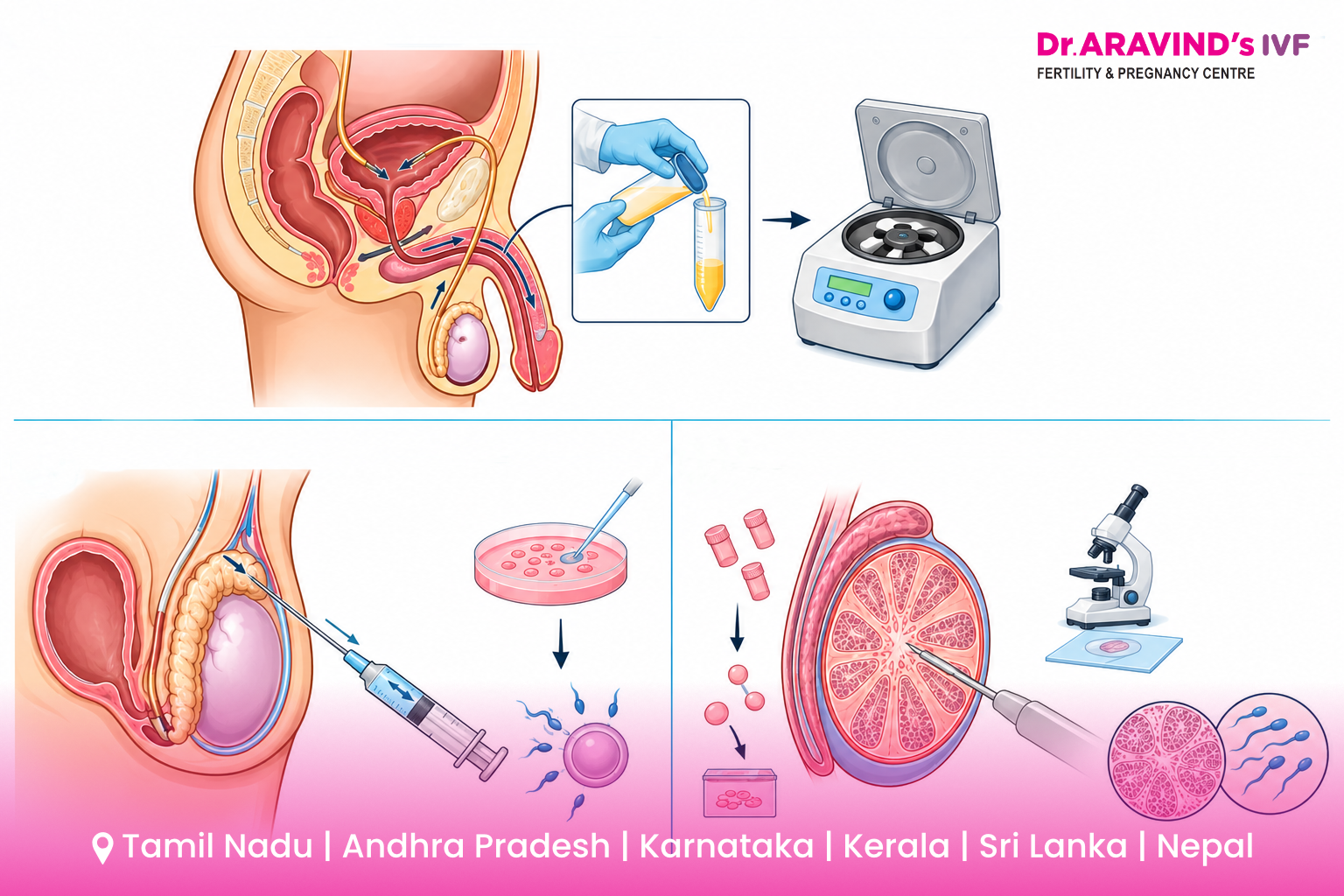
“No sperm” can mean quite different things, and each points to a different treatment plan.
| What Is Happening | What It Means | Usual Direction |
|---|---|---|
| Little or no semen at orgasm | An ejaculation problem. Sperm may still be produced normally. | Find the cause; assessment may include urine testing, ejaculation support methods or sperm retrieval. |
| Semen goes backwards into the bladder | Retrograde ejaculation. | Treatment may include medication or recovering sperm from urine under specialist guidance. |
| Semen is present but has no sperm | Azoospermia. | Investigate whether sperm production is impaired or a blockage is preventing sperm from reaching the semen. |
| Sample unavailable on egg collection day | A sample collection problem. | A backup plan may include previously frozen sperm or same-day surgical retrieval, if appropriate. |
In retrograde ejaculation, orgasm may feel normal, but semen flows backward into the bladder instead of coming out through the penis. Diabetes, pelvic or bladder-neck surgery, nerve conditions, spinal injuries and certain medicines can contribute to this condition.
If retrograde ejaculation is suspected, the laboratory may examine urine collected immediately after ejaculation to look for sperm. Because urine can affect sperm survival and movement, the sample needs to be collected and processed promptly using a specialist protocol.
Not every urine sample contains enough usable sperm for treatment. However, this is generally one of the less invasive approaches and may be considered first when retrograde ejaculation is the suspected cause.
Some men, including those with certain spinal cord injuries or neurological conditions, may be unable to ejaculate through sexual activity or masturbation. In selected cases, doctors can use medically supervised stimulation techniques to help obtain sperm.
These methods are not suitable for everyone, and availability varies between fertility centres. Ask your clinic whether it provides these procedures or works with a specialist unit that offers them.
The epididymis is a tube behind each testicle where sperm mature and are stored. If the testicles produce sperm but a blockage prevents sperm from reaching the semen, the epididymis may be a suitable place to retrieve sperm for treatment.
These procedures may be considered in situations such as:
The choice between PESA and MESA depends on the cause of the blockage, the expected sperm availability and the specialist's assessment.
When sperm cannot be obtained from the ejaculate or epididymis, a fertility specialist may consider retrieving sperm directly from testicular tissue. The procedure depends on the underlying condition and whether sperm production is present.
The best procedure depends on your diagnosis, previous test results, sperm production and treatment goals. Surgical sperm retrieval may involve risks, recovery time and specialist preparation, so your doctor should explain the benefits and limitations before proceeding.
For a detailed comparison of these procedures, read our guide to TESA, PESA and Micro-TESE sperm retrieval.
Success depends mostly on the cause, not on the technique alone.
| Situation | What published studies generally show* |
|---|---|
| Obstructive azoospermia (blockage) | Sperm is found in most men. |
| Non-obstructive azoospermia | Sperm is found in roughly half of men or fewer, varying with the underlying cause. |
| Retrograde ejaculation | Depends on sample quality after urine processing. |
Important note: *The ranges and evidence should be verified and referenced by the reviewing urologist before publication. No clinic can guarantee that sperm will be found.
Your fertility specialist will usually recommend a step-by-step evaluation before deciding whether sperm retrieval is needed. The aim is to understand why sperm are absent from the semen, identify the most suitable approach and avoid unnecessary procedures.
Your doctor may ask about diabetes, previous surgeries, vasectomy, infections, current medicines, testosterone therapy, anabolic steroid use and any history of difficulty ejaculating. These details can help identify possible causes of male infertility.
The specialist may examine the testicles and assess their size, as well as check whether the vas deferens can be felt. These findings can help distinguish a possible sperm transport blockage from reduced sperm production.
Depending on your history and examination, investigations may include:
If the findings suggest a possible genetic cause, your specialist may recommend genetic testing. Genetic counselling is important because some results can affect treatment decisions and may have implications for a future child.
The fertility specialist, urologist or andrologist, and embryology team may coordinate the retrieval plan with your partner's egg collection. The timing depends on the procedure, the likelihood of finding sperm and whether a backup sample is available.
For more information about the initial investigation, visit our page on semen testing and male fertility assessment.
Sperm obtained through surgical retrieval may be limited in number or have different characteristics from sperm collected in the ejaculate. For this reason, intracytoplasmic sperm injection (ICSI) is commonly used when suitable sperm have been retrieved.
During ICSI, an embryologist selects an individual sperm and injects it directly into a mature egg. This allows fertilisation to be attempted when sperm numbers are limited or when conventional IVF may not be suitable.
ICSI does not guarantee fertilisation, embryo development or pregnancy. Your specialist will recommend the approach based on your diagnosis, the available sperm and your overall treatment plan.
Learn more about ICSI treatment and how it differs from conventional IVF.
If your doctor recommends a sperm retrieval procedure, use this checklist to prepare:
The risks depend on the procedure and your medical circumstances. Possible complications include:
Follow your clinic's aftercare instructions and contact your medical team if you develop a fever, severe or worsening pain, rapidly increasing swelling, heavy bleeding or discharge from the wound. Seek urgent medical assessment for severe or rapidly worsening symptoms.
It is important to discuss this possibility with your fertility team before the retrieval procedure. If no usable sperm is found, the next steps depend on the suspected cause, previous test results, the procedure performed and your treatment preferences.
Possible options may include:
Ask your specialist to explain the possible outcomes, backup arrangements, costs and consent requirements before the procedure. Having this conversation in advance can help you make informed decisions without the added pressure of an unexpected result on retrieval day.
Being unable to ejaculate or having no sperm in a semen sample does not always mean that fertility treatment is no longer possible. Depending on the underlying cause, options may include sperm recovery from urine, medically supervised stimulation methods, epididymal sperm retrieval, or testicular sperm retrieval.
Each method is suitable for different circumstances. A proper medical evaluation helps your specialist identify the likely cause and recommend an appropriate approach based on your health, test results, and fertility goals.
If you are facing these challenges, a coordinated plan involving your urology specialist and IVF team can help you understand your options and prepare for the next steps.
Discuss your diagnosis, sperm retrieval options, and IVF treatment plan with the team at Dr. Aravind's IVF Fertility & Pregnancy Centre.
Book an IVF consultationMedical disclaimer: This article is intended for educational purposes and does not replace personalised medical advice. The availability and suitability of sperm retrieval procedures depend on the registered clinic, specialist expertise, your diagnosis and individual circumstances.
Sometimes. Depending on the cause, sperm may come from urine, the epididymis or testicular tissue.
Pain relief is given, but tenderness and bruising for a few days are common. Your urologist can describe the recovery for the exact method planned.
Not automatically. Micro-TESE is usually considered for non-obstructive azoospermia, while TESA often suits selected blockage cases.
Often, yes, from the epididymis or testis, and used with ICSI. A urologist can help you compare this with vasectomy reversal.
Usually ICSI is recommended because retrieved sperm may be few or less mobile.


