Written and medically reviewed by Dr. Aravind Chander, MBBS, DGO, DNB (Obstetrics & Gynaecology) Fertility Super Specialist, Dr. Aravind's IVF Centre · Last updated: 24/09/2026
This article is for informational purposes and does not replace personalized medical advice. If you have concerns about your menstrual cycle or fertility, book a consultation with our specialists.
In this article: What determines blood color · Period blood color chart · Does color indicate fertility problems · When to see a doctor · Period blood color and IVF · FAQs
If you've ever caught yourself staring into the toilet bowl wondering whether that shade of brown means something is wrong with you, you're not alone. It's one of the most quietly Googled questions among women trying to conceive — and for good reason. Your period is one of the few visible windows into what's happening inside your reproductive system every single month.
So here's the direct answer: period blood color alone does not reliably diagnose fertility problems. Color mainly reflects how long the blood has been inside the uterus before it leaves your body, along with factors like flow speed and oxidation. That said, when unusual color shows up alongside other signs — irregular cycles, unusually light or heavy flow, persistent pain, or clotting — it can be one clue among several that's worth discussing with a fertility specialist.
Let's break down what's actually going on.
Menstrual blood isn't like blood from a cut. It's a mix of blood, uterine lining tissue (endometrium), and cervical mucus, and its color depends heavily on how quickly it exits your body.
Fresh blood that leaves quickly tends to look bright red. Blood that lingers a little longer in the uterus before it's shed oxidizes, the way a sliced apple browns when left out — which is why you'll often see darker red or brown blood at the start or tail end of your period. Flow speed, hydration, hormone levels, and even how long you've been lying down before getting up all play a role in the shade you see on any given day.
In short: color changes within a single period are usually completely normal. It's patterns over multiple cycles that carry more meaning — a point backed by ACOG's guidance on the menstrual cycle as a vital sign, which emphasizes tracking cycle patterns over time rather than isolated symptoms.
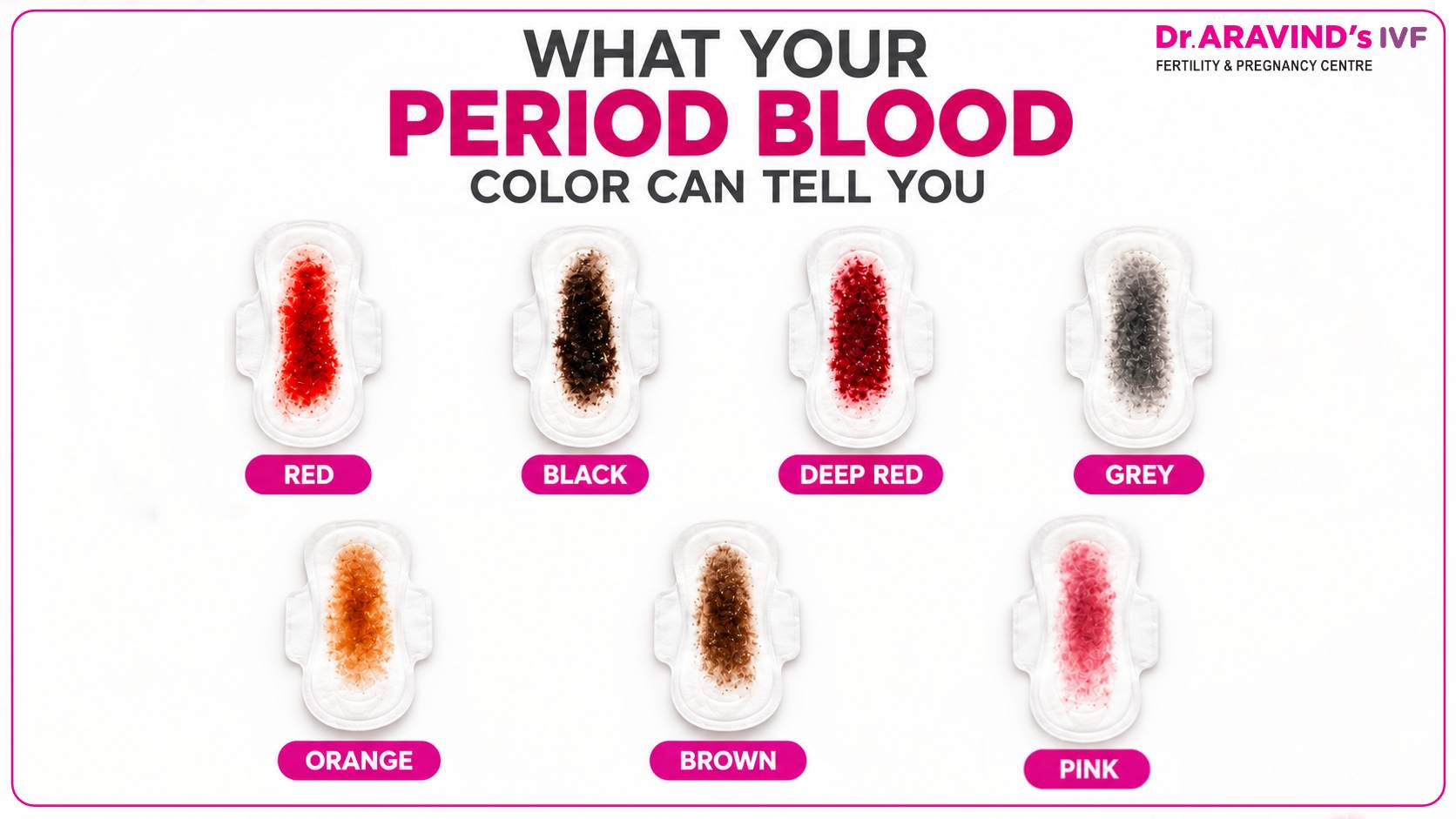
Here's a quick reference many patients find helpful — though it's meant as a general guide, not a diagnosis.
Bright red is typically fresh blood leaving the body quickly, most common on your heaviest flow days. It's usually a sign of a healthy, regular cycle.
Dark red often shows up when blood has spent slightly more time in the uterus, which is common overnight or during slower flow days. Usually nothing to worry about.
Brown or dark brown blood is very common at the start or end of your period, and it simply means the blood took longer to leave the uterus. However, if your period is consistently brown from start to finish, or brown spotting replaces your period altogether for several cycles, it may point to a hormonal imbalance affecting ovulation.
Pink blood can appear when menstrual blood mixes with cervical fluid, or when estrogen levels are lower than usual — sometimes seen with very light flows, excessive exercise, or hormonal contraceptives.
Orange blood usually indicates blood mixed with cervical fluid, but if it comes with an unusual odor, it can occasionally signal an infection worth getting checked.
Grey blood is one of the few colors that genuinely warrants prompt medical attention — it can indicate an infection or, in pregnancy, may be a sign of miscarriage.
Black blood is usually just very old, oxidized blood, most common at the very end of a period, though heavy black clotting or blockage-related black discharge should be evaluated.
This is where a lot of well-meaning articles overstate things. Color by itself isn't a fertility marker the way, say, AMH levels or an ultrasound of your ovarian follicles would be. What actually correlates more closely with fertility is the pattern and consistency of your cycle — not a single shade you noticed on a Tuesday.
That said, certain color patterns, when they persist, do line up with conditions that affect fertility:
Persistent dark brown or scanty brown periods, month after month, can sometimes point to anovulatory cycles — meaning ovulation isn't happening reliably, which directly affects your chances of conceiving. This is often seen alongside conditions like PCOS or thyroid imbalances.
Very light pink periods with thin flow over several cycles can sometimes reflect a thin endometrial lining, low estrogen, or an issue with the lining's ability to support implantation.
Heavy, bright red periods with large clots, particularly if they're new or worsening, can be linked to fibroids, adenomyosis, or hormonal imbalances that interfere with implantation.
The common thread here isn't the color itself — it's whether the color is part of a changing or irregular pattern rather than a one-off variation. A proper fertility evaluation looks at hormone levels, ovulation, and uterine health together, rather than relying on any single visible symptom.
As a general guide, it's worth booking a consultation with a fertility specialist if you notice:
Your period color has changed significantly and stayed changed for three or more cycles in a row. Your cycle length itself has become irregular alongside the color change. You're experiencing very heavy bleeding, large clots, or bleeding between periods. Your periods have become unusually light or have stopped for several months. You've been trying to conceive for over a year (or six months if you're over 35) without success, regardless of what your period color looks like.
None of these signs alone confirm infertility — but together, they're a good enough reason to get your hormone levels tested and your ovarian reserve and uterine lining evaluated rather than guessing based on blood color alone.
For patients already in fertility treatment, blood color takes on a slightly different meaning. Fertility medications like Clomid, letrozole, or gonadotropin injections can change your period's color, flow, and timing — this is a known and usually harmless side effect of hormonal stimulation, not a sign that treatment isn't working.
One question we hear often: how do you tell implantation bleeding from period color? Implantation bleeding, when it happens, tends to be light pink or light brown, much lighter than a typical period, and usually lasts only a day or two rather than the several days of a normal flow. It also tends to arrive earlier than your expected period date. If you're mid-cycle after a transfer and unsure whether what you're seeing is your period or something more encouraging, don't try to self-diagnose from color alone — a quick beta hCG blood test will give you a real answer.
After a failed IVF cycle, it's also common to see a heavier, darker period than usual as your uterine lining sheds along with the medication-supported buildup from that cycle. This is generally normal, but if bleeding is unusually painful or prolonged, it's worth flagging to your care team.
Your period is talking to you every month — but color alone is only ever part of the conversation. It's a helpful, low-effort thing to pay attention to, not a diagnosis. The real story is in the pattern: how your cycle has changed over time, how it pairs with flow, pain, and regularity, and what your hormones and uterine health look like underneath it all.
Here's what we'd tell a friend: don't spend another cycle Googling shades of red and brown and hoping for a clear answer. If something about your period feels different — the color, the flow, the timing, the pain — that's your body asking for a closer look, not a reason to wait it out. The earlier a fertility issue is identified, the more options you have to address it.
You don't have to figure this out alone. At Dr. Aravind's IVF Centre, our fertility specialists can evaluate your cycle, hormones, and reproductive health in a single consultation and give you real answers — not guesses based on a color chart.
Book Your Fertility Consultation Today → Talk to a specialist who listens, explains, and creates a plan built around your body and your goals.

Not on its own. Occasional brown blood, especially at the start or end of your period, is normal. Persistent brown periods every cycle can sometimes indicate a hormonal imbalance affecting ovulation, which is worth evaluating.
Implantation bleeding is usually light pink or light brown, much lighter and shorter than a typical period, often lasting just one to two days.
It can fluctuate slightly cycle to cycle due to natural hormonal shifts, but a dramatic, sustained change is worth mentioning to your doctor.
Dark blood by itself usually just means slower flow or blood that took longer to leave the uterus. It becomes more relevant only if it's a new, persistent pattern paired with irregular cycles.
Yes — grey discharge or blood can indicate an infection and should be checked by a doctor promptly, especially if you're pregnant or trying to conceive.


