The process of beginning a fertility journey requires couples to make one of their most important emotional choices. The financial burden of treatment becomes evident to Indian families because they need to pay for their treatment costs before they receive any medical procedures. The diagnostic phase needs blood tests, ultrasounds, hormonal panels and semen analyses, which begin to accumulate costs that exceed tens of thousands of rupees before treatment starts. Understanding the IVF diagnostic tests cost in India and exploring affordable fertility testing India options early can help couples plan better.
The right information, together with proper planning, enables couples to decrease their pre-treatment workup costs while maintaining medical test results and patient safety standards. The guide shows you step-by-step instructions which Dr. Aravind's IVF Fertility & Pregnancy Centre developed through more than 30 years of clinical experience.
The process of saving money requires you to determine which tests are necessary for your IVF, IUI, ICSI or fertility evaluation while you learn how to conduct tests without duplicating efforts, find budget-friendly testing facilities and choose the right times for testing.
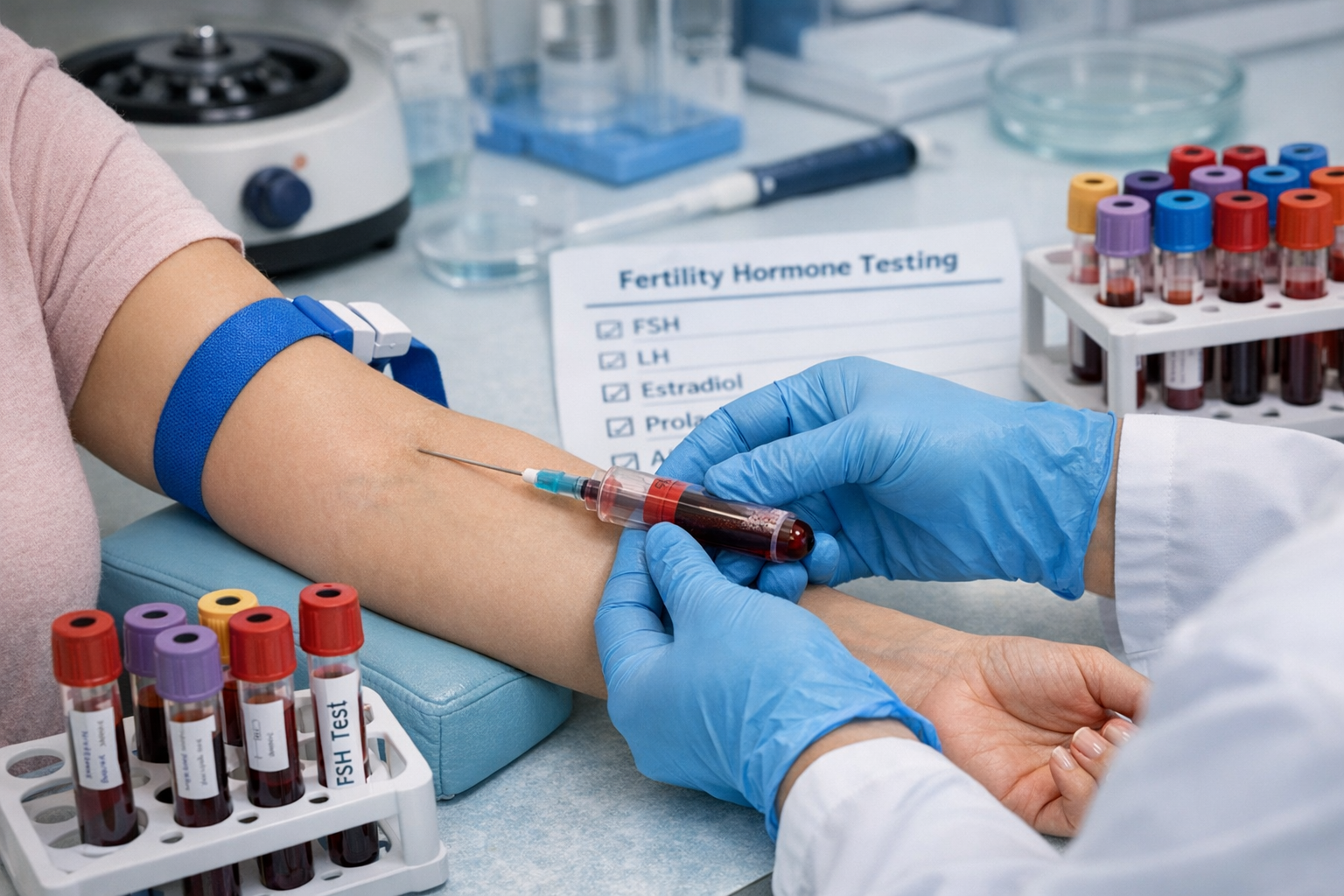
The most effective method to decrease your testing expenses requires you to learn the actual purposes of each medical examination. Many couples arrive at a fertility clinic having already spent money on tests ordered by a general physician or gynaecologist — tests that may not be specifically useful for fertility assessment, or that will simply be repeated by the fertility specialist anyway. This is especially important when considering overall diagnostic tests before IVF treatment.
The standard pre-treatment fertility investigations for women include the following tests
The fundamental investigations that men need to complete involve these tests
The key insight here is this: The test requirements of each individual determine which tests need to be performed. A good fertility specialist will tailor the diagnostic panel to your specific history, age, and presenting concerns. The essential tests for your situation require you to ask your doctor. The single question has the potential to reduce your expenses by eliminating the need for multiple tests.
The most common test duplication problem in fertility workups leads to unnecessary financial waste, which medical facilities could easily avoid. This is a key step to reducing fertility workup expenses. The test duplication process takes place when couples enter a different medical facility to undergo testing, which they completed within the last few weeks or months at another centre, because they failed to bring their previous test results to their new medical visit.
Before your first appointment at a fertility centre, all medical documents that you possess must be collected throughout your entire medical history.
A reputable fertility specialist will review these records carefully to determine which results maintain their clinical validity. This single habit of document preparation can eliminate Rs 3,000 to Rs 8,000 or more from your initial workup cost.
Dr. Aravind's IVF and other established fertility centres provide patients with diagnostic packages that include essential tests at a lower price than purchasing test items separately. The packages serve their purpose to evaluate the fertility status of couples because they include essential medical tests that need to be performed.
The bundled package offers three main benefits. First, package pricing is almost always cheaper than the sum of individual test prices. Second, blood samples are collected together in a single visit, which decreases the need for lab visits and prevents multiple blood draws. Third, specialists create packages to guarantee that every essential test gets included while they exclude unnecessary tests.
When you visit a clinic that handles your request, you should inquire whether they provide a fertility screening package or a pre-treatment workup bundle. The established fertility centres provide standard packages that their clients can use to evaluate services through direct price comparison.
The timing of your menstrual cycle affects the results of specific fertility tests because their sensitivity depends on that particular time. Testing their samples at the incorrect cycle day results in inaccurate findings, which require retesting and increase their expenses to double the original amount.
FSH, LH, and Estradiol: Must be done on Day 2 or Day 3 of your menstrual cycle (Day 1 is the first day of full menstrual flow). Testing on Day 5 or Day 7 gives unreliable results that will require a repeat.
AMH: Unlike FSH and LH, AMH can technically be measured at any point in the cycle, but many clinics prefer Day 2 or Day 3 for consistency when drawing a full hormonal panel. Please check this with your clinic.
Progesterone: If ovulation confirmation is needed, this is measured on Day 21 of a standard 28-day cycle, or 7 days after suspected ovulation.
TVS / Antral Follicle Count: The optimal time for this procedure occurs during the early part of the cycle between Day 2 and Day 5.
You need to ask your healthcare provider for a printed document that shows the exact times you should receive each test during your upcoming menstrual cycle. The small planning step prevents laboratories from wasting resources because staff members mistakenly test samples that they collected at improper times.
The accuracy and cost efficiency of laboratory testing procedures depend on lab accreditation. NABL (National Accreditation Board for Testing and Calibration Laboratories) accredited laboratories follow standardized quality control procedures, which enable them to deliver consistent and reproducible results that medical professionals trust. This procedure guarantees test reliability because fertility doctors require verified results from accredited laboratories to trust their findings.
The cost of identical tests that different NABL-accredited laboratories provide shows significant price differences between their testing services. It is entirely reasonable to call two or three labs and ask for the price of specific tests before booking. TSH testing and AMH testing, as well as semen analysis, show test price differences that range from Rs 200 to Rs 500 among laboratories located in the same city, and these differences add up throughout all tests in a complete diagnostic panel.
Many fertility clinics create partnerships with specific laboratories, which enable them to provide their patients with discounted lab testing services. Ask your clinic whether they have any such arrangements before booking tests independently elsewhere.
The medical practice uses certain tests as standard procedures, but these tests do not suit all patients. Patients who want to understand their medical condition must obtain permission from their doctor to inquire about the reasons behind test recommendations and the medical outcomes which these tests will produce. Avoiding unnecessary tests is one of the most important ways to reduce fertility workup expenses and manage diagnostic tests before IVF treatment efficiently.
Tests that are sometimes over-ordered include:
A confident, patient-centred fertility specialist will be comfortable explaining the rationale behind each test they order. You can ask about postponing a test that lacks clinical justification for your current situation until all basic testing options have been completed.
The Indian health insurance system is starting to change its coverage for fertility treatments because some policies now include partial fertility insurance coverage in India, especially for diagnostics. Current policies do not provide sufficient reimbursement. The corporate sector provides group health insurance plans, which now offer coverage for some fertility diagnostic expenses and treatment costs. You should review your insurance policy documents or contact your HR department to determine whether you need to pay for diagnostic testing.
The Indian government initiated funding programs that help economically disadvantaged couples who experience infertility across several states in the country. Tamil Nadu provides government health programs which subsidize fertility services at Dr. Aravind's IVF facilities that operate throughout its multiple cities. You can obtain free information about existing financial aid programs by asking your local government hospital or fertility clinic about their current assistance programs.
The diagnosis process in fertility treatment begins with the consultation fee, which couples need to pay when they visit multiple specialists before choosing their treatment centre. The doctor orders new tests after each consultation, which results in you spending money for two to three diagnostic tests that share many common elements. The first appointment at a reputable fertility centre should receive full funding because it serves as a permanent solution.
The first appointment at Dr. Aravind's IVF centre requires both partners to provide their complete medical history, while the medical team examines all existing documents to create a specialized diagnostic strategy. This focused method prevents the common problem of repeating tests, which results from patients visiting multiple medical centres for their treatment.
The selection of a centre with extensive in-house services plays a crucial role in the decision-making process. Your medical evaluation becomes more efficient when all testing services, including laboratory operations and ultrasound procedures, as well as andrology and embryology functions, are located within the same facility. Your doctor receives test results immediately, which decreases the time needed for diagnosis while reducing costs.
You do not need to visit the clinic for every appointment with your fertility specialist. The first option enables you to access results through telephone or video calls, which are served through the telephone call and video call system. You should inquire with your clinic about their tele-consultation service availability.
Dr. Aravind's IVF centres, which operate throughout Tamil Nadu, Kerala and Sri Lanka, provide medical treatment to patients from various regions. Couples who come from different districts or states can use virtual meetings for their initial and follow-up discussions, which decreases their total expenses on travel and logistics before they start their treatment.
The most effective cost-saving method, which people tend to overlook, remains this particular approach. Your fertility specialist can better select diagnostic tests based on your complete medical history information, which you present to them.
A woman who presents her PCOS diagnosis at the beginning of testing requires fewer tests than a woman who has untested reasons for her irregular menstrual cycles. A man who brings his semen analysis report from the last six months does not require testing before his scheduled time. The introduction of minor historical details leads to significant changes in the extent of the diagnostic process.
You need to prepare to provide the following information.
The practice of clinical transparency creates benefits for organizations but it impacts your diagnostic process costs from the first day of work.
Beginning a fertility treatment journey involves a real financial commitment. The diagnostic phase should not become a source of strain before treatment has even started. Couples can reduce their diagnostic costs through informed preparation, which includes bringing prior records, asking the right questions, choosing accredited labs, timing tests correctly and working with a specialist who values clinical precision.
The most important investment is not in the maximum possible number of tests but in choosing which fertility tests are necessary before IVF. Testing should proceed with actual tests at scheduled intervals conducted by qualified personnel who possess the necessary expertise. Dr Aravind's IVF method has remained the same for thirty years while assisting more than ten thousand patients throughout South India.
If you want to learn about affordable fertility testing in India, which tests are necessary for your fertility treatment-specific situation, searching for the best affordable IVF centre in Tamil Nadu, the team at Dr Aravind's IVF Fertility & Pregnancy Centre provides the most efficient and affordable first step for your needs.
It’s best to choose an NABL-accredited lab to ensure accuracy. You can compare prices across labs to find affordable options without compromising quality.
No, fertility testing should be personalized. Some advanced tests like DNA fragmentation or ERA are only needed in specific cases, not for all couples.
Some corporate health insurance plans may partially cover diagnostic tests. Coverage varies, so it’s important to check with your provider or HR department.
Yes, choosing a fertility centre with in-house labs and imaging reduces duplication, improves coordination, and can lower overall costs.
Teleconsultation helps reduce travel expenses and is ideal for follow-ups, reviewing reports, and planning next steps.


