First published [10/10/2026]
First step: call your fertility clinic now. If you took your trigger injection late or early, used the wrong medicine or dose, or aren't sure the full dose went in, phone your clinic straight away. Use the after-hours number if it is outside office hours: [clinic after-hours number: add here]. This article cannot tell you whether to repeat the injection or change your retrieval time.
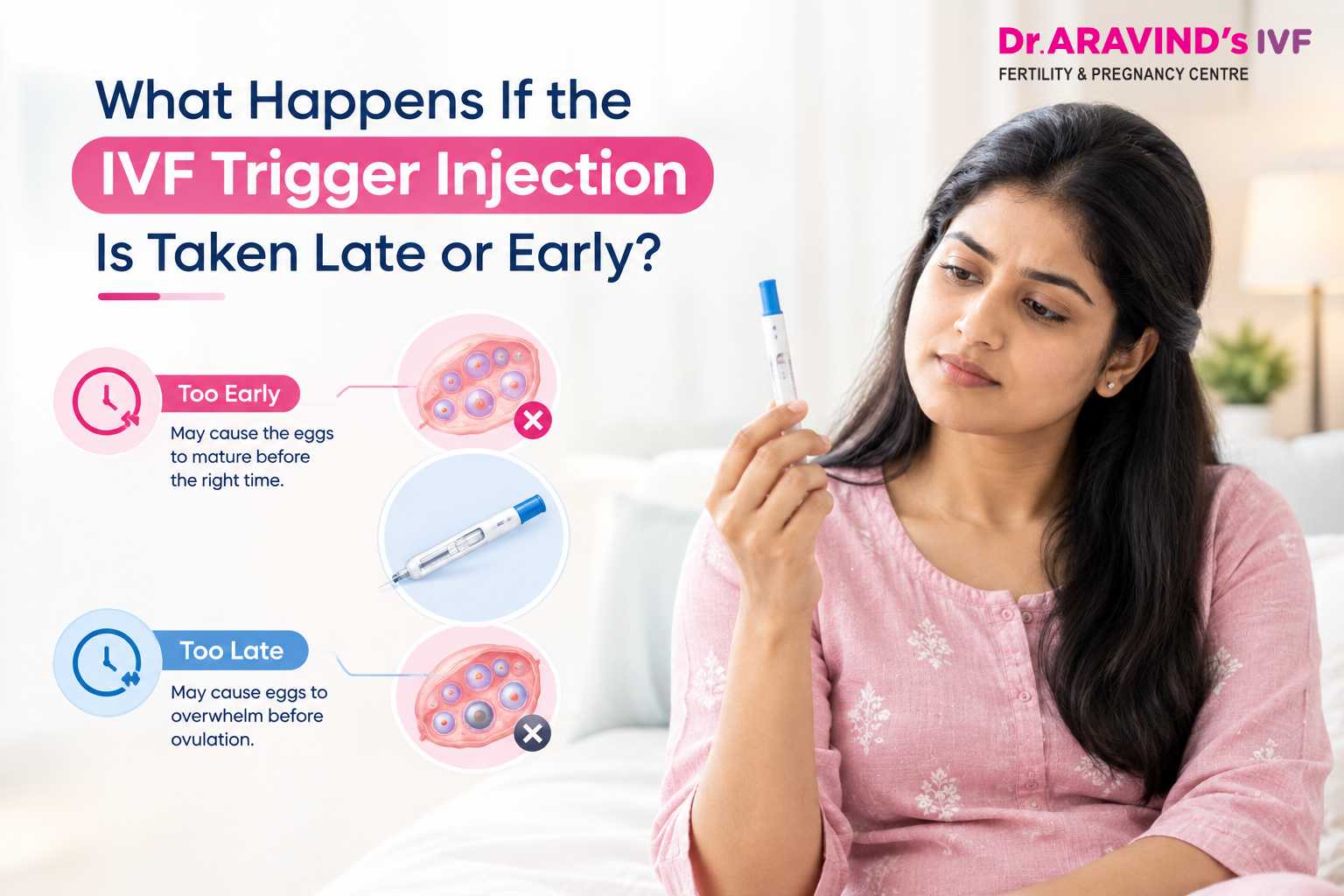
A late trigger shot in IVF, or an early one, can change how mature the eggs are at retrieval and whether ovulation happens before the procedure. How much it matters depends on how far off the timing was, which medicine you used, and how your follicles have grown. Depending on what happened, the team might leave the retrieval slot as it is, shift it, ask for another scan or blood test, or adjust the whole plan. A timing mistake is something to report straight away, not something to hide.
Key takeaways
If your IVF trigger injection was given at the wrong time, or you are unsure whether you administered it correctly, contact your fertility clinic immediately. Avoid trying to correct the timing yourself.
Keep the medication packaging and your treatment calendar nearby when you call. Tell the clinic which medicine you used, the prescribed injection time, the actual time it was administered, and the dose taken. This information can help your team decide what needs to happen next.
The trigger injection helps eggs complete their final stage of maturation and allows the fertility team to schedule egg retrieval within a specific time window. Retrieval commonly takes place around 34–36 hours after the injection, although the exact interval depends on the medication and your treatment protocol.
If the timing changes, the eggs may be at a different stage of maturity when retrieval takes place. If ovulation occurs before the planned procedure, some eggs may no longer be available for collection from the follicles.
The impact of an early, late or incorrectly administered trigger can vary from one person to another. Contact your treating fertility team promptly rather than assuming the cycle is lost or attempting to fix the timing yourself. Your doctor can review the circumstances and advise you on the safest next step.
For more information about the purpose of the injection and its timing, read our guide to the trigger shot in IVF: timing and purpose.
If your IVF trigger injection was delayed by a few minutes, record the exact time and inform your fertility team. Don't assume a small delay is irrelevant, but don't assume your IVF cycle has failed either. Your doctor will consider the medication, follicle development and planned egg retrieval time before deciding what to do next.
The team may keep your original retrieval appointment or adjust the schedule if needed. There is no single rule that applies to every IVF cycle, so follow your clinic's instructions.
A delay of several hours may affect the planned interval between the trigger injection and egg retrieval. Depending on your treatment protocol, your fertility team may ask you to attend at the original time, change the appointment, arrange an ultrasound or blood test, or reassess whether retrieval should proceed.
If the injection was significantly later than prescribed, contact your clinic before travelling for retrieval. Explain the medication, prescribed injection time and actual injection time so the team can advise you promptly.
Tell your fertility team exactly how early you took the injection. An early trigger may affect the timing of final egg maturation and retrieval, depending on your medication and follicle development.
Your doctor may review your scan findings or hormone results, adjust the retrieval schedule, arrange additional monitoring or discuss the risk of early ovulation or immature eggs. The next step will depend on your individual circumstances.
Do not take an extra injection or change the dose to compensate for the early timing. Contact your clinic and follow its instructions.
Contact your fertility clinic urgently if you missed your trigger injection. If egg retrieval is still ahead, your team may provide specific instructions based on your treatment schedule. If retrieval is approaching, the plan may need to be reassessed.
Be honest about what happened and provide the prescribed injection time, the current time and the medication details. Prompt, accurate information helps your fertility team decide on the safest next step.
Some trigger injections require powder and liquid to be mixed before use, while others come in pre-filled devices. If you are unsure whether the medicine was prepared or administered correctly, contact your clinic and keep the packaging available.
Be ready to explain:
Do not estimate the missing dose or inject more medicine unless your fertility team specifically instructs you to do so.
Sometimes, yes. Whether the appointment can be changed depends on the trigger medication, follicle development, the clinic's operating schedule and whether ovulation may already have occurred.
Your fertility team may decide to keep the original appointment, adjust the retrieval time, arrange an ultrasound or blood test, or reconsider the treatment plan. In some cases, they may discuss postponing or cancelling the cycle or changing the fertilisation plan.
These decisions must be made by your fertility team. Do not change your retrieval appointment independently.
Mild pelvic pressure, bloating, breast tenderness, tiredness or soreness around the injection site can occur during fertility treatment. However, symptoms alone cannot confirm whether the trigger worked or whether the eggs have matured.
Seek urgent medical assessment if you experience severe or worsening abdominal pain, rapidly increasing abdominal swelling, repeated vomiting, difficulty breathing, fainting, heavy bleeding or a significant reduction in urine output. These symptoms may indicate a complication, including ovarian hyperstimulation syndrome (OHSS).
Don't rely on memory. Record the medication name, prescribed dose and injection time in your phone and on your clinic's written schedule.
Set alarms on two devices if possible. You can also ask your partner or a trusted support person to confirm the scheduled time with you.
Check that your medication, needles, diluent (if required) and instructions are ready well before the scheduled injection time. If your medicine has not arrived from the pharmacy, contact your clinic immediately rather than waiting until the last minute.
If you are unsure how to prepare, mix or administer the medicine, ask your fertility nurse for a demonstration before trigger night. For more guidance, read IVF injections and side effects.
Write the egg retrieval date and time beside your trigger injection time. The two are closely connected, and following the schedule provided by your clinic is important for coordinating treatment.
Important: If you take the trigger injection early, take it late, miss it or suspect that the dose was not administered correctly, contact your fertility team promptly. Do not take another dose or alter your retrieval appointment without their guidance.
The IVF trigger injection is time-sensitive, but if you make a timing mistake, the most important thing is to report it promptly rather than hide it. Contact your fertility clinic with the exact medication name, prescribed injection time and actual time you took it. Never repeat the dose or change your egg retrieval appointment on your own. Wait for your fertility team's instructions about retrieval, monitoring or any changes to your treatment plan.
To understand the next steps in your fertility journey, read our guides to the IVF process timeline and IVF egg retrieval.
Get clear guidance on your medication, trigger injection timing and egg retrieval schedule at Dr. Aravind's IVF Fertility & Pregnancy Centre.
Book an IVF consultation →Important: If a trigger injection timing error has occurred during your current IVF cycle, contact your fertility clinic immediately. This article provides general information and cannot determine whether you need another dose or a change to your egg retrieval time. Follow your fertility team's specific instructions.

Not necessarily. It depends on how late it was, which medicine you used and how your follicles are developing. Phone your clinic straight away, because only the treating team can judge the cycle.
No, not unless your clinic specifically tells you to. A second dose could carry its own risks.
Sometimes it can, and the clinic may adjust the time or do further checks first. Don't decide this yourself.
Call the clinic urgently. An early trigger can change when the eggs mature and when ovulation may happen, so your doctor must decide what to do next.
No. A test cannot confirm that the eggs have matured or that the timing was right, and an hCG trigger can change an early test result.


