IVF can fail even with good-quality embryos because embryo grade shows only how an embryo looks, not its chromosomes or implantation potential. This blog explains the key causes, including genetic abnormalities, poor uterine lining receptivity, uterine problems, tubal fluid, sperm DNA damage, and transfer factors. It also covers helpful tests, steps to take before your next cycle, and when to consult a fertility specialist, so you can clearly understand what went wrong and plan your next treatment with greater confidence.
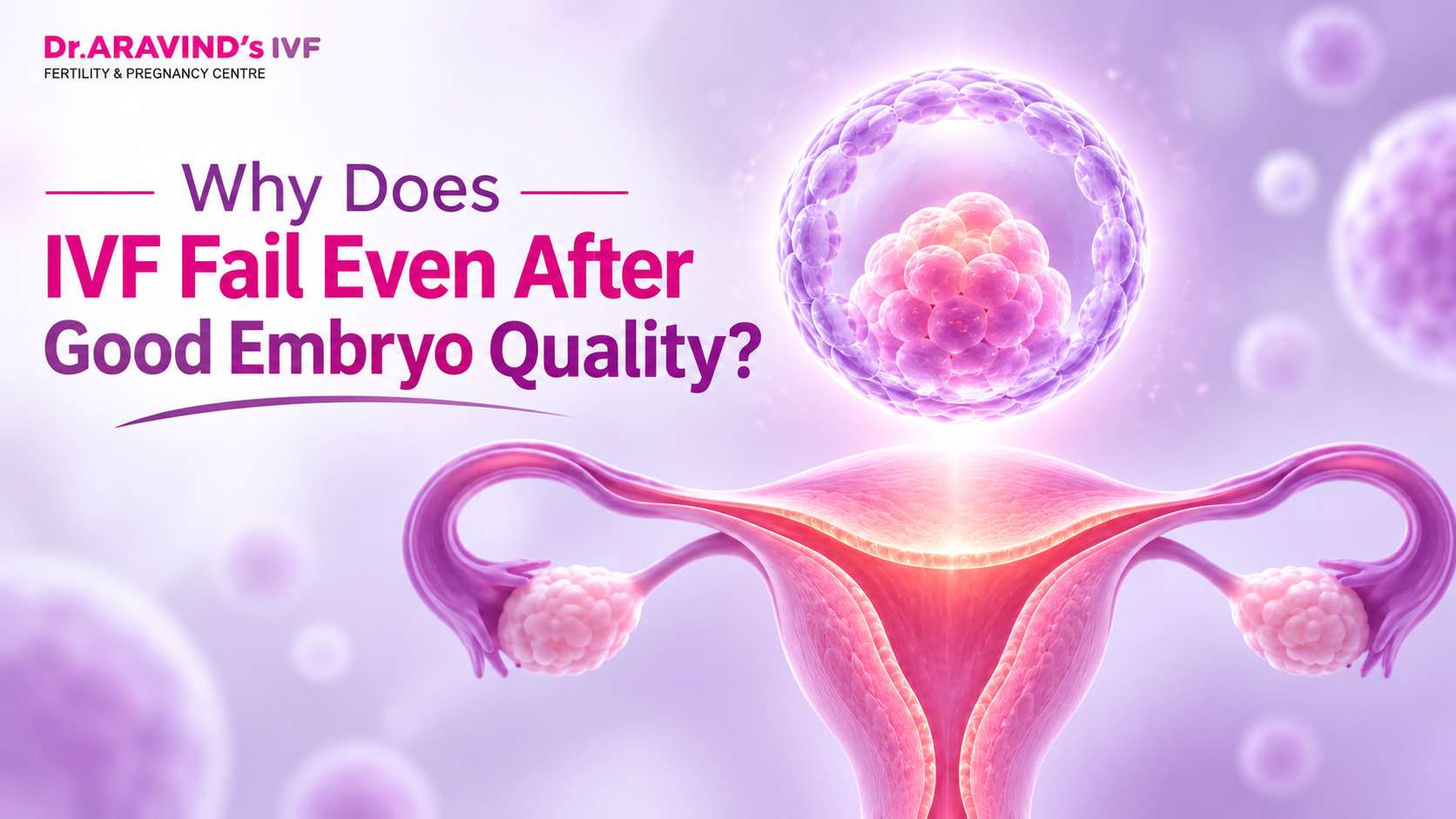
IVF can fail even with good embryos because embryo grade measures appearance, not chromosomes or implantation ability. Pregnancy also depends on uterine receptivity, embryo genetics, sperm DNA quality, transfer timing and technique, and hidden conditions such as polyps, chronic inflammation, or tubal fluid. Identifying which factor is involved is the key to a better next cycle.
When your embryologist says you have a "good" or "grade AA/AB" embryo, they are describing its morphology: how it looks under the microscope. This includes cell number, symmetry, and the quality of the inner cell mass and trophectoderm in a blastocyst.
Grading is useful, but limited. A beautiful-looking embryo can still carry a chromosomal error that no microscope can see. This is why a single failed transfer, even with a top-grade embryo, does not mean you did anything wrong. Even in the best programs, no embryo transfer carries a 100% chance of success.
This is the most common reason for implantation failure and early miscarriage. Chromosomal errors (aneuploidy) become more frequent as egg age increases, but they can occur at any age. An embryo can look perfect and still have the wrong number of chromosomes.
Embryo genetic screening such as Preimplantation Genetic Testing (PGT-A) checks chromosome numbers before transfer. Technology-assisted selection tools, including time-lapse embryo monitoring and AI embryo selection, add further information on development patterns. Neither guarantees a pregnancy, but both can help prioritise the embryo with the best potential.
Implantation requires a good embryo and a receptive uterine lining, working in sync. The lining is receptive only during a short "window of implantation." If the lining is too thin, poorly vascularised, inflamed, or out of sync with the embryo, a healthy embryo may fail to attach.
Treatments such as endometrial rejuvenation may be considered in selected cases of poor lining response. You can also read why the lining matters in our expert's video on the "Importance of Endometrium in IVF success" on the Dr. Aravind's IVF YouTube channel.
Structural problems inside the uterus can interfere with implantation even when embryos are excellent. These include:
A hysteroscopy lets the doctor look directly inside the uterus and correct many of these problems in the same sitting.
Blocked, fluid-filled fallopian tubes can leak toxic fluid into the uterus, reducing implantation chances. This is often linked to past infection or endometriosis. Learn more in our guide on fallopian tube blockage after PID. In such cases, laparoscopy for infertility may be recommended to treat the tubes before another transfer.
Normal semen analysis does not rule out sperm DNA damage. High fragmentation can affect embryo development and implantation, and increase miscarriage risk. A DNA Fragmentation Index (DFI) test measures this, and techniques like MACS or ICSI may help select healthier sperm.
A smooth, atraumatic transfer, correct catheter placement, and accurate timing all influence the outcome. In some women, a freeze-all approach followed by a frozen embryo transfer (FET) in a carefully prepared cycle gives the uterus time to recover from ovarian stimulation and can improve synchronisation.
Before implanting, an embryo must "hatch" from its outer shell. In some cases, such as older eggs or a thickened shell, this step is difficult. Laser Assisted Hatching (LAH) may be considered in selected patients.
Egg quality and uterine health are influenced by age, which is explained in detail in Does Age Affect Fertility in Women and Men?. Other contributors include uncontrolled thyroid disease, diabetes, PCOS, vitamin D deficiency, obesity, smoking, alcohol, and chronic stress. A balanced diet may also support reproductive health; see best foods to increase fertility.
Despite thorough testing, a cause is sometimes not found. This does not mean treatment is hopeless. Many couples conceive after a modified protocol, additional testing, or simply another transfer.
Yes. Even a chromosomally normal embryo does not always implant, and results vary with age, uterine factors, and clinic protocols. A single failed transfer is a data point, not a verdict. Doctors typically begin looking for specific causes after repeated failures (often defined as two or more transfers of good-quality embryos without pregnancy), though your doctor will individualise this based on your history.
Your fertility specialist may recommend a targeted review rather than repeating the same protocol. Depending on your history, this may include:
| Area | Possible evaluation |
|---|---|
| Embryo | PGT-A, review of lab culture and grading |
| Uterus | Hysteroscopy, 3D ultrasound, endometrial assessment |
| Tubes/pelvis | Ultrasound, laparoscopy if indicated |
| Sperm | Semen analysis, DFI |
| Hormones/metabolism | Thyroid, prolactin, vitamin D, blood sugar |
| Clotting/immune factors | Selected tests only when clinically justified |
Not every test is right for every patient. Some immune and clotting treatments have limited evidence, so insist on an explanation of why a test or medication is being suggested.
If you have experienced several unsuccessful transfers or pregnancy losses, our page for those with multiple failure of pregnancies explains the next steps.
Consult a fertility expert if you have had two or more failed transfers with good embryos, recurrent miscarriage, very thin lining, abnormal bleeding, pelvic pain, or a history of pelvic infection or endometriosis. Early evaluation saves time, cost, and emotional strain.
At Dr. Aravind's IVF, care is led by experienced fertility experts with decades of combined experience, and the group reports over 70,000 IVF cycles across its centres. You can learn more about Dr. Aravind's IVF, read patient testimonials, or visit our Coimbatore fertility centre. To discuss your own case, you can book your appointment or call +91 90 2012 2012.
Everyday stress is unlikely to be the sole cause, but chronic stress affects sleep, habits and wellbeing, so support is worthwhile.
Disclaimer: This article is for general education and is not a substitute for personal medical advice. Please consult a qualified fertility specialist about your individual situation.
Grade reflects appearance only. Hidden chromosomal errors, a poorly receptive endometrium, uterine problems, or sperm DNA damage can all cause failure despite top-grade embryos.
No. Many couples succeed after a failed cycle once contributing factors are identified and corrected.
Not always. It may help in women of advanced age, with recurrent miscarriage, or repeated failures, but your doctor should decide based on your history.
Yes. A thin, inflamed, or out-of-sync lining is a well-recognised cause of implantation failure.
Often after one to two menstrual cycles, though timing depends on your health, hormone recovery, and whether further tests are needed.
Everyday stress is unlikely to be the sole cause, but chronic stress affects sleep, habits and wellbeing, so support is worthwhile.


