Yes. Ovulation medicines can make more than one follicle mature and release an egg in the same cycle, which raises the chance of twins or more. Tablets such as letrozole and clomiphene usually carry a lower risk than injectable gonadotropins. Scans during the cycle let your doctor lower the dose, skip the trigger, advise against intercourse or IUI, or cancel the cycle if too many follicles grow. No medicine brings the risk to zero.
Key points
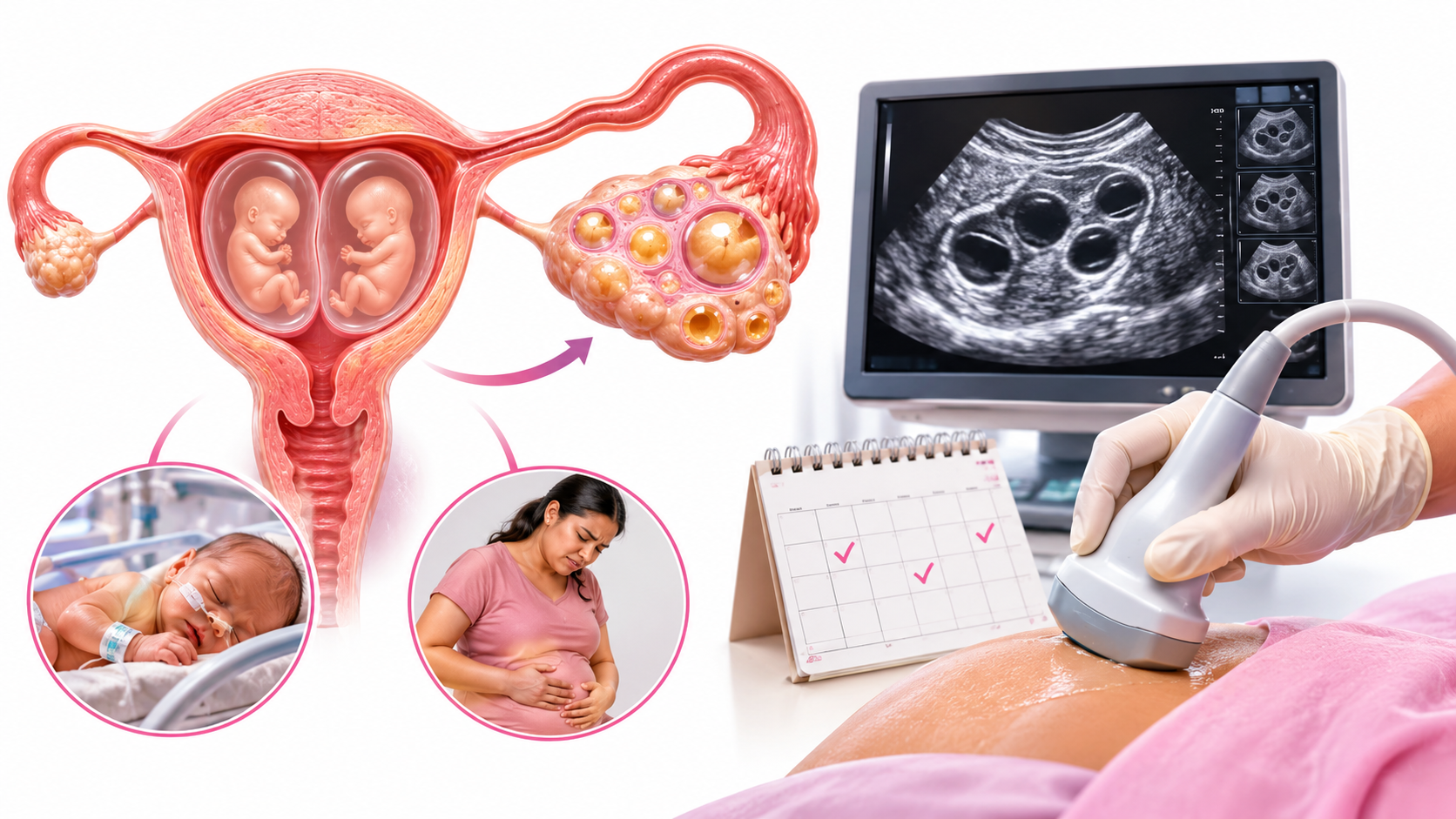
It means using medicine to help an egg develop and be released, usually when ovulation is irregular or absent, or when extra support is needed to conceive. The medicines can include:
It is not IVF. In IVF, eggs are collected and the team chooses how many embryos to transfer. In ovulation induction, any eggs that are released stay inside your body, so the number of follicles at ovulation largely decides the multiple-pregnancy risk.
Ovulation medicines mainly raise the chance of fraternal multiples, because they can allow more than one egg to ovulate. Triplets or more become more likely when several mature follicles develop, especially with injectable medicines.
| Medicine | How it works | Multiple-pregnancy risk (general) |
|---|---|---|
| Letrozole | Temporarily lowers oestrogen production, encouraging the brain to signal the ovaries to produce more FSH. | Generally lower; often used for ovulation induction in people with PCOS. |
| Clomiphene citrate | Blocks oestrogen receptors, prompting the body to release more FSH and stimulate follicle growth. | Higher than natural conception; triplets are possible but uncommon. |
| Injectable gonadotropins (FSH, hMG) | Directly stimulate the ovaries to develop follicles. | Generally the highest of these three, as several follicles may develop at the same time. |
Important: The actual risk varies between studies and patient groups. These general comparisons should not be treated as a personal percentage or prediction. Your doctor can explain how your age, ovarian reserve, diagnosis and cycle history influence your individual risk. The number of developing follicles and the treatment plan also matter.
A transvaginal ultrasound lets the team watch the follicles develop. A monitored cycle may check:
A scan can't guarantee that only one egg will be released. What it does is help your doctor judge the risk and decide whether to go ahead, change the dose or stop. See IVF ultrasound monitoring for how scans work in stimulated cycles.
Your doctor may advise one or more of these:
A cancellation isn't a failed treatment. It is a safety decision to avoid a high-order multiple pregnancy. Guidance such as ASRM's supports cancelling when the response carries a substantial risk, but exact thresholds depend on your age, diagnosis, medicine, clinic policy and whether the cycle involves intercourse or IUI.
Twins and more can be healthy, but they carry more medical risk than a single baby. Possible problems include:
| Area | Possible risks |
|---|---|
| Baby | preterm birth, low birth weight, newborn intensive-care stay |
| Mother | high blood pressure and pre-eclampsia, gestational diabetes, anaemia |
| Pregnancy and birth | placental problems, caesarean delivery |
| Family | greater physical, emotional and financial strain |
Risk generally rises with each additional baby. It is safer to prevent an avoidable high-order pregnancy than to depend on fetal reduction later. See twin pregnancy risks.
This is a common worry. Researchers study it carefully, and the picture is not simple. Some studies suggest that the underlying infertility, the parents' age and health, and the type of pregnancy (single or multiple) may matter as much as the medicine itself. Your doctor can explain what current evidence says about the specific medicine you're prescribed.
Before treatment, talk with your doctor about the medicine's safety, folic acid, and any medical conditions. Don't stop a prescribed medicine or add a supplement without advice.
A positive test is followed by an ultrasound, which shows the number and position of the gestational sacs and later how the babies are developing. Get urgent medical care if you have severe pain, heavy bleeding, fainting or shoulder-tip pain after a positive test, because an ectopic pregnancy or another complication needs prompt assessment.
Your team may take extra care if you have:
If safe monitoring isn't possible, delay or change treatment. See PCOS and fertility treatment and antral follicle count.
Ovulation induction can cause a multiple pregnancy because more than one follicle may mature and release an egg. The risk is usually lower with tablets than with injectable gonadotropins, but no medicine removes it. Careful dosing, ultrasound monitoring and a willingness to cancel an unsafe cycle are the core of responsible treatment.
Get personalised guidance and appropriate monitoring throughout your fertility journey.
Book an IVF consultationDr. Aravind's IVF Fertility & Pregnancy Centre
Ovulation medicines need a prescription and a monitoring plan. Never change a dose or go ahead with unmonitored treatment based on an online article. This article is for education only.
Yes, it can raise the chance of twins compared with natural conception, though the risk is generally lower than with injectable gonadotropins. Your personal risk depends on how many mature follicles develop.
It can rarely contribute to triplets or more, especially when several follicles develop. Monitoring and cancellation rules lower the risk.
They can be used safely when a fertility specialist prescribes and monitors them. Their higher multiple-pregnancy risk is the reason monitoring and cancellation rules matter so much.
Follow your clinic's exact instructions. The team may advise abstinence or a barrier method for that cycle.
Your doctor will advise based on timing and follicle response. Call the clinic rather than deciding on your own.
No. Many twin pregnancies go well, but they carry higher risks than a single baby and need closer obstetric care.


