The doctors diagnose patients who visit their clinics every month with severe cramps, heavy bleeding, pelvic pain and infertility problems, which affect thousands of women throughout India. These symptoms are often linked to adenomyosis vs endometriosis, two of the most common female infertility causes in India. The two conditions have a confusingly similar name, and they share multiple symptoms, but they remain separate medical conditions that doctors diagnose through different methods and treat through different procedures.
Women can make better treatment decisions because they understand the difference between adenomyosis and endometriosis, which helps them to find appropriate medical assistance at an earlier time and to maintain their reproductive abilities. The doctors at Dr. Aravind's IVF Fertility & Pregnancy Centre treat these medical conditions, which they encounter in their Chennai and Tamil Nadu practices, through specialized patient care programs.
The article explains both medical conditions using simple terms that describe their nature and distinct characteristics, their diagnostic processes and their effects on reproductive ability, and their available treatments.
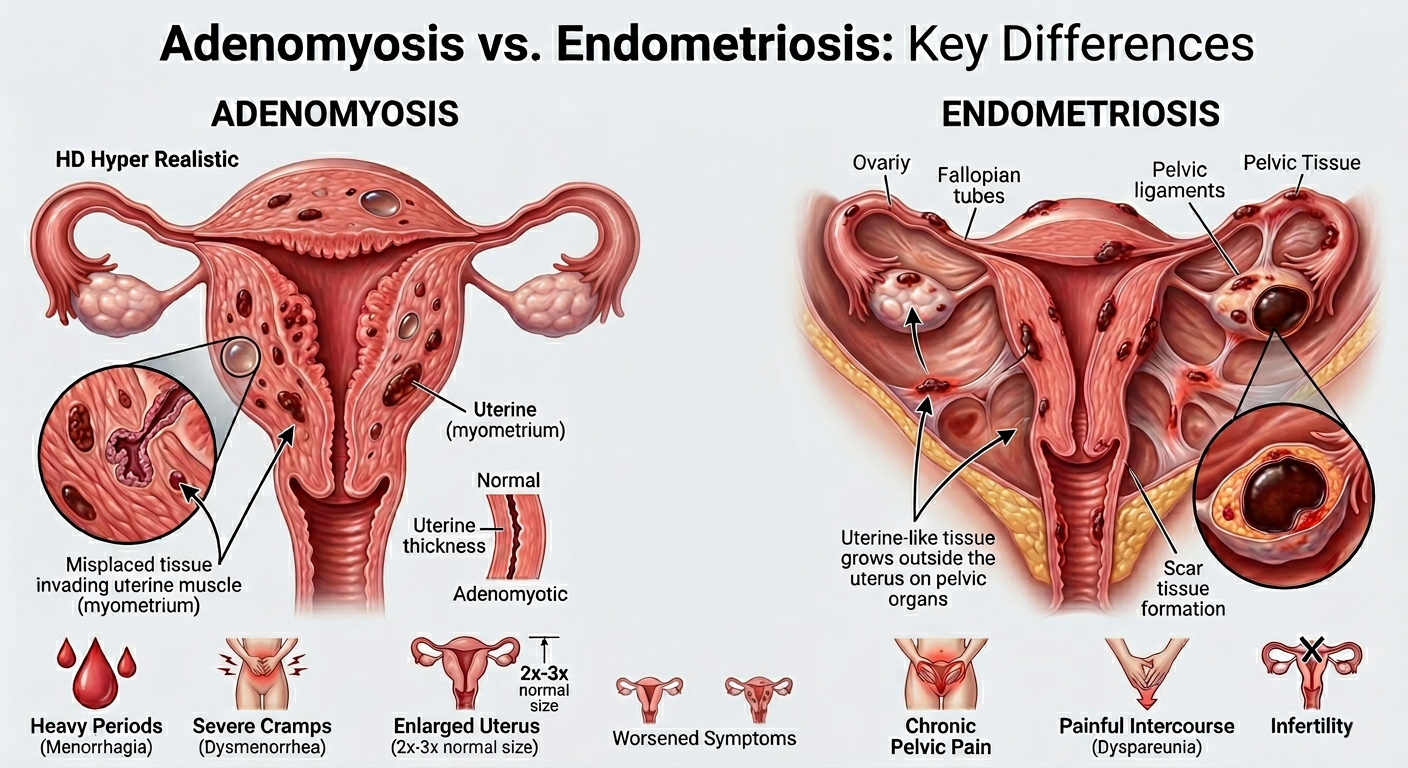
Adenomyosis is a condition that causes endometrial tissue to invade the myometrium, which forms the muscular wall of the uterus. This uterine enlargement adenomyosis condition of the muscle that leads to internal bleeding, which results in uterine wall thickening and organ enlargement.
Adenomyosis exists as a uterine disorder that remains entirely within the uterus. The uterine lining acts as an intruder that enters the space between its own organ walls. The internal invasion process creates a massive tender uterus, which develops stronger menstrual symptoms as the condition progresses.
The most common age range for women to receive an adenomyosis diagnosis extends from 35 to 50 years. The condition affects both younger women and women who have never been pregnant. Estrogen levels above normal limits create a hormonal imbalance, which serves as the main factor driving this medical condition.
Women experience excessively extended menstrual periods, which medical professionals define as menorrhagia, and it is a common heavy menstrual bleeding condition.
Women suffer from severe menstrual cramps, which prevent them from working through their dysmenorrhea condition and are a major painful periods cause.
Endometriosis is a permanent medical disorder that results in the growth of tissue that mimics the uterine lining outside of the uterus. This endometriosis condition usually impacts the ovaries and fallopian tubes, the outer surface of the uterus and the pelvic cavity lining. The disease progresses to advanced stages, which enable it to spread throughout the body, including the bowel, bladder and diaphragm.
The misplaced tissue responds to hormonal changes in the same way as normal endometrial tissue because it goes through the same process of building up, breaking down and bleeding at each menstrual cycle. The trapped blood in the body results in three physical conditions: inflammation, scar tissue and the development of endometriomas, which people commonly refer to as chocolate cysts.
Endometriosis affects approximately 1 in 10 women of reproductive age globally and is one of the leading causes of endometriosis infertility. The medical community usually diagnoses the condition between the ages of 20 and 30, despite the fact that symptoms begin with the first menstrual period. The genetic factors in endometriosis develop through a family connection because women who have mothers or sisters with this condition face a higher risk levels.
• The condition causes persistent pelvic discomfort, which becomes more intense during menstrual cycles and is a major pelvic pain infertility cause.
The following table summarizes the key differences between the two conditions at a glance:
The diagnosis of adenomyosis presents difficulties because its symptoms resemble those found in uterine fibroids, pelvic inflammatory disease and endometriosis. The main diagnostic tools include:
Dr. Aravind's IVF centre uses advanced imaging methods together with complete clinical assessments to achieve precise diagnostic results, which the centre uses to create patient treatment strategies.
Endometriosis needs about 7 to 10 years until doctors can make a diagnosis because people think its symptoms are nothing more than common menstrual discomfort. The medical field uses these diagnostic methods:
Women with adenomyosis and endometriosis experience reproductive challenges because both conditions work through distinct biological pathways and are key contributors to female infertility causes India.
Adenomyosis impacts fertility through multiple mechanisms. The thickened, irregular uterine muscle creates an unfriendly environment that prevents successful embryo implantation. The uterine biochemical changes impede both sperm movement and embryo development. The heightened uterine contractions that occur with adenomyosis dislodge embryos from their sites of attachment while increasing the chances of spontaneous abortion.
Women with adenomyosis who undergo IVF experience diminished success during implantation while facing increased risks of losing their pregnancies. The fertility centre has helped many women with adenomyosis achieve successful IVF births after implementing pre-treatment optimization methods that combine hormonal suppression with personalized stimulation plans.
Endometriosis affects fertility through multiple pathways. Scar tissue and adhesions can distort pelvic anatomy, blocking or damaging the fallopian tubes. Endometriomas on the ovaries can destroy healthy egg-containing tissue, reducing ovarian reserve. The chronic inflammation associated with endometriosis creates a toxic environment in the pelvic cavity that harms eggs and sperm alike.
The presence of endometriosis creates obstacles to conception but does not render a woman completely unable to become pregnant. Many women with endometriosis achieve successful pregnancies after receiving appropriate surgical treatment for endometrial implant removal or through assisted reproductive techniques such as IVF and ICSI. At Dr. Aravind's IVF, we have helped thousands of women with endometriosis achieve their dream of motherhood.
Hormonal Therapy: The combination of oral contraceptive pills together with progestins and GnRH agonists and the Mirena IUD, which releases levonorgestrel, provides women with a treatment option that effectively eliminates menstrual periods while decreasing their menstrual symptoms. These treatments provide women with an option to maintain their reproductive capabilities while they seek alternatives to surgical procedures.
Uterine Artery Embolization (UAE): This radiological treatment method creates an obstruction in blood flow to adenomyosis lesions, which results in symptom relief and maintains uterine function. The procedure is appropriate for women whose reproductive timelines have reached completion.
Hysterectomy: The single treatment method that permanently eliminates adenomyosis symptoms. The procedure is appropriate for women experiencing intense medical symptoms who have finished their pregnancy planning process.
IVF with Frozen Embryo Transfer (FET): The combination of IVF with a freeze-all approach followed by FET after hormonal preparation of the uterine lining produces successful outcomes for women with adenomyosis who want to become pregnant.
Pain Management: The use of NSAIDs together with hormonal contraceptives provides effective symptom relief for mild cases while preventing further disease advancement.
Laparoscopic Surgery: The procedure involves both removing endometrial implants through excision or ablation and executing drainage of endometriomas, together with restoring normal anatomical structures. The treatment remains the most effective method to achieve both symptom relief and improved fertility results.
GnRH Agonist Therapy: Leuprolide and other similar medications create a temporary state of menopause, which causes estrogen levels to drop and results in the reduction of endometrial tissue. Surgeons and doctors frequently use the technique as a preparation method before surgery and during the IVF process.
IVF & ICSI: The medical community advises women with advanced endometriosis and reduced ovarian function to pursue IVF with ICSI as their primary method for achieving pregnancy.
Yes, this condition occurs more frequently than most people understand. Studies indicate that around 20 to 35 percent of women with endometriosis also develop adenomyosis. When two medical conditions exist together, they create more intense symptoms, which lead to greater infertility problems and require medical professionals to implement joint treatment plans for both conditions.
At Dr. Aravind's IVF, our multidisciplinary team, which includes reproductive endocrinologists, laparoscopic surgeons and embryologists, creates a detailed treatment strategy that matches her particular needs and reproductive objectives when a patient shows symptoms of both conditions.
Women who experience painful periods continue to endure their discomfort for multiple years before they decide to get medical assistance. The following conditions require immediate evaluation by a specialist:
Your fertility preservation process will benefit from early diagnosis and timely intervention because both conditions can be managed more effectively. The treatment options that you have available to you will increase when these conditions are diagnosed at an earlier stage.
The two separate medical conditions, adenomyosis and endometriosis, share a connection that results in serious impacts on women's ability to live normally and have children. The condition of adenomyosis remains restricted to the uterine wall, which results in heavy menstrual bleeding and an increase in uterine size, while endometriosis develops beyond the uterine confines to become a leading cause of both pelvic discomfort and infertility problems.
The most important takeaway is this: neither condition should be dismissed as "just bad periods." Both are real, diagnosable, and treatable medical conditions. Most women with adenomyosis or endometriosis can achieve symptom relief through proper specialist treatment, which enables them to start their desired family life when they feel ready to do so.
You should seek medical help immediately if you believe you have either of these conditions. Contact the caring medical team at Dr. Aravind's IVF Fertility and Pregnancy Centre now. We are here to support you throughout your entire process of obtaining health and becoming a parent.
Adenomyosis occurs when endometrial tissue grows inside the uterine muscle, while endometriosis occurs when similar tissue grows outside the uterus on organs like ovaries and fallopian tubes.
Both conditions can cause severe pain. Adenomyosis is often linked to heavy, painful periods, while endometriosis causes chronic pelvic pain, especially during menstruation and intercourse.
Yes, around 20–35% of women with endometriosis may also have adenomyosis, making symptoms more severe and treatment more complex.
Yes, pregnancy is possible. However, both conditions can affect fertility. Treatments like IVF significantly improve chances of conception.
Adenomyosis is usually diagnosed using transvaginal ultrasound or MRI, and confirmed through histopathological examination after surgery.


