Chronic endometritis is a long-lasting, often silent inflammation of the womb lining. It is diagnosed with a lining biopsy, usually stained for a marker called CD138 that picks out plasma cells, though lab methods and cut-offs vary. It has been linked with implantation failure and pregnancy loss in some studies, but a positive test does not prove it caused your failed cycle. Antibiotics are used only when a doctor believes the diagnosis is supported, not automatically after every failed transfer.
Key points
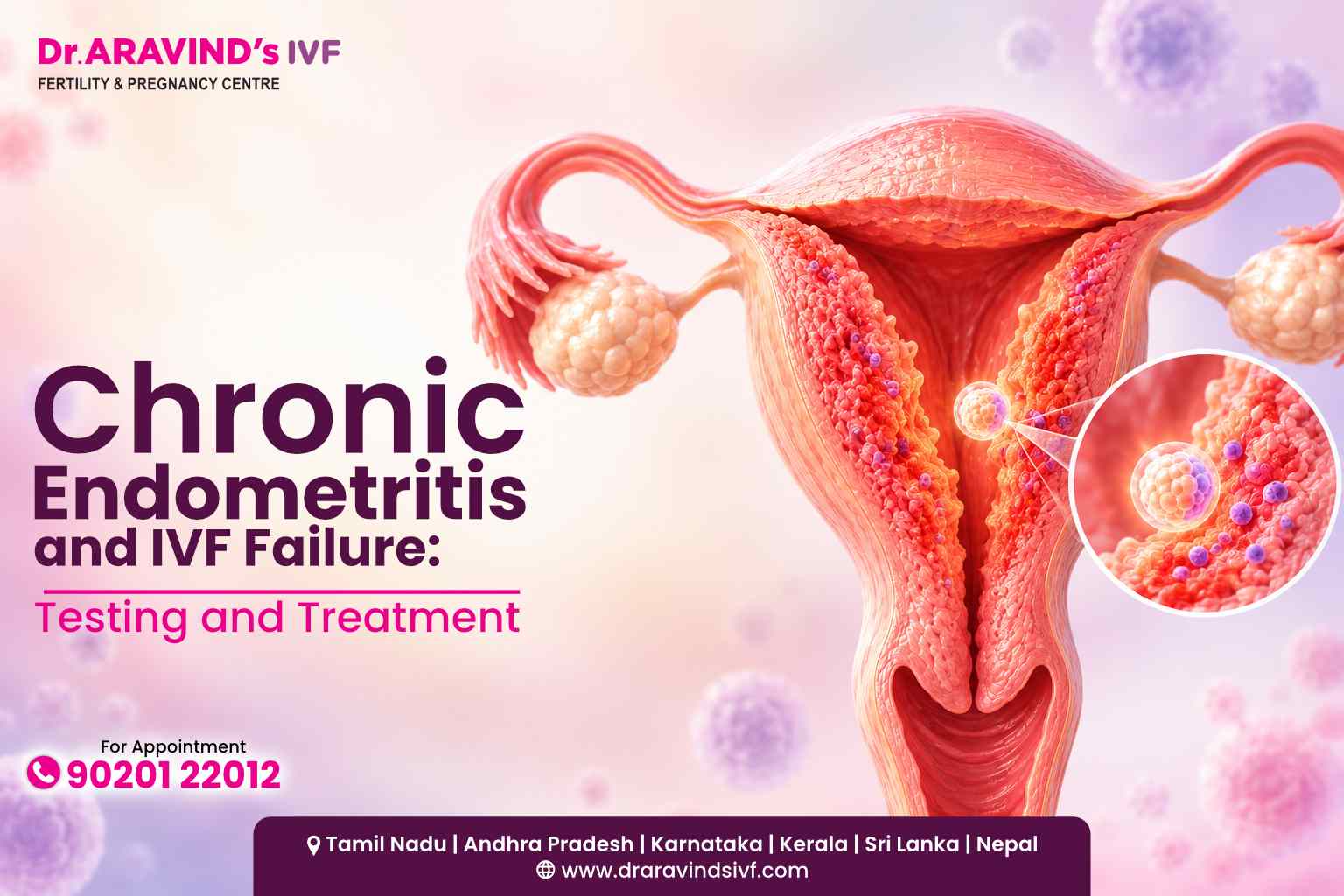
Your womb lining stays inflamed for a long time, yet it often causes few or no symptoms. It isn’t the same as a sudden pelvic infection. To confirm it, a pathologist checks a tissue sample for plasma cells, commonly with a CD138 stain. Because labs differ in how they take samples, stain them and set their thresholds, the result isn’t always clear-cut.
| Condition | What it is |
|---|---|
| Chronic endometritis | Long-lasting inflammation of the womb lining. |
| Endometriosis | Tissue similar to the womb lining growing outside the womb. See endometriosis and IVF. |
| Adenomyosis | Lining-type tissue growing into the womb muscle. See adenomyosis and IVF. |
| Acute pelvic infection | A sudden infection, often with fever, pain, discharge or feeling unwell. It needs prompt medical assessment and treatment. |
Many women have none. Possible symptoms include:
None of these is specific. Polyps, fibroids, infections and hormonal conditions can look the same.
Inflammation could affect the lining and the environment an embryo lands in. Some studies report lower pregnancy rates or more miscarriage in some infertile groups with chronic endometritis. But an association is not the same as proof that it caused your failed cycle. IVF can fail because of embryo chromosomes, age, lining timing, womb anatomy, sperm factors, lab factors or simple chance. A diagnosis should lead to a proportionate plan, not blame. See why IVF implantation fails.
Testing every IVF patient is not universally recommended. Your specialist should say why it is relevant to you and what will happen after a positive or negative result. The wider process is in how doctors investigate failed embryo implantation.
| Test | What it involves | Limits |
|---|---|---|
| Endometrial biopsy | A small sample of the womb lining is taken through the cervix and examined by a pathologist, often using CD138 staining. | Sampling methods, staining techniques and diagnostic cut-offs vary between laboratories. |
| Hysteroscopy | A camera examines the womb cavity for a red or irregular lining, micropolyps, fluid or adhesions. | A normal appearance does not rule out chronic endometritis. A suspicious appearance needs biopsy confirmation. See hysteroscopy before IVF. |
| Microbiology (cultures or molecular tests) | Looks for microorganisms in a collected sample. | Contamination, colonisation and test sensitivity can affect results. A positive result does not always mean antibiotics will improve fertility outcomes. |
Before testing: Ask your doctor which diagnostic method will be used, what the laboratory will report and how the result could change your treatment plan.
No single result settles it. CD138 staining helps identify plasma cells, but thresholds and interpretation vary. Read it alongside your symptoms, the quality of the sample, a pathologist's review and your fertility history. Plasma cells can occasionally be present for reasons that don't call for long treatment. If a result is unexpected, ask whether a second pathology opinion or repeat sampling is needed.
If a specialist judges chronic endometritis to be clinically present, treatment usually means an antibiotic chosen according to local practice, your history, allergies and any organisms found. It must be prescribed by a doctor. Taking antibiotics after every negative transfer isn't appropriate, because unnecessary courses can cause side effects, allergic reactions, resistance and disturbance of normal vaginal bacteria.
You should be told clearly about:
Practice varies. Some specialists repeat a biopsy to check the inflammation has settled, especially if the first result was significant or implantation failure has continued. There is no universal rule requiring a repeat biopsy after every course. It depends on the first result, the treatment, your symptoms and the transfer plan.
Some observational studies and meta-analyses report better outcomes after treatment and documented resolution. But the quality of evidence varies, studies use different definitions and some questions remain open. Treatment can be reasonable when the diagnosis is well supported, but it should not be described as a guaranteed cure for IVF failure. Your clinic should explain how certain the evidence is, and what other explanations exist.
It can recur or persist, especially when the cause isn't clear or treatment was incomplete. Ongoing symptoms or continued implantation failure call for reassessment, not repeated antibiotics without testing.
A positive endometrial test belongs inside that full review. If you've heard about add-ons for the lining, see endometrial scratch before IVF.
Chronic endometritis is usually subtle. But fever, severe pelvic pain, heavy bleeding, fainting, a foul discharge or feeling very unwell may point to an acute infection or another emergency, and need prompt medical care, as do pregnancy symptoms with pain or bleeding.
[Doctor to write 3 to 4 honest sentences on the centre's policy: for example, when testing is offered, how results are interpreted with the pathologist and how patients are counselled on antibiotics. No success figures or unprovable claims. Delete this note.]
Chronic endometritis is a possible, usually subtle cause of lining inflammation that may be considered after repeated implantation failure, pregnancy loss, symptoms or abnormal findings. Diagnosis may involve a biopsy and CD138 staining, though thresholds vary. Antibiotics may suit a supported diagnosis, but routine testing and automatic treatment are not necessary for every IVF patient.
Discuss your previous IVF cycles, test results and possible next steps with the fertility team at Dr. Aravind's IVF Fertility & Pregnancy Centre.
Book an IVF consultationDr. Aravind's IVF Fertility & Pregnancy Centre
Chronic endometritis is a specialised diagnosis that needs proper sampling and pathology interpretation. Do not start antibiotics on your own, or assume a positive test explains every IVF outcome. This article is for education only.
It may be associated with implantation failure in some women, but it isn't the only cause, and a positive test doesn't prove it caused an individual negative cycle.
No universal recommendation supports testing everyone. It may be considered after repeated failures, repeated losses, symptoms or relevant findings.
No. Chronic endometritis is inflammation of the womb lining, while endometriosis is lining-type tissue outside the womb.
No. Antibiotics should be prescribed when a clinician believes the diagnosis is supported. Treating every failed cycle empirically isn't appropriate.
It depends on the treatment, follow-up testing, symptoms and protocol. Ask your fertility specialist rather than using a fixed timeline from the internet.


