Welcome to Dr Aravind's IVF Fertility and Pregnancy Centre. In this article, we explore the science behind egg quality, the reality of the biological clock, and how follicle tracking helps women understand their fertility better.
Fertility is influenced by several factors, including biology, hormones, lifestyle, and environmental conditions. However, one of the most important factors affecting fertility is a woman’s age. Understanding how age affects egg quality and ovarian function can help women make informed decisions when planning pregnancy.
At Dr Aravind's IVF, with more than 40 branches across India and a strong presence in South India, we believe that knowledge is one of the most powerful tools in fertility care. The phrase “biological clock” is commonly used, but it actually represents the relationship between age, egg quality, and ovarian follicles.
Women are naturally born with the total number of eggs they will have during their lifetime. At birth, the ovaries contain approximately one to two million eggs stored within follicles.
Fertility is generally highest between the ages of 20 and 29 and remains relatively stable through the early 30s. As age increases, both the number and the quality of eggs gradually decline. This natural biological process may make it more difficult to become pregnant and can increase the chances of pregnancy complications.
Unlike skin or blood cells that regenerate throughout life, eggs cannot regenerate once they are lost. As the number of eggs declines, hormone levels in the body begin to change. Some hormones decrease while others increase as the body attempts to stimulate the remaining follicles.
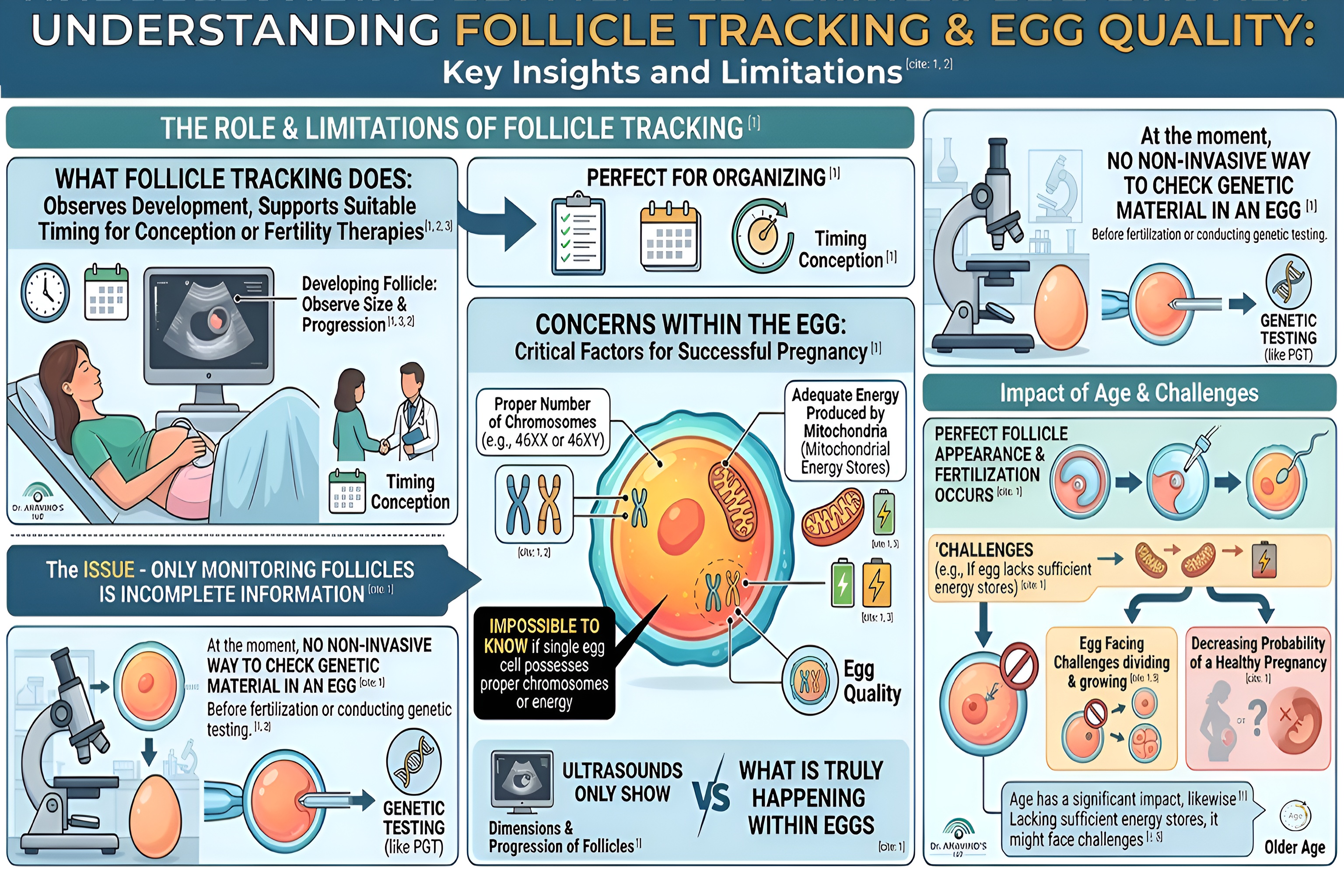
Egg quality refers to the ability of an egg to be fertilized, develop into an embryo, and lead to a healthy pregnancy. Good quality eggs contain the correct number of chromosomes and sufficient energy to support early embryonic development.
Poor egg quality may reduce the chances of fertilization and increase the risk of miscarriage or genetic abnormalities. Age plays a major role in determining egg quality because eggs gradually undergo biological changes over time.
Even if fertilization occurs, the egg may not always have the necessary energy or genetic stability to develop into a healthy pregnancy. However, maintaining a healthy lifestyle including balanced nutrition and stress management can support overall reproductive health.
Egg quality is not about the number of eggs available in the ovaries. That refers to ovarian reserve. Instead, egg quality refers to whether an egg has the correct number of chromosomes and the cellular energy needed to support embryo development.
This energy comes from mitochondria, which act as the power source within each egg.
Mitochondria are tiny structures within cells that produce energy. In reproductive biology, they play an essential role in supporting fertilization, cell division, and embryo growth.
Each egg contains thousands of mitochondria that function like small batteries supplying energy for important developmental processes. As women age, mitochondrial efficiency gradually decreases.
This decline in energy production may affect the egg’s ability to divide properly and support a developing embryo, even if fertilization occurs successfully.
A follicle is a fluid-filled sac in the ovary that contains an immature egg. Follicle tracking is a monitoring method used by fertility specialists to observe follicle growth through ultrasound scans during the menstrual cycle.
This process helps doctors predict ovulation, identify potential fertility issues, and determine the most suitable time for conception or fertility treatments.
Ovarian reserve refers to the number of eggs remaining in the ovaries. While medical tests can estimate ovarian reserve, it is important to understand that egg reserve and egg quality are not the same.
Both egg quantity and egg quality decline naturally with age. A higher ovarian reserve may increase the chances of pregnancy during fertility treatments such as IVF, but it does not guarantee the genetic health of the eggs.
Although age-related decline in egg quality cannot be reversed, certain lifestyle choices may help support reproductive health.
A healthy lifestyle creates a supportive environment for egg development and overall fertility health.
Follicle tracking helps doctors evaluate how the ovaries respond during the menstrual cycle. While it does not directly measure egg quality, it provides useful information about ovarian function.
Follicle tracking allows fertility specialists to observe follicle development and determine the optimal timing for conception or fertility treatments.
However, ultrasound scans can only show the size and development of follicles. They cannot directly measure the genetic health or energy capacity of the egg inside the follicle.
Currently, egg quality can only be assessed after fertilization through specialized laboratory testing. This means that even if a follicle appears healthy, the egg inside may still vary in quality.
Ovarian reserve testing provides a snapshot of ovarian function at a specific point in time. Follicle counts can naturally vary from month to month.
Factors such as stress, illness, hormonal fluctuations, and lifestyle changes may influence follicle development during each cycle.
Egg freezing has become an increasingly popular option for women who want to preserve their fertility for the future. The process involves stimulating the ovaries, retrieving eggs, and freezing them for later use.
When eggs are frozen at a younger age, they retain the same biological quality they had at the time of freezing. This provides an opportunity for women to consider pregnancy later while preserving healthier eggs.
Understanding fertility provides individuals with greater control over their reproductive choices. Follicle tracking helps identify ovulation timing and supports personalized fertility planning.
When combined with ovarian reserve testing, healthy lifestyle choices, and options such as egg freezing, women can actively manage their reproductive future.
At Dr Aravind's IVF Fertility and Pregnancy Centre in Tamil Nadu, Kerala, Karnataka, and Andhra Pradesh
, Our specialists are dedicated to guiding patients through every step of their fertility journey and helping them achieve healthy pregnancy outcomes.
As women age, both the number and quality of eggs decline naturally. Egg quality refers to whether an egg has the correct number of chromosomes and enough energy to support embryo development. After the age of 35, the risk of chromosomal abnormalities increases, which can reduce the chances of successful fertilization and increase the likelihood of miscarriage.
Follicle tracking is an ultrasound-based monitoring method used to observe the growth and development of ovarian follicles during a menstrual cycle. It helps fertility specialists determine when ovulation will occur, allowing couples to time intercourse or fertility treatments such as IVF more effectively.
Ovarian reserve refers to the number of eggs remaining in the ovaries, while egg quality refers to how healthy those eggs are genetically. A woman may have a good ovarian reserve but still experience reduced egg quality, especially as she gets older.
Female fertility generally begins to decline gradually after the age of 30, with a more noticeable decline after 35. This happens because both egg quantity and egg quality decrease with age.
No, follicle tracking cannot directly measure egg quality. It only shows the size and development of follicles in the ovaries. While it helps predict ovulation and monitor ovarian response, it cannot reveal the genetic health of the egg inside the follicle.


