The diagnosis of Premature Ovarian Insufficiency (POI), which occurs before reaching adulthood, creates a life-altering experience for people who receive it. The dream of motherhood becomes an unreachable goal for most women who receive this diagnosis. However, obstetricians practice medicine after diagnosing patients with POI because they treat patients through multiple stages of their fertility journey. The path to parenthood begins a new chapter for you, which modern reproductive medicine enables you to navigate through different ways. Today, several Premature Ovarian Insufficiency fertility options are available for women who want to achieve pregnancy despite a POI diagnosis.
Dr. Aravind's IVF Fertility & Pregnancy Centre has successfully assisted hundreds of women with POI to achieve pregnancy through its 30 years of experience and more than 70000 completed IVF cycles. This article provides complete information about POI, which includes its definition and causes, along with all current fertility treatment options available to you, including advanced POI treatment for young women.
The condition called Premature Ovarian Insufficiency, which people previously knew as premature ovarian failure symptoms, leads to ovarian failure before a woman reaches 40 years of age. The condition of POI, which affects women in their twenties and teenagers, shows different characteristics than the natural menopause, which occurs between 50 and 55 years of age. Many women also describe this condition as premature menopause IVF-related infertility because IVF often becomes part of their fertility journey. The main feature of this condition involves a major decline in ovarian reserve, which refers to the total quantity and viability of eggs that can be used for fertilization.
Women under 40 who experience the following symptoms will receive a POI diagnosis:
The distinction of primary ovarian insufficiency from total ovarian shutdown requires clear identification. Women with primary ovarian insufficiency experience occasional ovulation, while 5 to 10 percent of them achieve pregnancy without any medical assistance. The unpredictable nature of the situation makes it necessary to conduct immediate expert assessments. The POI pregnancy success rate varies depending on the severity of ovarian decline and the fertility treatment chosen.
The process of developing personalized treatment schedules requires research into the fundamental factors that cause POI. The known causes of the condition include:
The most established genetic factors that lead to POI include Turner syndrome (45,X) and Fragile X premutation. The risk of early menopause increases for women who have a family history of the condition.
The immune system mistakenly attacks ovarian tissue in 4 to 30 percent of POI cases. The risk increases for women who have autoimmune thyroid disease, Addison's disease or rheumatoid arthritis.
Chemotherapy and radiation therapy, especially through pelvic radiation treatment, lead to major ovarian function impairment. Oncofertility care now recommends fertility preservation for young women as a standard procedure, which should be followed before patients start cancer treatment.
The development of premature ovarian decline has been associated with viral infections, such as mumps oophoritis, and prolonged contact with specific toxins or endocrine disruptors.
Women experience POI symptoms because the condition simulates natural menopause. The condition includes various symptoms, which include:
Women who are under 40 and show any of the described symptoms, especially irregular periods with hot flashes, should get urgent assessment from a fertility specialist. The early diagnosis of a medical condition enables additional treatment possibilities, which include the option for egg freezing before menopause and long-term fertility planning.
The process of diagnosis requires three components, which include clinical history, physical examination and specific tests. The diagnostic procedure for suspected POI at Dr. Aravind's IVF clinic includes the following tests:
Through early diagnosis, we provide women with information about their fertility choices while showing them how oestrogen deficiency will affect their bone health and cardiovascular health.
Women who have primary ovarian insufficiency want to know whether they can still have children. Through personalized treatment methods, the answer for most cases becomes positive. Dr. Aravind's IVF clinic provides complete details about its various fertility treatment methods.
Some women with intermittent ovarian activity can achieve natural conception because complete ovarian failure does not occur in all cases of primary ovarian insufficiency. Current medical technology lacks the ability to predict and optimize our hormonal pattern monitoring system, which we use to determine the best times for natural conception attempts during our ongoing treatment process.
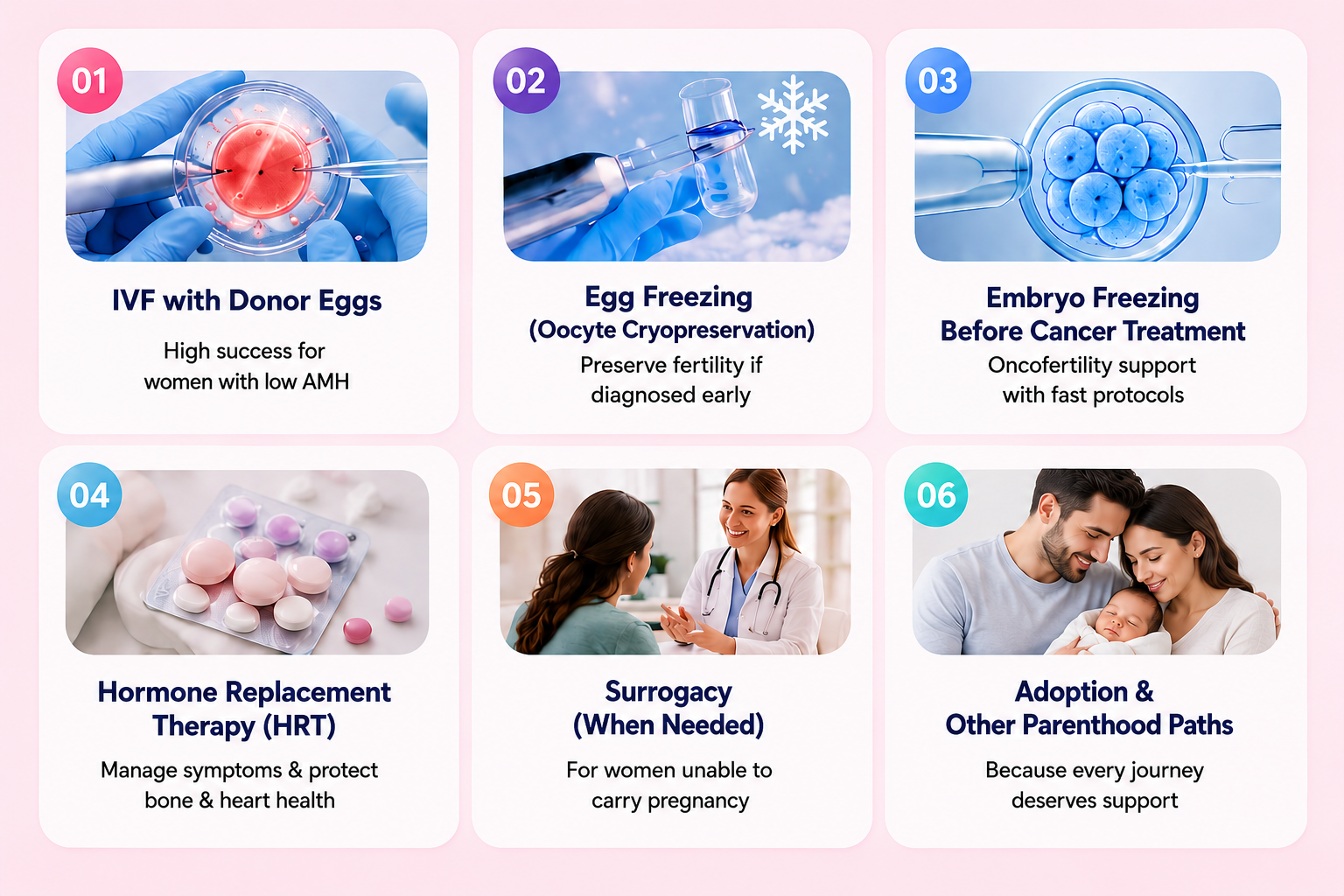
Women with primary ovarian insufficiency who show constant high follicle-stimulating hormone levels and extremely low anti-Müllerian hormone levels should pursue donor egg IVF for POI because it provides them with the best probability of becoming pregnant. Dr. Aravind's IVF centre maintains a strong and ethically operated program for egg donation.
In donor egg IVF:
Our centre reports a 75% live birth success rate across our IVF programmes, and donor egg cycles produce exceptional results because they use high-quality eggs, which enable women who were previously considered infertile to conceive. Patients searching for the best IVF centre for POI Coimbatore often choose Dr. Aravind's IVF because of its extensive expertise and advanced fertility technology.
Egg freezing serves as an effective method to protect your fertility when you have an early-stage POI diagnosis or a strong family history, which increases your risk of the condition. You establish a biological insurance policy for future use by collecting and freezing your eggs before your ovarian reserve drops to lower levels. This process is commonly referred to as egg freezing before menopause and has become an important option in modern reproductive medicine.
This method works best for:
Modern vitrification (rapid egg freezing) technology has transformed the success rates of frozen egg cycles. The embryology staff at Dr. Aravind's IVF utilizes advanced vitrification methods to achieve high egg survival rates after thawing.
Women with cancer who have partners should freeze their embryos before starting oncology treatment because this method provides higher success rates than egg freezing, which only uses unfertilized eggs for storage. Our oncofertility program provides this essential service because we partner with oncologists to perform egg retrieval and embryo freezing before treatment starts in a secure and efficient manner.
The condition of primary ovarian insufficiency causes a deficiency in oestrogen, which results in actual health impacts that affect bone density, cardiovascular system function and emotional health. The treatment of hormone replacement therapy for POI provides more than just relief from symptoms because it serves as a vital medical treatment for women who experience primary ovarian insufficiency.
Dr. Aravind's IVF centre provides HRT treatment as part of their comprehensive treatment approach for women who have primary ovarian insufficiency. HRT:
The use of HRT as a treatment for POI differs from its application in postmenopausal women. Young women require hormone replacement therapy because their bodies fail to produce essential hormones, which they need to achieve their normal hormonal levels.
Gestational surrogacy serves as a reproductive option for women who experience both uterine infertility and medical conditions that prohibit them from carrying a pregnancy to term. The process begins with fertilizing your eggs or eggs from a donor at our lab and subsequently transferring the created embryo to a gestational carrier. This option requires individual assessment, which includes comprehensive legal and medical support.
The field of reproductive medicine has advanced significantly during recent years, yet some women still choose adoption as their method for establishing a family. Our counselling services help women to make decisions about their life paths while providing judgment-free support and compassionate care.
The emotional impact of a POI diagnosis creates deep psychological distress for patients. People usually handle distress through three common responses, which include feeling sad about their lost ability to conceive, experiencing fear about what lies ahead, and facing difficulties in their personal relationships. Dr. Aravind's IVF centre considers emotional assistance to be essential for clinical practice.
The complete care system we provide includes fertility counselling services, peer support groups, and medical professionals who treat each patient meeting as an interactive discussion instead of a business exchange. The process of becoming a parent requires the complete involvement of the individual because it extends beyond hormonal assessments and imaging results.
Patients who visit our clinic for their first meeting with us will receive three important benefits, which include feeling understood, receiving respectful treatment, and developing optimistic outlooks.
The right fertility centre selection for your POI diagnosis will directly affect your results. The following features distinguish Dr. Aravind's IVF program from other fertility clinics.
The organization shows dedication to its patients by creating a compassionate environment that offers continuous assistance. Our team will support you through your entire process, whether you want to get a second opinion, start your first fertility assessment, or need treatment.
The diagnosis of Premature Ovarian Insufficiency represents one of the most difficult fertility assessments that a young woman can receive, yet this condition does not determine her future. Women with POI now possess multiple treatment options thanks to modern reproductive medicine, which includes donor egg IVF for POI, egg freezing, embryo preservation, integrated hormonal care, and unwavering emotional support.
The most important step you can take right now is to speak to a specialist. The process requires you to discover which doors remain open while you evaluate their current accessibility.
At Dr. Aravind's IVF Fertility & Pregnancy Centre, your dreams of parenthood matter to us as much as they matter to you. Our three decades of experience with family building and our team, which unites clinical excellence with authentic human compassion, allow us to support you throughout this process.
Donor egg IVF is considered the most successful fertility treatment for women with POI, especially when ovarian reserve is extremely low.
No. Unlike menopause, women with POI may still have intermittent ovarian activity and occasional ovulation, which means pregnancy may still be possible.
Yes. Women diagnosed early or those at high risk of POI can preserve fertility through egg freezing before ovarian reserve declines further.
POI can be caused by genetic conditions, autoimmune disorders, chemotherapy, radiation therapy, infections, or unknown factors.
Yes. Hormone Replacement Therapy (HRT) helps manage symptoms, protects bone and heart health, and supports uterine preparation during fertility treatment.


