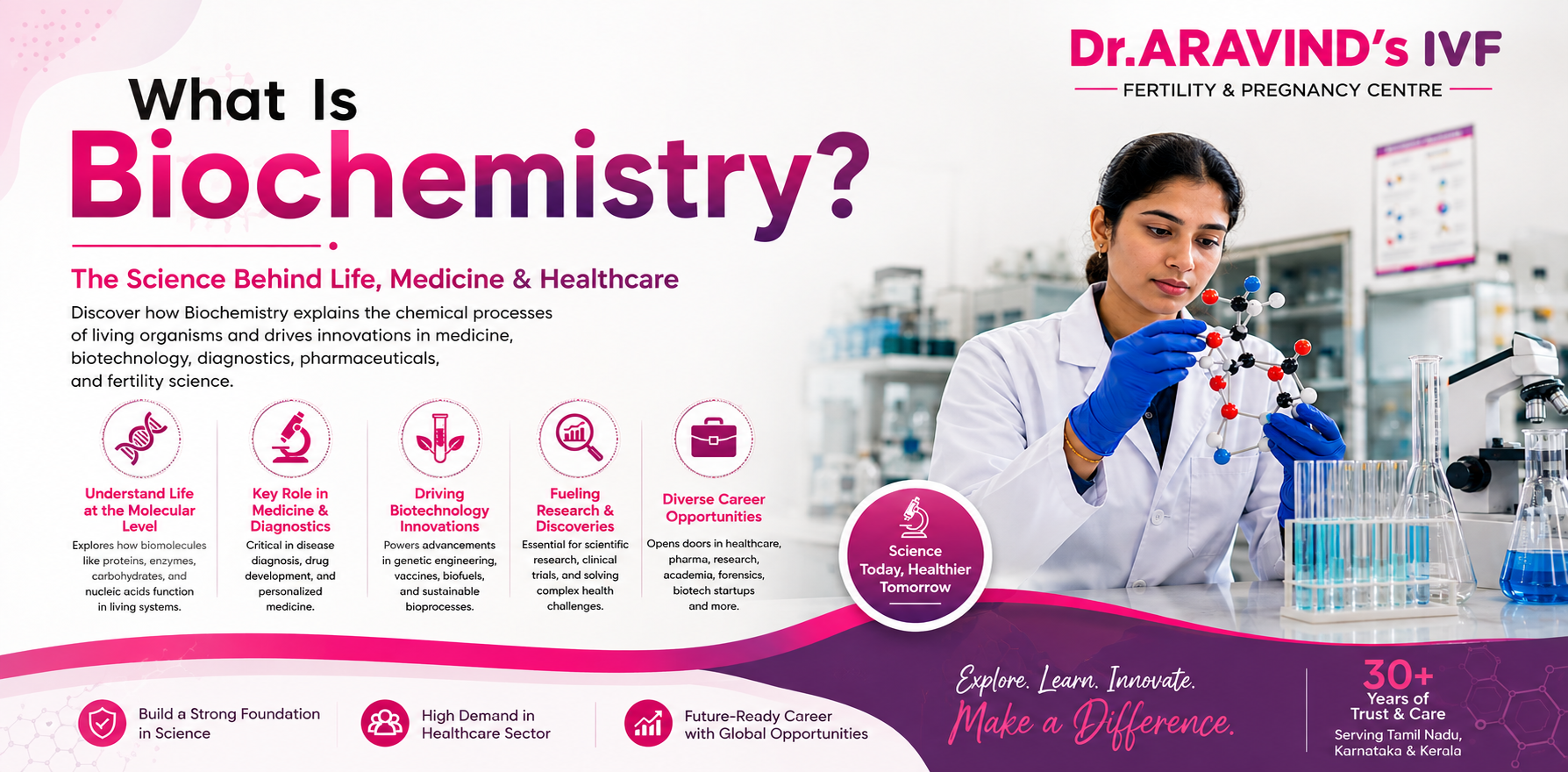
Have you ever wondered how cells produce energy, how medicines work, or how diseases develop at the molecular level? The answer lies in biochemistry. This fascinating branch of science connects biology and chemistry to explain the chemical processes that sustain life. It plays a vital role in healthcare, biotechnology, pharmaceuticals, diagnostics, and reproductive medicine.
Biochemistry is the branch of science that studies the chemical substances and reactions that occur within living organisms. It focuses on understanding how molecules such as proteins, carbohydrates, lipids, nucleic acids, enzymes, and hormones interact to support life.
Simply put, biochemistry explains how living cells function at the molecular level. It helps scientists understand normal biological processes and identify what happens when diseases disrupt those processes.
Today, biochemistry is one of the foundations of modern medicine, genetics, biotechnology, agriculture, nutrition, and fertility treatments.
Biochemistry helps researchers and healthcare professionals understand disease causes, develop medicines, improve diagnostic techniques, and advance medical treatments.
Some important applications include:
In fertility care, biochemistry supports hormone analysis, metabolic assessments, and laboratory investigations that guide IVF treatment. Leading institutions, including the Best IVF center in India, rely on biochemical testing to support accurate diagnosis and personalized fertility care.
| Area | Description |
| Molecular Biology | Studies DNA, RNA, and gene expression |
| Enzymology | Examines enzyme structure and function |
| Clinical Biochemistry | Uses laboratory tests to diagnose diseases |
| Metabolism | Explores how the body produces and uses energy |
| Immunochemistry | Studies immune system molecules and responses |
| Nutritional Biochemistry | Investigates the relationship between nutrients and health |
Biochemistry has applications across multiple industries.
Healthcare
Doctors use biochemical tests to diagnose conditions such as diabetes, thyroid disorders, kidney disease, liver disease, and hormonal imbalances.
Pharmaceuticals
Biochemists help develop new medicines by studying how drugs interact with cells and proteins.
Biotechnology
Biochemistry supports genetic engineering, recombinant DNA technology, and the production of therapeutic proteins.
Agriculture
Scientists improve crop quality, disease resistance, and food production through biochemical research.
Fertility and IVF
Biochemical investigations play an important role in reproductive medicine. Hormone testing, ovarian reserve evaluation, and metabolic assessments are routine components of fertility treatment. The Best IVF center in India uses advanced laboratory techniques supported by biochemical science to improve patient care.
Biochemistry continues to evolve alongside advances in technology and medical research.
Precision Medicine
Doctors increasingly use biochemical markers to personalize treatments based on a patient's biology.
Artificial Intelligence in Research
AI helps researchers analyze complex biochemical data more quickly, accelerating drug discovery and disease research.
Molecular Diagnostics
Advanced laboratory technologies detect diseases earlier using biochemical and genetic biomarkers.
Personalized Nutrition
Biochemical testing supports customized nutrition plans based on metabolism and health conditions.
Reproductive Medicine
Biochemistry is playing a growing role in fertility treatments through hormone monitoring, embryo culture media development, and reproductive health research.
Biochemistry remains one of the fastest-growing scientific disciplines due to increasing demand in healthcare and life sciences.
| Industry Insight | Current Trend |
| Global biotechnology industry | Continues strong annual growth driven by medical innovation |
| Clinical laboratory testing | Increasing demand due to preventive healthcare |
| Precision medicine | Rapid adoption in hospitals and research institutions |
| Pharmaceutical research | Significant investment in biologics and targeted therapies |
| Fertility care | Rising demand for biochemical diagnostics in IVF and reproductive medicine |
These trends highlight the expanding importance of biochemistry in improving healthcare outcomes worldwide.
Successful biochemists develop both technical and analytical skills.
Essential skills include:
These competencies prepare graduates for careers in research, diagnostics, healthcare, and biotechnology.
Graduates in biochemistry can work across several industries.
| Job Role | Work Area |
| Clinical Biochemist | Diagnostic laboratories and hospitals |
| Research Scientist | Universities and research institutes |
| Quality Control Analyst | Pharmaceutical and biotechnology companies |
| Biomedical Scientist | Clinical laboratories |
| Medical Laboratory Scientist | Hospitals and healthcare centers |
| Biotechnology Specialist | Biotech companies |
| Pharmaceutical Scientist | Drug development and manufacturing |
| Academic Faculty | Colleges and universities |
With experience, professionals may move into research leadership, laboratory management, or regulatory affairs.
Biochemistry offers excellent opportunities for students interested in science, medicine, and research.
Benefits include:
Its relevance continues to grow as healthcare becomes increasingly data-driven and personalized.
The future of biochemistry is promising due to continuous advancements in medicine and technology.
Emerging areas include:
Professionals with expertise in biochemistry will remain essential for developing innovative treatments and improving patient outcomes

If you've ever asked what biochemistry is, the answer goes far beyond textbooks. It is the science that explains life's chemical foundation and supports major advances in medicine, biotechnology, diagnostics, and fertility care. From developing life-saving medicines to improving IVF outcomes, biochemistry continues to transform healthcare. As scientific innovation accelerates, this field offers exciting opportunities for students, researchers, and healthcare professionals while contributing to better health and improved quality of life worldwide.

Biochemistry is the branch of science that studies the chemical processes occurring within living organisms. It combines biology and chemistry to understand how cells function and how diseases develop.
Biochemistry is widely used in medicine, pharmaceuticals, biotechnology, nutrition, agriculture, diagnostics, and reproductive medicine.
Yes. Biochemistry offers opportunities in research, hospitals, biotechnology companies, pharmaceutical industries, diagnostic laboratories, and academic institutions.
Biochemistry supports fertility care through hormone testing, metabolic analysis, and laboratory diagnostics. These investigations help specialists at the Best IVF center in India develop personalized treatment plans and monitor reproductive health.
Important skills include laboratory techniques, analytical thinking, scientific research, data interpretation, communication, and problem-solving.


