The duration of your attempts to become pregnant has lasted for several months or extended into multiple years. You have completed all required medical tests, which include blood work, scans, semen analyses and additional tests that your doctor ordered. The moment arrives when couples receive results that show all their tests came back with normal results.
Everything checks out — yet pregnancy still has not happened. Unexplained infertility presents couples with an emotionally and medically demanding diagnosis, which stands as one of their most difficult challenges. The condition occurs with sufficient frequency that it has become common. Approximately 10 to 30 percent of all worldwide infertility cases have more than 80 different reasons that lead to unexplained infertility causes. People experience deep frustration during their day-to-day activities when they hear that something is wrong with their situation, yet nobody acknowledges this fact.
Dr. Aravind's IVF Fertility and Pregnancy Centre serves as a daily workplace where couples face this particular uncertainty. Our team has developed a comprehensive method for studying and treating unexplained infertility, which they developed through their more than 70,000 IVF cycles and decades of clinic experience. The article presents a genuine and medically-based explanation that reveals the actual meaning of unexplained infertility and its available treatment options.
Unexplained infertility, which medical practitioners call idiopathic infertility, becomes a diagnosis when couples fail to conceive after one year of unprotected sexual activity (or six months when the woman reaches her 35th birthday), and standard fertility tests reveal no identifiable medical reasons.
A doctor needs to conduct evaluations that identify all important medical issues before reaching this diagnosis.
The standard evaluation process confirms five essential aspects of fertility, but if you have infertility, even if you have normal tests, the assessment results still need to solve the existing mystery. This is where the actual examination needs to start.
The most crucial concept exists for couples who experience unexplained infertility because they need to comprehend this particular concept. Our standard fertility tests provide dependable screening solutions that assess various biological aspects that contribute to conception, yet they fail to study every biological aspect that affects conception. The following is the list of things that they will not be able to identify:
A woman's AMH level and antral follicle count tell us how many eggs she has. The tests do not confirm whether the eggs possess chromosomal health. Poor egg quality — particularly eggs with abnormal chromosomes (aneuploidy) — is one of the most common hidden causes of unexplained infertility. Eggs can appear completely normal when viewed through a microscope, yet they possess chromosomal defects that prevent proper fertilization and embryo development.
A semen analysis evaluates the basic sperm traits, which include their quantity, movement patterns and physical structure. The test does not assess how well the genetic components within each sperm cell are preserved. High levels of DNA fragmentation — damage to the sperm's DNA strands — can lead to fertilization failure, poor embryo quality, or recurrent early miscarriage, all without triggering any flag in a routine semen analysis. Sperm DNA fragmentation testing is not part of standard evaluation but is enormously informative.
The embryo requires successful implantation into the uterine lining, which shows receptivity after a healthy egg undergoes fertilization by a healthy sperm. The process of implantation involves multiple biological mechanisms that depend on immune system reactions and endometrial response, and specific hormone levels at particular times. The implantation process gets blocked by three conditions, which include non-receptive endometrium, high uterine natural killer cell activity and subclinical inflammation, which remain undetectable through standard medical tests.
Thyroid disorders, even at subclinical levels, create major obstacles that prevent people from achieving reproductive success. The combination of elevated prolactin and insulin resistance without complete PCOS development and luteal phase progesterone deficiency creates conditions that disrupt reproduction but remain within "normal" test results on standard medical panels.
Doctors need to perform a laparoscopy to detect superficial endometriosis, which displays no visible cysts and does not cause any structural damage. The condition of endometriosis creates a pelvic space that prevents normal egg development through fertilization and embryo progression, yet it produces no detectable results through ultrasound or HSG testing.
The emotional aspects of unexplained infertility require equal consideration with its clinical aspects. Couples often describe the diagnosis as "a limbo state" which prevents them from experiencing both the relief of an answer and the ability to proceed with a treatment plan.
The relatives and friends who mean well to you believe that your thinking processes have become excessive, which will lead to successful outcomes at the appropriate moment. The absence of a physical explanation leads to major psychological problems, which result in relationship issues and create feelings of powerlessness. The occurrence of anxiety and depression reaches higher levels in couples who face unexplained infertility than in couples with other infertility types.
Dr. Aravind's IVF centre operates under this principle during all our client meetings. Our care extends beyond medical treatment to include our human connection with patients. We consider both clear communication and honest explanation, together with emotional support, to be essential components of our advanced diagnostic procedures.
At our centre, when a couple presents with unexplained infertility, we do not stop at the standard checklist. We begin our testing process with an extended diagnostic protocol that aims to detect hidden medical issues that standard tests cannot uncover. The comprehensive assessment will include the following elements:
There is no standardized treatment method for unexplained infertility because every case requires different handling. The appropriate solution for a couple needs to account for their age, together with their infertility duration, their complete medical assessments and their individual treatment choices. Dr. Aravind's IVF clinic establishes its treatment programs by following this standard procedure.
Younger couples who have experienced infertility for less than one year should begin their treatment with structured lifestyle changes that include nutritional optimization and antioxidant supplements, especially for men with high DFI, together with weight control and stress management techniques. The couple should start timed intercourse cycles while using ovulation tests, which will help them achieve natural conception before starting assisted reproductive treatments.
The process of ovulation induction through IUI enables more effective application of assisted reproductive technologies. IUI delivers a prepared sperm sample directly into the uterine cavity during ovulation, which eliminates multiple barriers that prevent conception. IUI enables sperm to travel shorter distances to access multiple eggs, which results from using mild ovarian stimulation to produce one or two mature eggs. The IUI stimulation method produces conception rates between 8 and 15 percent for unexplained infertility cases during each treatment cycle, but total success rates increase over three to four treatment cycles.
The process of handling unexplained infertility cases reaches its most informative point through the application of In Vitro Fertilization which enables doctors to witness all aspects of the reproductive process during its laboratory testing. The system now provides us with data about the total number of eggs that get collected and the actual numbers that succeed in fertilization plus the process that forms authentic blastocysts. The medical field regards this information as essential for clinical work. IVF enables scientists to shift the process of fertilisation and the initial stages of embryo growth from their unpredictable natural setting into artificial laboratory conditions, which usually succeed in solving the problems that blocked natural conception.
Intracytoplasmic Sperm Injection (ICSI) involves the direct injection of one sperm into each egg. The method proves essential when there are doubts about the presence of sperm DNA fragmentation or any minor issues with sperm performance. The system uses ICSI to ensure that fertilization success remains protected because standard analysis methods fail to identify sperm-egg interaction complications.
The testing process, PGT-A examines all embryos for chromosomal normality before their transfer to women who face fertility issues due to suspected egg quality problems, which affect women who are older than 35 or have experienced failed IVF attempts. The practice of transferring only chromosomally normal embryos, which are known as euploid embryos, results in substantial enhancements to implantation success rates while it decreases the chances of miscarriage. This particular technology represents one of the most significant advancements that contemporary fertility medicine offers to its practitioners.
ERA testing provides an identification system for each woman that shows her specific implantation time frame after couples have failed to achieve successful implantation with their high-quality embryos. The practice of personalized embryo transfer (PET) schedules embryo transfer to happen at the exact moment of this window, which has been proven to produce better results for patients who struggle with recurring implantation problems.
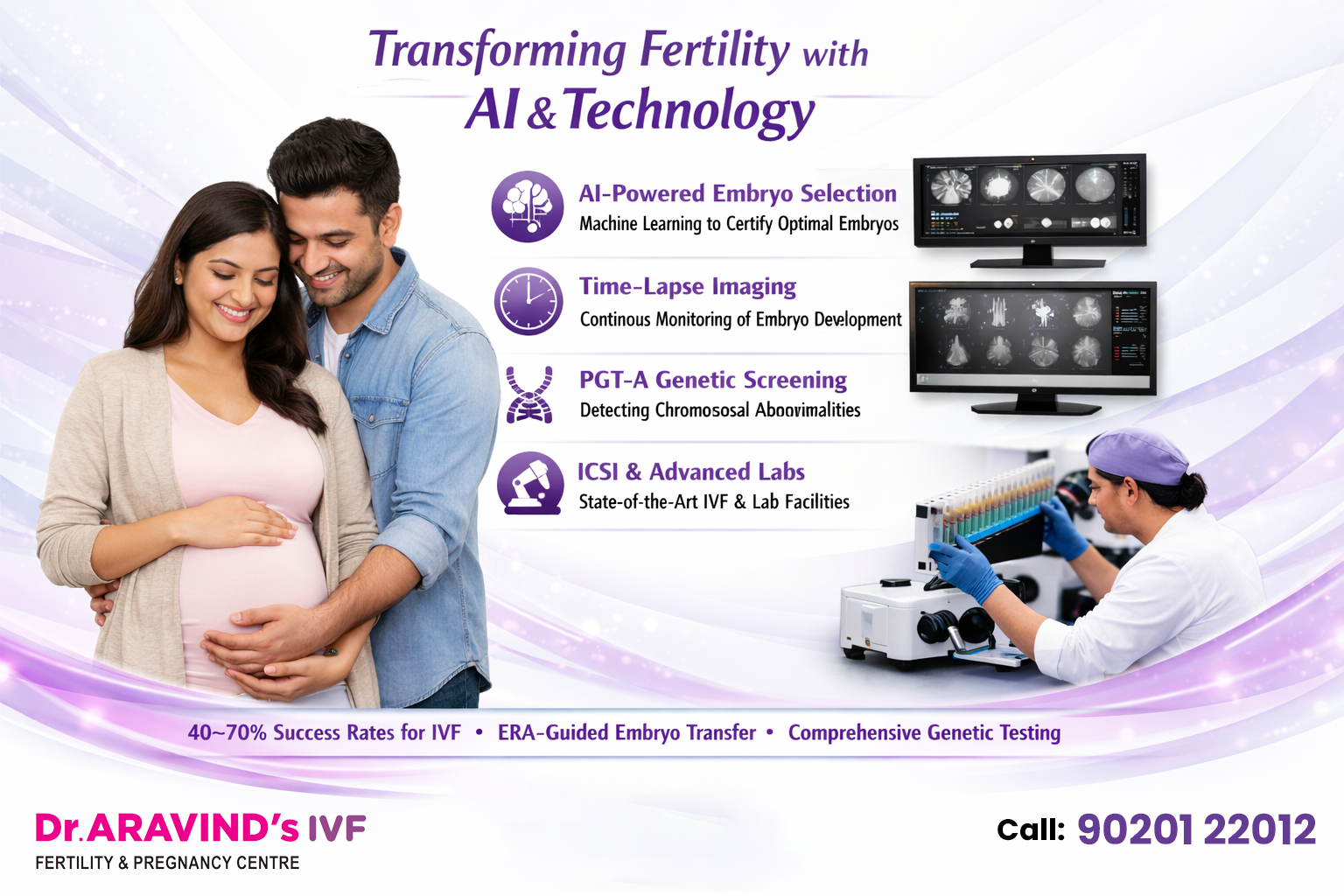
Unexplained infertility is a diagnosis where advanced medical technologies create a significant impact. At Dr. Aravind's IVF, we use artificial intelligence for our embryology procedures through AI-powered embryo selection, which employs machine learning to assess embryo growth patterns and timing data, along with other indicators to find the embryo most likely to lead to a successful pregnancy.
The technology gives our embryologists access to objective data, which helps them assess their clinical skills. Our capacity to identify the best embryo for transfer increases through time-lapse embryo monitoring, which allows us to observe embryo growth while maintaining their position in the incubator.
Dr. Aravind's IVF provides couples with unexplained infertility access to the same advanced reproductive technology that top medical centres worldwide use through our state-of-the-art ICSI workstations, blastocyst culture systems and extensive genetic testing abilities.
The prognosis for couples with unexplained infertility is actually more hopeful than many people realize. Couples with unexplained infertility achieve better IVF results because their reproductive systems operate normally, but need help to find and fix their specific problems.
The research and clinical data provide consistent evidence which demonstrates that:
The selection of a fertility centre represents the most crucial choice that couples dealing with infertility must undertake. The treatment of unexplained infertility at Dr. Aravind's IVF Fertility and Pregnancy Centre relies on three fundamental elements that define our operational procedures.
Comprehensive Diagnosis: Our centre uses advanced sperm and egg quality assessments, immunological panels, ERA testing and AI-powered embryology for tests that standard workup procedures do not identify.
Individualized Treatment: Our centre does not follow any standard treatment method because we create customized treatment plans for each couple based on their age and biological makeup, diagnostic results and reproductive objectives.
Compassionate Support: The team provides assistance by creating treatment plans through which patients receive treatment, and their healthcare professionals maintain constant contact with them until their recovery process ends.
You can find world-class fertility treatment through our multiple centres, which extend throughout Chennai, Coimbatore, Sivakasi, Palakkad, Kerala and Bangalore and other locations in South India.
Doctors can reach a conclusion about unexplained infertility, but they must proceed with their research. The diagnostic process begins with this testing method, which leads to study-based research about your unique reproductive system. Advanced diagnostic methods and assisted reproductive technologies at our fertility clinic in Chennai provide solutions that remain hidden until traditional testing methods reach their maximum capacity, enabling couples to achieve their goal of parenthood through accessible methods.
You should contact Dr. Aravind's IVF Fertility and Pregnancy Centre if you or a loved one experienced normal test results, but pregnancy did not occur. Our team of specialized professionals will investigate all aspects of your situation, and they will accompany you throughout the entire process because researchers have not discovered a permanent solution to this problem.
Unexplained infertility is a condition where a couple is unable to conceive despite having normal results in standard fertility tests such as ovulation tracking, semen analysis, and tubal patency tests.
It affects approximately 10–30% of couples facing infertility, making it a relatively common diagnosis in reproductive medicine.
Yes, many couples conceive naturally or with treatment. Options like IUI and IVF significantly improve the chances of pregnancy.
Possible hidden factors include poor egg quality, sperm DNA fragmentation, implantation failure, subtle hormonal imbalances, and undetected endometriosis.
IVF success rates are generally favorable, with cumulative live birth rates of 40–70% after multiple cycles, especially in women under 38.


