Stress and Fertility Overcoming IVF Anxiety is a critical topic for couples navigating infertility and IVF treatments in today’s high-pressure environment.
The couple who have been trying to conceive for more than one year have received their medical results, which show mostly normal findings. The couple has been unable to achieve conception through multiple months of attempts. The story of this couple from India shows how other couples throughout the world face the same problem.
The actual biological system exists between the brain and the reproductive organs. Chronic psychological stress triggers a cascade of hormonal and physiological changes that can suppress ovulation, impair sperm quality, disrupt implantation, and reduce the success rates of assisted reproductive technologies like IVF. Couples who face difficulties in their relationship should not be blamed for their current difficulties because they must understand this connection.
The body's response to continuous psychological stress needs to be studied for understanding stress and fertility: overcoming IVF anxiety impacts reproductive health. leads to fertility issues. The hypothalamic-pituitary-adrenal (HPA) axis system controls all body functions associated with stress. The brain activates the hypothalamus to produce corticotropin-releasing hormone (CRH) when it detects a threat, which includes both real dangers and the fear of another failed pregnancy test.
The hormone CRH causes the pituitary gland to release adrenocorticotropic hormone (ACTH), which leads to the adrenal glands producing cortisol, the primary stress hormone in the body. The body requires small amounts of cortisol, which serves essential life-saving functions. The reproductive system suffers severe damage from constant stress because it keeps cortisol levels high throughout the day.
The term fertility anxiety describes the constant dread that people experience during their attempts to get pregnant through both fertility tests and IVF treatments. The situation does not represent a personal defect because people who experience it show excessive emotional response. The condition exists as a psychological disorder that medical experts have confirmed through scientific research, and its effects show up in physical measurements.
Research articles in Human Reproduction and Fertility and Sterility demonstrate that women who experience infertility show anxiety and depression symptoms, which match the levels found in cancer, heart disease and HIV patients. The treatment cycle process creates multiple stress sources which include waiting for pregnancy results after embryo transfer, sustaining social ties, and managing treatment expenses.
The Indian system works to increase pressure on people even more. People in society hold specific expectations about when couples should have children and start families, yet they consider infertility to be a significant social taboo. Couples experience three stressful situations, which include people giving unwanted advice and society expecting them to behave in certain ways, and they face social isolation – these stressors create an anxiety loop which makes it harder for them to conceive.
The real situation has led Dr. Aravind's IVF program to make infertility counseling a main treatment element instead of a treatment that physicians can choose to add at their discretion. The treatment plan considers emotional support to be as vital as hormone monitoring and embryo transfer procedures.
How Stress Specifically Affects IVF Outcomes
People who undergo IVF need to manage their stress because it creates extensive challenges for their treatment process. Research shows that psychological distress during pre-cycle and mid-cycle times decreases the success rate of IVF procedures.
High cortisol levels in the follicular fluid, which serves as the biological environment for egg maturation in the ovaries, lead to decreased fertilization rates and diminished embryo development. Stress causes blood flow changes in the uterus, which decrease endometrial receptivity and hinder successful embryo implantation. High anxiety patients exhibit different immune system responses, which disrupt their essential post-implantation period.
Stress stands as an equal factor together with other factors which lead to IVF treatment failure. Stressful conditions do not prevent many couples from achieving their goal of pregnancy. The relationship exists as a probabilistic pattern which does not follow a fixed course. Stress management techniques remove biological barriers which prevent success while they improve throughout their demanding times.
Research shows that psychological therapies, which include cognitive behavioral therapy and mindfulness training and structured group support, lead to better results in IVF treatment. The landmark study revealed that women who completed a structured mind-body program before their IVF cycle achieved a higher clinical pregnancy rate than the women who received standard care alone.
Stress manifests itself through various expressions. Couples who experience fertility anxiety may not recognize its symptoms as actual medical conditions that require treatment. The first step to effectively handling issues requires people to learn how to recognize their particular signs.
The presence of multiple patterns in your or your partner's behavior does not indicate that you both have psychological disorders. These are deeply normal responses to an abnormally difficult situation.
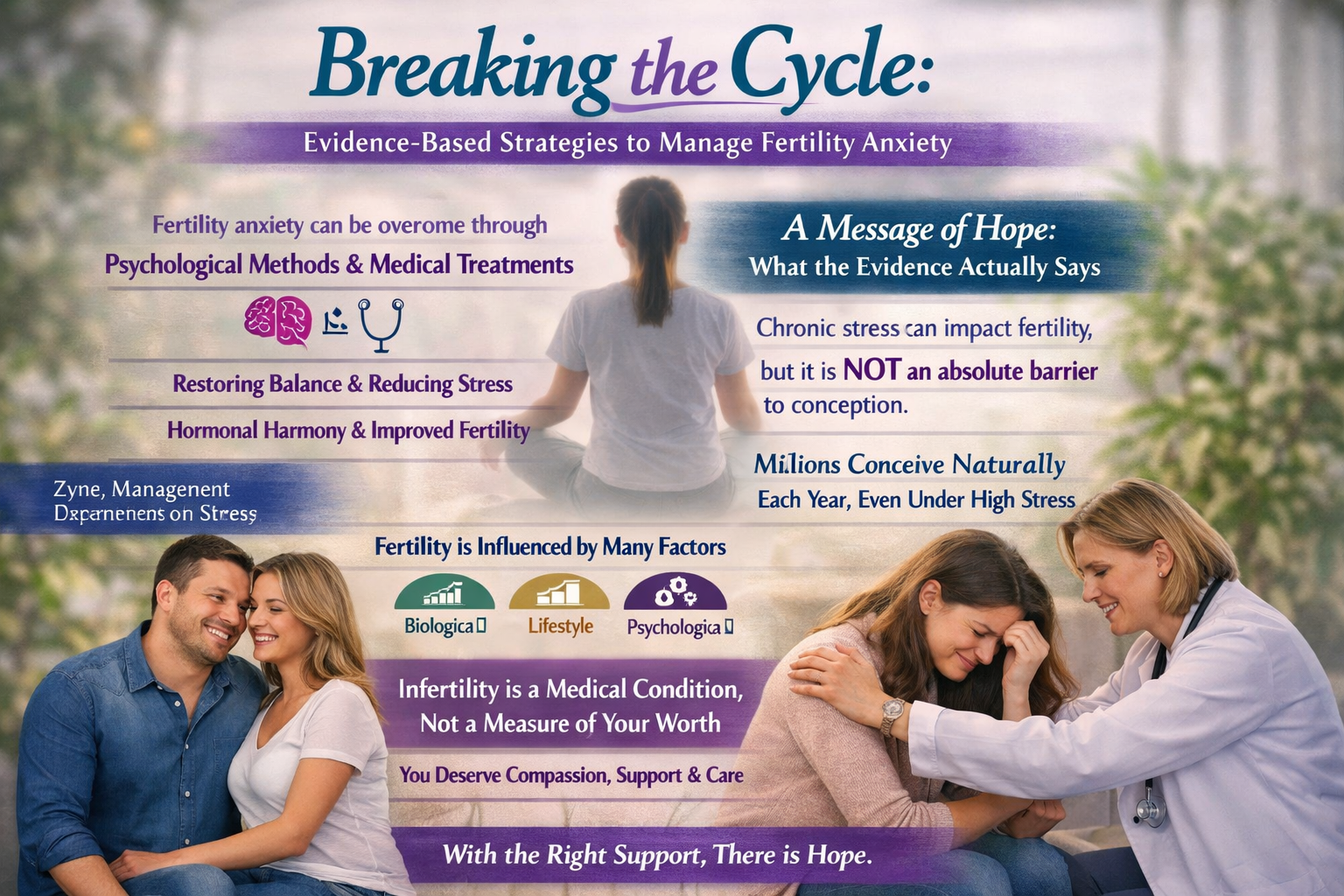
The positive aspect of fertility anxiety problems because they can be resolved through either psychological methods or medical treatments. Medical research, together with psychological studies, verifies that people can achieve significant stress relief through psychological methods and lifestyle changes, which lead to hormonal equilibrium restoration and better life quality and fertility results.
CBT enables people to recognize their automatic negative thought processes, which cause anxiety problems and replace them with positive thinking. The treatment proved successful because it diminished patient anxiety and helped them develop coping skills throughout multiple IVF procedures.
People who practice mindfulness regularly experience decreased cortisol levels, which results in lower amygdala activity because their brain learns to handle uncertainty with greater compassion. The research shows that people who practice for at least 10 to 15 minutes every day will experience actual decreases in anxiety rates, which makes this practice one of the most effective yet simple methods to use.
Fertility yoga practice enables the body to enter a state of deep relaxation, which promotes the body's natural healing process while enhancing blood flow to pelvic areas and reproductive organs through its combination of breath control and gentle movement practice.
The establishment of sleep patterns requires people to sleep between seven and nine hours of sleep which they should achieve by following consistent sleep patterns and creating dark and cool sleep environments, and avoiding screen time before bedtime.
Social media exposure, together with compulsive research on fertility issues, creates severe anxiety problems. The implementation of scheduled reading periods for fertility-related materials, together with the practice of muting or unfollowing content that triggers anxiety, helps people decrease their daily anxiety symptoms.
The consumption of foods that contain antioxidants together with omega-3 fatty acids and whole foods enables people to fight inflammation, which occurs because of their ongoing stress. The Mediterranean dietary pattern provides the strongest scientific evidence to enhance overall reproductive health, according to current research.
Couples who practice regular and honest discussions about their emotional states beyond medical information experience higher relationship contentment, together with reduced anxiety during their fertility treatment process. The journey is a shared one, and sharing the weight makes it lighter.
The strength of your relationship with your fertility care team serves as the primary factor that most effectively decreases your stress levels. Patients who experience active participation in their treatment process, together with a complete understanding of their situation and their healthcare providers taking their needs seriously, will see their anxiety levels decrease.
Our centres in South India provide infertility counselling services, which our trained professionals deliver through their expertise in reproductive medicine and psychological assessment. Professional emotional support at your current treatment stage and from your first fertility investigation through your current treatment and after a failed cycle exists as an essential component of your medical treatment.
The discussion about stress and conception between men and women shows an unequal distribution because it mostly emphasizes women's experiences. The public fails to recognize that chronic psychological stress has an equivalent negative effect on male fertility, which needs more awareness in public discussions.
The hormone testosterone which controls sperm production experiences direct suppression through increased cortisol levels. Research shows that men with high work-related or mental health stress levels experience sperm concentration drop and sperm motility decline and sperm morphology changes and DNA fragmentation rates increase when compared to men who work in less stressful conditions. The success rate of fertilization depends on each of these factors.
The cultural pressure on men to remain emotionally stoic during fertility struggles often prevents them from acknowledging or addressing their own psychological burden. This situation creates an opportunity that leads to actual biological effects. The relationship partners who practice stress management together will receive combined relationship benefits that improve their emotional connection and create a better biological environment for conception.
The critical point needs to be advanced to the conclusion. The evidence demonstrates that chronic stress leads to decreased fertility but it requires equal recognition of the evidence's limitations. Stress does not create an absolute barrier that prevents people from becoming pregnant. Every year, natural conception occurs among billions of people who experience high levels of stress.
The process of determining fertility involves multiple biological factors, lifestyle factors and psychological factors, with stress serving as one of many elements that influence future results. Managing stress serves as one scientific method that you can use to improve your ability to reproduce.
The inability to conceive should not be viewed as proof of your emotional dedication level. Infertility constitutes a medical condition that requires medical care and emotional assistance, and continuous compassion from your medical team, your family and most importantly from yourself.
Chronic stress causes hormonal disturbances which lead to ovulation problems and decreased sperm production and diminished success rates for natural conception and IVF procedures.
IVF success rates decrease when patients experience high stress because stress affects egg quality and embryo development and uterine receptivity.
Cortisol the stress hormone disrupts reproductive hormonal functions which include GnRH and LH and FSH that enable both ovulation and sperm generation.
The practice of stress management through mindfulness techniques and therapy methods and lifestyle modifications leads to improved hormonal function which enhances fertility results.
People who experience fertility anxiety show signs through constant pregnancy worries and sleep disturbances and mood fluctuations and social isolation and their need to track or research fertility information excessively.


