Fourth Trimester Guide: Postpartum Healing, Hormones & IVF Recovery


People envision parenthood as a peaceful, dreamlike period filled with soft blankets throughout the house, a tranquil nursery space, and a baby who sleeps soundly while parents radiate joy and vitality. Advertisements and social media often portray this version of reality, where everything appears calm, simple, and perfectly organized. The day unfolds effortlessly with quiet moments of cuddling, predictable routines, and every developmental milestone happening at just the right time.

This idealized picture creates a strong emotional pull, making many people believe that parenthood is made up entirely of beautiful experiences and softhearted moments. However, the moment you bring your newborn home, the experience begins to transform into a new reality. Your physical strength, emotional balance, and energy levels start to shift dramatically. The peaceful and perfectly organized life many people imagine rarely reflects the real journey of becoming a parent.

In reality, the human body undergoes significant changes after childbirth as it begins the process of healing and recovery. This recovery period, known medically as the puerperium, typically lasts between six to eight weeks. During this time, the body gradually returns to its pre-pregnancy state while adjusting to the physical demands of caring for a newborn.

This stage is often called the Fourth Trimester. It can be both physically and emotionally challenging because the body is still recovering while the mind adapts to the responsibilities of parenthood. Hormones shift, sleep becomes irregular, and daily routines change completely as families adjust to life with their new baby.

Your body and mind are now recovering from nearly ten months of transformation. Understanding the puerperium recovery period can help parents navigate these early weeks with greater confidence. Whether the pregnancy occurred naturally or through in vitro fertilization (IVF), recognizing the importance of the fourth trimester allows mothers to focus on healing, rest, and gradual recovery.
Fourth Trimester Guide: Postpartum Healing, Hormones & IVF Recovery

The Fourth Trimester - Emotional Roadmap: Navigating the Hormonal Shift

The period after childbirth often called the Fourth Trimester is one of the most important stages of recovery for a new mother. While pregnancy and delivery receive significant attention, the weeks following birth bring equally powerful physical and emotional transformations. During this time, the body undergoes a dramatic postpartum hormonal shift that affects mood, energy levels, sleep patterns, and overall wellbeing.

For many mothers, the experience can feel like an emotional rollercoaster. The body begins adjusting to life after pregnancy, and hormone levels change faster than at any other time in adulthood. Understanding these changes helps families prepare for the emotional ups and downs that often occur during the puerperium recovery period.

The Progesterone and Estrogen Drop

During pregnancy, the placenta produces large amounts of estrogen and progesterone. These hormones support fetal development, regulate blood flow to the uterus, and prepare the body for breastfeeding. However, once the baby is delivered and the placenta detaches, hormone levels fall sharply within hours.

Within roughly 48 hours after childbirth, estrogen and progesterone levels return to their pre-pregnancy state. This rapid hormonal drop is commonly referred to as a postpartum hormonal crash. For many women, this sudden shift triggers emotional changes such as irritability, mood swings, sadness, or anxiety.

These symptoms usually peak between the third and fifth day after delivery. The brain is adjusting to the sudden withdrawal of progesterone, which normally helps regulate mood and calm the nervous system. Understanding that these feelings are often part of normal postpartum adjustment can reassure mothers that their bodies are simply responding to a major biological transition.

Baby Blues vs Postpartum Depression (PPD)

One of the most important aspects of postpartum care is recognizing the difference between Baby Blues and Postpartum Depression (PPD). While both conditions involve emotional changes, their intensity and duration differ significantly.
Baby Blues – The baby blues affect nearly 70–80% of new mothers. Symptoms may include mood swings, unexpected crying, fatigue, irritability, and emotional sensitivity. Despite these feelings, mothers are generally able to continue caring for themselves and their newborn.
  • Postpartum Depression – Postpartum depression is more intense and long-lasting. Mothers may experience persistent sadness, anxiety, sleep problems even when the baby sleeps, feelings of disconnection from the baby, or overwhelming guilt. In severe cases, thoughts of self-harm or harming the baby may occur and require immediate medical support.

If emotional symptoms continue beyond two weeks postpartum, it is important to seek professional guidance from a healthcare provider or mental health specialist. Early support can make a significant difference in recovery and maternal wellbeing.

The Role of Partners and Emotional Support

Support from partners and family members plays a vital role during the postpartum recovery phase. Emotional reassurance and practical assistance help reduce stress and allow mothers to focus on healing and bonding with their baby.
Open Communication – Encourage honest conversations about emotions and physical recovery. Mothers should feel safe expressing how they truly feel without judgment.
  • Active Listening – Sometimes mothers simply need to be heard. Statements like “I can see this is really difficult for you” provide comfort and validation.
  • Practical Help – Assisting with household responsibilities such as cooking, laundry, and baby care allows the mother time to rest and recover physically.

It is important for mothers to remember that self-worth is not measured by productivity. Healing after childbirth is a demanding process, and emotional recovery is just as important as physical healing.

Healing Foods: A Postpartum Grocery List for Restoration

Nutrition plays a major role in postpartum healing. After childbirth, the body needs additional nutrients to rebuild blood supply, repair tissues, and support breastfeeding. Choosing the right foods can help restore energy levels and accelerate recovery during the first six weeks.


The Iron–Vitamin C Duo

Blood loss during delivery often causes temporary iron deficiency or fatigue. Consuming iron-rich foods together with vitamin C improves iron absorption and helps rebuild healthy blood levels.

A simple meal example includes a spinach salad topped with pomegranate and orange slices. Citrus fruits and pomegranate contain high levels of vitamin C that enhance the body's ability to absorb iron from leafy greens. Dates also provide natural iron and can be paired with fresh amla juice for additional nutritional benefits.

Hydration and Breast Milk Production

Hydration is essential for maintaining a healthy breast milk supply. Traditional postpartum diets often include oats, fenugreek (methi), and garlic because these foods are believed to naturally support milk production.

Drinking water during or after each breastfeeding session is one of the easiest ways to maintain proper hydration. Adequate fluid intake also helps reduce postpartum swelling and supports overall recovery.


Protein for Tissue Repair

After childbirth, the body needs additional protein to repair muscles, tissues, and internal organs. Protein supports healing following both vaginal birth and cesarean delivery.

High-quality protein sources such as boiled eggs, paneer, lentils, and lean meats provide the building blocks needed for tissue regeneration. Collagen-rich foods help strengthen connective tissues and support uterine recovery.


Essential Micronutrients

Micronutrients such as zinc and vitamin A are essential for wound healing and immune function. Carrots, sweet potatoes, and other colorful vegetables supply these nutrients and help repair skin and tissue damage after childbirth.


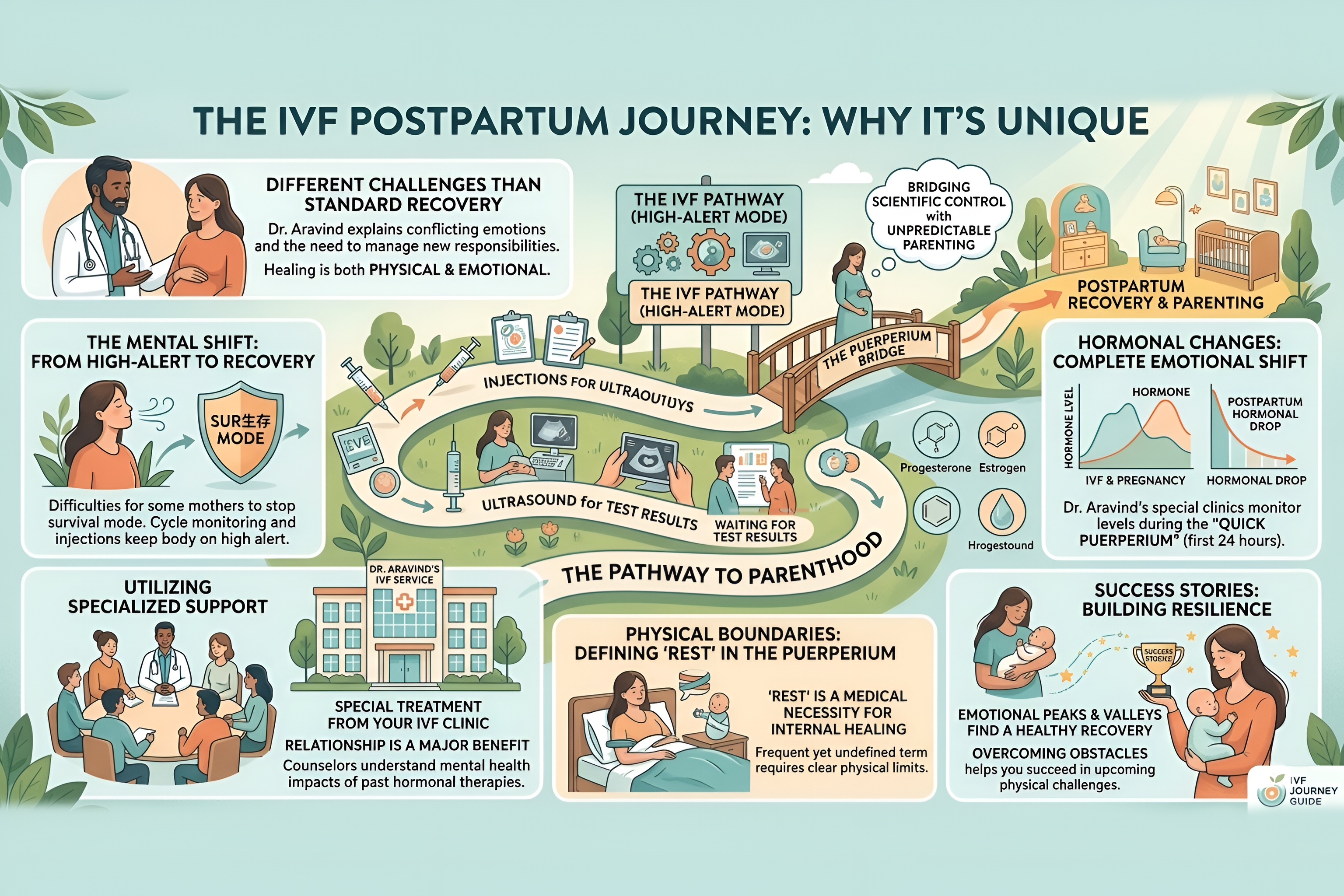
The IVF Postpartum Journey: Why It’s Unique

For mothers who conceived through In Vitro Fertilization (IVF), the postpartum journey can carry unique emotional dimensions. After months or years of fertility treatments, the transition from pregnancy monitoring to motherhood may feel overwhelming.

According to specialists at Dr. Aravind's IVF Center, many IVF mothers experience both relief and heightened emotional sensitivity after delivery. The journey involves healing not only physically but also emotionally after a long fertility journey.

The Mental Shift: From High-Alert to Recovery

The IVF process requires constant monitoring, hormone injections, and medical appointments. Many patients spend months in a heightened state of anticipation while waiting for treatment results. After childbirth, transitioning out of this “high-alert mode” can take time.

The puerperium acts as a bridge between the highly controlled environment of fertility treatment and the unpredictable rhythm of parenting.

Utilizing Specialized Support

Tailored Counseling – Mental health professionals familiar with fertility journeys can provide more personalized emotional support.
  • Hormonal Monitoring – IVF pregnancies often involve additional progesterone and estrogen supplements. Postpartum hormone changes may therefore feel more noticeable.
  • Resilience and Strength – Many IVF mothers have already developed strong coping skills through their fertility journey, which can help them navigate postpartum recovery.

Physical Boundaries: Defining Rest in the Puerperium

Rest during the puerperium is not simply a lifestyle recommendation — it is a medical necessity. The body requires time to repair internal tissues, restore muscle strength, and allow the uterus to return to its pre-pregnancy size.


The Uterus Reset (Involution)

During pregnancy, the uterus expands from the size of a small pear to roughly the size of a watermelon. In the six weeks following childbirth, a natural process called uterine involution gradually returns the uterus to its original size.


Red Flags to Watch For

High Fever – A temperature above 100.4°F may indicate infection.
  • Heavy Bleeding – Soaking through a pad in under an hour requires immediate medical attention.
  • Foul Smelling Discharge – Strong odor in lochia may signal infection.
  • Severe Leg Pain or Swelling – Could indicate a blood clot (deep vein thrombosis).

Gentle movement such as short walks can improve circulation and reduce the risk of complications. However, recovery should progress slowly and always respect the body's signals.

Conclusion

The puerperium marks the true beginning of motherhood. Understanding postpartum hormones, emotional health, nutrition, and physical recovery helps families navigate the fourth trimester with confidence.

At Dr. Aravind's IVF, postpartum care focuses not only on the newborn but also on the wellbeing of the mother. When families recognize the importance of emotional support, proper nutrition, and adequate rest, the first six weeks after childbirth become a powerful foundation for lifelong maternal health.

FAQs:

The puerperium is the recovery period after childbirth when the mother’s body gradually returns to its pre-pregnancy state. It typically lasts six to eight weeks and includes hormonal changes, uterine involution, and emotional adjustment.

The fourth trimester refers to the first three months after childbirth, when both the mother and baby adjust physically and emotionally to life after pregnancy.

Baby blues are short-term mood swings that occur within the first 3–5 days after delivery and usually resolve within two weeks. Postpartum depression lasts longer and includes symptoms like persistent sadness, anxiety, sleep problems, and difficulty bonding with the baby.

Nutrient-rich foods help rebuild strength and support healing. Iron-rich foods, protein sources, vitamin C, and hydration help restore blood levels, repair tissues, and support breastfeeding.

Physically, recovery is similar. However, IVF mothers may experience stronger emotional shifts because they have gone through a long fertility journey and intense hormonal treatments.

Signup for our Newsletter
Follow us on Social Media
Book Appointment
booking your appointment
Book online Consultation