Endometriosis presents a challenge that requires active management because it cannot be treated with simple methods. The condition affects approximately 1 out of every 10 women who are of reproductive age throughout the world. The first real relief for most patients who undergo surgery results in them experiencing decreased discomfort along with improved chances of fertility and new prospects for their future. Yet many patients find that their temporary relief eventually disappears.
The body generates fresh tissue. The body experiences its original discomfort. The inquiry, which repeats during each follow-up visit, deals with whether surgery can prevent endometriosis recurrence after surgery. The answer to this question requires a detailed examination of different factors, which should be investigated through a medical consultation that encompasses all aspects of surgical procedures, hormonal treatments, patient lifestyle and ongoing medical supervision.
Through our establishment at Dr. Aravind's IVF Fertility & Pregnancy Centre, recognized for endometriosis treatment in Coimbatore and across Tamil Nadu, has dedicated over three decades to assisting women from Tamil Nadu, Kerala and other regions with their specific fertility needs. The article presents evidence-based findings that demonstrate the surgical outcomes, together with subsequent recovery timelines and the effective methods that decrease the chances of relapse.
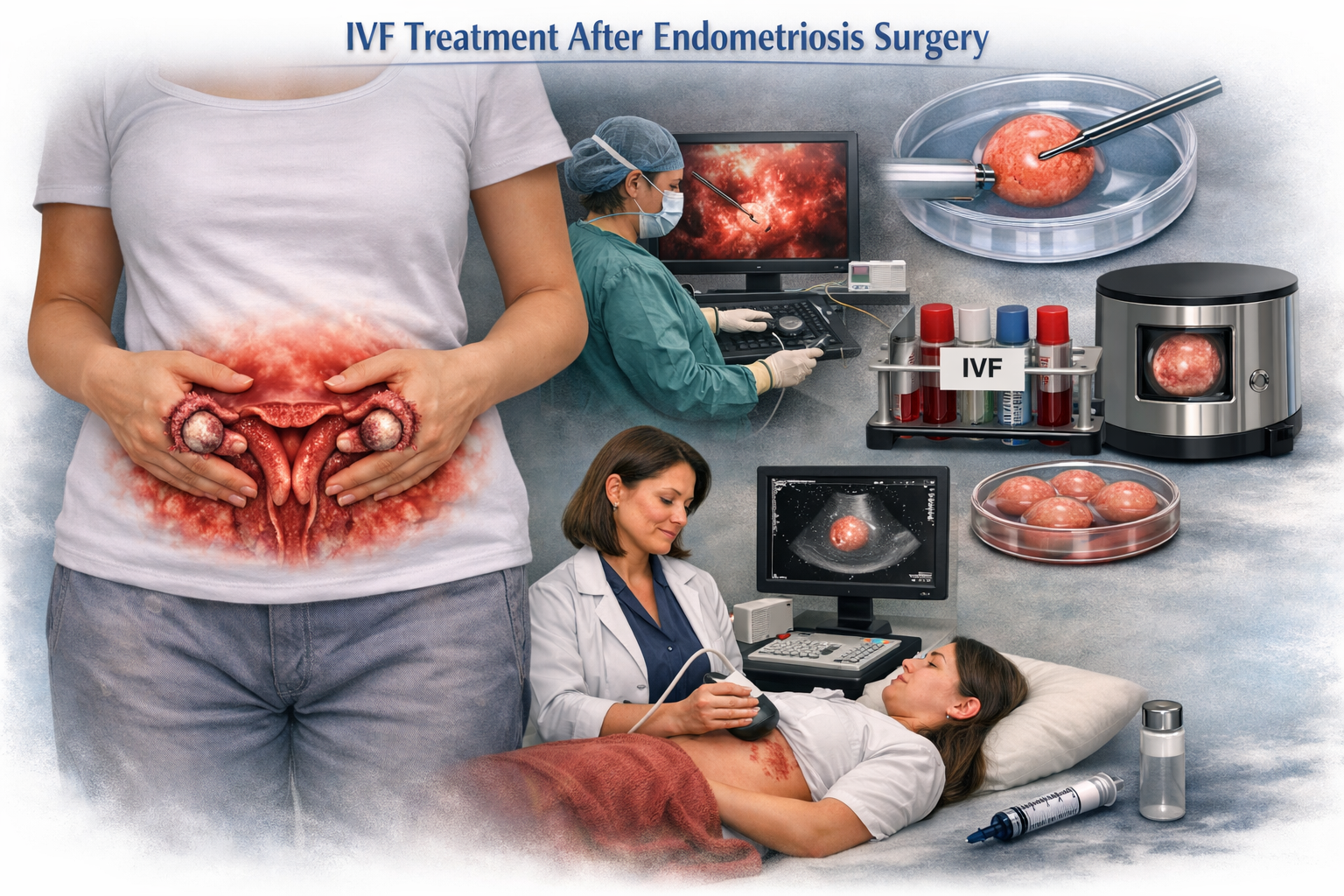
Understanding the enemy requires knowledge before starting prevention work. Endometriosis happens when endometrial tissue grows beyond the uterus, where it attaches itself to the ovaries, fallopian tubes, outer uterine surface, and even the bowel or bladder. The misplaced tissue in the body functions like the uterine lining because it responds to hormonal changes by undergoing three processes: it thickens, breaks down, and then bleeds. The body cannot eliminate the substance because it functions like the uterine lining. The process results in the creation of inflammation and scar tissue, which produces cysts that medical professionals identify as endometriomas.
Surgery removes visible endometrial deposits, but it does not eliminate the microscopic seeds of the disease. Estrogen circulates through the body when a woman undergoes continued ovulation and menstruation because her remaining endometrial cells will reactivate. Studies show that patients who undergo surgery without proper post-surgical endometriosis management have a recurrence that reaches between 40 and 50 percent during the next five years. The number seems discouraging, but it does not show that we will experience that outcome.
The initial surgery requires a complete examination because its results determine surgical success through its impact on both surgical performance and patient satisfaction. Research shows that excision surgery, which involves the complete removal of endometrial implants, leads to better results than ablation, which only destroys visible lesions. The process resembles weed removal because one method removes the entire plant while the other method removes only the visible portion. The disease starts to return when complete removal of the disease fails to happen.
The most important choice a patient makes is selecting an endometriosis excision surgeon who has experience performing the procedure at a facility that does high-volume surgeries. Our specialists at Dr. Aravind's IVF conduct laparoscopic operations which is one of the best fertility clinics for endometriosis in Tamil Nadu, aim to achieve maximum tissue extraction during deep infiltrating endometriosis surgeries because this condition presents the greatest chance of recurrence when not fully treated.
Endometriosis progression depends on estrogen as its main growth factor. The surgical procedure, followed by hormonal treatment, functions through its ability to block ovulation and decrease the estrogen levels that support endometrial implant development. The most effective strategy for women who want to become pregnant after their operation is this method, which provides them with one treatment option. Hormonal therapy after endometriosis surgery helps suppress ovulation and reduce estrogen levels that drive disease activity.
The most commonly used birth control method after surgical procedures is low-dose combined oral contraceptive pills, which doctors prescribe to their patients without giving them a pill-free week. The treatment method achieves three main effects by blocking ovulation and decreasing menstrual flow while establishing less favourable conditions for endometriosis to return. Multiple studies have shown that their use for 18 to 24 months post-surgery significantly reduces the chance of symptom return.
Progestins and the Levonorgestrel IUD
Progestins, which function as progesterone-based medications, create a permanent opposition to estrogen effects while they induce endometrial tissue to undergo decidualization, which results in tissue reduction. The available options include oral progestins, which include norethindrone acetate and medroxyprogesterone acetate and the levonorgestrel-releasing intrauterine device, which functions as LNG-IUD. The LNG-IUD provides an ideal solution for women who need long-term birth control methods and endometriosis treatment because it delivers progestin through local administration, which produces few systemic adverse reactions.
Gonadotropin-releasing hormone (GnRH) agonists and antagonists create a temporary medical menopause by completely blocking estrogen production in women. The treatment successfully reduces cancer recurrence, yet doctors restrict its use to three to six-month periods because extended treatment affects bone density. The small amounts of estrogen and progesterone given with GnRH therapy should be used as add-back therapy to reduce side effects while maintaining treatment protection.
The discussion enters a more sensitive stage at this point. The hormonal treatment that stops cancer from returning will also stop women from becoming pregnant. The period after surgery, which women need to wait before getting pregnant, is essential for women who have had surgery for fertility purposes because they need a customised approach that must be executed within a specific time frame.
The clinical experience at Dr. Aravind's IVF centre shows that endometriosis surgery provides optimal fertility results during the first six to twelve months after the operation, according to medical studies. The best results for women with moderate to severe health problems who want to become parents through IVF should start their treatment during this specific period.
Dr. Aravind's IVF centre provides couples who have undergone endometriosis surgery with a custom stimulation protocol that considers their diminished ovarian capacity that results from endometrioma extraction and their risk of developing cysts during the stimulation process. Women who require additional time before starting to conceive receive information about fertility preservation options through embryo and egg freezing.
The complete understanding of the situation requires more than just medical management. The latest research findings and clinical observations show that lifestyle factors have a significant effect on the hormonal and inflammatory processes that cause endometriosis. The following lifestyle changes cannot replace medical treatment, yet they function as complementary measures to treatment:
These steps complement medical therapy and are key endometriosis surgery recovery tips.
Endometriosis exists as an ongoing medical condition that requires permanent treatment because it cannot be solved through a single intervention. Patients who achieve positive results from surgical procedures and hormonal treatments need to undergo permanent treatment for their condition according to medical standards. The safety net system requires both regular pelvic ultrasound procedures and specific transvaginal ultrasound procedures, which doctors use to track endometrioma patients. Medical staff can quickly verify the presence of new cysts through initial detection, which enables them to start treatment before extensive scar tissue develops.
CA-125 blood tests, which show positive results for endometriosis in some cases, can be used to track disease progression in women who showed high levels before their surgical procedure. A woman with existing endometriosis will need more diagnostic tests when her CA-125 levels increase above normal.
Dr. Aravind's IVF clinic creates customized post-surgical follow-up procedures which they develop for every patient. Patients with stage III or IV endometriosis and former disease recurrences and visible remaining illness must attend check-ups more often than patients who had their early-stage illness completely treated. The organization’s objective focuses on detecting all changes that occur in the system before they develop into critical situations requiring surgical intervention.
The practice of performing multiple surgical operations requires a complete, honest assessment. The need for multiple surgeries arises in specific situations when women develop new, large endometriomas or experience substantial pain that disrupts their daily activities. All surgical procedures create combined threats that endanger a woman's ability to produce eggs because her ovarian stock decreases with every operation. The process of endometrioma removal results in the unintentional removal of healthy ovarian cortex tissue, which contains eggs during the procedure that removes the cyst wall.
The decision to perform additional surgery requires thorough evaluation against other treatment options, which include extended medical treatment, specialized cyst aspiration procedures and immediate IVF treatment. Women in their late thirties to early forties who undergo repeat ovarian surgery face an increased risk of early ovarian failure, which will permanently affect their ability to conceive naturally.
The medical team at Dr. Aravind's IVF presents all available treatment methods to patients while considering their age, AMH levels, antral follicle count, symptom severity and reproductive objectives before choosing the best treatment method.
People who live with a condition that has the potential to return show a battle against their condition, which creates a mental impact that is usually underestimated. The three mental health issues, which involve anxiety about disease recurrence and grief from fertility problems and the persistent pain of pelvic discomfort, require equal treatment to physical health problems.
Dr. Aravind's IVF centre implements emotional counselling as a fundamental part of its treatment approach. Our understanding of infertility, together with chronic illness, extends beyond medical definitions because these conditions create major impacts on relationships, self-perception and life enjoyment. Women who experience endometriosis need to establish links with both counsellors and peer support groups for their condition. Online support groups and condition-specific patient communities can also reduce the sense of isolation that this disease so often creates.
Endometriosis research continues to advance through its ongoing studies. Researchers are actively pursuing multiple research paths that will transform post-surgical infection control methods during the next few years.
The surgical procedure can limit endometriosis recurrence because it creates a substantial risk reduction, yet fails to provide complete assurance of success. The evidence-based strategy establishes an organized structure that implements customized solutions that address your hormonal needs, your inflammatory triggers, your lifestyle requirements and your continuous assessment needs.
Women who maintain their treatment through active participation, and they implement dietary changes, and they follow their hormonal treatment plan, and they report any health changes to their doctor. Proactive partnership with an experienced, compassionate partner with the best fertility specialist makes a measurable difference — not just to recurrence rates, but to overall quality of life.
Dr. Aravind's IVF Fertility and Pregnancy Centre team assists individuals who have undergone endometriosis surgery and need to create their post-surgery plan, or those who need to establish their pre-surgery plan. The expert assistance you need is available at our centres throughout Coimbatore, Chennai, Salem, Erode, Tirupur, Hosur, Palakkad, Kozhikode and other locations.
Yes, endometriosis can return after surgery. Studies show recurrence rates of 40–50% within five years if no post-surgical treatment is followed. Proper aftercare significantly reduces this risk.
The most effective approach includes a combination of complete excision surgery, post-operative hormonal therapy, and consistent follow-up care along with lifestyle modifications.
Most doctors recommend hormonal therapy for 18–24 months after surgery, depending on your symptoms and fertility goals.
Yes, fertility often improves after surgery. The best time to conceive is usually within 6–12 months post-surgery, especially for women with moderate to severe endometriosis.
An anti-inflammatory diet rich in omega-3 fatty acids, fruits, vegetables, and whole grains may help reduce inflammation and support hormonal balance.


