Understand how premature ejaculation may affect your fertility journey. Learn about symptoms, causes, effective treatments, and when to consult a fertility specialist for personalized care.
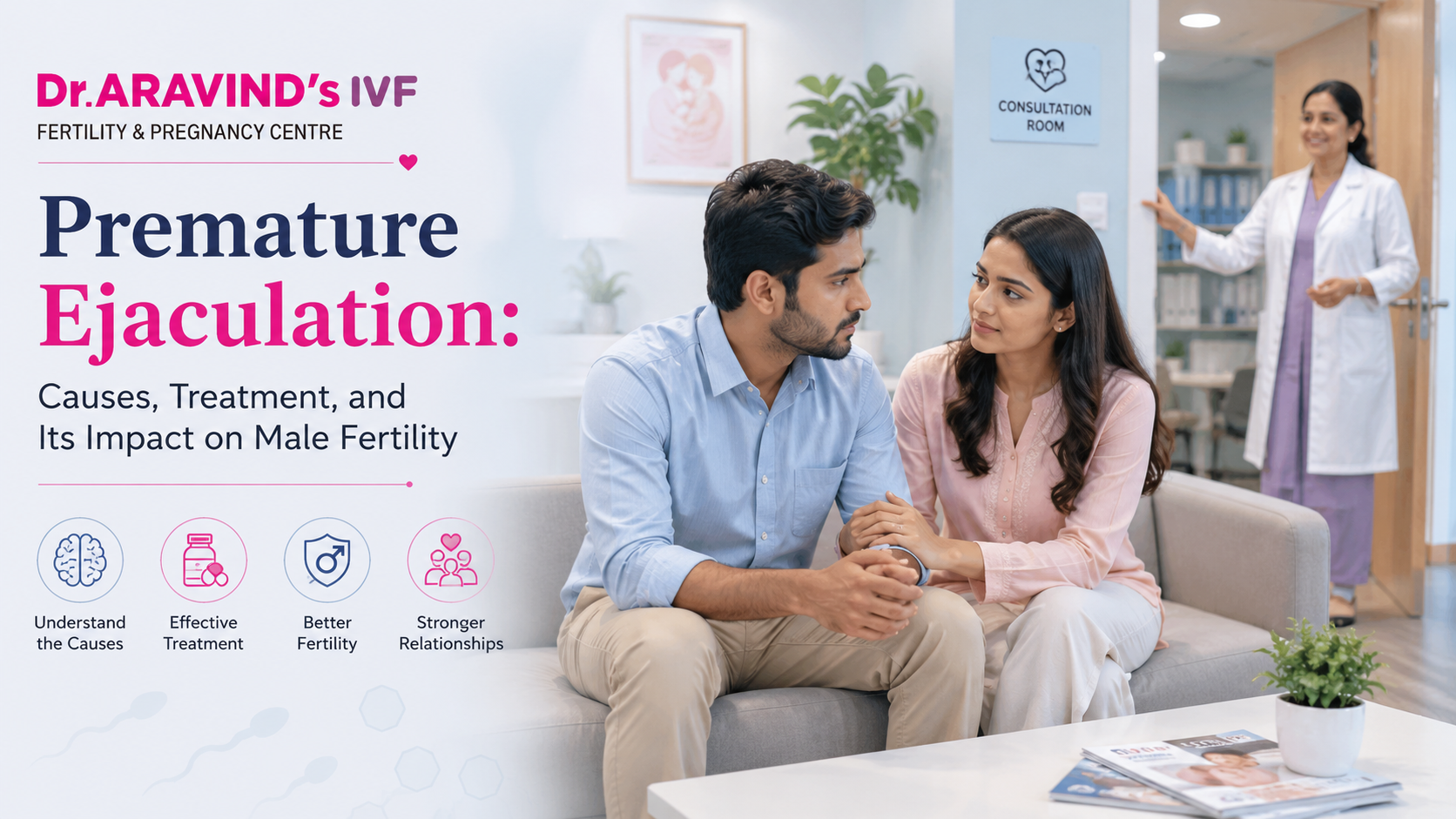
Premature ejaculation is one of those topics men often carry alone — uncomfortable to bring up with a partner, even harder to raise with a doctor. But it's also one of the most common sexual health concerns worldwide, affecting a large share of men at some point in their lives. If this is something you're dealing with, you're far from the only one, and it's highly treatable.
Premature ejaculation does not usually reduce sperm count or sperm quality. However, if ejaculation consistently occurs before vaginal penetration, sperm may not reach the cervix, which can make natural conception more difficult over time.
Premature ejaculation alone does not usually reduce fertility. However, persistent ejaculation before penetration, or other underlying reproductive health conditions occurring alongside it, may affect a couple's chances of conceiving and should be evaluated by a healthcare professional rather than left to guesswork.
Premature ejaculation (PE) happens when a man ejaculates sooner than he or his partner would like, often within about a minute of penetration, with little sense of control. An occasional early finish isn't a concern. It becomes one when it happens consistently and starts affecting intimacy or confidence.
It's a distinct condition from nightfall in men, which is involuntary ejaculation during sleep rather than during intercourse — both are common, both are treatable, and neither is a sign of a serious underlying problem.
There are two recognized types, and knowing which one applies to you helps a doctor narrow down the likely cause:
Lifelong PE — present since a man's very first sexual experiences and has never really changed. This type is more often linked to biological factors, such as heightened penile sensitivity or how the nervous system regulates ejaculatory reflexes, and tends to respond well to a combination of behavioral training and, when needed, medication.
Acquired PE — develops later in life, after a period where ejaculation timing wasn't an issue. This type is more frequently tied to a specific trigger: new relationship anxiety, a stressful life period, emerging erectile dysfunction, or a hormonal shift. Because there's usually an identifiable cause, acquired PE often improves once that underlying trigger is addressed.
If these symptoms happen occasionally, they're not a red flag. It's the consistency and the distress that turn early ejaculation into something worth addressing.
In most cases, nothing is physically wrong with the reproductive organs — it's usually a mix of psychological and biological factors working together, which is part of why treatment often combines more than one approach.
Physical and biological contributors:
Diagnosis is usually straightforward and rarely involves anything invasive. A doctor typically builds a clear picture through a few simple steps:
Most men won't need every test on this list. Tests are typically added only when the history suggests a specific underlying cause worth ruling out, rather than run as a default panel.
Most men see real, measurable improvement, usually through a combination of approaches rather than relying on just one.
Behavioral techniques tend to be the first line of treatment. The start-stop method — pausing stimulation just before climax, repeated a few times — and the squeeze technique, which applies gentle pressure at the head of the penis near climax, both build control with practice. Pelvic floor exercises also help: find the muscles by stopping your urine stream midway, then practice controlled contractions, holding for a few seconds and releasing, for a few minutes daily. Consistency matters more than intensity — most men notice a difference within four to six weeks of daily practice, though full confidence often takes a couple of months.
Medical treatment may be added when behavioral techniques alone aren't enough. Certain SSRIs, prescribed off-label, can meaningfully delay ejaculation, often within one to two weeks of starting. Topical numbing creams or sprays work faster — usually within the same session — by reducing sensitivity. If erectile dysfunction is present alongside PE, treating that first often improves both conditions together.
Counseling — sex therapy or cognitive behavioral therapy — helps unpack performance anxiety, rebuild sexual confidence, and repair intimacy that's been strained by the condition, especially when a partner is involved in sessions.
Lifestyle adjustments support all of the above rather than replacing them. Regular exercise improves blood flow and hormonal balance. Cutting back on alcohol and quitting smoking both improve nerve sensitivity, which plays directly into ejaculatory control. Getting consistent, adequate sleep helps regulate the hormones and stress response tied to sexual performance. And active stress management — through relaxation techniques, exercise, or simply addressing the source of the stress — reduces one of the most common triggers of PE in the first place.
It's worth setting realistic expectations: PE rarely resolves overnight. Behavioral techniques typically take weeks of consistent practice, medication can show results faster but works best alongside behavioral training, and counseling tends to produce more durable results when combined with either.
Many men delay seeking help simply because they don't know what to expect. In reality, a fertility or andrology specialist will ask a few direct, non-judgmental questions about your history, may suggest a semen analysis or basic hormone tests if warranted, and outline a treatment plan from there. None of this is invasive, and none of it is designed to embarrass you — it's simply information-gathering to point toward the right treatment.
If you're also trying to conceive, this conversation naturally folds into a broader fertility check-up, so you're not juggling two separate concerns with two separate doctors. A male fertility assessment can also rule out related issues like varicocele along the way — a useful step, since some of the same conditions that affect ejaculation timing can also show up in a fertility workup.
A practical example: a couple trying to conceive for eight months, with normal semen parameters on paper, discovers during a consultation that ejaculation is consistently happening before penetration. In this case, sperm quality was never the issue — timing was. Addressing PE directly, rather than continuing to assume "unexplained infertility," is often the faster path forward.
Silence tends to make PE feel bigger than it is. Partners who understand what's going on — that it's a common, treatable condition and not a reflection of attraction or effort — are usually far more supportive than men expect. Bringing a partner into treatment, whether that's practicing techniques together or attending counseling sessions, tends to produce better and faster results than going it alone.
Expert Insight from Dr. Aravind's IVF Fertility & Pregnancy Centre: Premature ejaculation is highly treatable. When couples are also trying to conceive, assessing ejaculation concerns alongside sperm health helps identify whether timing, sperm quality, or another fertility factor is affecting conception — rather than leaving couples to guess at the cause on their own.
Premature ejaculation is common, treatable, and rarely a sign of a deeper medical problem. For most men, a combination of behavioral techniques, lifestyle changes, and — when needed — medical support leads to real improvement over a matter of weeks to months. And if conception has been slower than expected, it's worth having PE evaluated alongside a broader fertility assessment rather than assuming the two are unrelated.
Reaching out for help isn't a sign that something is seriously wrong. It's usually the fastest way to fix something that's very fixable.
Yes. Premature ejaculation does not usually affect sperm quality, but if ejaculation happens before penetration, sperm may not reach the cervix. This can reduce the chances of natural conception and may warrant a fertility evaluation.
No. Most men with premature ejaculation have normal sperm production and fertility. However, if it affects successful intercourse or occurs alongside other reproductive issues, it may contribute to difficulty conceiving.
Yes. Many men improve through pelvic floor exercises, behavioral techniques, stress management, and counseling. Medication may be recommended when symptoms persist or significantly affect quality of life or fertility goals.
An andrologist, urologist, or fertility specialist can evaluate premature ejaculation. They may assess sexual health, hormone levels, and sperm quality to identify the cause and recommend the most suitable treatment.
Yes. Stress, performance anxiety, and relationship concerns are common triggers. Managing emotional stress and addressing anxiety often helps improve ejaculatory control, especially when combined with professional guidance and treatment.
No. Premature ejaculation is one of the most treatable sexual health conditions. Most men see significant improvement through behavioral techniques, pelvic floor exercises, and — when needed — medication or counseling. Results typically appear within four to six weeks of consistent practice.
The most effective approach combines behavioral techniques (start-stop method, squeeze technique, pelvic floor exercises) with counseling for performance anxiety. SSRIs or topical numbing agents may be added when behavioral methods alone are insufficient. No single treatment works best for everyone — a specialist can recommend the right combination for your specific case.
Premature ejaculation can occur at any age. Lifelong PE is present from a man's first sexual experiences. Acquired PE more commonly develops in men between 30 and 50, often triggered by stress, hormonal changes, or emerging erectile dysfunction. Age alone is not a determining factor.


