The consultation process left you feeling defeated because your poor egg quality IVF assessment showed poor results. The phrase establishes a powerful connection that few medical words achieve because it speaks to a woman's personal identity and her aspiration to create a family. Most couples receive from doctors only one critical detail, which shows that egg quality assessment results do not determine their future reproductive ability. Your chances of success can improve through specific evidence-based actions that you should implement during the period between your IVF cycle and the upcoming weeks to improve egg quality naturally and medically before treatment.
Dr. Aravind's IVF Fertility & Pregnancy Centre has provided expert assistance to couples who encounter this specific problem for more than 30 years. The completed IVF cycles exceed 70000, with 75 percent of patients achieving live birth success, which demonstrates our knowledge of egg quality science and the emotional burden that this diagnosis brings.
Our article presents to readers the information that we provide to patients about their medical situation, together with possible treatment options and recommended treatment procedures.
The term egg quality describes the ability of a woman to develop her eggs into viable eggs that can undergo successful fertilization and correct cell division to create a healthy embryo that can develop into a baby. Multiple factors determine quality assessment. A high-quality egg has:
The causes of poor egg quality include one or more compromised factors. The eggs from this process produce three possible results, which include eggs that do not fertilize and, eggs that achieve fertilization yet stop developing at an early stage and eggs that create embryos that either fail to implant or lead to miscarriage. This directly affects low egg quality IVF success rates in many women.
The first step to resolving the issue of egg quality decline requires a complete understanding of its underlying causes. The causes of the problem fall into two main groups: permanent factors and factors that can be modified.
A woman is born with all the eggs she will ever have. The eggs in her ovaries have remained inactive for more than thirty years by the time she reaches her mid-thirties. The cellular machinery deteriorates during that period while chromosomal defects multiply and mitochondrial function decreases. The reason for increased aneuploidy (chromosomal abnormalities) risk after egg quality age 35+ occurs because of declining IVF success rates, which decrease as people grow older. Age constitutes only a fraction of the complete narrative, according to our findings. The difference in egg quality between two women who share the same age proves that multiple additional factors exist, which include several elements that people can change.
The statement confirms that many women can achieve significant progress through treatment. The complete response needs a fundamental biological principle to be explained.
The 90-day period between primordial follicle development and mature oocyte development for ovulation or retrieval defines the final egg maturation process. The mitochondria and cytoplasm of the egg, as well as its surrounding cellular environment, show sensitivity to the different conditions that exist during this time period. The three months that occur before your IVF egg retrieval process serve as the most crucial period for your preparation work and for learning how to improve egg quality effectively.
Research conducted during the last ten years has established strong evidence that targeted nutritional supplementation, lifestyle changes and medical optimization during the preconception period lead to improved egg and embryo quality. The alterations in this area do not create major changes, but even small improvements hold great significance in a field where one extra blastocyst determines whether to achieve success or enter another treatment cycle.
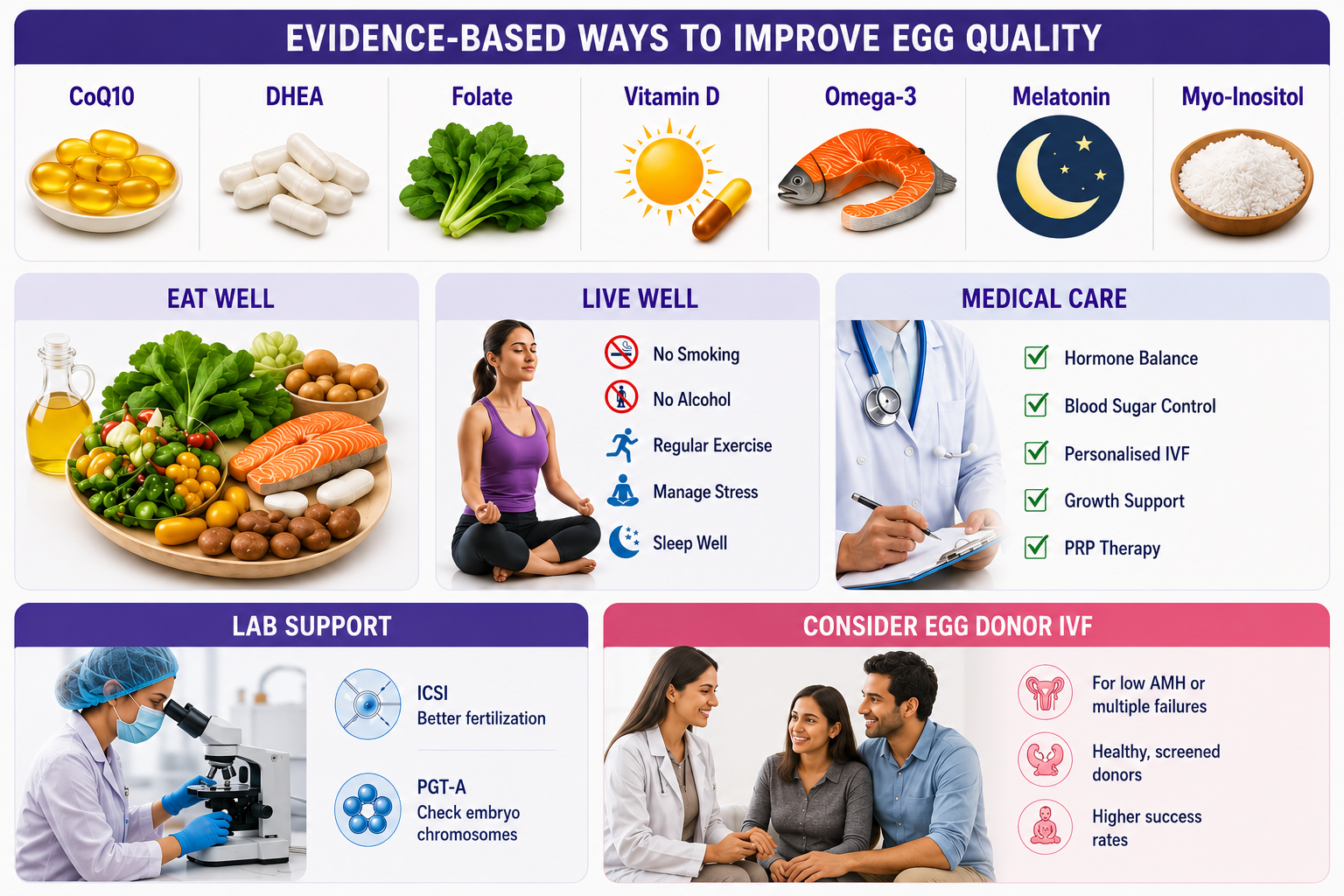
Coenzyme Q10 (CoQ10): It serves as the most researched supplement used in reproductive medicine to assess egg quality. CoQ10 exists as a natural antioxidant that the human body produces and which functions throughout all bodily cells to support mitochondrial energy production. The body of women shows decreasing levels of CoQ10 in their follicular fluid as they reach older ages. Clinical studies demonstrated that daily doses of ubiquinol between 200 mg and 600 mg bring about better results in both egg and embryo development. Research indicates that older women who took egg quality supplements for IVF CoQ10 supplements for 60 days before their retrieval process showed better fertilization results and produced more euploid embryos.
DHEA (Dehydroepiandrosterone): DHEA functions as an adrenal hormone that the body uses to create both oestrogen and testosterone. Daily supplementation of 25-75 mg DHEA egg quality IVF treatment for 6-12 weeks shows positive effects by increasing egg retrieval numbers and embryo quality while decreasing aneuploidy rates, especially in women facing diminished ovarian reserve. DHEA usage requires medical supervision because it does not suit all patients.
Folate (as Methylfolate): The body needs sufficient folate for both DNA synthesis and DNA repair throughout the process of cell division. Women need methylfolate supplementation because they have difficulty converting synthetic folic acid due to the MTHFR gene variant. Women should take 400-800 mcg of the recommended dose before conception according to guidelines, but some specialists advise higher doses for women with confirmed deficiency.
Vitamin D: The presence of vitamin D receptors exists on granulosa cells, which directly surround and support developing eggs. IVF studies demonstrate that patients with sufficient vitamin D levels experience better treatment results through increased fertilization and clinical pregnancy rates. Modern Indian women develop vitamin D deficiency despite their high sun exposure because of their contemporary way of life. Doctors recommend that patients undergo blood tests before they receive supplementation.
Omega-3 Fatty Acids: Present in fish oil and flaxseed oil enter egg cell membranes and follicular fluid. Research has shown that higher omega-3 levels in follicular fluid lead to improved embryo quality. The agents decrease systemic inflammation, which creates a separate advantage for the treatment of infertility.
Melatonin: The body produces melatonin, which exists as a natural component of follicular fluid. The substance functions as a strong antioxidant that protects oocytes from oxidative damage during their maturation process. Research has demonstrated that melatonin supplements lead to better fertilization outcomes and enhanced embryo development. The standard dosage starts at 3 mg, which people take every night for about 2 months before they undergo retrieval.
Inositol (especially Myo-Inositol): Myo-inositol brings benefits to women with PCOS because it helps them achieve better insulin sensitivity and hormonal equilibrium. The study discovered that the substance improved oocyte quality while decreasing FSH levels and enhancing embryo morphology in PCOS patients who received IVF treatment.
The complete dietary pattern serves as the essential basis that supports all subsequent medical treatments. The Mediterranean diet has been proven through multiple studies to be the most effective dietary pattern that supports reproductive health. The diet consists of vegetables, fruits, whole grains, legumes, nuts, olive oil, and lean fish proteins, while it restricts the consumption of red meat, processed foods, trans fats and refined sugar.
The Mediterranean diet delivers a high amount of natural antioxidants together with anti-inflammatory substances and essential micronutrients, which work to promote follicular health. The diet contributes to maintaining a healthy body weight and improves insulin sensitivity, which both play critical roles in determining egg quality before IVF.
The following objectives need to be achieved through daily activities:
Stop Smoking Immediately: The complete cessation of smoking should begin at this instant because cigarette smoke contains more than 4000 harmful substances that damage oocyte DNA and speed up the process of ovarian ageing. The research on this is unambiguous: smoking significantly reduces IVF success rates. There is no safe level of exposure during IVF preparation.
Reduce or Eliminate Alcohol: The first study showed that even light drinking brought down IVF success rates. Alcohol consumption causes two health problems, which include oxidative damage and hormonal disorders, and it additionally affects folate processing. The safest way is to abstain completely for the 90-day period designed as preparation.
Exercise Moderately: People can achieve better health results through regular moderate exercise, which includes 30 minutes of brisk walking, yoga, or swimming most days, because it increases blood circulation to the ovaries and decreases oxidative stress while helping people keep their body weight balanced and lowering their primary stress hormone cortisol levels. The body should avoid intense high-impact exercise during both stimulation and after transfer.
Prioritise Sleep: The body requires sleep because it uses this time to repair cells, produce melatonin and control hormone levels. The body suffers from various harmful effects that result from chronic sleep deprivation because this condition causes elevated cortisol levels, disrupts FSH and LH signalling pathways, and reduces the body's ability to produce antioxidants. The body demands that people get about seven to nine hours of continuous sleep per night.
Manage Stress Proactively: Fertility problems arise from stress because the connection between stress and fertility exists, but shows complicated patterns. The body responds to elevated cortisol levels by decreasing its reproductive hormone signalling activity. The combination of mindfulness meditation, yoga, acupuncture and counselling support shows effective results because these techniques help decrease cortisol levels and enhance emotional well-being during IVF, which leads to improved results.
Your fertility specialist helps you achieve better results through hormone management after you complete your lifestyle adjustments.
When egg quality becomes critical, all activities inside the embryology laboratory attain greater significance. The senior embryologists at Dr. Aravind's IVF use advanced technological systems to create optimal conditions for each egg.
ICSI (Intracytoplasmic Sperm Injection) is used for cases where egg quality does not meet established standards. ICSI uses direct sperm injection into mature eggs, which produces better fertilization results according to specific criteria. The technique enables researchers to maintain continuous embryo development observation without creating any disturbances to the incubation process. The method helps us to identify embryos that demonstrate the highest development speed, which provides an advantage when testing a limited number of embryos.
Preimplantation Genetic Testing for Aneuploidies (PGT-A) enables testing of embryos to detect chromosomal defects before their transfer. PGT-A testing offers substantial benefits for women who are above 37 years old or have experienced multiple miscarriages because it enables better identification of chromosomally normal embryos, which serve as the main factor for successful implantation.
The realistic path to parenthood for some women requires donor eggs because they have very low AMH and very poor antral follicle count, and they have failed multiple cycles. People should approach this decision with compassion because it requires an open and authentic dialogue, which should not be decided through fast recommendations.
The team at Dr. Aravind's IVF practice maintains a policy of refusing to recommend donor egg treatment to couples until they reach the proper point in their treatment journey. We believe that every woman should receive complete personalized tests, which will help her improve her egg quality through her first step. We provide donor egg IVF services with access to our screened donors who remain anonymous and our established programme, which has helped numerous South Indian families achieve pregnancy success.
In a donor egg cycle, the procedure uses eggs that come from a younger, healthy donor who has completed extensive medical, genetic and psychological evaluations. Your partner's sperm or donor sperm creates the embryos, which are then placed into your uterus. Donor egg pregnancy rates in reproductive medicine reach their highest level because they maintain their success rate regardless of the woman's age who receives the treatment.
The reproductive medicine field faces its greatest diagnostic challenge because of poor egg quality, which when diagnosed, leads to ongoing treatment options. The three months before your IVF egg retrieval represent a genuine biological window during which targeted supplementation, nutritional optimisation, lifestyle changes, and medical management can improve the quality of the eggs you produce. As the best IVF centre in Coimbatore and a trusted fertility specialist in South India.
The scientific evidence shows that CoQ10, DHEA, melatonin, omega-3 fatty acids, vitamin D and methylfolate all have scientific evidence showing their vital functions within the body. Your eggs will develop optimally when you maintain a Mediterranean diet, practice regular moderate exercise, sleep according to proper sleep standards and handle stress effectively. The combination of proper stimulation methods, ICSI and advanced embryology techniques enables a fertility team to achieve optimal results from every collected egg. Our team supports couples dealing with poor egg quality treatment in India, concerns and repeated IVF failures.
You should not accept your egg quality assessment as final when doctors inform you about your low egg quality. Come and speak with our specialists at Dr. Aravind's IVF. Our team will assess your hormone levels, life history, current life patterns and future ambitions to create a personalized plan which will enhance your chances of achieving your family-building goals. Dr. Aravind's IVF Fertility and Pregnancy Centre provides complete support, which helps people realize their dreams of becoming parents.
Yes. Egg quality naturally declines with age, especially after 35, due to increased chromosomal abnormalities and reduced mitochondrial function.
Yes. A Mediterranean-style diet rich in vegetables, fruits, whole grains, healthy fats, nuts, and fish may support better egg and embryo quality by reducing inflammation and oxidative stress.
Chronic stress may negatively affect reproductive hormones and increase cortisol levels, potentially impacting egg development and IVF outcomes.
Yes. Many women with poor egg quality still achieve pregnancy through personalized IVF protocols, ICSI, advanced embryology techniques, and in some cases, donor egg IVF.
Treatment depends on the individual’s age, AMH levels, ovarian reserve, hormone profile, and previous IVF history. Customized stimulation protocols, ICSI, PGT-A testing, and targeted supplements are commonly used.


