The population of the world witnesses multiple people start their day by using plastic containers to heat their breakfast, while they consume coffee from paper cups that have a plastic lining, and they use plastic-wrapped shampoo bottles. The situation appears to be safe because it lacks any extraordinary characteristics. However, plastic toxins and fertility are now closely linked. The common items people use in their daily lives contain hidden chemical substances that have the potential to disrupt the basic human reproductive system. The world faces an escalating crisis of infertility that has reached its current dangerous state.
The World Health Organization reports that couples around the world experience difficulty conceiving at a rate of one couple for every six couples. The research from Indian studies reveals that between 10 and 15 percent of couples in the country experience infertility problems, highlighting growing concerns around infertility causes in India, which have continued to increase over the years. People mostly focus on age-related stress and hormonal imbalances, plus lifestyle habits, because they represent the main reasons for infertility problems, yet they overlook the hidden danger that stems from the toxic chemicals that plastic products and synthetic materials release into our environment.
The general public lacks any knowledge about chemicals, which scientists classify as endocrine-disrupting chemicals (EDCs). These substances do not produce any instant physical discomfort, which results in visible health problems. The substances operate in a quiet manner to imitate or obstruct body hormones while they create gradual destruction of the delicate hormonal system, which controls fertility and egg production, sperm development plus embryo implantation success. The substances function as a complete silent killer, which permanently destroys human reproductive capability.
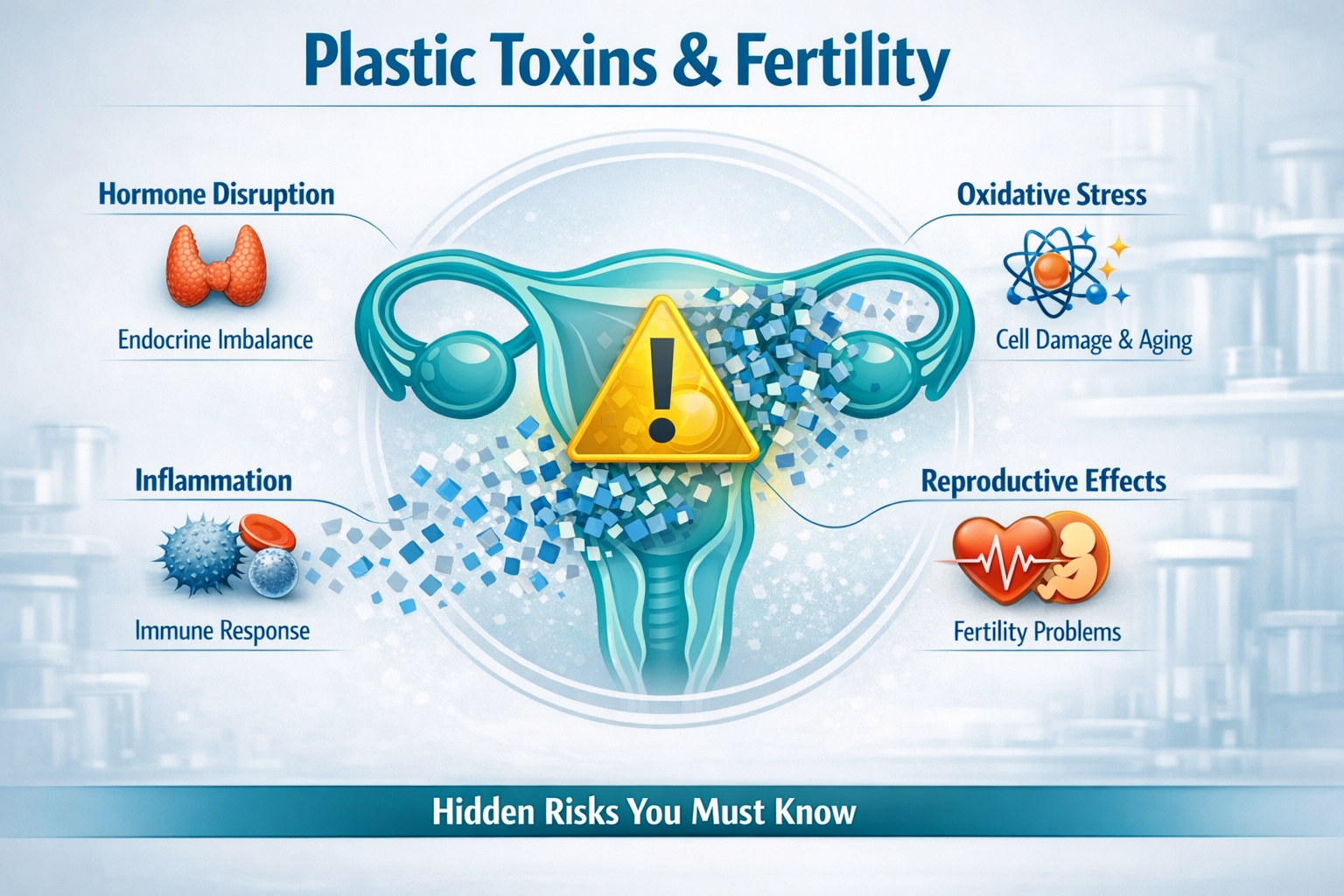
To comprehend the impact of plastic toxins on fertility, we must first investigate the functioning of the endocrine system. The glandular network, which includes the ovaries, testes, thyroid, adrenal glands, pituitary gland and hypothalamus, functions to produce and control hormonal activities. The body uses hormones as chemical messengers which control all body functions, including metabolism, mood and sexual development.
The most extensively studied EDCs found in plastics and associated products include:
The ovarian reserve, which exists as her complete egg supply, decreases when she ages, but environmental chemicals that disrupt endocrine function speed up this natural process. This highlights the growing concern around female fertility environmental toxins. Multiple studies have demonstrated that BPA disrupts the process of oocyte maturation, which includes meiosis, because it prevents eggs from developing their chromosomal structures.
The research discovered that women with increased urinary BPA excretion show decreased antral follicle counts, which serve as an essential indicator of their ovarian reserve. Their ability to produce eggs decreases during IVF treatment, and their chances of having embryo aneuploidy, which involves chromosomal defects, increase. The added stress of this burden results in successful treatment outcomes for women whose ovarian reserve already exists at critical levels.
The female reproductive cycle depends on estrogen as its primary hormone. The natural estrogen-progesterone balance gets disrupted by BPA and phthalates, which function as xenoestrogens through their action as foreign oestrogen-like compounds. The disturbance results in multiple symptoms, which include irregular menstrual cycles and anovulatory cycles and the onset of early or late puberty and symptoms that mimic polycystic ovarian syndrome PCOS.
The condition PCOS has become a major cause of infertility among women in India. Research from India shows that women with PCOS have higher phthalate metabolite levels than healthy women do, which raises concerns about whether environmental chemical exposure triggers this condition in people with genetic risk.
Endometriosis occurs when tissue that normally grows inside the uterus starts to develop outside the uterus, and this condition affects 10 percent of reproductive-age women because it serves as a major factor that leads to infertility. Dioxins, PCBs and BPA show their role in endometriosis because these substances produce estrogen-like effects while creating inflammatory responses in the body. Women with endometriosis who face higher exposure to chemicals will encounter additional obstacles that make it harder for them to achieve successful implantation.
EDCs can change the endometrium beyond their effects on endometriosis because they create conditions that block embryo implantation. BPA exposure has been linked to endometrial receptivity changes because the chemical creates a timeframe during which the uterus becomes most suitable for embryo reception. These chemicals not only worsen inflammation but also contribute to plastic chemicals pregnancy risk, affecting embryo implantation and uterine receptivity.
The decline in male fertility highlights growing concerns about how plastics affect sperm quality over the past several decades, which stands as one of the most dangerous patterns that affects reproductive health. The Human Reproduction Update published in 2017 introduced a landmark meta-analysis which showed that average sperm counts among men from Western countries decreased more than 50 percent between 1973 and 2011. Follow-up research suggests this decline has continued. India experiences the same problem as Indian cities have shown decreasing average sperm counts, together with rising cases of abnormal sperm morphology.
The worldwide decline in sperm counts has reached its peak because of endocrine-disrupting chemicals, which scientists consider to be the main cause of this phenomenon based on their convincing proof.
Testosterone functions as the main hormone that regulates three biological processes, which include sperm development, sexual maturation and sexual desire. The chemical phthalates, especially DEHP di(2-ethylhexyl) phthalate, function as established anti-androgens that inhibit testosterone production in Leydig cells located within the testes. The research discovered that men who had higher urinary phthalate metabolite levels experienced two main effects: they had lower testosterone levels, and their sperm DNA showed increased damage.
The research showed that men who had the most exposure to phthalates experienced a significant decrease in testosterone levels when compared to men who had the least exposure. The identification of this chemical link becomes essential in a nation where infertility stigma causes lengthy delays for men to receive assessment and medical care.
Sperm DNA fragmentation, which refers to the presence of breaks or damage in genetic material that sperm cells carry, has become a recognized infertility cause that standard semen analysis cannot detect. The presence of high DNA fragmentation will result in fertilization failure, poor embryo quality and recurrent pregnancy loss even when count motility and morphology show normal results. The primary mechanism through which phthalates, BPA and PFAS cause damage to sperm DNA involves oxidative stress that results from EDC exposure.
Testicular Development and Long-Term Impact
The most alarming issue of EDC exposure during fetal development poses the greatest threat to human health. The male reproductive system demonstrates extreme vulnerability to hormonal signals throughout specific developmental stages, which occur at various times of life. Male infants who have mothers who were exposed to phthalates and BPA during their pregnancy show two physical symptoms, which include shorter anogenital distance that serves as a testicular development indicator and higher incidence rates of undescended testes and hypospadias conditions, which lead to decreased adult fertility.
The current fertility problems that men experience today result from their mothers' chemical exposures, which occurred multiple decades ago. The problem creates a serious inter-generational issue because it shows how chemical exposures affect multiple generations.
The modern world has made it impossible for people to escape plastic toxins, which act as major threats to their ability to conceive. The main exposure sources need to be studied because they help people decrease their contact with dangerous substances.
The evidence connecting EDC exposure with inferior results in ART treatments through IVF and ICSI shows its active value to couples who receive these procedures. Multiple clinical studies have examined this relationship:
Dr. Aravind's IVF centre delivers outstanding medical services through its patient-centred approach, which includes environmental exposure history assessments as part of its complete fertility check for patients who experience unexplained infertility or multiple failed implantation attempts.
The research findings show that EDC levels in the body will decrease rapidly after people stop EDC exposure for two to three weeks, which makes this information important for couples who plan to have children.
The study, which appeared in Environmental Health Perspectives, used a controlled dietary intervention to show that people who switched to a fresh food diet for five days experienced a 53 to 56 percent reduction in their urinary phthalate and BPA metabolite levels. The reduced chemical input enables the body to achieve better results when it comes to clearing these substances from the system.
The plastic toxins that we encounter in our environment exist as established scientific evidence, which functions as active biological agents that disrupt human reproductive health. The issue remains unspoken because proof exists that shows the truth, but it requires people to change their daily practices, industries and their current systems of operation.
Fertility represents a vital biological function that demonstrates personal health status. The medical field needs to establish reproductive health protections through better reproductive treatments and open public discussions about environmental factors that affect reproductive health. The increase in infertility cases requires medical investigation, yet it remains partly unresolved because chemical factors require a complete scientific explanation. Infertility causes in India now require awareness of environmental exposures along with medical care.
You have expert support available for your fertility journey because other people share your experience. Dr. Aravind's IVF Fertility & Pregnancy Centre team delivers clinical expertise and compassionate patient care, which helps couples achieve parenthood through their extensive experience of more than three decades. You need to start your journey by reducing your exposure to harmful substances, taking care of your body and contacting a specialist who will support you throughout your entire journey.
Endocrine-disrupting chemicals are substances found in plastics and synthetic products that interfere with the body’s hormonal system, affecting fertility, metabolism, and overall health.
Plastic toxins like BPA and phthalates can reduce ovarian reserve, disrupt hormone balance, cause irregular periods, and increase the risk of conditions like PCOS and endometriosis.
Yes, chemicals such as phthalates and BPA can lower testosterone levels, reduce sperm count, and increase sperm DNA fragmentation, impacting overall male fertility.
Studies show that higher exposure to endocrine-disrupting chemicals can reduce egg quality, fertilisation rates, embryo development, and implantation success during IVF.
Common sources include plastic food containers, bottled water, canned foods, non-stick cookware, cosmetics, thermal receipts, and household dust.


