The body of each woman reveals her unique life journey, which includes a hidden aspect that Indian women between 35 and 55 experience through their menopause vs perimenopause transition. You may experience irregular periods, unexplained mood swings and sudden night sweats, which make you question whether you are entering menopause or you have another condition.
The answer, for many women, is perimenopause, which describes the transitional phase before menopause officially begins. The two terms from this sentence are used as synonyms, but they describe two different medical stages that affect your health, fertility and life quality in distinct ways.
The staff at Dr. Aravind's IVF Fertility & Pregnancy Centre, which serves as one of India's most reliable reproductive healthcare centres, has treated patients for 30 years. The article provides medical information to educate women who need help understanding their current state of transition.
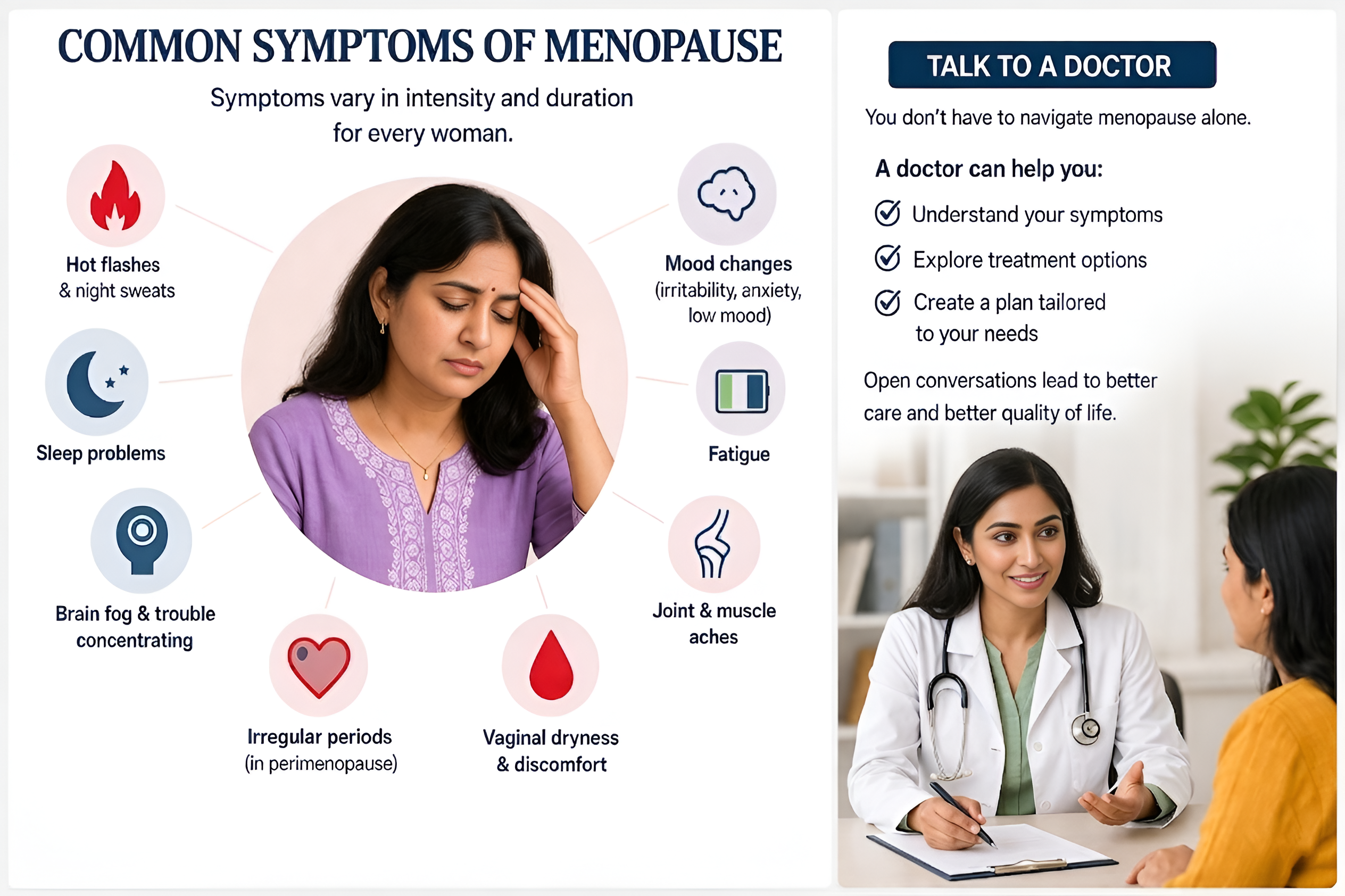
Menopause occurs when a woman experiences her first 12-month period of complete menstrual cessation without any medical explanation for her missing periods. The condition represents the final phase of a woman's reproductive life because her ovaries no longer produce eggs and her body decreases its output of estrogen and progesterone hormones, leading to common menopause symptoms.
Women in India typically experience natural menopause between the ages of 46 and 51, defining the menopause age in India, which results in an earlier onset than the worldwide average that occurs at 51 years, because of genetic factors, dietary habits and lifestyle choices. Women who experience premature menopause before reaching 40 years and early menopause between 40 and 45 years often develop these conditions because of their autoimmune disorders, their cancer treatment or their surgical removal of ovaries.
Menopause exists as a natural biological process because it marks an important milestone in human life. Women experience various physical and emotional effects because hormonal changes during this period disrupt their normal bodily functions.
Menopause requires confirmation through retrospective evaluation, which confirms its existence only after a woman has completed 12 months of menstrual absence. The stage of perimenopause continues until the woman reaches that 12-month milestone.
Perimenopause functions as the transitional phase that comes before a woman experiences menopause. The condition can start in your mid-30s, but most women begin to see its effects during their early to mid-40s. Women experience different lengths of perimenopause age: some women have it for one to two years, while others endure its symptoms until they reach menopause after ten years.
The ovaries decrease their production of estrogen and progesterone throughout perimenopause symptoms. Perimenopause shows different hormone patterns, which cause hormonal levels to change throughout the entire period. Women find it difficult to handle perimenopause because of its unpredictable hormonal patterns. Estrogen levels experience sudden increases and decreases, which result in symptoms that appear to be both unpredictable and hazardous.
Women maintain their ability to ovulate and conceive during perimenopause despite experiencing irregular menstrual cycles. This is an important point for women who either wish to avoid pregnancy or, conversely, are hoping to become pregnant at this life stage. Women need to consult fertility specialists who work at Dr. Aravind's IVF clinic to get help with making pregnancy-related choices during this time.
Medical professionals use your symptoms, menstrual patterns and your current age to determine whether you have this condition. Your doctor needs blood tests to help with their evaluation of your condition. The following tests serve as diagnostic tools for this assessment.
The specialists at Dr. Aravind's IVF Fertility & Pregnancy Centre combine their knowledge of patient symptoms with research-based hormonal tests to create precise medical evaluations and customised treatment plans that differ from standard treatment methods.
The relationship between fertility and perimenopause remains one of its most commonly misunderstood aspects. Women believe they cannot become pregnant when their menstrual cycles show irregular patterns. The assumption that women must use birth control to prevent pregnancy during their perimenopausal vital period is incorrect. Women who want to become pregnant during their perimenopausal phase wait to contact medical professionals because they believe they have sufficient time left to conceive. The situation needs more than one solution, making fertility during perimenopause an important consideration.
Women experience perimenopause with their body systems continuing to produce eggs, which become less frequent and more unpredictable. Egg quality decreases with ageing, which raises the chance of chromosomal defects and miscarriage. The process of becoming pregnant requires urgent action for women over 40 who need to achieve their desired pregnancy.
Dr. Aravind's IVF program has enabled thousands of women to navigate their perimenopausal fertility journeys by providing both expert medical treatment and compassionate emotional support. The centre provides trusted support for women facing fertility issues throughout their entire life because it has achieved a 75% live birth success rate and delivered care to more than 20000 patients.
Effective symptom management during perimenopause and menopause shows a significant impact on your life quality. The treatment provides an option for you to decide between two treatment paths, which require your most recent information for decision-making. The following section presents the most scientifically validated treatment methods for evidence-based research.
HRT functions as a medical treatment that uses synthetic or bioidentical estrogen together with progesterone to treat women who experience diminishing hormone levels. The treatment serves as the primary solution for hot flashes and night sweats, together with providing protection against bone density loss.
The administration of current HRT treatments has become safer than the HRT practices from previous decades because contemporary research shows these treatments benefit most women who maintain good health until they reach 60 years or until their 10-year postmenopausal period. The doctor will evaluate your unique medical situation to determine appropriate medication for your needs.
Women who need to avoid HRT or choose not to take it can find effective treatment through various non-hormonal medications, which have demonstrated clinical success.
Perimenopausal wellness requires first the implementation of lifestyle alterations. The following components support this requirement
The local vaginal estrogen treatment, which uses cream, ring and tablet forms, produces effective results for vaginal dryness and urinary problems because it does not lead to substantial hormonal level increases. The treatment is effective for most women except those who need to avoid systemic HRT.
Women discover relief from their symptoms by using herbal supplements, which include black cohosh and red clover isoflavones and evening primrose oil. Scientific evidence shows mixed results about these products, but their use under medical supervision presents low risk. Patients should tell their doctor about all supplements they plan to take.
People focus on the physical signs of perimenopause and menopause, but they should recognize that both emotional and psychological effects create equal strength. Research links the menopausal transition to higher rates of anxiety and depression, irritability and low self-esteem. The condition should not be misunderstood as mental weakness because it exists as a medical condition.
Estrogen level changes produce direct impacts on serotonin and dopamine pathways, which exist in the brain. Low estrogen levels result in decreased mood levels. Women who have experienced premenstrual dysphoric disorder or postpartum depression tend to face higher risks of developing mood disorders during perimenopause.
Perimenopause often occurs at the same time as major life changes, which include children leaving home, parents getting older, and people changing their jobs and their relationships. The total burden of emotional weight becomes too much to handle.
The process of health assessment starts after women establish their menopause status. The long-term effects of estrogen deficiency require immediate active treatment because they affect both B. The long-term effects of estrogen deficiency require active medical treatment.
The bone strength of women depends on estrogen, which helps them maintain their bone strength. Women who have reached menopause will experience annual bone loss between 1 and 3 percent during their first menopause years, which will result in higher osteoporosis and fracture risks. The preventive methods for the high-risk population include calcium (1200 mg/day), vitamin D (800–1000 IU/day) and weight-bearing exercise and bone-protective medications.
Premenopausal women benefit from cardiovascular protection through their estrogen levels. A woman develops heart disease after menopause at a rate that matches the heart disease risk of men. Blood pressure control requires doctors to monitor cholesterol levels, blood sugar levels and body weight management. A heart-healthy diet and regular aerobic exercise are foundational.
During the menopause transition, between 50 and 70 years of age, most women experience 'brain fog' symptoms. Temporary cognitive changes become reversible when people practice mental activities, obtain quality sleep, handle stress and sustain their cardiovascular health.
Postmenopausal women experience genitourinary syndrome of menopause, which includes vaginal dryness, urinary urgency and increased risk of urinary tract infections. Local vaginal estrogen and new non-hormonal vaginal moisturisers serve as effective treatment options. You should start a conversation with your gynaecologist.
Perimenopause progresses into menopause as the most important hormonal change that women experience throughout their entire lives. The situation requires understanding because it can be managed through careful planning instead of needing to be endured through silent suffering.
You will be able to find appropriate treatment when you understand the difference between menopause and perimenopause symptoms. The program helps you learn about your fertility choices, which enables you to decide how to handle your symptoms while safeguarding your future well-being. The most important aspect of the experience shows you that what you are going through is common among others who face the same circumstances.
Dr. Aravind's IVF Fertility & Pregnancy Centre provides essential services that include active listening, accurate diagnoses, and complete patient support which this vital life stage needs. Our clinic functions as your reproductive health partner throughout your entire fertility journey because we combine three decades of industry expertise with state-of-the-art technology and our commitment to patient care.
Perimenopause is the transitional phase before menopause, marked by hormonal fluctuations and irregular periods. Menopause is confirmed after 12 consecutive months without menstruation.
Perimenopause typically begins in the early to mid-40s, but some women may experience symptoms as early as their mid-30s.
Yes, pregnancy is still possible during perimenopause because ovulation can occur, although fertility declines with age.
Common symptoms include hot flashes, night sweats, mood changes, vaginal dryness, sleep disturbances, and decreased libido.
Doctors diagnose perimenopause based on symptoms, menstrual history, and hormone tests like FSH, AMH, estradiol, and thyroid levels.


