I-Pill is an emergency contraceptive pill used to help prevent pregnancy after unprotected sex or contraceptive failure, such as a broken condom or missed birth control pills. It contains levonorgestrel 1.5 mg, a hormone that can delay or prevent ovulation. Take it as soon as possible. The Indian product label advises taking it within 72 hours. I-Pill is not an abortion pill, does not protect against infections and should not replace regular contraception. This guide explains I-Pill uses, timing, side effects, period changes and its effect on future pregnancy.
I-Pill is a brand of levonorgestrel emergency pill. It is an emergency contraception tablet, used after unprotected sex, not before it. Common reasons to use it:
Important: If sex was forced or non-consensual, seek medical care as soon as you can. A doctor can help with pregnancy prevention, infection testing and other time-sensitive care, and can support you in deciding what to do next.
I-Pill contains levonorgestrel 1.5 mg, a progestin hormone, in a single tablet. Check the pack, because other emergency pills may contain different ingredients.
The WHO explains that levonorgestrel emergency pills work mainly by preventing or delaying ovulation. If no egg is released, there is nothing for sperm to fertilise. Its effect depends partly on your cycle. If ovulation has already happened, I-Pill may not work, and it cannot stop an established pregnancy.
No. I-Pill does not terminate an established pregnancy. It acts before ovulation, mainly by delaying or preventing the release of an egg. Abortion medicines are different and are used only under medical advice.
Take one tablet (1.5 mg) with water, with or without food, as soon as possible after unprotected sex. Follow the instructions on the pack. Do not take extra tablets to increase protection.
If you vomit within 2 hours of taking it, the dose may not have been absorbed. Contact a pharmacist or doctor promptly, because the dose may need to be repeated.
Take it as soon as possible. The effect is highest early and falls as time passes. The Indian I-Pill product label advises taking the tablet within 72 hours of unprotected sex. WHO guidance covers emergency contraceptive pills for up to 5 days, but levonorgestrel becomes less effective over time. If more than 72 hours have passed, seek medical advice promptly about other emergency contraception options.
Yes. It can still be taken, but it is usually less effective than taking it earlier. Do not wait for symptoms or for your period.
Levonorgestrel is not a dependable option after 72 hours. Contact a doctor as soon as possible. A copper IUD (within 5 days) or other emergency options may be more suitable, depending on your timing and medical history.
I-Pill lowers the chance of pregnancy but does not prevent it every time. In studies cited by the WHO, pregnancy rates after levonorgestrel pills ranged from about 1.2% to 2.1%. These figures describe groups of women in studies. They are not your personal chance of pregnancy, which depends on timing, your cycle and other factors. Things that can reduce its effect:
I-Pill does not protect against HIV or other sexually transmitted infections.
I-Pill side effects are usually mild and pass within a few days. Some women have none. They can include:
Important: Severe or lasting lower abdominal pain, fainting or unusually heavy bleeding should not be assumed to be normal side effects. Seek medical care.
It can. I-Pill acts on ovulation, so your next period may come earlier or later than expected, and the flow may be lighter or heavier. These changes are usually temporary.
If your periods stay irregular for several cycles, read about what causes irregular periods.
Yes. I-Pill lowers the risk but is not 100% effective. It is more likely to fail if taken late, if ovulation has already happened, or if you vomit. It also does not protect you from unprotected sex later in the same cycle.
Pregnancy test after I-Pill: test if your period is more than 7 days late, as also advised in this Cleveland Clinic guide, or 3 weeks after the unprotected sex, even if you had some bleeding. If the test is positive, or you have severe one-sided abdominal pain, dizziness or fainting, see a doctor urgently, because it can signal an ectopic pregnancy or miscarriage.
I-Pill is intended for emergency use. The WHO notes that frequent use can cause menstrual irregularities, but it carries no other known health risks for most women. It is also less reliable than regular contraception, so pregnancy becomes more likely if it is your main method.
No. Condoms, birth control pills and intrauterine devices give more reliable ongoing protection, and condoms also reduce infection risk. You can generally start or resume regular hormonal contraception immediately after taking levonorgestrel. Depending on the method, you may need to use condoms or avoid sex for a short period until it becomes effective. Ask your doctor or pharmacist about the backup period for your chosen method. If you need emergency contraception often, talk to a doctor about a regular method.
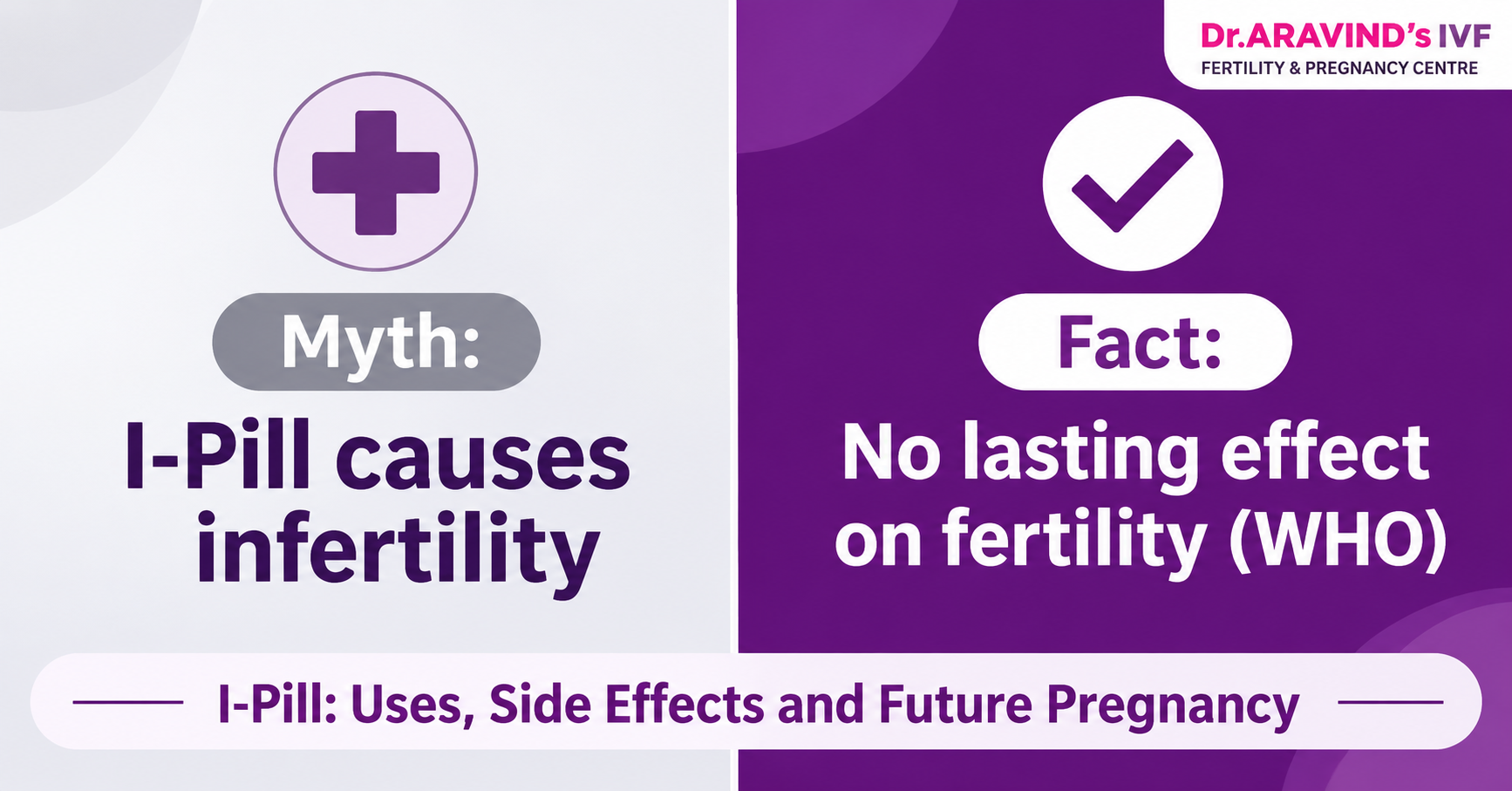
No. According to the WHO, emergency contraceptive pills have no lasting effect on fertility.
If you have been trying to conceive for 12 months (6 months if you are 35 or older) without success, I-Pill is almost never the cause. See a fertility specialist for evaluation. Irregular cycles can also affect fertility, so read whether irregular periods are linked with infertility. If treatment is needed, options may include IUI or IVF.
See a doctor if you:
At Dr. Aravind's IVF, our specialists can help you understand menstrual changes, contraception-related concerns and fertility health. Book your appointment.

No. I-Pill does not terminate an established pregnancy. It delays ovulation.
The Indian label advises 72 hours. WHO guidance recommends emergency contraception within 5 days, but levonorgestrel works less well the longer you wait. Contact a doctor as soon as possible, because a copper IUD or other options may be more suitable.
Yes. It lowers the risk but is not 100% effective. Test if your period is more than 7 days late, or 3 weeks after unprotected sex.
It mainly works by delaying ovulation, so it may not prevent pregnancy if ovulation has already happened.
It is meant for emergencies only. Repeated use can disturb your periods and is less reliable than regular contraception. If you need it often, talk to a doctor about a regular method.
If you vomit within 2 hours, the tablet may not have been absorbed. Contact a pharmacist or doctor about repeating the dose.
No. The WHO states that emergency contraceptive pills have no lasting effect on fertility.


