The moment you see two lines or the test shows the word "Pregnant", your entire world changes. Everything shifts in an instant. Some people wait for this moment, tracking every cycle, hoping and facing letdown after letdown. For others, the news just lands out of nowhere, leaving your heart pounding and your brain scrambling to catch up. A positive test result brings more than a simple yes or no answer. The result marks the start of a significant event which affects your entire being through physical, mental and spiritual transformation.
You’ll probably experience a mix of excitement and nervousness together with the feeling of uncertainty, which leads you to ask what should happen next. That’s completely normal. The truth is, these first weeks after a positive test really count. Your foundation for the future begins at this very moment, which can be called the “Construction Phase” of pregnancy. This guide acts as your companion, helping you transform that initial burst of emotion into meaningful action, including scheduling your first medical appointment and making small adjustments that support your well-being and your baby's safety.
Home pregnancy tests show their magic when people use them. A life-changing moment can happen with one small test stick after just a short wait. The team at Dr. Aravind's IVF explains that while these tests are a useful first step, they are only the beginning of the confirmation process. They can give an early indication, but they do not always provide complete certainty.
True confirmation comes from understanding the biological processes behind pregnancy and following up with proper medical testing. Knowing what happens beneath the surface helps expectant parents feel more confident and informed.
Both urine tests and blood tests work by detecting a hormone called human chorionic gonadotropin (hCG). This hormone acts as the body's signal that pregnancy has begun. It is produced by cells that later form the placenta and helps maintain progesterone levels in the body.
Progesterone keeps the uterine lining stable and prevents menstruation, allowing the pregnancy to continue developing. Because of this role, detecting hCG is one of the earliest ways to confirm pregnancy.
Home pregnancy kits are convenient and easy to use. They usually provide a simple “yes” or “no” result by detecting hCG in urine. These tests are generally reliable after a missed period, but certain situations can affect accuracy and sometimes create confusion or anxiety.
The beta-hCG blood test provides a precise measurement of hormone levels in the body. Unlike home tests that only show a positive or negative result, this test gives doctors a numeric value.
Doctors monitor how quickly this number increases. In a healthy early pregnancy, hCG levels usually double every two to three days. Tracking these numbers helps doctors confirm normal pregnancy development and detect potential concerns early.
Many patients undergo a procedure called a viability ultrasound during this appointment. Doctors often use a transvaginal ultrasound probe to obtain a clear image of early pregnancy. The scan looks for several key indicators.
During this appointment, doctors may collect several blood samples for routine testing. These tests include checking blood type, Rh factor compatibility, screening for infections like rubella or hepatitis, and measuring iron levels to detect anemia. While the process may feel clinical, it helps ensure both mother and baby remain healthy from the start.
During the first twelve weeks, the baby undergoes rapid development. Essential organs such as the brain, heart, and lungs begin forming during this time. Because of this intense growth period, proper nutrition becomes especially important.
Folic acid is one of the most important nutrients during early pregnancy. It supports the formation of the neural tube, which eventually develops into the brain and spinal cord. Adequate folic acid intake significantly reduces the risk of neural tube defects such as spina bifida.
Health experts typically recommend 400 to 800 micrograms of folic acid daily beginning before conception and continuing during early pregnancy. While foods like spinach, lentils, asparagus, and oranges contain natural folate, most women still benefit from a prenatal vitamin supplement.
Iron helps the body produce additional hemoglobin to support increased blood volume during pregnancy. Low iron levels can lead to fatigue and may affect the baby’s development. Lean meats, beans, lentils, tofu, and leafy greens are excellent sources.
Calcium is essential for building the baby’s bones, teeth, heart, muscles, and nervous system. Pregnant women usually need about 1000 milligrams per day. Dairy products, fortified plant milk, tofu, almonds, and leafy vegetables are good sources.
Seeing two lines on a pregnancy test marks the beginning of an important life journey. Suddenly, there are doctor visits, dietary changes, and lifestyle adjustments to consider. But pregnancy is a long journey, and perfection is not required from the start.
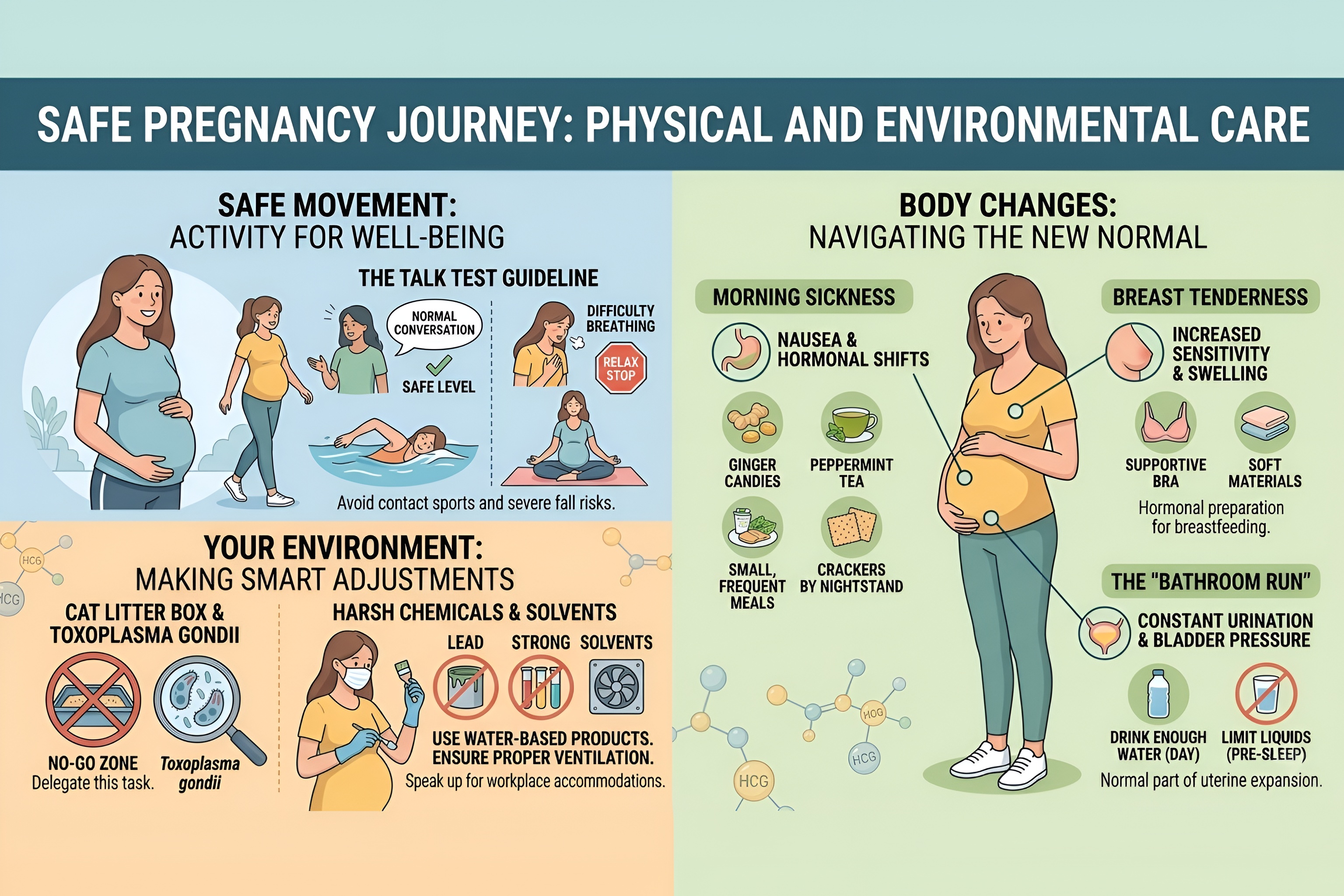
Focus on the basics—confirm your pregnancy with a trusted healthcare provider, build a strong support system, eat nutritious food, and stay active in ways that feel comfortable. Some days will feel exciting, while others may feel exhausting. Both experiences are normal.
Every pregnancy journey is unique. By staying informed, listening to your body, and making thoughtful choices, you are already taking meaningful steps toward becoming a wonderful parent.
A pregnancy test works by detecting the hormone human chorionic gonadotropin (hCG) in urine or blood. This hormone is produced after a fertilized egg implants in the uterus. Home pregnancy tests detect hCG in urine, while blood tests at a clinic measure the exact hormone level to confirm pregnancy.
Yes, pregnancy tests can sometimes give incorrect results. A false negative may occur if the test is taken too early or if the urine is diluted. A false positive is rare but may happen due to certain fertility medications or very early pregnancy loss.
The best time to take a pregnancy test is after a missed period, using first-morning urine. At this time, hCG levels are usually high enough to detect pregnancy accurately.
In early pregnancy, hCG levels rise quickly and typically double every 48 to 72 hours. Doctors monitor these levels through a beta-hCG blood test to ensure the pregnancy is developing normally.
An ultrasound usually confirms pregnancy around 6 to 8 weeks. At this stage, doctors can often see the gestational sac, yolk sac, fetal pole, and sometimes the baby’s heartbeat.


