The health recommendations for couples who want to conceive a child create an overwhelming burden that they must handle through proper eating, sufficient sleep, stress management and mandatory exercise. When discussing exercise and fertility, the recommended health habit of exercise, which people should follow, becomes harmful when it prevents them from reaching their fertility objectives.
People who exercise will experience physical advantages because fertility and physical activity benefit all areas of their health. You achieve body weight control through its ability to decrease body fat and enhance your body's ability to process insulin and maintain mental wellness. All of these factors play a meaningful role in fertility. The amount of exercise needs special attention. Hormonal balance and metabolic function both suffer from insufficient physical activity. High-intensity exercise, which includes extreme training activities, causes a drop in sexual hormones, which stops women from ovulating.
The article investigates how physical activity affects human fertility. The effects of physical activity on your reproductive system will help you make better decisions about your conception journey, whether you start through natural methods, deal with PCOS, or get ready for IVF.
Your body shows high sensitivity to physical stress, which affects its production of reproductive hormones that include estrogen and progesterone, luteinising hormone, follicle-stimulating hormone and testosterone. Your body shows positive responses to moderate-intensity exercise. The body experiences better blood circulation, insulin resistance improvement and reduction of inflammatory symptoms. The amount of exercise needs special attention, as hormonal balance exercise and metabolic function all suffer from insufficient physical activity. This process results in a hormonal system that enables proper ovulation and sperm production to occur.
The body starts to perceive exercise-related stress as a life-threatening condition when people reach particular exercise intensity and duration limits. The body starts to save energy by decreasing its activity in non-essential body systems. The body starts to decrease reproductive functions because they represent one of the body's primary biological needs. The hypothalamus decreases its release of gonadotropin-releasing hormone (GnRH), which leads to decreased FSH and LH production by the pituitary gland. Women experience irregular or missing menstrual cycles, which doctors name hypothalamic amenorrhoea. Male testosterone levels decrease, which leads to reduced sperm quality and diminished sexual desire.
People need to understand that exercise functions as a complete system that depends on its various components. Energy availability determines how to balance exercise when trying to conceive because energy availability represents the remaining energy that the body requires for its normal functions after exercise has taken place.
Athletes who follow strict calorie limits while they train hard develop a condition called chronic energy deficit because their energy levels drop below critical thresholds. The reproductive system depends on hormonal pathways, which this condition can block at every level of its operation.
Excessive exercise that causes underweight status brings the same health dangers that people experience when they become overweight. Both extremes disrupt ovulation, reduce egg quality, and lower sperm count and motility. The researchers define the ideal zone for weight and exercise volume as "adequate energy availability," which requires you to consume sufficient calories for your physical activity and reproductive system needs.
The exercise session had moderate intensity, which helped women achieve better fertility results. The research evidence shows that women who perform moderate physical activity multiple times per week experience improved ovulatory function compared to women who do not exercise. The research shows that women with polycystic ovary syndrome (PCOS) experience improved insulin level control and reduced androgen excess through physical activity, which helps them establish regular menstrual cycles.
The practice of moderate exercise enables people to maintain their body weight, which directly affects their ability to conceive. Women who struggle with obesity can achieve restored ovulation by losing just 5 to 10 percent of their body weight through exercise and dietary modifications. The difficulties that emerge from exercise problems develop when women exercise beyond their safe limits, which occurs when they perform excessively long and intense workouts that exceed their body's energy requirements. The Female Athlete Triad shows female athletes who engage in intense training activities.
The three conditions affect a woman's ability to conceive.
Your exercise practices should be discussed with a fertility specialist near me or expert when you experience these symptoms while training at an intense level. The body can achieve hormonal balance through a combination of lower training volume and higher caloric intake, which takes about two months to complete.
Research shows that male fertility needs more attention because male fertility depends on lifestyle factors, which include sperm health exercise activities. Men who do moderate exercise experience better sperm production outcomes because their sperm shows higher concentration levels and improved movement capabilities, and better physical appearance. People who exercise regularly experience decreased oxidative stress levels, which leads to DNA damage in sperm cells.
Men who do not exercise and have excessive body weight experience decreased testosterone production, increased testicle temperatures and greater occurrences of sperm defects. The implementation of regular moderate exercise, which includes walking, swimming, cycling and strength training, will lead to significant improvements in these specific health metrics throughout the duration of time.
Men and women both experience negative consequences when they engage in excessive workout sessions. Running more than 60 kilometres per week leads to decreased testosterone levels and lower sperm quality according to research about extreme endurance training. The biological mechanism works in the same way because the body takes energy and hormonal resources away from reproductive functions to support physical survival and recovery processes.
Some sports activities present distinctive safety hazards for participants. Cyclists who maintain extremely high training intensities and durations face two major dangers, which include increased scrotal temperatures and perineal pressure. Anabolic steroids, which men use in competitive sports and bodybuilding activities become one of the strongest substances that halt sperm production, so men who want to father children should not use these drugs.
Should You Exercise During an IVF Cycle?
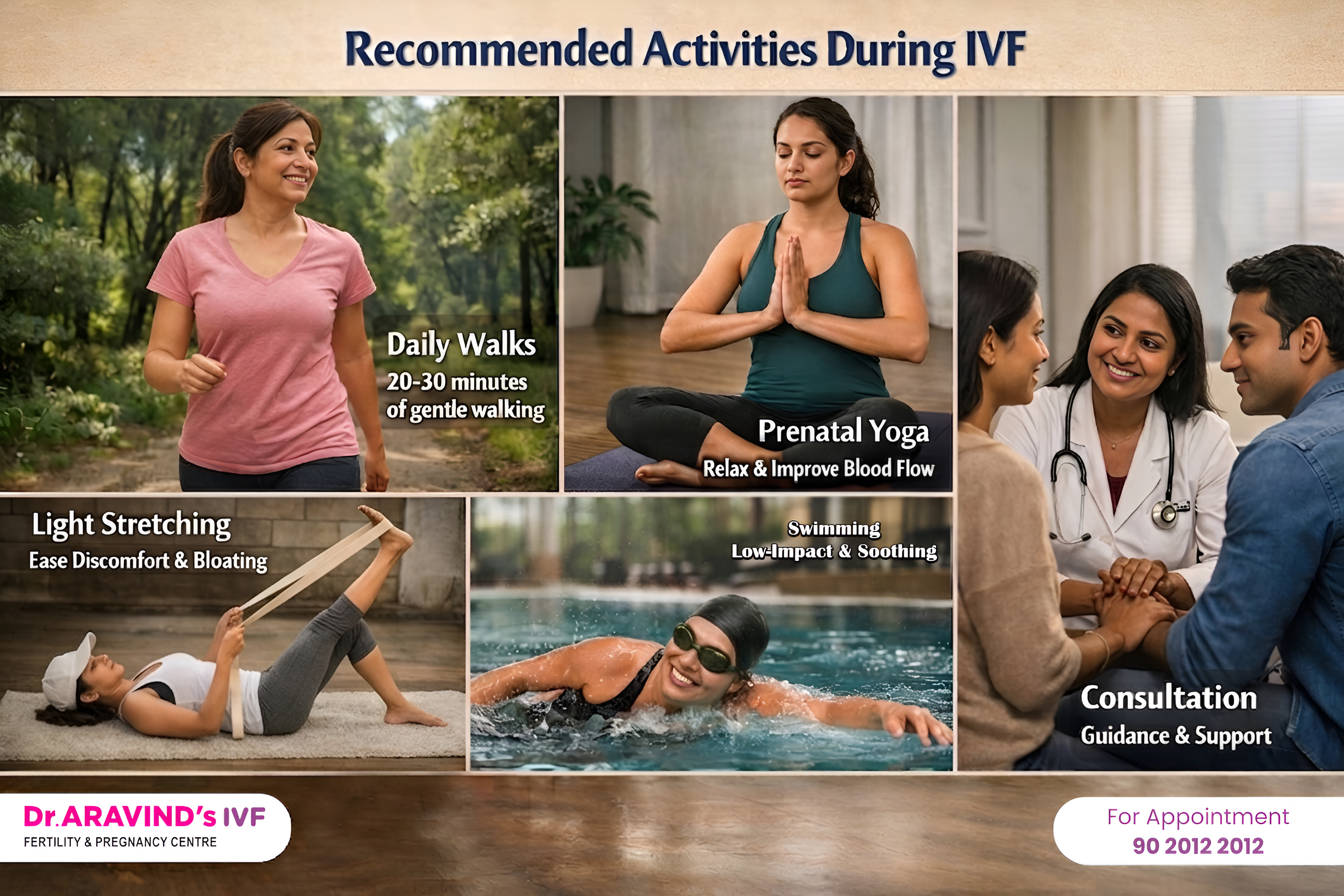
The patients at the fertility clinic in Chennai most frequently ask this question, which medical experts answer with a positive response that includes essential conditions. Most parts of an IVF cycle permit safe and advantageous use of light to moderate exercise. The stress and emotional challenges that people experience during their fertility treatments can be reduced through walking, gentle yoga and light swimming.
The IVF process requires specific periods that need more safety measures. The ovaries experience considerable growth during the ovarian stimulation stage. The combination of high-impact exercise with heavy lifting and vigorous twisting movements creates a situation where ovarian torsion becomes more likely to happen. When looking for safe workouts during IVF treatment, Fertility specialists advise their patients to decrease exercise levels after they begin ovarian stimulation.
Women after embryo transfer commonly ask if exercise might detach or damage the embryo. The good news is that gentle movement will not affect implantation — embryos are not so delicately placed that a short walk could disturb them. The two-week waiting period should be spent avoiding high-intensity workouts, hot yoga and any activities that cause substantial physical strain. Resting and maintaining emotional tranquillity bring benefits, which gentle exercise can help achieve both purposes.
Recommended Activities During IVF
Polycystic ovarian syndrome stands as the leading medical condition that brings about anovulatory infertility since it impacts 10 percent of women who are in their reproductive years. The main characteristic of PCOS involves insulin resistance, which exercise functions as the most efficient non-drug method to enhance insulin resistance. Women with PCOS experience two types of exercise benefits, which include aerobic exercise and resistance training that reduce androgen levels while increasing ovulation rates and establishing regular menstrual patterns.
Women with PCOS achieve their best hormonal results through a combination of moderate cardiovascular activities and strength training exercises, which they should perform about two to three times each week. Research demonstrates that even small weight reductions between 5 to 7 percent of body weight can lead to ovulation restoration in most overweight women who have this medical condition.
Endometriosis affects approximately 10 percent of women and leads to extreme discomfort, which decreases their ability to conceive. Exercise provides two advantages, which include decreasing systemic inflammation that worsens endometriosis while it helps control the ongoing discomfort associated with this illness. Women who suffer from advanced endometriosis should consult their doctor about suitable exercise activities that they need to follow throughout flare-up periods and post-surgery times.
For couples facing unexplained infertility — where standard investigations reveal no clear cause — lifestyle optimisation becomes even more important. The combination of exercise with proper nutrition and sufficient rest enables both partners to achieve better hormonal balance. The current research indicates that chronic psychological stress, which exercise helps to relieve, establishes an immune system environment in the uterus that contributes to unexplained infertility.
The exercise parameters that most support fertility for both men and women require three to five weekly training sessions, which last 30 to 45 minutes at a moderate intensity level, which enables conversational communication during exercise. People should walk, swim, and cycle through competitive events and practice yoga, Pilates, and light strength training. People should not practice marathon training, CrossFit or HIIT at high volumes and heavy powerlifting while they attempt to become pregnant.
People must establish their nutritional requirements through their first exercise session. The majority of people who attempt to conceive and exercise experience their first reproductive failure from improper dietary choices. Your daily food intake needs to include whole foods, healthy fats, lean proteins and complex carbohydrates. Folate, zinc, iron, vitamin D, and omega-3 fatty acids are particularly important for reproductive health in both men and women. The pattern that people use to exercise with extreme calorie limits shows a direct link to their hormone reduction.
Your body requires you to pay attention to the signals it sends you while your doctor provides you with guidance.
Everyone has their own unique body structure. The level of moderate exercise that suits an individual depends on their age, fitness level, hormonal status and health conditions. The most effective approach to treatment requires individualization through collaboration with a fertility expert who possesses knowledge of all your medical history.
The relationship between mental health and reproductive function needs to be investigated because both exercise and fertility research require this connection to be established as essential. Chronic psychological stress, which develops during extended fertility treatment, leads to increased cortisol production, which then disrupts reproductive hormone levels and affects both ovulation and sperm development.
Research demonstrates that mind-body exercise activities such as yoga, tai chi and Pilates lead to lower cortisol levels while enhancing mental health results. For fertility patients, this is not a trivial benefit. Couples who combine mind-body programs with fertility treatments experience reduced anxiety and depression, according to research, while some studies show clinical pregnancy rates improve as well.
People who exercise with proper selection make better choices that lead to stress reduction through activities that bring them actual stress relief. The body receives greater support for fertility through a 30-minute yoga session and a serene evening walk than through an hour of demanding exercise, which causes total physical exhaustion.
The relationship between exercise and fertility exists as a balanced connection because both elements need to maintain equal values. Regular, moderate physical activity serves as the most effective method for anyone who wants to enhance their reproductive health. The system controls hormones while it helps people maintain their weight, decrease their body inflammation and experience better mental health. The combination of these elements leads to enhanced reproductive health in men and women who possess better physical health.
The problem occurs when people exercise beyond their initial purpose of enhancing their health. The combination of high-intensity training with high-volume training and insufficient food intake causes hormonal disruption, which prevents people from becoming pregnant. Understanding where that boundary lies for your individual body is essential, and this understanding is best developed in conversation with qualified specialists.
Dr Aravind's IVF Fertility & Pregnancy Centre, considered by many to be the best IVF centre in South India, has more than 20 years of experience which has produced a 75 percent success rate for live births and more than 20000 successful births through their medical services. As a leading IVF centre in Tamil Nadu, the centre treats patients as complete individuals instead of treating only their menstrual cycle. The team provides personalized support to help you achieve your conception goals through custom lifestyle advice and exercise program development. Your parenthood journey is unique, and you deserve support that reflects that.
Yes, but keep the intensity moderate. Daily light activity — such as walking or yoga — is generally beneficial. Avoid daily high-intensity sessions, which can increase physiological stress and suppress reproductive hormones.
No. Complete cessation is not necessary or recommended. Continue gentle exercise such as walking, light stretching, or fertility yoga. Avoid high-impact or strenuous activity, particularly after embryo transfer and during ovarian stimulation.
Yes, significantly. Regular moderate exercise improves insulin sensitivity and reduces androgen levels, both of which are central to PCOS management. Combined with dietary changes, exercise is one of the first-line recommendations for overweight women with PCOS who want to conceive.
Moderate exercise generally improves sperm count, motility, and morphology by reducing oxidative stress and supporting healthy testosterone levels. However, excessive endurance exercise or anabolic steroid use can severely impair sperm production.
Walking, swimming, light cycling, yoga, and Pilates are all excellent choices. These activities are low-impact, support hormonal balance, and reduce stress — all important factors for fertility in both men and women.


