The first question that couples direct to each other before they start their IVF process is: "Will it hurt?" The situation represents a typical human response. The process of choosing In Vitro Fertilization (IVF) already requires people to face two major challenges, which become harder to manage when they start to worry about potential discomfort. Modern IVF protocols have experienced multiple significant transformations throughout their development.
Dr. Aravind's IVF Fertility and Pregnancy Centre now offers safe anesthesia in IVF and sedation solutions, which medical professionals use throughout all procedure stages to guarantee patient comfort with minimal distress. The article provides a complete guide to all IVF process steps while describing the timing and application of anesthesia during the procedure to give you a clear understanding of what to expect during your fertility treatment journey.
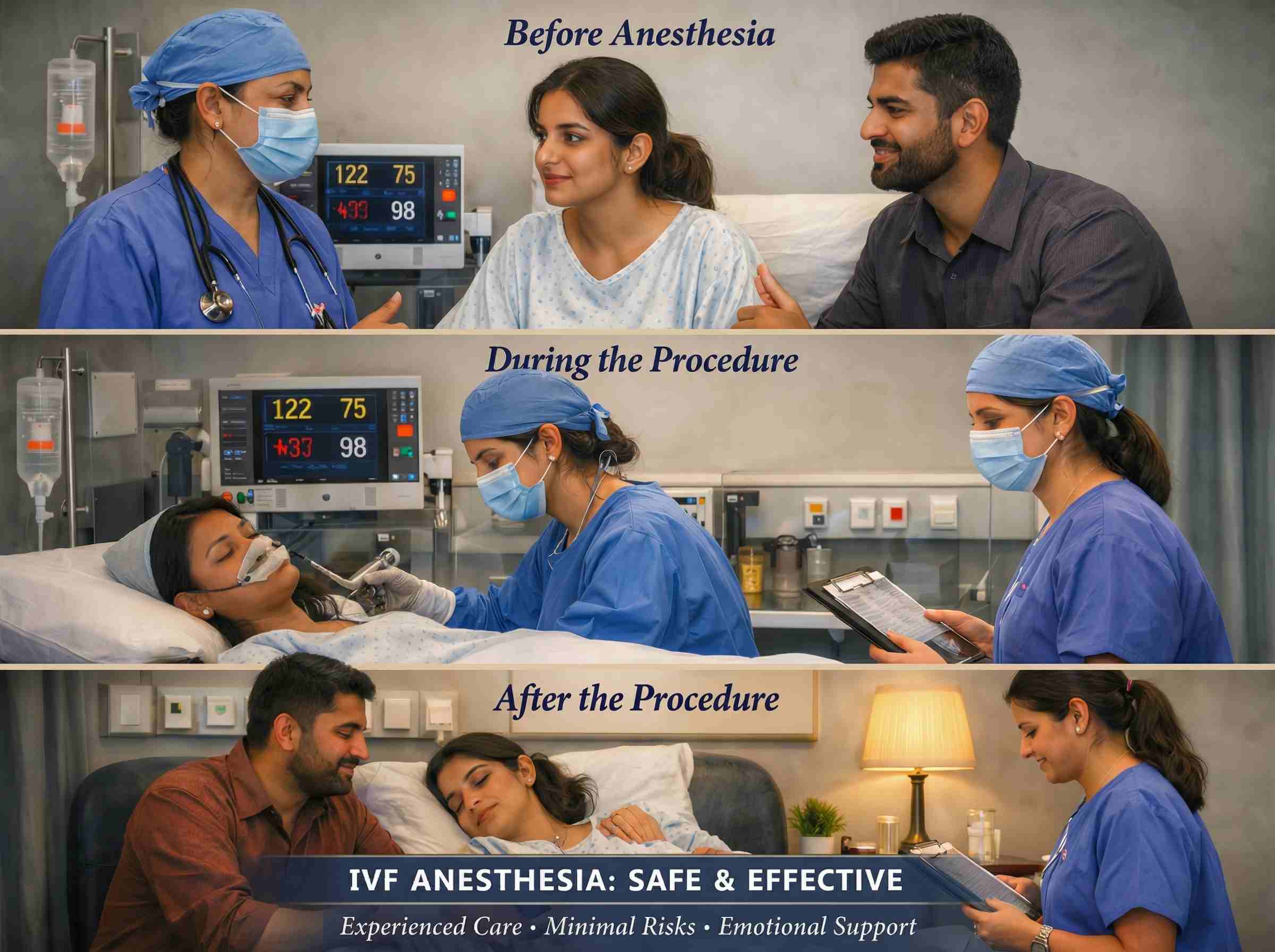
The complete details of IVF procedures must be explained before we start our discussion about anesthesia. IVF functions as an assisted reproductive technology (ART) process, which contains multiple steps that research scientists use to create embryos through laboratory egg and sperm fertilization. The following stages of the procedure have been simplified for better understanding.
Anesthesia and sedation are most frequently used during the egg retrieval stage, which represents the most common step in the process. Most women can handle the embryo transfer process because it creates only temporary discomfort, which requires no sedation.
People have different levels of pain tolerance because their pain experiences differ from one another. The following information describes the typical pathway that patients will follow through all treatment phases and answers the common concern: Is IVF painful?
During the ovarian stimulation process, medical professionals deliver subcutaneous injections, which require them to place the medicine just under the skin at abdominal locations. Women usually experience this procedure as a mild sensation that feels like a small pinch or sting. The needles used are very fine, and many patients become comfortable self-administering them at home within the first few days. The ovarian response can trigger side effects, which include bloating, breast tenderness and mild pelvic discomfort, which are common IVF side effects, but all these effects can be controlled.
The anesthesia becomes the most essential element during this stage of the process. The fertility specialist uses a fine needle to extract ovarian follicles through the vaginal wall while using ultrasound technology as a reference point. The ovaries inside the body create discomfort, which would become unbearable without anesthesia. Patients experience total procedure unawareness and complete pain relief when they receive appropriate egg retrieval anesthesia or sedation during IVF.
The doctors perform the embryo transfer procedure without using sedation, which makes patients compare its discomfort level to that of a cervical smear test or a Pap smear. Medical staff use a thin, flexible catheter to navigate through the cervix until they reach the uterus. The majority of women who undergo this procedure report experiencing only mild cramping symptoms, which start during the procedure and continue afterwards. The doctor may need to use a local anesthetic and cervical relaxants when the cervix becomes challenging to reach.
The application of anesthesia in IVF procedures requires customized solutions for each specific case. The selection of anesthesia method requires three factors to be assessed: the patient's medical condition, the clinic's operating procedures, and the surgical procedure's difficulty level. The presence of an anesthesiologist or trained sedation specialist at fertility centres guarantees IVF anesthesia safety during egg retrieval procedures.
The most frequent method used during egg retrieval procedures is this medical technique. The patient receives an intravenous (IV) medication that combines a sedative with a pain reliever to create a state of drowsiness and relaxation. You continue to breathe independently while your body remains in a state between full consciousness and deep sleep, which makes most patients unable to remember anything from the operation. Recovery time is faster than with general anesthesia because patients can leave the hospital within a few hours after their procedure.
Full general anesthesia becomes necessary for certain patients who experience anxiety and have a low pain threshold, and require treatment for complex retrieval procedures that involve difficult ovary extraction. Under general anesthesia, patients experience complete unconsciousness without any physical sensations. The anesthesiologist who possesses training will oversee your essential health indicators during the entire medical operation. The procedure requires a longer recovery time, but has zero IVF procedure pain level during egg retrieval.
Some clinics provide a paracervical block as a local anesthetic injection near the cervix, which serves as a sedation alternative for egg retrieval. The patient stays conscious while the treatment procedure provides numbing effects throughout their body. The primary method of treatment depends on patient preference, since conscious sedation delivers better overall comfort to patients.
The anesthesiologist will talk to you about the sedation approach while answering your questions. You must find someone who will take you home because you cannot drive after sedation. The medical staff will monitor your vital signs, which include blood pressure, heart rate and oxygen saturation levels throughout the procedure. The sedation process begins to work after the staff administers the intravenous medication.
The egg retrieval procedure takes about 20 to 30 minutes to complete for most patients. The medical staff will monitor your blood pressure, heart rate and oxygen saturation levels throughout the procedure. You should not experience pain because you will not remember the procedure at all. The recovery process begins for most patients who wake up in a medical facility with nursing staff.
The body typically experiences normal mild cramping, light spotting, and bloating after the retrieval process, which will resolve within one to two days. The patient can treat post-procedure pain with over-the-counter medications that include paracetamol. The medical team monitors patients during their recovery process for one to two hours before they receive instructions for aftercare.
Women who are trying to conceive face understandable concerns about this matter. The answer provides reassurance because trained professionals at fertility clinics use anesthesia for IVF procedures, which they perform safely according to global practice standards that occur thousands of times each day.
Medical procedures require sedation because they have different risks, which include nausea, dizziness and temporary blood pressure drops. The occurrence of serious complications happens infrequently. The anesthesiologist will evaluate your health status through a complete assessment, which he will use to create a sedation plan that reduces all potential risks. The medical team evaluates each patient with respiratory disorders and anesthetic allergy conditions through individual assessment procedures.
IVF egg retrieval procedures use short-acting anesthetic agents, which the body eliminates through natural processes. The drugs used in long surgical operations differ from these drugs because researchers have studied their effect on egg quality. Researchers have determined through current research that proper medication administration does not harm fertilization or embryo development.
The emotional aspects of IVF, which include anticipation and waiting, hope and heartbreak between patients who experience greater difficulties than any physical pain that they endure. The leading IVF centres dedicate equal resources to emotional support services, which they operationalize through their medical work.
Dr. Aravind's IVF healthcare system provides treatment that is dedicated to the entire human existence, instead of a single medical operation. The patient support system implements three essential components, which include counselling services, complete project updates and ongoing access to compassionate staff who assist throughout the entire process.
The clinic has observed through its 30 years of experience that 90,000 Tamil Nadu families received support, which demonstrated how proper procedure explanations about anesthesia reduce patient anxiety and create better overall experiences.
The following practical steps will help you achieve both preparedness and relaxation.
The process becomes less frightening when you understand it better because Dr. Aravind's IVF care team is ready to assist you at any time.
People can experience IVF procedures without feeling any discomfort or experiencing any fear during their treatment. Modern anesthetic techniques, together with patient preparation methods and dedicated clinical staff, create an experience that exceeds patient comfort expectations. The egg retrieval process, which represents the most delicate part of the procedure, requires either sedation or general anesthesia in IVF to keep patients completely unaware of what happens. The body experiences typical post-procedure symptoms, which will resolve on their own after a short period of time.
The IVF process starts with your initial injection and ends with your final embryo transfer which helps you understand what will happen during the treatment. At Dr. Aravind's IVF Fertility & Pregnancy Centre, with over three decades of expertise and multiple centres across Tamil Nadu and beyond, every stage of your fertility journey is supported by skilled specialists who prioritise your physical comfort and emotional wellbeing in equal measure.
You can contact Dr. Aravind's IVF team to ask any questions you have about IVF anesthesia or, the treatment process or about any other aspects of your fertility care. The path to parenthood begins with proper care, which starts with an educated decision-making process that requires one initial step.
IVF is generally not painful. Most discomfort is mild and occurs during hormone injections or after egg retrieval. The egg retrieval procedure itself is performed under sedation or anesthesia, so patients do not feel pain during the process.
Yes, anesthesia is commonly used during egg retrieval. Most clinics use conscious sedation or, in some cases, general anesthesia to ensure the procedure is completely pain-free.
Embryo transfer is usually not painful. It may cause mild discomfort or cramping, similar to a Pap smear, but it does not require anesthesia in most cases.
Recovery typically takes a few hours. Most patients can go home the same day and resume normal activities within 24 hours, although mild cramping or bloating may last 1–2 days.
Yes, anesthesia used in IVF is considered very safe. Short-acting medications are used, and studies show they do not negatively affect egg quality or embryo development.


