The fourth month of pregnancy brings one of the most visible and exciting transformations during pregnancy. This stage officially marks the beginning of the second trimester, covering weeks 13 to 16, a period many doctors and parents lovingly call the "Golden Period" or the "Honeymoon Phase" of pregnancy.
For many couples at Dr. Aravind's IVF Fertility & Pregnancy Centre, the clinical anxiety that often surrounds the first trimester slowly begins to fade. Instead, parents begin to embrace the joyful anticipation of welcoming a new life into the world.
The fourth month serves as an important transition point, connecting the early embryonic stage with the stronger developmental phase that follows in the later months of pregnancy. Whether the pregnancy occurs naturally or through assisted reproductive techniques such as IVF, this stage marks a significant milestone in the journey toward parenthood.
This guide explores the physical changes, emotional transformations, and nutritional needs that define this remarkable phase, helping parents better understand and enjoy this special chapter of pregnancy.
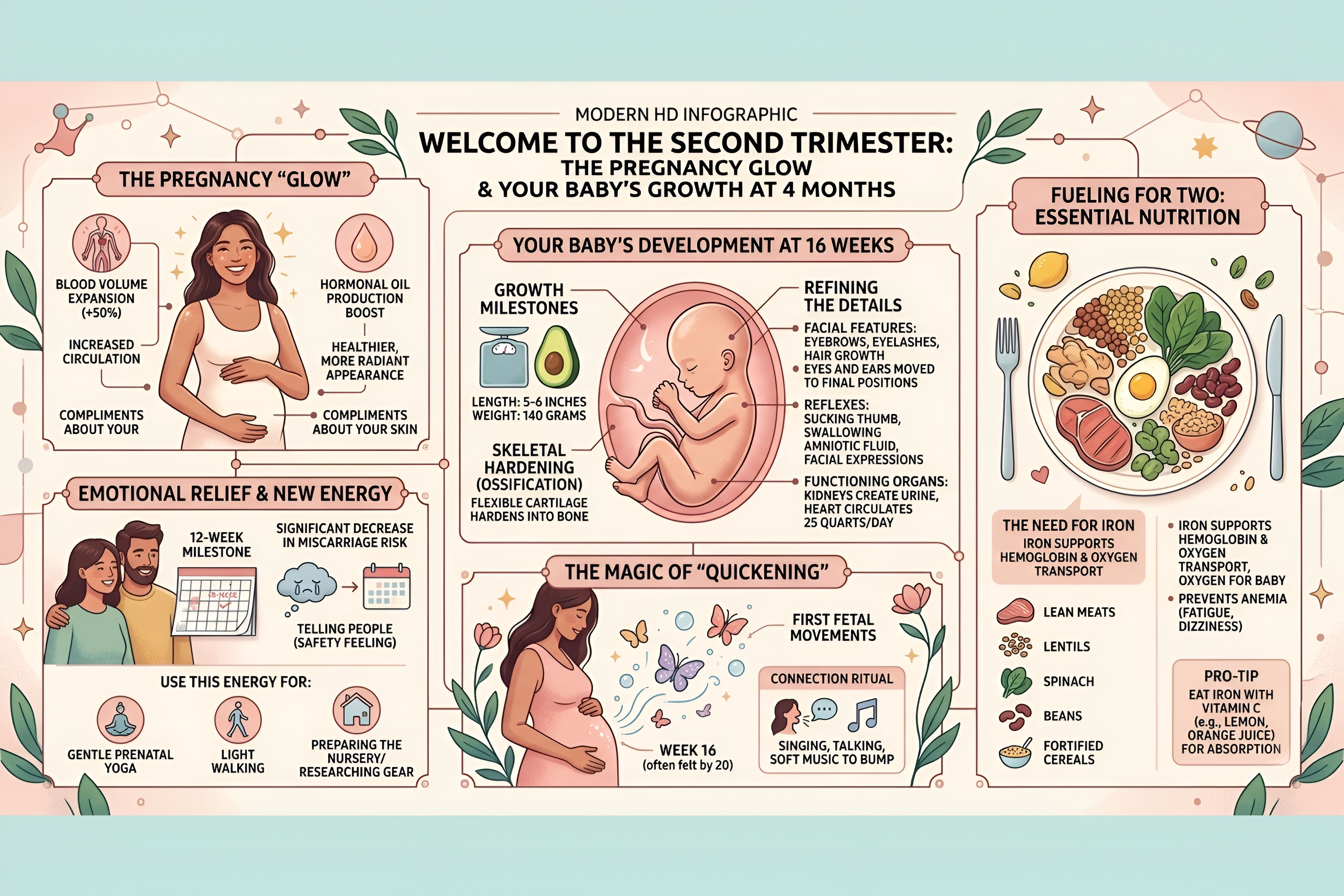
For many women, the first three months of pregnancy feel like a constant battle with morning sickness, fatigue, and hormonal changes. By the time the fourth month begins, however, the body enters a new physiological phase that brings noticeable relief and renewed energy.
The placenta becomes fully functional between weeks 13 and 14. During the first trimester, the body works intensely to build this vital organ and produce hormones that support pregnancy.
Many expectant mothers begin to receive compliments about their skin during the fourth month. This famous pregnancy glow occurs due to biological changes within the body.
After reaching the 12-week milestone, many parents feel a sense of emotional relief as the risk of miscarriage decreases significantly during the second trimester.
This renewed energy makes Month 4 a wonderful time to begin light prenatal activities such as gentle yoga, walking, and preparing for the baby’s arrival.
While you begin feeling better physically, your baby is also going through remarkable growth and development during the fourth month.
The most magical moment during the fourth month is quickening — the first time a mother feels the baby move.
During the fourth month, proper nutrition becomes even more important as your baby’s bones and organs continue developing rapidly.
By the 16th week, the uterus rises between the pubic bone and the belly button, making the baby bump visible for many mothers.
Although the second trimester is generally considered the safest phase of pregnancy, certain symptoms require immediate medical attention.
The fourth month of pregnancy marks the beginning of the "Golden Period", when energy returns and the excitement of parenthood becomes more tangible.
From feeling your first baby movements to watching your body change with a growing bump, every milestone brings you closer to meeting your child.
At Dr. Aravind’s IVF Fertility & Pregnancy Centre, our team is committed to guiding you through every step of your pregnancy journey with expert medical care and compassionate support.
Celebrate this special phase, stay connected with your healthcare team, and enjoy the beautiful journey that leads to the day you finally meet your baby.
During the fourth month of pregnancy, energy levels improve, morning sickness reduces, and the baby continues rapid growth with developing bones, facial features, and organ functions.
At 16 weeks, the baby is about 5–6 inches long and weighs around 120–140 grams, roughly the size of an avocado.
Some mothers begin to feel early fetal movements (quickening) around 16–20 weeks of pregnancy.
Yes. As the placenta takes over hormone production, nausea decreases and energy levels increase, making the second trimester feel easier.
If you're experiencing anything that's really worrying you i.e. heavy bleeding, severe abdominal pain, sudden swelling or persistent headaches you should be getting in touch with your doctor ASAP.


